

Welcome to another issue of The Newport Cornucopia where we dig through the newspapers archives for interesting news articles and adverts. All articles are posted verbatim and most headlines are original (headlines in quotes are my own).

John Davies the Lame Chicken

John Davies, known affectionately to his supporters as "The Chick" (or Y Cyw), was a dominant figure in 19th-century Welsh foot-racing. Born in 1822 near Bridgend, Davies transitioned from working as a collier to becoming an inn-keeper near Pontypridd, but his true legacy lay on the track. His career was defined by an intense, multi-year rivalry with the English champion Tom Maxfield, nicknamed "The North Star." Their series of races was fraught with drama, including a controversial event in Llantrisant where Maxfield was struck by a crowd-control horse, rendering the race null and void. However, Davies ultimately proved his superiority with decisive victories on neutral ground in Bath in 1846 and a final triumph on Maxfield's home turf in Slough in 1847, leading Maxfield to concede that Davies was the better man.
Beyond his athletic prowess, Davies’s victories served as a lightning rod for national pride, sparking a fervor comparable to modern Wales-versus-England rugby matches. Contemporary ballads describe these events as chaotic, passionate affairs dominated by heavy betting; one verse humorously notes that while backers of the Englishman were left disappointed, those who wagered on "The Chick" won enough to afford a fat goose for Christmas. Although Davies was compared in his time to the legendary Guto Nyth-brân, he did not achieve the same lasting folk-hero status, yet his story remains a vivid snapshot of Victorian sporting culture where athletic achievement and national identity were deeply intertwined.
Source: Facebook and Cardiff University
Interestingly, there was a pub in Cardiff called the Lame Chicken around the same time as John Davies was running. It was located on Whitmore Lane which became Custom House Street.

'Emigrants on Missing Newport'
In October 1854, someone with the pen-name Glanmorr wrote to the Monmouthshire Merlin to describe life in Charleston, South Carolina, after emigrating from Newport, and how they missed the town.
Some few years ago, when we lived in Newport, we used to think it a dreary, disagreeable abode, —the last place in all creation, and that not finished. We now candidly confess (although we never did confess to an editor before) that our judgment was at fault, and we in error.
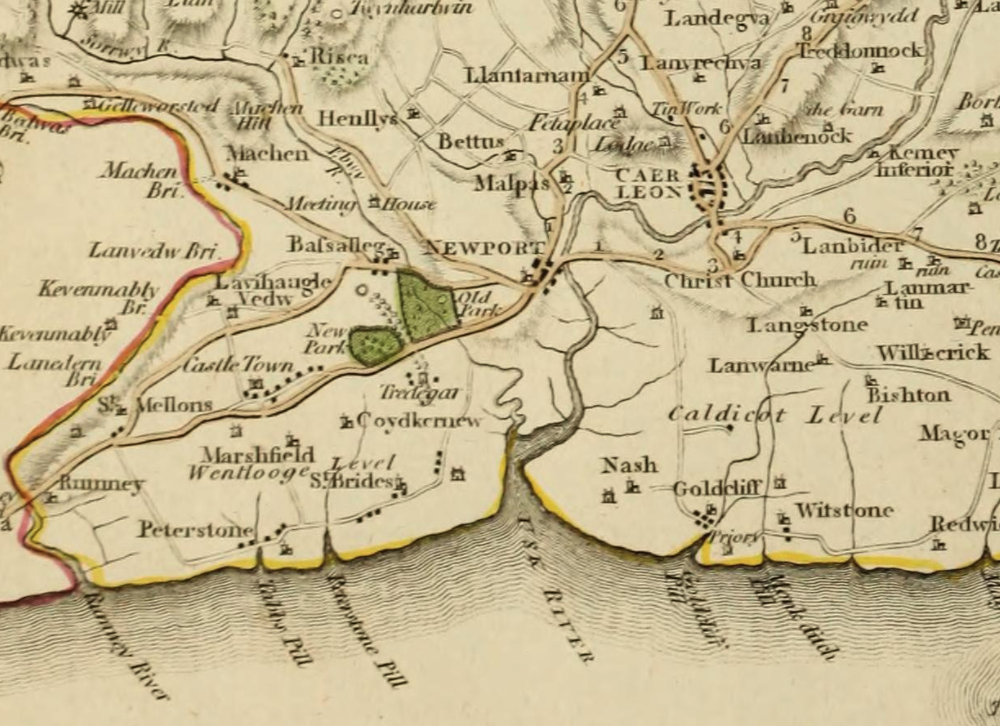
Many times during the past summer have we sighed for the cool breeze of Stow-hill, and the felicity of taking a walk in Tredegar-park; but, alas! between us and those sweet spots of Creation, there is a great ocean fixed, so that we cannot pass over.
Glanmorr then went on to describe the intensity of the hear, the frequent thunderstorms, people being struck by lightning, small pox and yellow fever. Perhaps the grass wasn't greener.
— Monmouthshire Merlin, 20th October, 1854
Stoppage at the Level Crossing of Thomas Street
[TO THE EDITOR.]
SIR,—Allow me to complain, through the MERLIN, of an inconvenience which, I am inclined to think, the officials of the South Wales Railway will remedy when their attention is respectfully requested to the matter. On coming towards Newport, from the Pontypool road, I have more than once, of late, been stopped by the closed railway gates in Thomas-street, for some minutes—not by passenger railway carriages (for such move on rapidly enough), but by a Dan Tucker of a merchandise train, with a legion of cars behind, as lengthy as the great sea serpent.
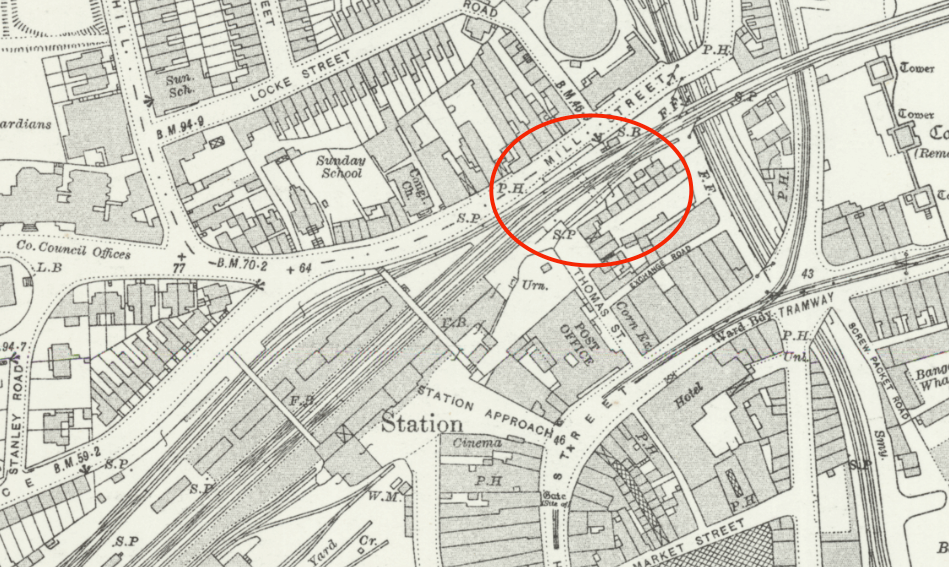
Now these trains "stop the way" several times a day; and when, on the last occasion of my retardation, I peeped through the palings to see what Dan Tucker was lazily lagging for, I found that the engine was taking in water. Now surely the public might be easily saved from this stoppage, which may sometimes be the cause of their losing the Pontypool, or the Newport, Abergavenny, and Hereford trains, or losing appointments in Newport, by merely removing the water-tank lower down the line, so that the goods cars may be clear of the level crossing.
Your obedient servant,
MOVE ON
— Monmouthshire Merlin, 20th October, 1854
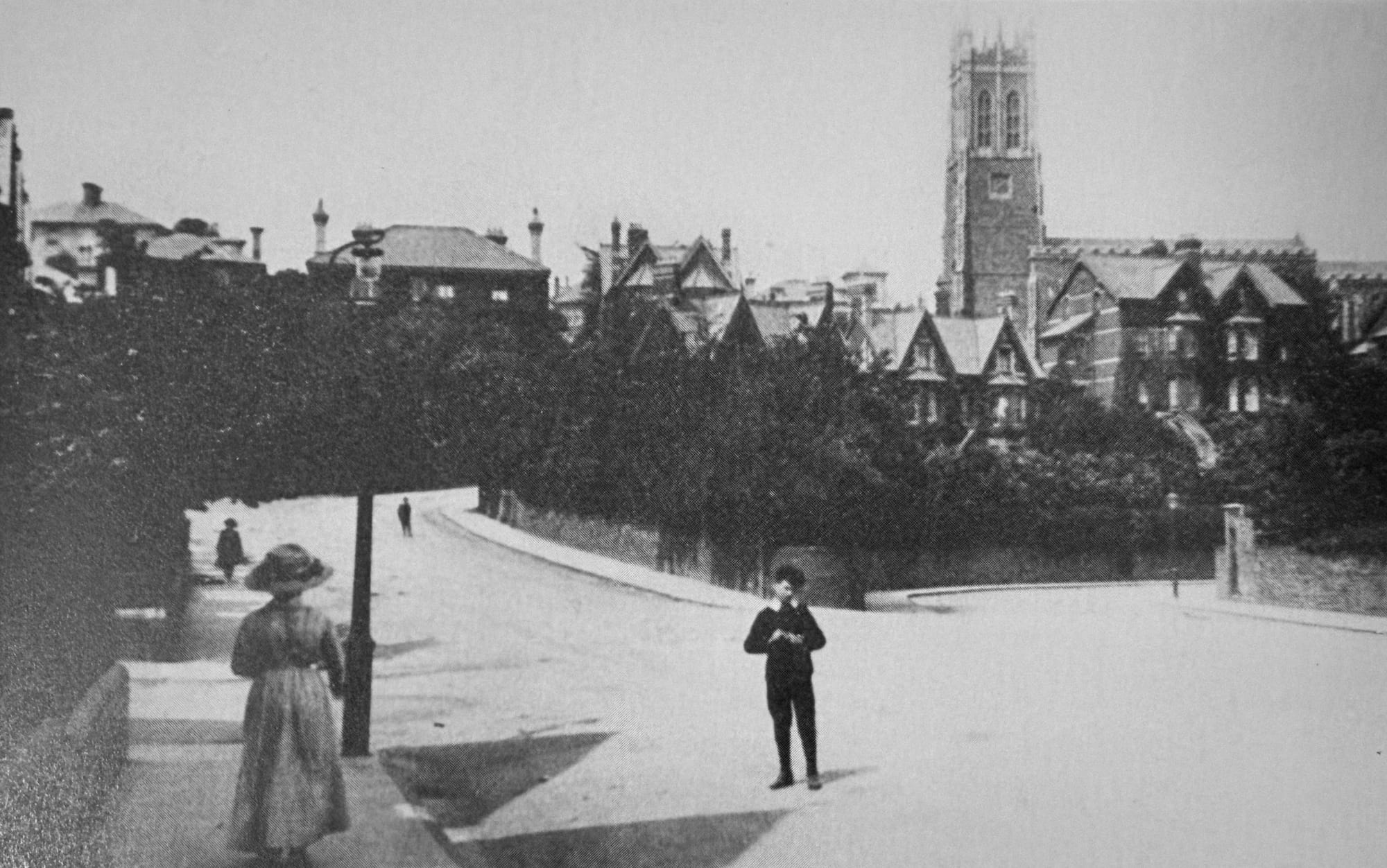
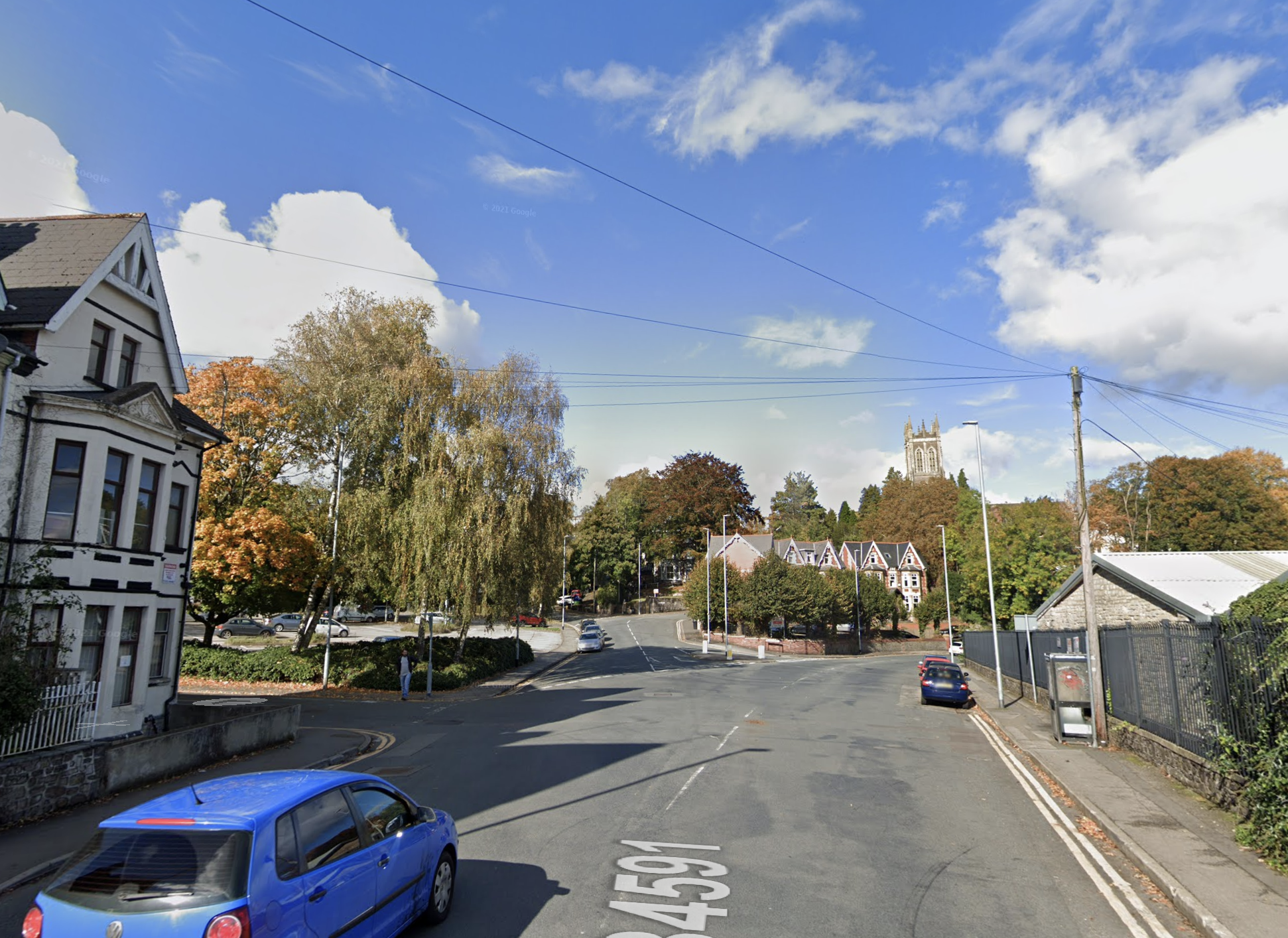
Then and Now: Godfrey Road in 1910 and present day.

Cabbaging a Freeholder's Cabbages
William Millard, an old man residing at Pillgwenlly where he follows the business of a huckster, was charged by Thomas Thomas, with stealing his cabbages. Mr. Champ defended. The prosecutor and prisoner are occupiers of land on the Freehold Society's Maindee Estate, which has been tilled for garden purposes by them, and cabbages formed a large proportion of the produce.
On Saturday evening, John Thomas saw Millard cutting some of his brother's cabbages, and accused him of doing so. He denied it, and said he had plenty of his own. He had pulled up twelve and cut off three of the cabbages. On the Monday following, Thomas Thomas went to his house, and asked Millard how he could have had the conscience to go over to Maindee and cut his (complainant's) cab- bages. He denied having done so; but after being advised by his wife, he offered to pay for them, and said, had he known they were Thomas's, he would not have taken them, having a great deal of respect for his family.
Much evidence was given in support of the charge, and Millard was ordered to pay 6d. damage, and 20s. fine, together with £1 6s. 6d. costs, or a month's hard labour.
— Monmouthshire Merlin, 6th October, 1854
'Woman Assaults Servant Over Lost Sheet'
Mrs. Mark Taylor was charged with assaulting Ann Barry, her servant. This was a quarrel of a domestic character, respecting a lost sheet, and divers other matters as to wages, &c. The mistress was ordered to pay the girl her wages, and the case was dismissed.
— Monmouthshire Merlin, 6th October, 1854
'A General Scrimmage'
Sarah Chinn was charged with assaulting Martha Morgan. A general scrimmage, in which one party was shown to have been as bad as the other. Complainant called a young man as her witness, who completely turned the tables on his fair friend, till she cried out vehemently, "It is false! it is false!"
There were fifteen witnesses in the case: one of which was a frying-pan!
The defendant was also charged with assaulting Ann Smith; and after that, she became the complainant against George Morgan, father of the first complainant. This latter person, her sister Naomi, and the mother, were next charged with assaulting Mrs. Chinn. After a very long inquiry, the first three cases were dismissed, the costs to be paid by the parties, all being bound over to keep the peace towards each other. The Morgan family were all severely censured; and the father and his two daughters were convicted in 10s. each and costs, or a month's imprisonment, for the assault on Mrs. Chinn; and the mother was discharged.
— Monmouthshire Merlin, 6th October, 1854
'Stealing a Wine Glass'
Mary Thomas was sentenced to five weeks' hard labour, for stealing a wine glass, the property of John Parker, Newport.
— Monmouthshire Merlin, 27th October, 1854
Suspected Turnip Stealers
William Hunt and Mary Stockwell, two residents in the row called The Rookery, at the top of Stow Hill, were charged with having a quantity of turnips in their possession, under some- what suspicious circumstances. P.C. Hill detected the prisoners with the bag of turnips, but had not been able to ascertain from whence they were stolen or obtained. We would advise parties in the neighbourhood who find that their produce is preyed upon, to give instant information to the police, that the marauders may be detected. The prisoners in this case could not be proved guilty of stealing the turnips, and being cautioned, they were allowed to walk at large once more.
— Monmouthshire Merlin, 7th March, 1846
Sheep-Stealer Caught — And No Blood-Hounds Used
John Morgan, alias Umbrella Jack, was charged with being found in possession of some portions of a newly-slaughtered sheep. P.C. Pennimore stated that on Tuesday morning, at an early hour, he saw the prisoner coming along by the turn-pike gate on the Caerleon road towards Newport, with a large reticule basket on his shoulder, and a bundle of cabbage plants tied on the top. Pennimore, with that praiseworthy activity and observation which have distinguished him on previous occasions, immediately examined the man and the basket, discoring in the latter two fore-quarters of mutton, with the exception of a shoulder, and in his coat pocket a shoulder of mutton and the knuckle of a leg of mutton.
The prisoner told witness several improbable stories, and he thereupon took him to the station, and locked him up. This meat was subsequently discovered by witness and Sergeant Harlow, to have been severed from a carcase killed in a wood, in the parish of Saint Bride, Netherwent, and the property of Mr. Evans. The prisoner was committed to take his trial for feloniously killing a sheep. Persons who have a taste for their neighbour's mutton, must take heed that blood-hounds do not get on their track, since the use of the unerring blood-hound in pursuit of sheep-stealers, is now resorted to by some farmers.
— Monmouthshire Merlin, 7th March, 1846
Three to One
Keen Mahoney, his sister, an another female, or fury—either will do—were changed with having cruelly ill-used Ann Brown, whose face presented startling evidence respecting brickbats, pokers, and "bunches of fives."
The poor creature detailed a harrowing account of the brutal treatment she had received from her assailants, and the magistrates fined each defendant 10s. and costs, or a month's imprisonment. Not being able to pay, they were "quodded."
— Monmouthshire Merlin, 7th March, 1846
'Engravings for Sale'
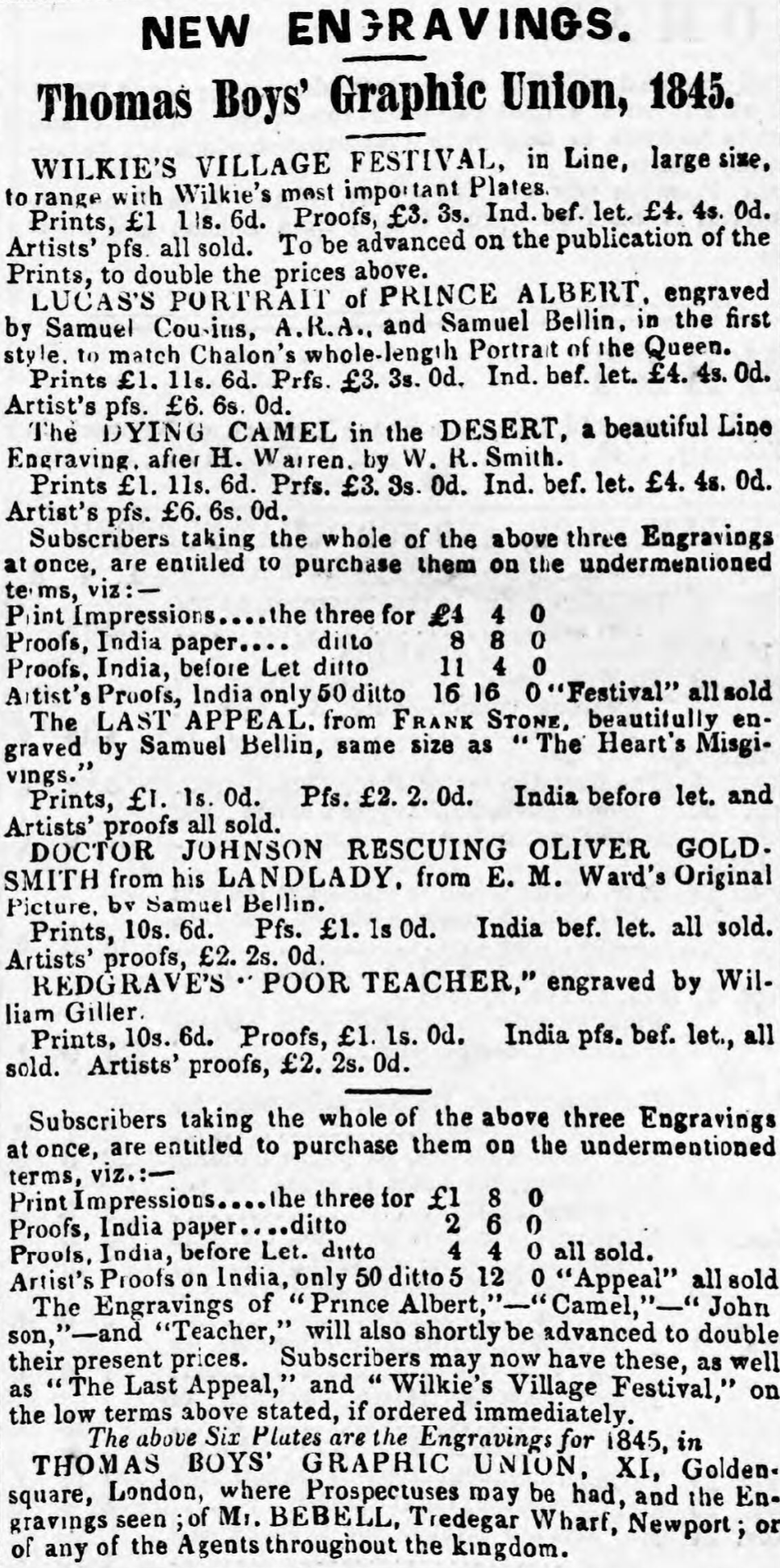
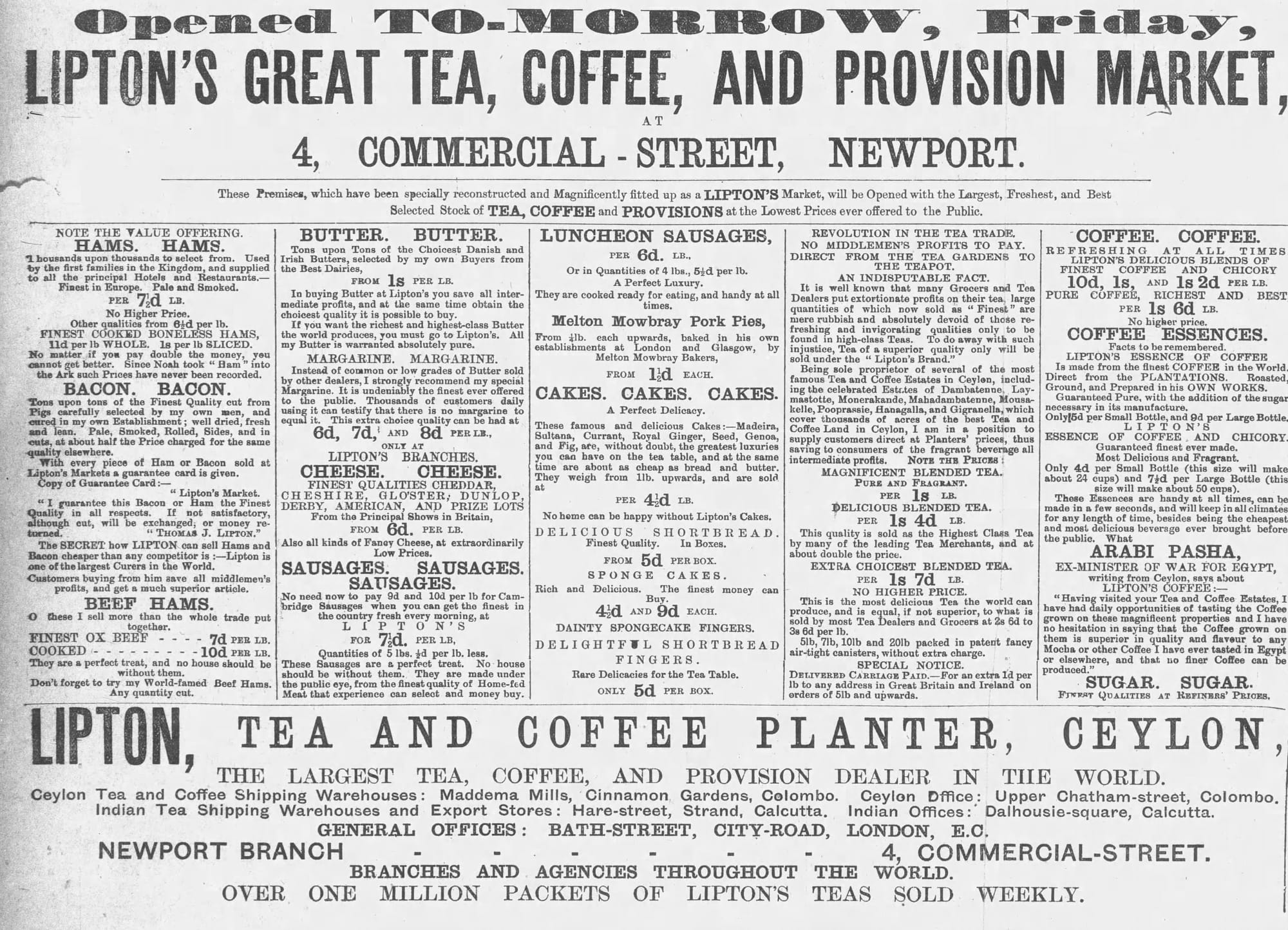
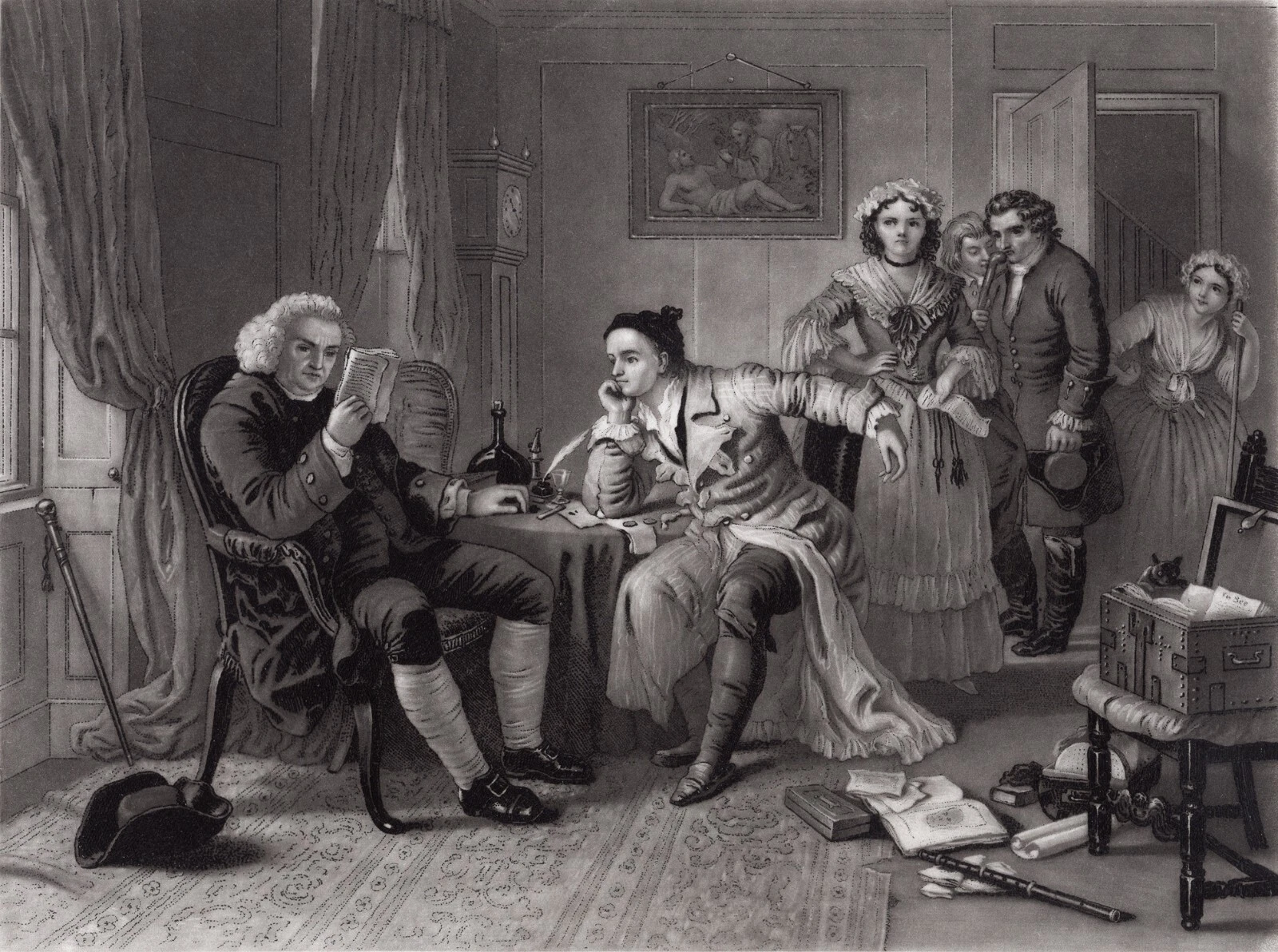
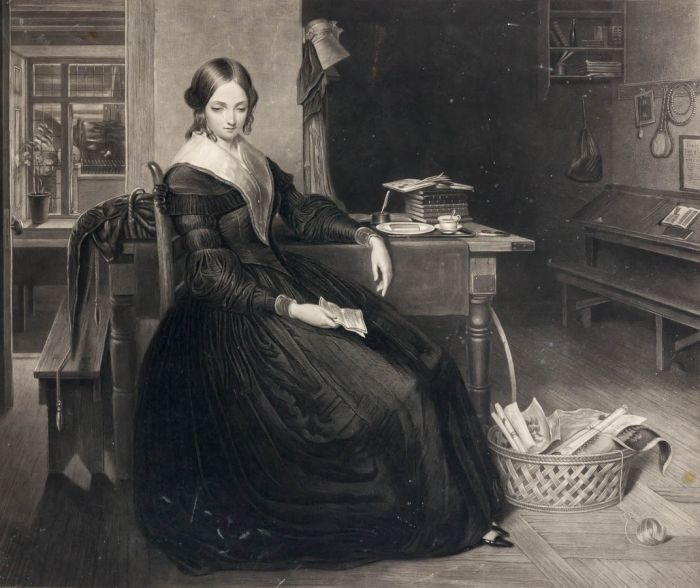
On display at the premises of Mr Bebell, Tredegar Wharf were 6 engravings in a collection call Thomas Boy's Graphic Union.
The engravings where sold as prints and different type of proofs ranging in price from 10s 6d to £6 6s 0d and up to £16 16s 0d for a full collection of artist proofs. That's around £2,200 today.
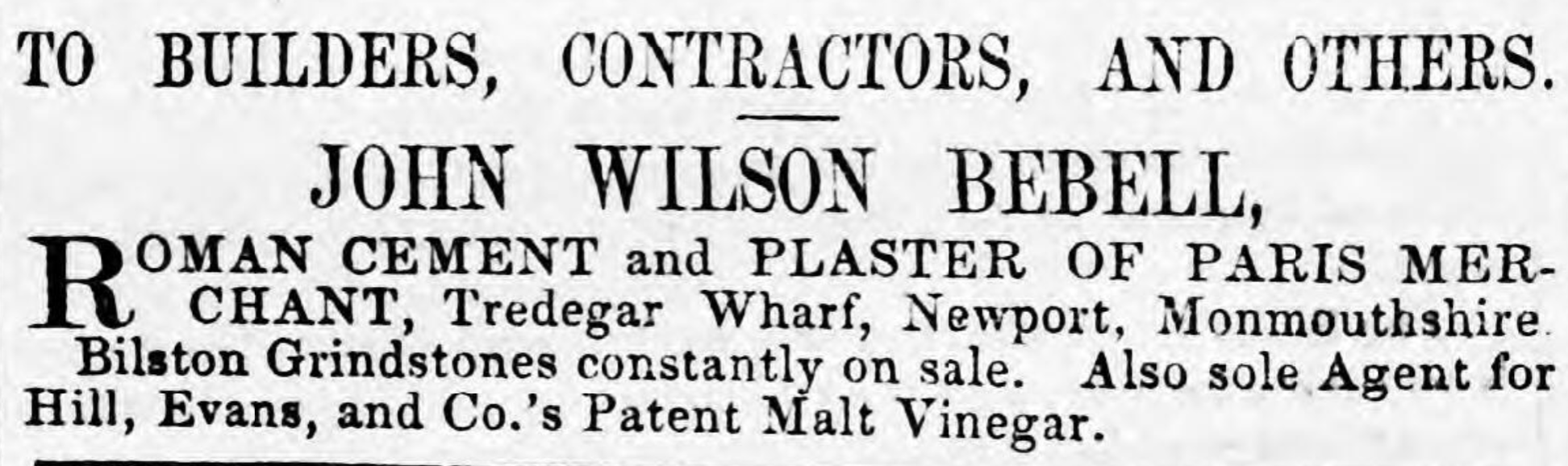
Mr Bebell, mentioned in the advert, was a roman cement and Plaster of Paris merchant as being the sole agent for Hill, Evans, and Co.'s Patent Malt Vinegar.
'Complaint About A Draper Opening Late'
Sir — About the commencement of the present season, it was announced, and generally understood, that the drapers of this town would close their respective shops at eight o'clock precisely; and I have been much pleased to see it so punctually amended to. Very recently, however, one person assumed the untradesmanlike, and, I will add, unbecoming, character of a nine o'clock closing and frequently have I observed the shutters closed but the door ajar, for the admission of the late customers. I hope, however, this will not lead the public into any error, as the shops generally are still closed at the same hour.
I beg to subscribe myself, Sir, your obedient servant,
A READER OF YOUR PAPER. February 24th, 1846.
— Monmouthshire Merlin, 7th March, 1846
Police in Pillgwenlly
To the Editor of the Monmouthshire Merlin.
SIR,—A letter appeared in the MERLIN of last week, signed "Detector," stating that a policeman is not seen in Pillgwenlly scarcely once in twelve months; and that the sight of one is, indeed, a "Rara avis in terris." Now, I am ready to admit that a policeman may not at all times be immediately on the spot when he is wanted, for such a functionary is not supposed to be omnipresent; but I am ready to prove that a policeman may be seen in Pill every day on duty.
I have this week seen as many as three at a time; and whilst I am writing this letter, I have seen two policemen pass my window. Now, I think if "Detector" were to be a little more cautious in publishing untruths, and let his neighbour's business alone, mind his own calling, take the advice of one of his predecessors, not to be a busy body, speaking things which he ought not, it would be all as well, perhaps better.
I am, Sir, your obedient Servant,
PUBLICOLA
March 5, 1846.
— Monmouthshire Merlin, 14th March, 1846
Awfully Sudden Death
On Saturday night last, as Thomas Bostock, head waiter at the Westgate Hotel, was carrying grog into the coffee mom, he was suddenly seized with illness, and died in a short time. Everything that medical aid could do was tried. soon after the attack, which was apoplectic. The deceased, Mr. Hallen says, was a sober, well conducted man. He leaves a family in Bristol.
— Monmouthshire Merlin, 21st March, 1846
'Fires in Newport'
Alarm of Fire
On Sunday morning, about one o'clock' sparks, and occasionally a slight blaze were observed issuing from the stack of chimneys of the Town Hall, over that part where the Exchange-room is situated. A body of police was speedily in attendance, and fears being entertained that the fire originated in the Exchange-room, the door was burst open; but all was safe and cool in that quarter.
It was then supposed that the flue of Mr. William Evans's chimney might communicate with the stack from which the fire was now ascending with increased force and on inquiry, such was found to be the case. Immediate means were adopted to master the enemy the most effectual being to heat a quantity of salt in the grate, the useful and speedy effects of which were completely to over power the fire in the chimney—a plan easily adopted, and worth remembering. No serious damage resulted from the accident, and all was quiet again in an hour.
— Monmouthshire Merlin, 6th May, 1848
Fire
On Monday night about ten o'clock, an alarm of fire was raised near the extensive premises of Messrs Phillips and Getting, Commercial Buildings, and it was feared for some time, that the fire existed in those premises, where large quantities of inflammable goods, such as turpentine, oil,, hemp, &c., were known to be stored.
Happily, however, when the engine, and a strong body of the police, accompanied by several tradesmen and others, had arrived, the fire was found to be in a far less perilous place, having originated in a heap of dry dung, upon which some hot ashes had been in cautiously thrown, and adjoining a hay and straw shed belonging to Mr. Joseph Jones, in Fothergill-street, which was consumed, resulting in damage to the amount of about £40.
In about an hour all was extinguished, through the good services of Mr. Superintendent English and his aids. Mr. English, who has had much experience in the working of fire engines, speaks well of that belonging to our Corporation. He recommends a larger suction pipe, a want which, according to the following paragraph, may be cheaply procured:- Canvas has at length been made available, by means of suction pipes, for fire-extinguishing engines and other purposes. The whole of the outside is canvas, and the interior vulcanised caoutchouc, which renders them not only water-tight, but equal in strength and durability to the best leather, while their extreme comparative lightness and cheapness must render them most desirable."
— Monmouthshire Merlin, 6th May, 1848
Another Fire
An accident occurred on Sunday morning last, which threatened destruction to the household furniture of Mr Wm. Williams, Hill-street. A clothes-horse had been placed before the kitchen fire, upon which was placed wearing apparel; and during the temporary absence of Mr. and Mrs. Williams, a spark ignited one of the articles, which set fire to all the rest, and in a few moments, all was consumed. Had it not been for the almost immediate return of Mrs. Williams to the house, there is little doubt but the fire would have done extensive damage.
— Monmouthshire Merlin, 6th May, 1848
Potato Stealing
On Monday night last two bushels and a half of potatoes were stolen from the barn of Mr. Hodgkinson, Alteryn, and belonging to Mr. Symons, shipbroker, of Pillgwenlly. Two parties were suspected of being the thieves.
— Monmouthshire Merlin, 6th May, 1848


Mr Hodgkinson lived in Alteryn House which used to be located near the canal and Black Ash Lane.
'The Narrow Pass at Blaina Wharf'
[TO THE EDITOR.]
Sir, — Permit me to mention in your useful paper a monstrous inconvenience, to which the public are put, in a narrow pass immediately opposite the Blaina wharf, on the town side of the Canal. Have the public, or have they not, a right of thorough- fare along by the company's tramroad?
If they have, is it not wrong that any person should be allowed to obstruct the path by timber and carriages, which is frequently the case, till there is no alternative for passengers but to squeeze by, with their clothes wiping the dirty wheels of the carriages on one side, whilst in danger of stepping into the canal, on the other?
If the public have a right of way there, the present state of things ought to be remedied; if they have not, of course they must submit to so crushing a case.
With thanks for the small space you have given me,
I remain, sir, your humble servant,
A SUFFERER.
— Monmouthshire Merlin, 21st December, 1850


Member discussion