

Welcome to another issue of The Newport Cornucopia where we dig through the newspapers archives for interesting news articles and adverts. All articles are posted verbatim and most headlines are original (headlines in quotes are my own).


Accident
The horse, in a dog-cart, coming through Commercial-street last Wednesday morning, from the Cardiff ball, shied at a bull passing along, and threw some of the gentlemen from their seats, when Mr. Samuel S. Phillips, shipping agent, received severe injuries on the skull. He was, however, recovered sufficiently, to be able to attend the Newport ball last evening. [see next article]
— Monmouthshire Merlin, 4th February, 1853
Grand Annual Subscription Ball
The charming assembly is in the zenith of enjoyment, as we are going to press. There is quite a galaxy of beauty, in dresses which do credit to the modistes of Newport; the music is well selected; the supper (from the Westgate Hotel, laid out in the Reading Room in superior style,) has fulfilled the highest expectations and in quality, the good things would not have discredited the wedding supper at the Tuileries; whilst the truly elegant decorations of the Town Hall room, will long be remembered as a model for such interesting occasions.
We may add, that about one hundred and thirty were present, many ladies and gentleman among them, being from distant parts of the county. Dancing was led off by Mr. Sheppard, one of the stewards, and the lady of the Mayor. The orchestra was under the direction of the veteran violinist, Mr. Pollock; and among his effective force, were Mr. Quelch, of Cardiff, and Mr. Richardson, of Bristol.
— Monmouthshire Merlin, 4th February, 1853
Transfer of License
Mr. Samuel Polak applied to the Bench for leave to transfer the license of the Angel wine and spirit vaults, one of his houses in the new town at Bane's well, to Mr. William Jones, formerly wine and spirit traveller, Chepstow. The Bench asked for some reference as to Mr. Jones, who immediately replied he could produce a satisfactory one from his late employers but a gentleman in court intimating to the magistrates his knowledge of Mr. Jones's respectable character, the transfer was immediately ordered.
— Monmouthshire Merlin, 4th February, 1853

'Stealing Half Crowns'
Thomas Lake was charged with stealing six half crowns, the property of Messrs. Thomas and Edward Davies, grocers, High-street, on the 20th inst. John Long, assistant at Messrs. Davies's, stated that the prisoner had been employed at the prosecutor's shop about two months.
On Saturday last about half-past one o'clock he missed two half crowns from the till. He had missed money on previous occasions. He saw the prisoner roll something in a pocket handkerchief and place it inside his waist coat. While he was informing another assistant in the shop what had taken place the prisoner went out, and returned shortly afterwards.
Alfred Budd said that he had suspicion that the prisoner had been robbing his employer for some time past. About a quarter to two o'clock on Saturday last he saw him put something in a pocket handkerchief and put it in his breast. The prisoner was afterwards told to go to dinner, and he followed him, and accused him of stealing money from the till. He strongly denied it for some time, but subsequently admitted that he had taken it. The prisoner then gave him the pocket handkerchief he bad concealed, which contained between 15s. and 16s. He begged him not to tell his employer. P.S. Pratten apprehended the prisoner on Saturday afternoon. He admitted that he had taken the money from the till. The handkerchief produced was that taken from the prisoner, and which contained six half crowns.
Mr. Davies stated that he had been in the employ of his father about five years. He had engaged him after he had been out ot a situation some time and was in a reduced condition. He had also endeavoured to improve his position by trying to procure for him a better situation. The Bench considered that the conduct of the prisoner had been most ungrateful. He had been taken into the employ of Messrs. Davies out of pure charity when in a state of destitution, and they were endeavouring to procure for him a better situation.
By the repeated thefts that had taken place in the shop suspicion might possibly have rested upon innocent persons, and it was fortunate that the thief had been discovered. Committed for six months with hard labour.
— Monmouthshire Merlin, 5th September, 1863
A Den of Thieves
John Holmes, a man of good address and respecta ble appearance, was charged with allowing thieves and prostitutes to assemble in his house.
Sergeant Huxtable proved that he went into the Neptune on Monday night last, the house of the defendant, where he found a large number of thieves and prostitutes. [Witness stated the number of offences with which about a dozen of them had been charged, and the number of convictions they had undergone. A pretty assemblage, truly!]
Mr Holmes said he had not been landlord more than about a month, and did not know his company, or he would not have suffered such a disgraceful set to assemble. He was the victim of malice in this case, however; for he had been complained of to the Mayor by persons who suffered conduct just as flagrant in their houses, and sold beer and spirits during the house of Divine Service. Fined 10s and the expenses.
James Thaine was charged with allowing beer to he consumed in his bouse after hours, on the 3rd instant, and was fined 2s 6d.
Elizabeth Davies, alias Pugh, was charged with being an idle and disorderly prostitute about the streets, and was sent to prison for two months.
John Joseph was charged with stealing apples from the garden of Mrs Rebecca Harrhy, and was discharged, no prosecutor appearing.
William Strickland, Edward Gibbon, and John Pring, were charged with stealing a quantity of fruit from the garden of Mr Webb. The prisoners were remanded.
— Monmouthshire Merlin, 29th July, 1843
Stealing Trousers
Stephen Conroy was charged with stealing two pair of trousers—one from the doorway of Solomon Galland's shop, and the other from the outside of Henry Hazell's shop, Pillgwenlly. Mr. Cathcart prosecuted.
The prisoner was seen to unhook Galland's pair, and carry them off, by Sarah Hall, servant of Mr. James, surgeon. She gave information, and Galland and a young man named Fromberg, pursued the thief. The trousers were picked up by Galland in Albert-street; and the man was caught by Fromberg behind a door in a house near the spot. He acknowledged committing the theft, saying he had been driven to rob by want.
When Sergt. Lloyd was searching the prisoner at the station, he found a pawnticket for the other pair of trousers pledged at Mr Stoeker's. The garments were now identified by the two prosecutors; and the prisoner was committed for trial in both cases.
— Monmouthshire Merlin, 4th February, 1853
Capture of Thieves
Last week, a robbery was committed at the house of Mrs. Mary Beynon, at Llandaff. The police obtained a good clue to the robbers, and went to the house of a woman named Prothero, in Whitmore lane, Cardiff and while searching for the stolen property, Stephen Henderson, John Joshua, Ann Owen, and Eliza Fair, decamped.
On Sunday last, Sergt. Lloyd, the active officer of the Newport police force, shrewdly guessed that two strangers whom he saw in Llanarth-street, were the men who were "wanted." He took them into custody; and they proved to be the thieves. In the afternoon of the same day, he captured their two female friends in Friars' Fields. The gang, thus secured by Lloyd's tact, were taken by him (aided by a Cardiff officer) to Llandaff, where the gang were charged with the robbery alluded to; and a complete case was established against them. They were, however, remanded to Saturday, when another charge will be brought forward.
— Monmouthshire Merlin, 4th February, 1853
Stealing Watercresses
Ellen Brian and Julia Findlay were summoned for gathering watercresses on the land of Daniel Lewis, at Llanmartin. At the previous sitting of the Court the prosecutor did not appear, and this day the defendants were absent. Brian was fined 2s. and costs and the case against Findlay was dismissed.
— Monmouthshire Merlin, 12th July, 1878
A Violent Fellow
James Flynn, was charged with being disorderly in Llanarth-street on Sunday also with throwing stones at P.C. Payne on Saturday night.
The officer was taking a woman to the Town- hall, when the prisoner threw stones at him, and in doing so struck the woman on the back.
Sentenced to 21 days' hard labour.
— Monmouthshire Merlin, 12th July, 1878
Linen Larceny — The Pawning Propensity.
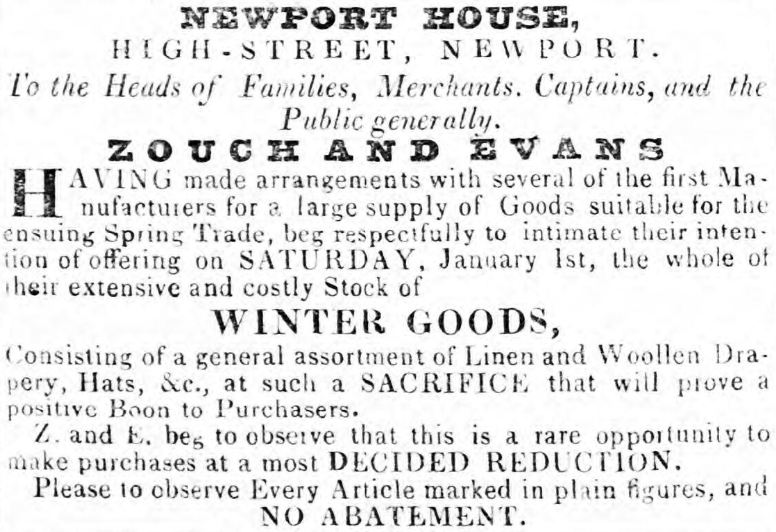
Ann Porter, a married woman, lately residing in Corn-street, and the wife of a very industrious labourer, employed at the New Barracks, was placed at the bar, charged with having stolen about fifty yards of Irish linen, a quantity of calico, &c., the property of Messrs. Zouch and Evans, the extensive drapers, High-street, in this borough.
The prisoner, who had an infant in her arms, appeared to have suffered much since taken into custody, last Thursday night. Mr. Harwood appeared for the defence, by permission of the magistrates.
The first witness called was John Scott, a lad employed in the shop of Messrs. Zouch and Evans, who swore that he knew the prisoner, Ann Porter, who was in the habit of working occasionally at his master's, as char-woman but did not live in the house. On the evening of Thursday last, he had occasion to go into the cellar, where a piece of white calico, lying behind a box, attracted his attention. He found it to be a piece ten and a half yards in length. He put it in the same place, and left it there, while he went into the shop, and acquainted Mr James, one of the shopmen, of the circumstance. [Calico produced, and identified.] Other pieces are similarly marked; but the cellar was not the proper place in which it should have been.
Cross-examined by Mr. Harwood: Did not like to swear the piece produced was the identical piece he found in the cellar.
By Mr. Pyke: To the best of my knowledge, it is the same piece. It was brought into the shop by Mr. James, in about a quarter of an hour after I told him of it.
Edmund James, sworn: Is shopman at Messrs. Zouch and Evans's, and knows the prisoner, who had been employed to do all sorts of servants' work in the house, ever since it had been opened in business. Went, on the information of last witness, into the cellar, where he saw the prisoner, and returned again, without saying anything to her or meddling with the calico. She presently came-up stairs, and went into the kitchen, where he also went, and saw her. There saw a basket on the ground, with a wool carpet in it. The servant said the basket belonged to the prisoner. Witness went into the shop again, and presently returned to the kitchen, and sent the prisoner out. While she was absent, witness searched the basket, and took out the piece of calico [produced and identified]—wrapped up in the carpet, which he had previously seen her shaking in the cellar. The piece of calico measured ten yards and a half, and was worth sixpence per yard. Mr. Evans came in shortly afterwards, when witness told him what had been discovered, and subsequently went with him to Mr. Wilde's, the pawnbroker, who said the prisoner pawned Irish linen there, and showed them a piece, which was found, by private marks, to be the property of Messrs. Zouch and Evans. Mr. Wilde produced two other lengths of Irish linen, which were also pledged by the prisoner.
Mr. Richard Baugh Evans, sworn: Is in partnership with Mr. Clement Zouch, as drapers. Prisoner had been in Mr. Zouch's employ in the house occasionally, as char-woman, during the last four years. Witness corroborated the evidence, in which he had been alluded to, of the last witness, down to the production of the linen, at Wilde's shop. Witness then gave information to Mr. Superintendent Hopkins, and went with him to search prisoner's house, but they found nothing of consequence.
Mr. Superintendent Hopkins proved apprehending the prisoner, when he found three silk laces in her pocket, which she said she had found in the ashes, at Mr. Zouch's house, She said she had nothing in pledge, nor any pawn-tickets; but in a box he found sixteen duplicates, four of them being from Wilde's, for Irish cloth, three in the name of Ann Porter, and six from Mrs. Leek, pawnbroker, for Irish clothes, five of which were in the name of the prisoner, and one in the name of Mary Evans. The other tickets were for articles, which Mr. Evans could not identify, pledged by the prisoner. Witness then proceeded to the pawnshops of Mr. Wilde and Mrs. Leek, where he saw the articles named on the tickets. The Irish linen found at each place measured about 28 yards each.
Miss Leek was examined, and proved the articles produced to have been pledged at her mother's shop, by the prisoner. Mr. Moses Wilde, son of Mr. Ambrose Wilde, pawnbroker, was also examined respecting the goods produced, a portion of which he identified, which had not the prisoner's name attached while two portions to which her name was attached, his "conscience" would not permit him to say were pledged by the prisoner.
Mr. Pyke, with a great deal of propriety, examined the young pawnbroker as to this loose mode of doing business, and enquired if he took any precaution to ascertain if goods brought to him were stolen property or not; to which Master Wilde replied that they only enquired what name the articles were pledged in! To this Mr. Pyke rejoined that any person might go to the shop, then, with the most valuable article, and give the name of Mr. John Styles, or Mr. Anybody-else, whilst the article might glaringly be a stolen one, and the name fictitious? "We only ask what name," was the business-like reply. And to such a mode of transacting the pledge business, may the downward step by step of this unfortunate woman, in the criminal knowledge of the safe procedure of getting rid of stolen property, be traced. We dare say the Chairman at the next Quarter Sessions will make some strong comments on this loose mode of taking in property.
The testimony against the prisoner was sufficiently conclusive to warrant her committal, and she will, therefore take her trial at the next Sessions, for larceny.
On the solicitor for the defence representing to the Bench the great inconvenience and distress to which the prisoner would be subjected in lying in prison previously to her trial, while nursing an infant, and having family cares to attend to, the magistrates kindly consented to take bail for her appearance at the sessions.
— Monmouthshire Merlin, 21st September, 1844
Newport Town Council Meeting — 1878
'Dispersing Sailors'
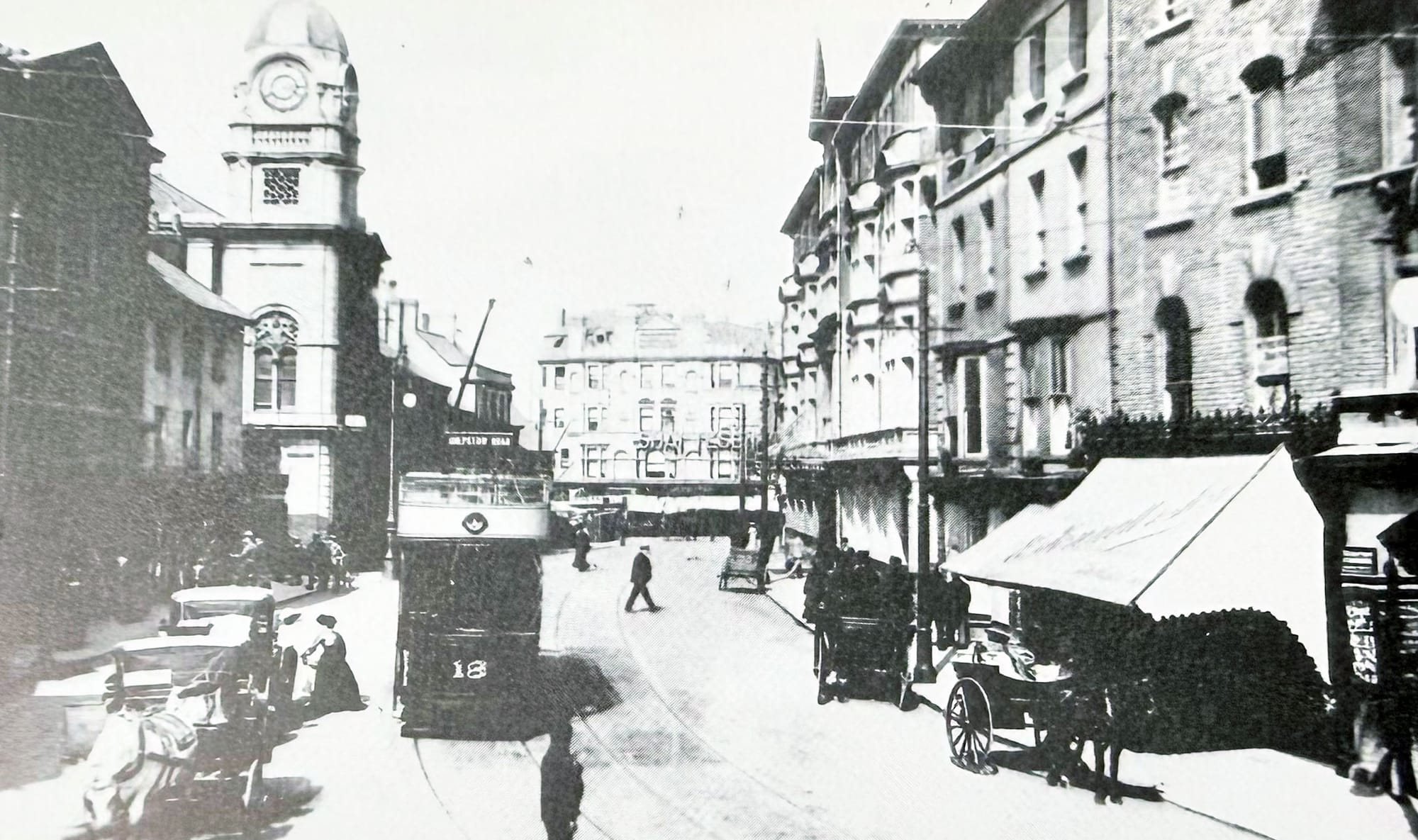
The Superintendent read a report of the crime committed in the borough during the past fortnight. Also among other matters he stated that a gentleman who was standing at the corner of the Bank in High-street had been ordered by a constable to "move on." The gentleman had been offended, and had gone to the Town-hall to complain, but he (the Superintendent) had not seen him. Since then he had been given to understand that the matter would be brought before the Watch Committee. P.C. Hoyle had been appointed a constable to the Old Dock Company, and he (the Superintendent) had promised to allow him to go without the usual month's notice.
Mr. Goss said he thought the police had taken no notice of what had been said in the Council some time ago respecting the crowds of sailors which congregated in. Dock-street. Superintendent Sinclair said he had instructed the police to disperse such crowds, and he knew that in some instances at least his order bad been carried out, for several persons had been brought before the magistrates for this very offence.
Mr Goss: I don't think there is any need of bringing them before the magistrates. All we want is to get the police to disperse the crowds.
The Supetintendent: Yes; but where the men refuse to move they are taken into custody.
Alderman Lyne thought it but right to mention now that several people had spoken to him about the marked improvement that bad taken place with regard to the window smashing since that matter had been brought forward at the Council.
It was explained that the Superintendent had only recommended that the usual month's notice should not be insisted upon from P.C. Stoyle, and the Committee then adopted the recommendation.
'Were they Obstructing the Pavement?'
The Mayor said that he had now received a letter respecting the alleged officiousness of a policeman in ordering gentlemen to move on. It was as follows:—
Custom House, Newport, 9th July, 1878
Last evening, about half-past six o'clock, I was walking with one of my colleagues along Commercial-street, and at the junction of it with High-street we met another gentleman we both knew. We had not been talking together three minutes when policeman 33 came up and told us we must move on. On my asking him why, he said he had orders to prevent people from standing m the streets, or words to that effect. I inquired where he got his orders from, and he referred me to his Superintendent, at the Town-hall. I immediately went there, but failed to find the Superintendent. Two sergeants, however, who were standing at the door, confirmed the policeman's statements, and added that the order was given by the Committee of the Town Council, I understood.
"I beg to ask you, Sir, if it is the fact that orders have been given to the police to prevent any two or three well-behaved persons from standing, in open daylight, m any portion of the streets they may think proper, so long as they do not cause an obstruction—and there was no obstruction in this case; and if such orders have been given to the police I shall feel obliged if you will tell me under what law, as the Riot Act was not previously read, such a monstrous interference with public rights and private freedom is exercised.
"I await your reply in the hope that it will contain an assurance that such an order, if given, has been cancelled, and that if not given policeman 33 will be reprimanded for his officiousness.
"I reserve to myself the right, if your answer should demand it., of publishing this letter or of forwarding a copy of it to the Secretary of State for the Home Department.
"I have the honour to be, sir,
Your obedient servant,
"John Cross
"John Moses, Esq., Mayor, Newport."
The paragraph referring to the Riot Act caused great laughter in the Council, as also did the last portion of the letter. The Superintendent said the policeman had reported to him what had occurred.
Alderman Davis said that in High-street, where the pavement was so narrow, it was a practice with many people—gentlemen as well as common people—to stand together and cause an obstruction in the way of passers-by.
It was the duty of the police to order everybody to move on, and a gentleman ought to set an example to other people.
The Mayor thought the constable had only done his duty.
The Superintendent said he had given instructions to the police to order people on, but to do so in as civil way as they could.
Mr Jacob believed it would be wise to exercise a little discretion in the matter.
The question then resolved itself into one of "small talk," and ultimately was dropped.
'New Urinal'
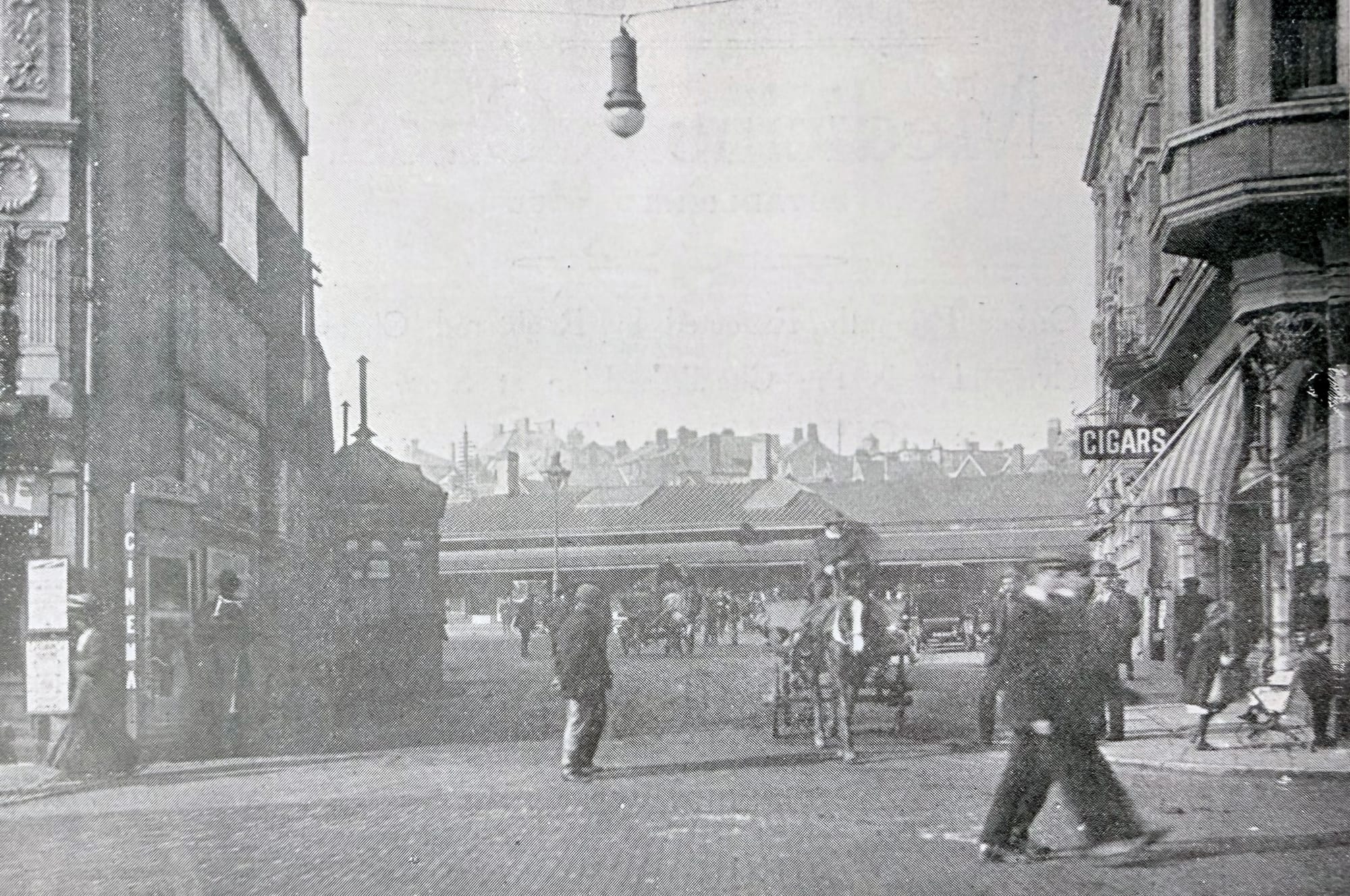
The Committee recommend that an iron urinal for two persons be placed in the road to the Great Western Railway Station, adjoining the cab rest on the west side, provided the Great Western Company do not object thereto.
— Monmouthshire Merlin, 12th July, 1878
A Vicious Bull
On Monday evening a child, named William Henry Barton, was thrown by a bullock near the new entrance to the Marshes road. The child was not severely injured.
— Monmouthshire Merlin, 3rd October, 1884
Mr and Mrs Cordes's Welcome Home
The return of our esteemed neighbour Mr T Cordes and his bride from their wedding tour yesterday was the occasion of a demonstration such as is rarely witnessed in Newport. In a marked decree it testified to the popularity of a gentleman occupying a prominent and useful position among us—while it may also be taken as an expression of good will towards the estimable lady who has become his wife.
Extensive preparations had been made for a hearty "welcome home," and the manner in which the arrangements were carried out by a body of willing workers afforded a striking proof of the regard felt, by the Conservatives especially, for one who has done their Party good service in the past and who is in other respects closely identified with local interests.
Considerable attention was paid to house embellishment and displays, more or less extensive, of bunting were to be seen in most parts of the town. At the station entrance hung a string of handsome flags, the centre one bearing the inscription "Welcome to our Townsman's bride" while banners were shown from the King's Head Hotel and other buildings in the vicinity. But it was between the New Entrance and Bryn Glas that the decorators had bestowed their most successful efforts. An arch of evergreens and flowers was erected near the Castle Brewery and the front of the railway bridge lower down the road was completely hidden by a wealth of foliage and flowers, the design being surmounted by a scroll on which were the words "Long life and happiness to the Squire of Bryn Glas and his bride."
Many of the residences hereabouts displayed flags, most of them bearing mottoes such as "Welcome the bride," "Welcome Sea King's daughter, May they be happy," "Hearty good wishes," "God speed them both," &c. Near the Wesleyan chapel a row of flags waved across the road, and on the middle a banner appeared the lines (evidently suggested by a verse of the "National Anthem,")
"Thy richest gifts in store
On them be pleased to pour;
God bless them both."
At the foot of Barrack-hill poles had been erected from which floated streamers with suitable legends. A magnificent arch spanned the entrance to Bryn Glas and at the mansion there was a profuse display of flags, while cannon were discharged in the grounds. At the Dos Works the firing of cannon went on all day and when the train by which Mr. and Mrs Cordes travelled ran into the station there was a loud salvo of artillery. Not a few of the cabmen and all the car and 'bus drivers sported blue favours, their horses being decked in a similar manner.
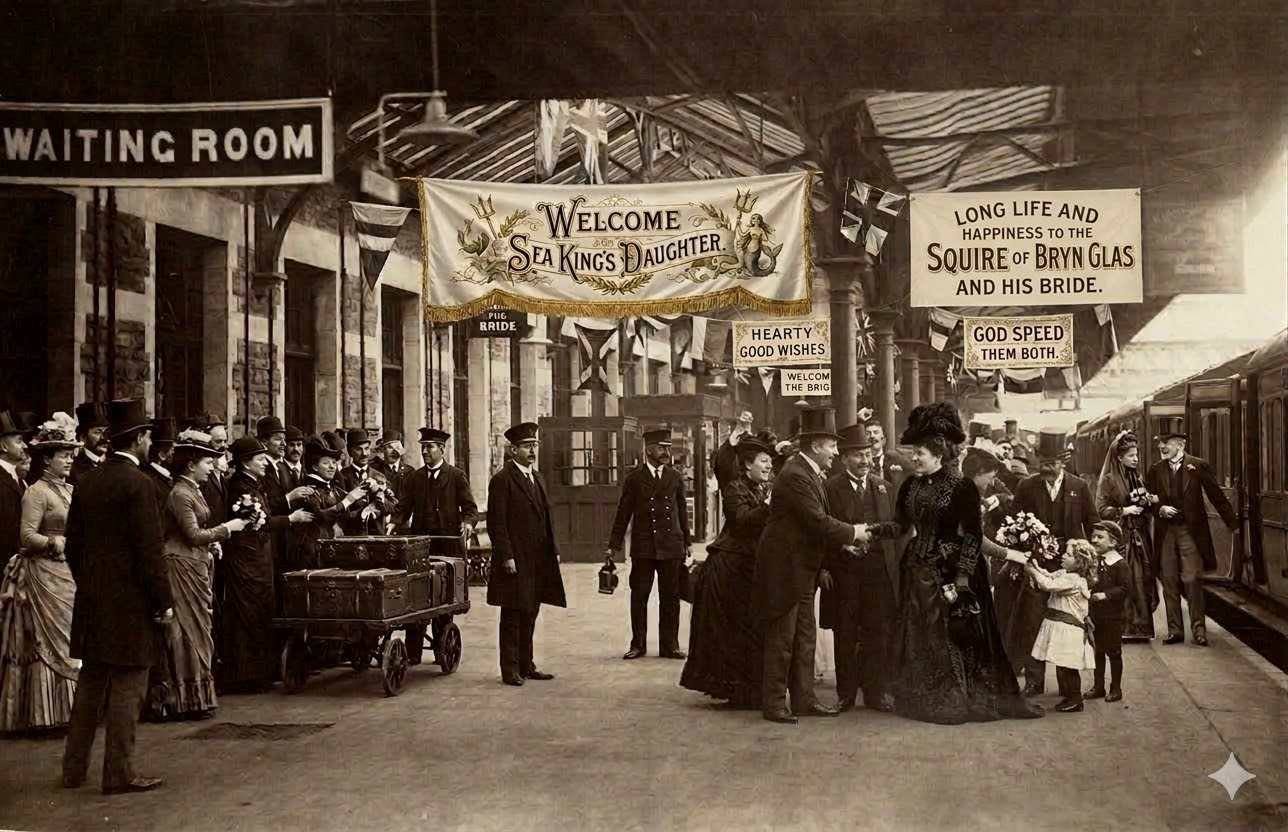
The train carrying the newly-wedded pair was due in Newport at 6.17 p.m., and long before that hour the down platform was crowded by ladies and gentlemen eager to greet Mr. and Mrs. Cordes. The majority of the gentlemen enumerated were accompanied by ladies, and Mrs Grice bore an exquisite bouquet of imposing dimensions, destined for presentation to Mrs Cordes. When the train came in it was pulled up so that the saloon carriage in which Mr and Mrs Cordes were, stopped opposite the first-class waiting room, whither they were conducted amid ringing cheers. There Mrs Cordes was introduced to a few of her husband's friends, and Mrs Grice asked her acceptance of the bouquet on behalf of the assembled ladies.
After a few minutes had been spent in friendly chat, Mr Cordes and his wife were escorted to their carriage, from which the horses had been removed. It was surrounded by Dos Works men, carrying aloft blazing torches, and as the happy couple with their friends, emerged from the station, the bands of the local volunteer corps (combined) played that heart-stirring air "Auld Lang Lyne," but the cheers immense assemblage nearly drowned the music. Mr Cordes bowed his acknowledgments again and again, and, a procession having been formed, a start was made for Bryn Glas.
The carriage, dragged by a host of lusty fellows, proceeded at a good pace, and on the arrival at the mansion the following address was presented on behalf of the inhabitants of Malpas by Mr. L. A. Homfray:—"To Thomas Cordes, Esq. and Mrs. Cordes, Brynglas, Newport, Mon. — We the inhabitants of the parish of Malpas, congratulate you on your marriage, and wish you a most hearty 'welcome home.' May every happiness attend you and may you reside long in the parish where you Mr. Cordes, have lived so many years. We trust we may have the pleasure at a very early date presenting you with some small token of the regard esteem felt for you, Mr. Cordes, in Malpas, and we trust that you and Mrs Cordes may live for many years. — October 2nd, 1884.
In reply Mr. Cordes said he was glad to find himself amongst his neighbours once more, and begged to thank them for the hearty reception they had given Mrs Cordes and himself. He had heard there was to be reception, but it was tenfold greater than he had expected. He trusted that they would have many opportunities of seeing his old friends, and he was sure his wife would be glad to make their acquaintance. (Loud and repeated cheers.) The procession then returned to Newport and after the National Anthem had been played, broke up. A number of handsome gifts from the Conservatives of the town, the Dos Works employees, &c, will shortly be presented to Mrs Cordes.
— Monmouthshire Merlin, 3rd October, 1884



Member discussion