

Welcome to another issue of The Newport Cornucopia where we dig through the newspapers archives for interesting news articles and adverts. All articles are posted verbatim and most headlines are original (headlines in quotes are my own).


The Cabmen's Rest
The cabmen's rest in the Great Western Railway Station yard, and which it may be remembered, was erected at the sole cost of Mr. Cordes, MP, some time ago, has since done good service to those whom it was intended to benefit.
Cabmen wishing to use the Rest pay a penny day, and in return for this they have the shelter afforded by the structure, use of hot water for making tea and coffee, facilities for cooking a chop or steak, and a supply of water for their horses.
Some of the cabmen have left, and now wish to re-join without paying up arrears. This would be in contravention to the ninth rule and on Tuesday evening a meeting of the proprietors and drivers was held at the Rest to consider the matter, Mr. Perrott in the chair. After discussion, it was agreed to adhere to the rule.
— Monmouthshire Merlin, 8th June, 1877
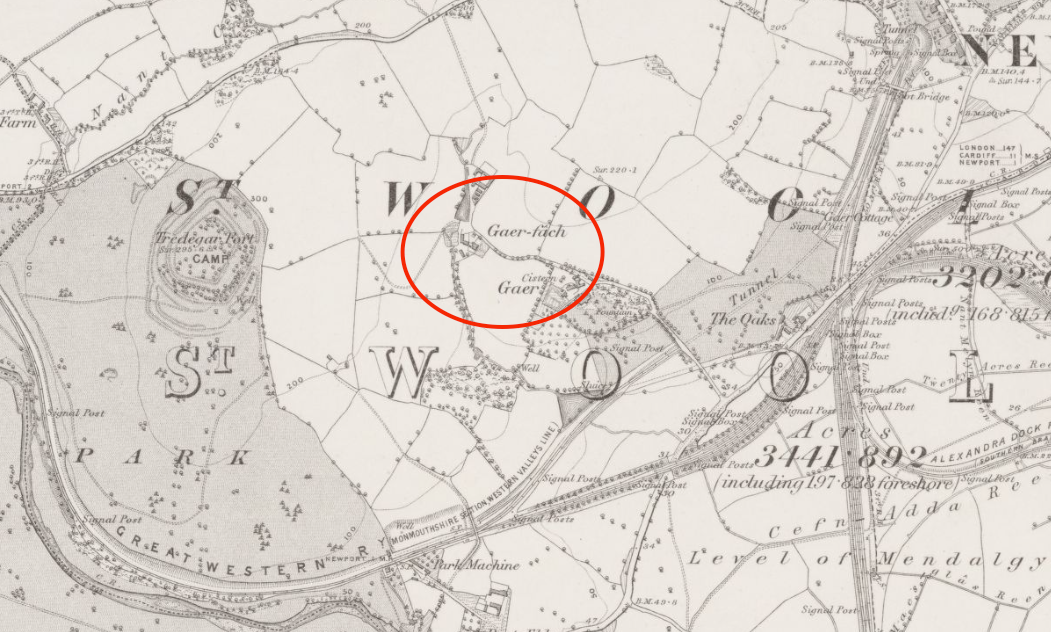
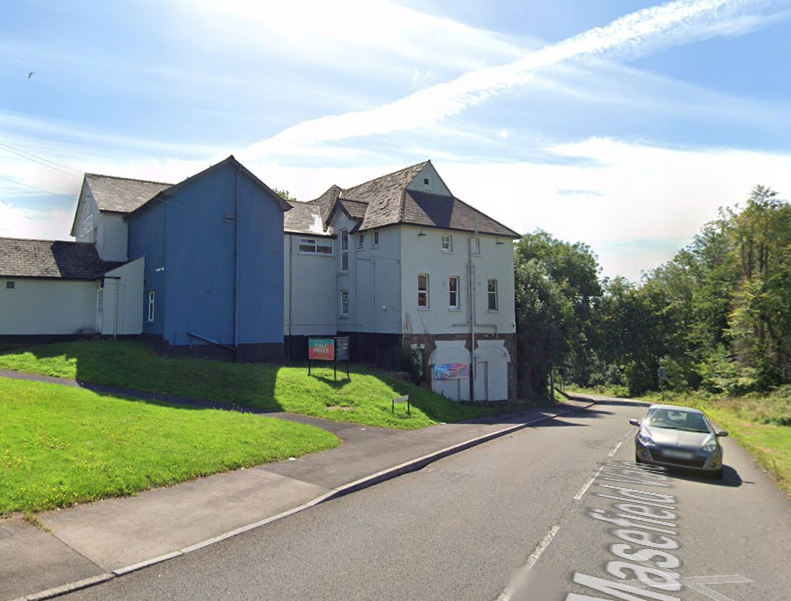
'First Annual Sale at Gaer Fach Farm'
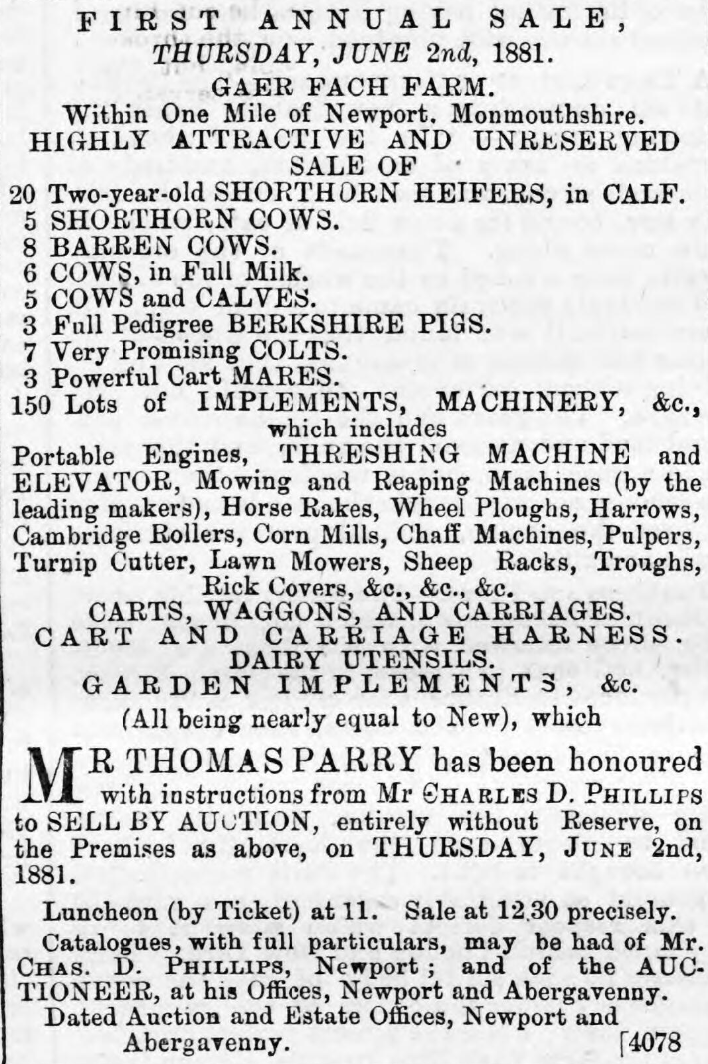
An advert for the first annual sale at Gaer Fach Farm showing that it must have been a farm of some size. The following year the sale had even more animals for sale including 50 cows, 140 lambs and 40 pigs.
'House for Sale in Maindee'
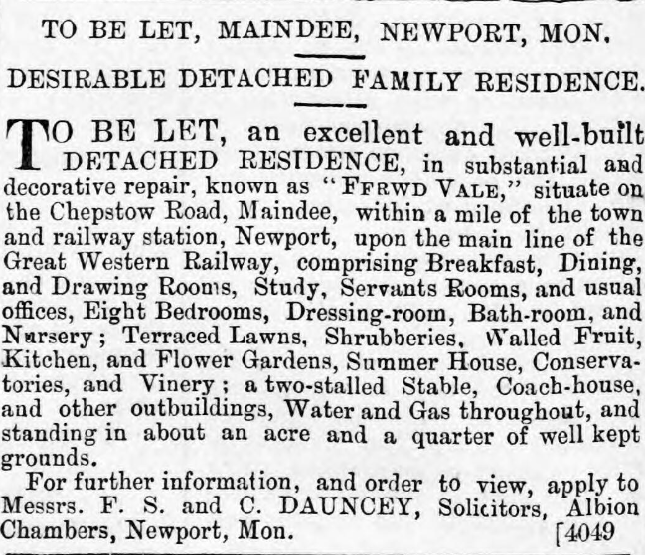
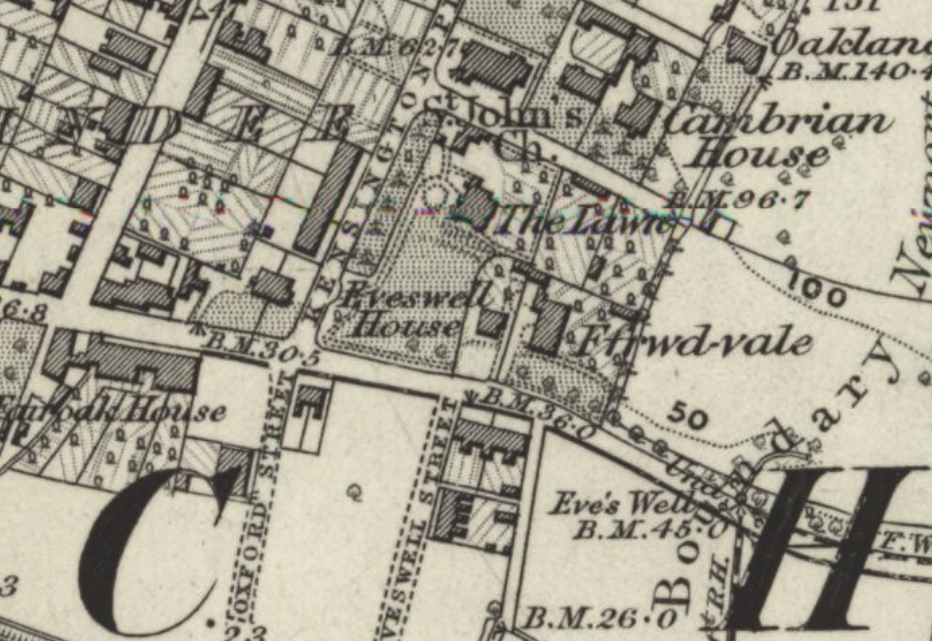
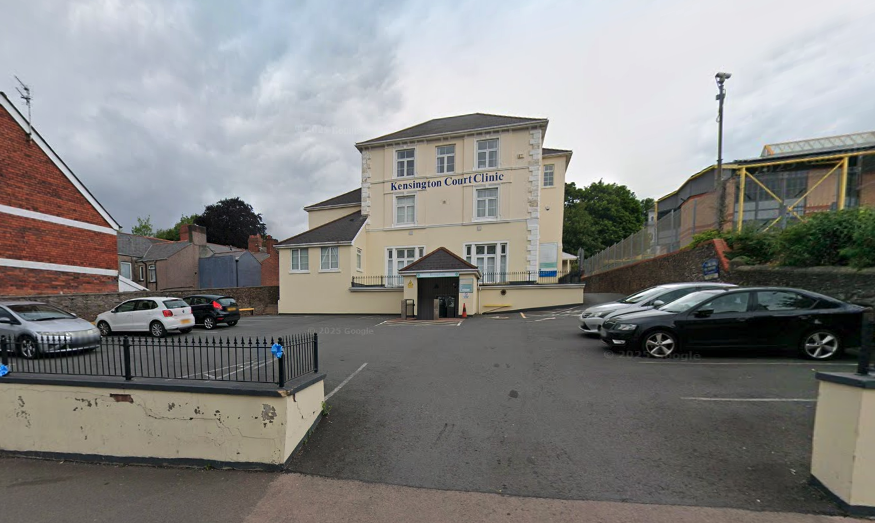
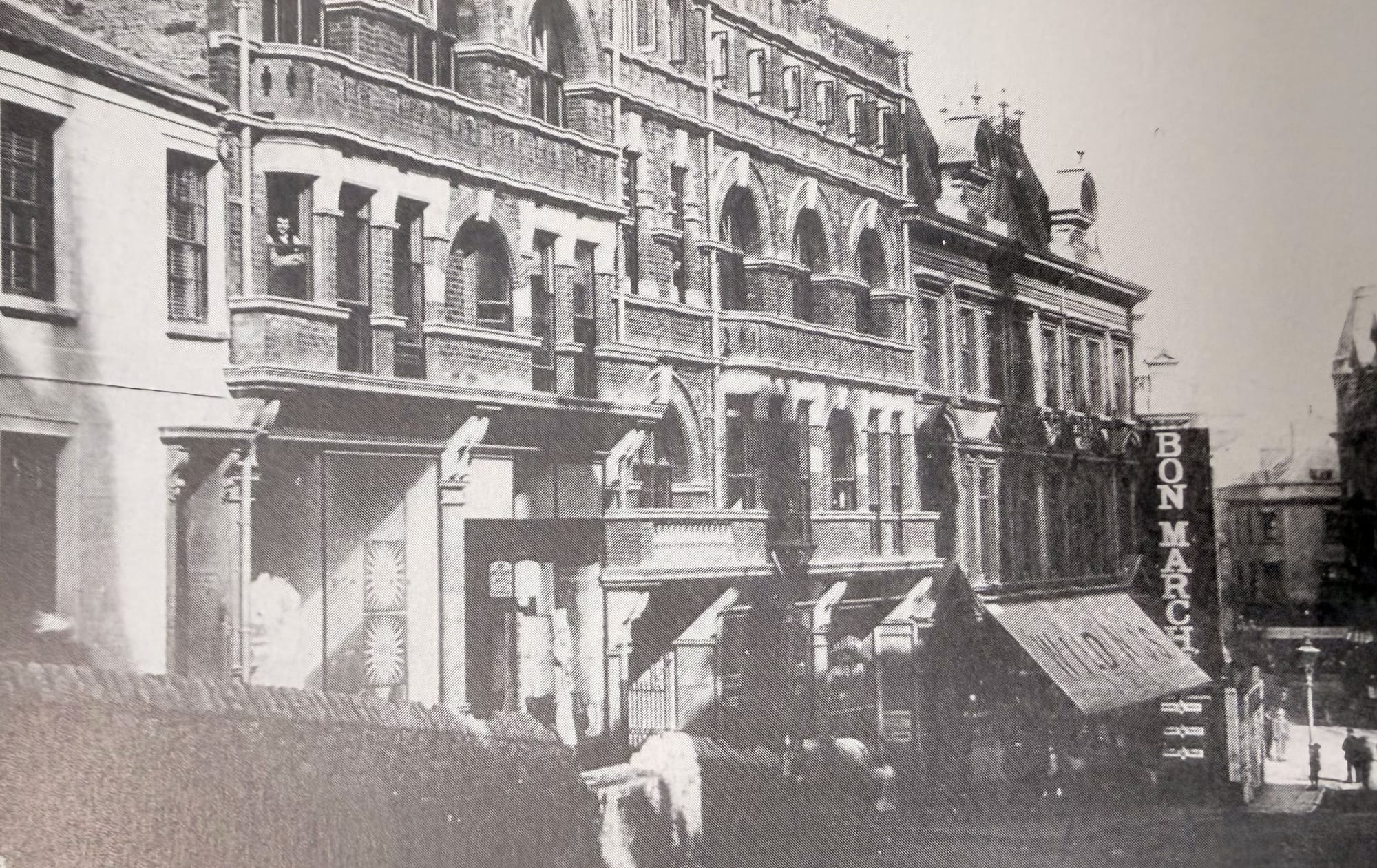
Ffwrd Vale is located next to the present day Eveswell school and is occupied by the Kensington Court Clinic. The map below surveyed the same time as the advert shows the lawn and gardens surrounding the large house.
Madame Sainton Dolby
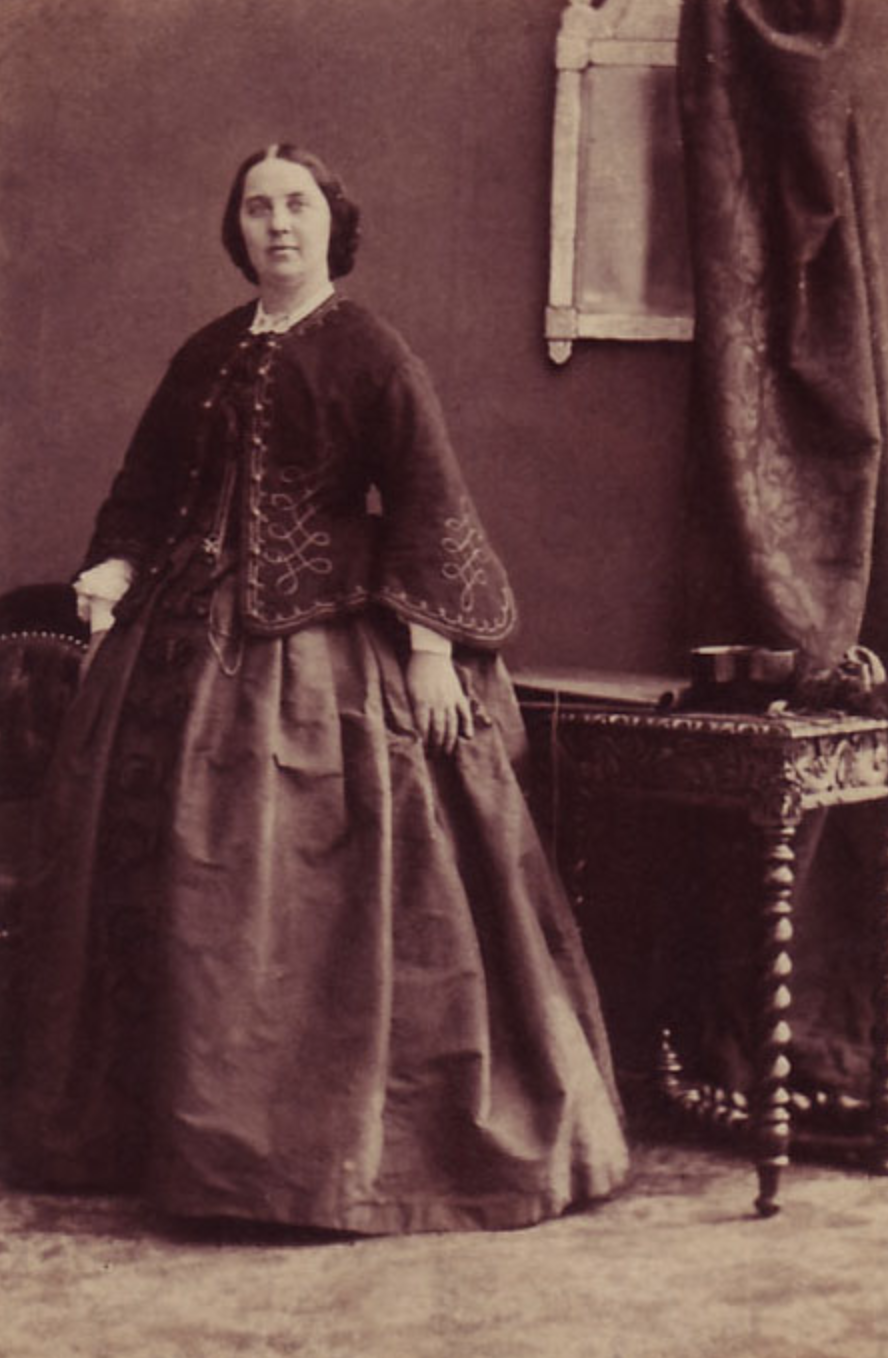
Madame Sainton Dolby (full name Charlotte Helen Sainton-Dolby) was an English contralto, singing teacher and composer born in 1821. She was a principal soloist in the first English performance of Bach's St Matthew Passion, directed by William Sterndale Bennett (a road in Alway is named after him). She retired shortly after performing in Newport in 1870 and then became a vocal teacher.
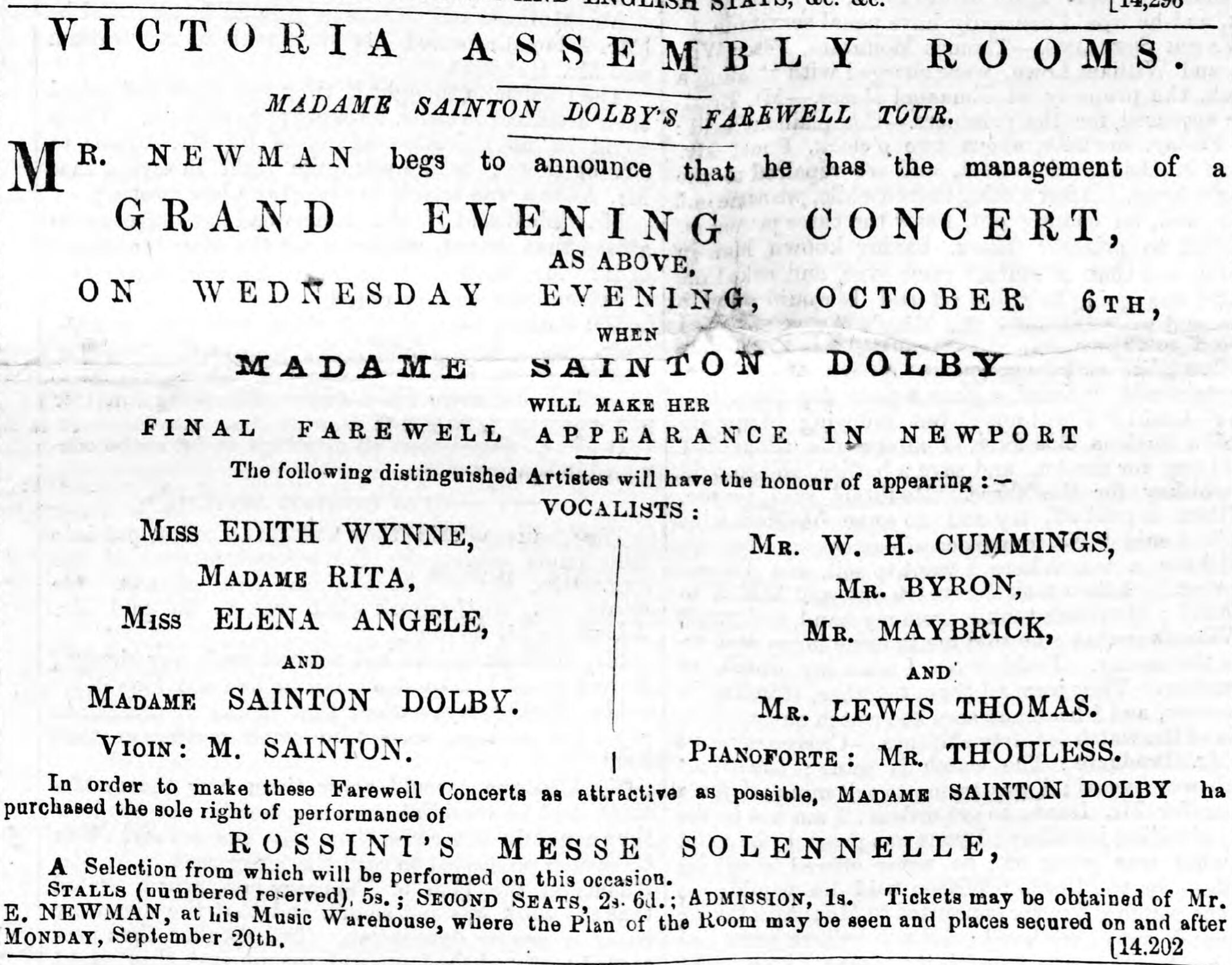
From the Monmouthshire Merlin the same day that the advert was published:-
The proposed retirement of Madame Sainton Dolby from the Concert Room is an event which the musical public will generally deplore. That the fair singer should wish for more repose than her present position enables her to enjoy can be easily understood. But the question naturally arises, "who can fill her place?"
But great as her claims on public gratitude may be, for the hours of delight they have enjoyed in listening to her exquisite rendering of Home Ballads, the boon of her example in private life is not inferior. The "fierce light which beats about a throne" is scarcely less fierce around the domestic hearths of singers; and it should be one of the greatest triumphs to Madame Sainton in her retirement, to know that the public have always borne witness to the purity of her life.
Her name, as Miss Dolby, was a household word wherever music was venerated and as Madame Sainton she has gained fresh popularity and esteem. True to the last, we perceive that she brings forward at her farewell concerts, the most interesting musical work the present age has produced—the Messe Solennelle of Rossini. Amateurs of music and admirers of intrinsic private worth will, we confidently trust, combine to pay an appropriate tribute to the merit of both author and exponent of the work.
— Monmouthshire Merlin, 2nd October, 1869

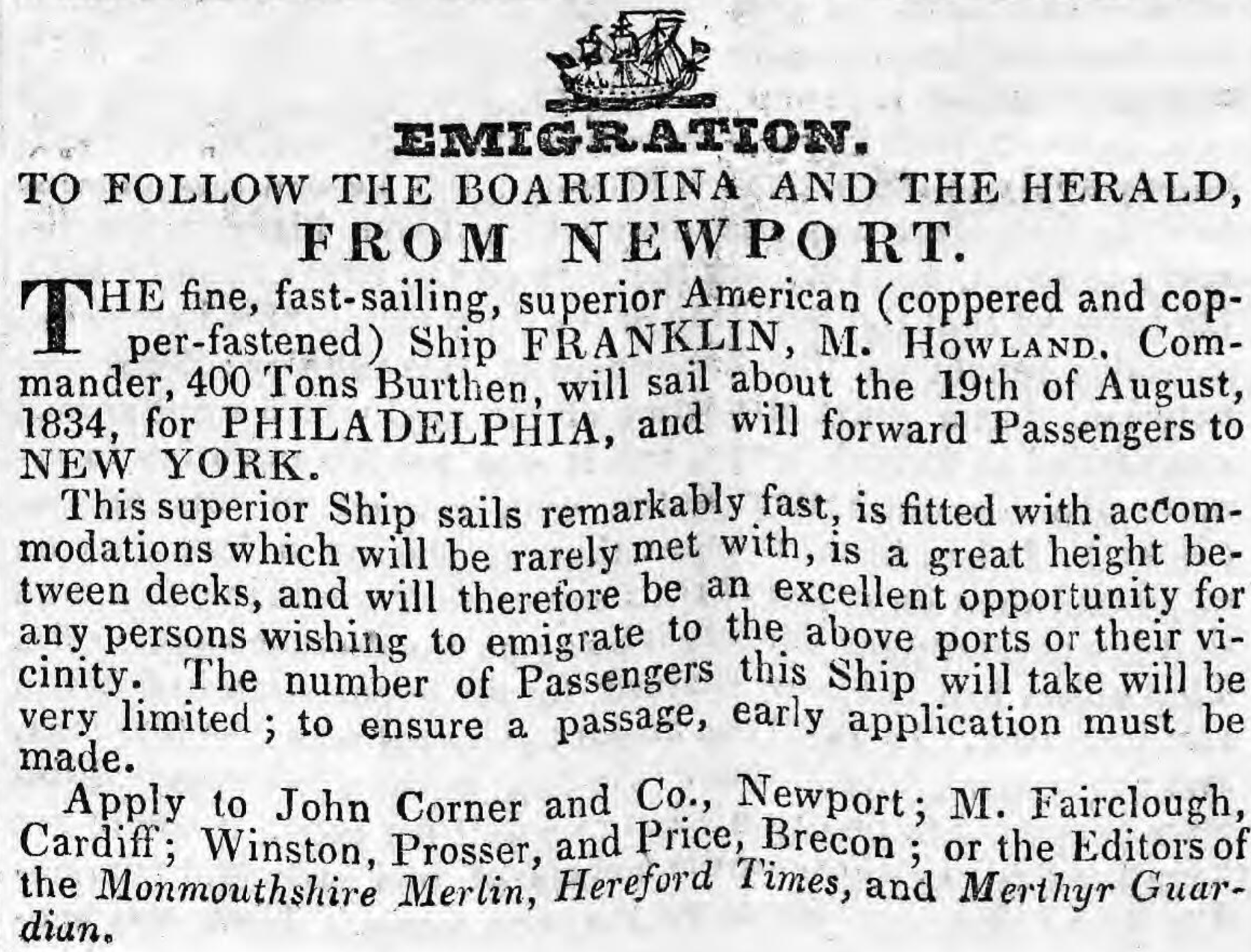
Emigrating to Philadelphia
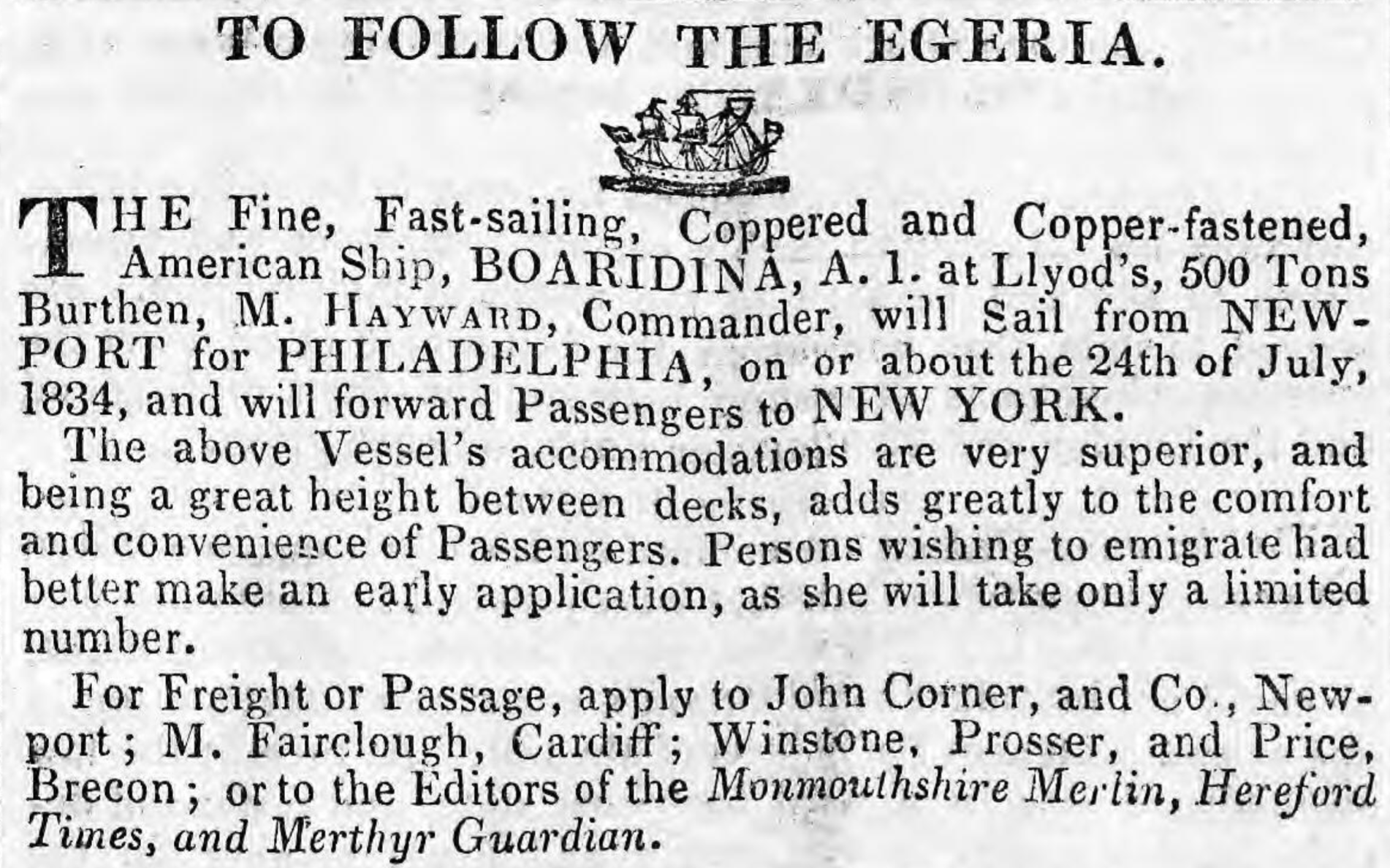
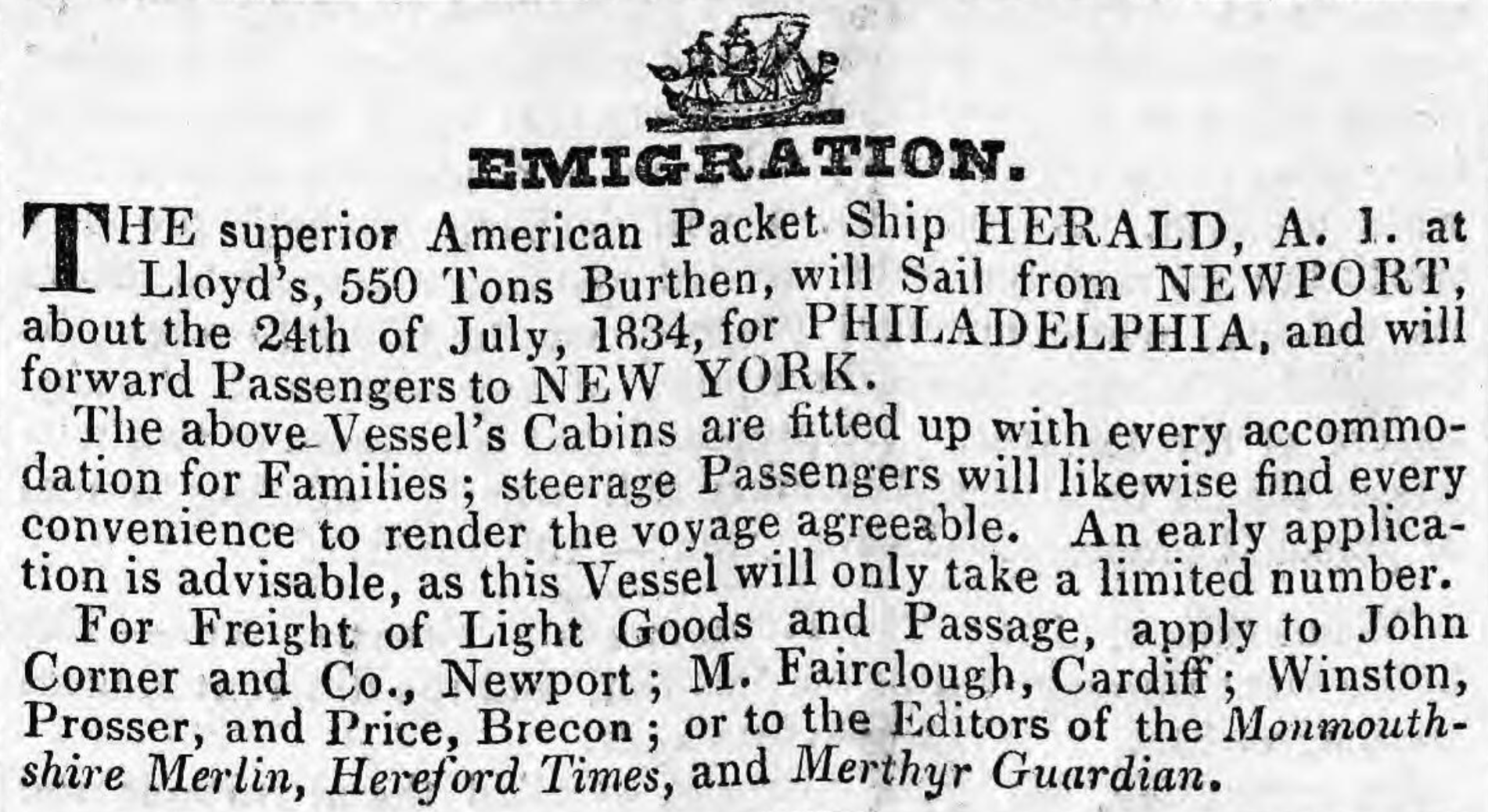
Over the period of a month in 1834, three separate ships set sale from Newport for Philadelphia.

Playing Cat
Five boys, named Francis Garrett, John Crane, Michael Hart, Jeremiah Spillard, and Thomas Hodgkiss were charged with playing a game called "Cat," in Dock-street. P.C. May said that the boys continually played this game to the annoyance of the inhabitants of Dock-street, and on Thursday last, witness went there, saw them, and afterwards summoned them. William Gibbins, a young man employed at Mr. Firbank's office, said that boys playing this game and throwing stones, were a continual annoyance to the people living in the neighbourhood. Ordered to pay a fine of Is. each, and cautioned not to play in the streets again.
— Monmouthshire Merlin, 15th February, 1878
Disturbance in Quiet Woman's Row
Mary Ann Welsh was summoned for being disorderly in Quiet Woman's-row, and breaking five panes of glass in a window, the property of Edward Larkin, on Tuesday. P.C. Morgan hearing a row in the place named, went there and saw the defendant behaving in a very disorderly manner. Edward Larkin stated that on Tuesday after he returned home the defendant came up with a stone in her hand, and told witness that if his wife was there instead of him she would hit her brains out. She then broke the window, and subsequently struck his wife.
The magistrates' clerk asked why the place was called Quiet Woman's-row, and P.S. Franklin stated there was formerly a beer house there called the Quiet Woman. On the sign was a figure of a woman with her head off, and the name was taken from that. The Bench fined defendant 20s., and 5s. for the damage done, or a month.
— Monmouthshire Merlin, 13th May, 1881
Stealing a Watch
Thomas Stacey, a tramp, was charged witbi stealing a watch, the property of Joseph Rondall,. Union-court. Mrs. Rondall: was hanging out some clothes, when prisoner, who came to the house to beg, walked in and took the watch from the mantelpiece, He now said he was sorry. The Chairman asked him how he got his living, and he replied "I don't know months!" Six months hard labour.
— Monmouthshire Merlin, 1st June, 1877
'Man With The Itch'
Edward D. Higgs, a respectably attired man, was charged with wilfully breaking a pane of glass, in the shop of William Evans, grocer, Commercial-street. P.S. Pyne said he was standing on the Town Hall steps, on Saturday last, when prisoner accosted him, and asked if there was a lock-up there. The sergeant told him there was, and at the same time asking him what be wanted to know for.
He replied that he wanted a month's imprisonment, as he had a complaint called the itch, and that if he could get a month in prison he would get cured all right.
He had not done anything yet, but he intended to do something on the sly. The sergeant cautioned him, and told him he had better go to the old barn—Union Hospital on Stow Hill—but he said that would do him no good, but if he had a month in prison be would be all right. He then left the sergeant, and proceeded towards the shop of Mr. Evans and took a rule out of his pocket, and deliberately broke a pane of glass.
Several of the assistants ran out, and when asked who it was, prisoner said, "Yes, it was me, and if its necessary, I will break two or three more." He was then taken into custody. When asked if be had any questions to ask the witness, he said he had not, and what the sergeant had said was quite right.
Mr. Lyne said it would be a pity to disappoint the prisoner of his month, and he would have more, viz., six weeks' imprisonment with hard labour.
Prisoner: Thank you, sir, I am very much obliged.
— Monmouthshire Merlin, 5th November, 1864
Bicycle Contest
The first run between the Newport and Cardiff Bicycle Clubs took place on Saturday, and proved to be an unqualified success. Eighteen of the Cardiff club, with their captain (Mr. Hutchins) and twelve of Newport, under Mr. T. L. Evans (the secretary), met at Castletown, and rode into Newport, side by side.
After proceeding to Maindee and Liswerry, they returned to Messrs Ewins and Son's Restaurant, Commercial-street, where the Newport club entertained their Cardiff friends to a knife-and-fork tea.
A cordial vote of thanks was proposed by the Captaio, and seconded by the Secretary of the Cardiff club, to the Newportonians for their hospitality, and suitably acknowledged. A start was shortly afterwards made for home, a number of the Newport men escorting their visitors as far as Castletown.
— Monmouthshire Merlin, 13th May, 1881
The Old Barn
Mr. Bolt reported that two apartments in the Old Barn were now ready for the reception of small-pox patients.
Mr. Gething said the Ex-Mayor had asked him whether they were ready to take in any patients, Mr. Lyne said that was opening the door rather wider than, this Board, intended.
The Old Barn was for the accommodation of paupers only, and if cases other than paupers were sent in, it ought to be on the distinct understanding that they should entail no loss upon the Guardians.
Mr. Gething said that was understood.
The Clerk said they could not proceed in this matter until they had received, the sanction of the Local Government Board to purchase this building, and then they would have no power to remove to the Old Barn any persons excepting paupers.
Mr. Woodruff wanted to know what they should have to do if another such case as that of the black man came before them?
Mr. Lyne said that was a pauper case, and if any such cases now occurred, this Old Barn was intended as a provision for them, so that they should not be left to die in the streets, but the Old Barn was not intended for all classes of patients.
Mr. Lewis, the medical officer, said he had attended 42 pauper cases of small-pox this year, and eight of them had proved fatal; and he had found in houses where there resided persons who had not been vaccinated they caught the contagion, whilst those who had been vaccinated escaped.
Mr. Bolt thought that was sufficient to show the necessity for providing a proper place where such cases could be isolated.
The subject was then allowed to drop, and there was no other public business.
— Monmouthshire Merlin, 24th November, 1871
The "Old Barn" Nuisance
(To the Editor of the Monmouthshire Merlin.)
SIR,—Allow me through your columns to call attention to a most disgusting nuisance caused for some nights past by the burning of filthy straw or other rubbish at the "Old Barn," on Stow-hill.
On Tuesday night, in particular, the stench was so bad that the persons living in the neighbourhood were made seriously ill.
My house is unfortunately very near this "Old Barn," and every room in the house was filled with a suffocating and disgusting smell. Whereas our Inspector of Nuisances, that he does not interfere to prevent such improper practices? If such offensive practices were carried on in a private house heavy penalties would be inflicted. Why, then, should the parish officials be allowed to annoy the public in this way any more than private individuals?
Hoping that a stop will be put to such offensive practices,
I am, sir, yours obediently,
E. R.
— Monmouthshire Merlin, 25th July, 1868
The "Old Barn" and the Workhouse
[TO THE EDITOR OF THE MONMOUTHSHIRE MERLIN.]
SIR,—My attention has been directed to a correspondence in our local papers resulting from some strictures made by Mr. Knapp in the Town Council, upon the part taken in political questions by the ministers of this town.
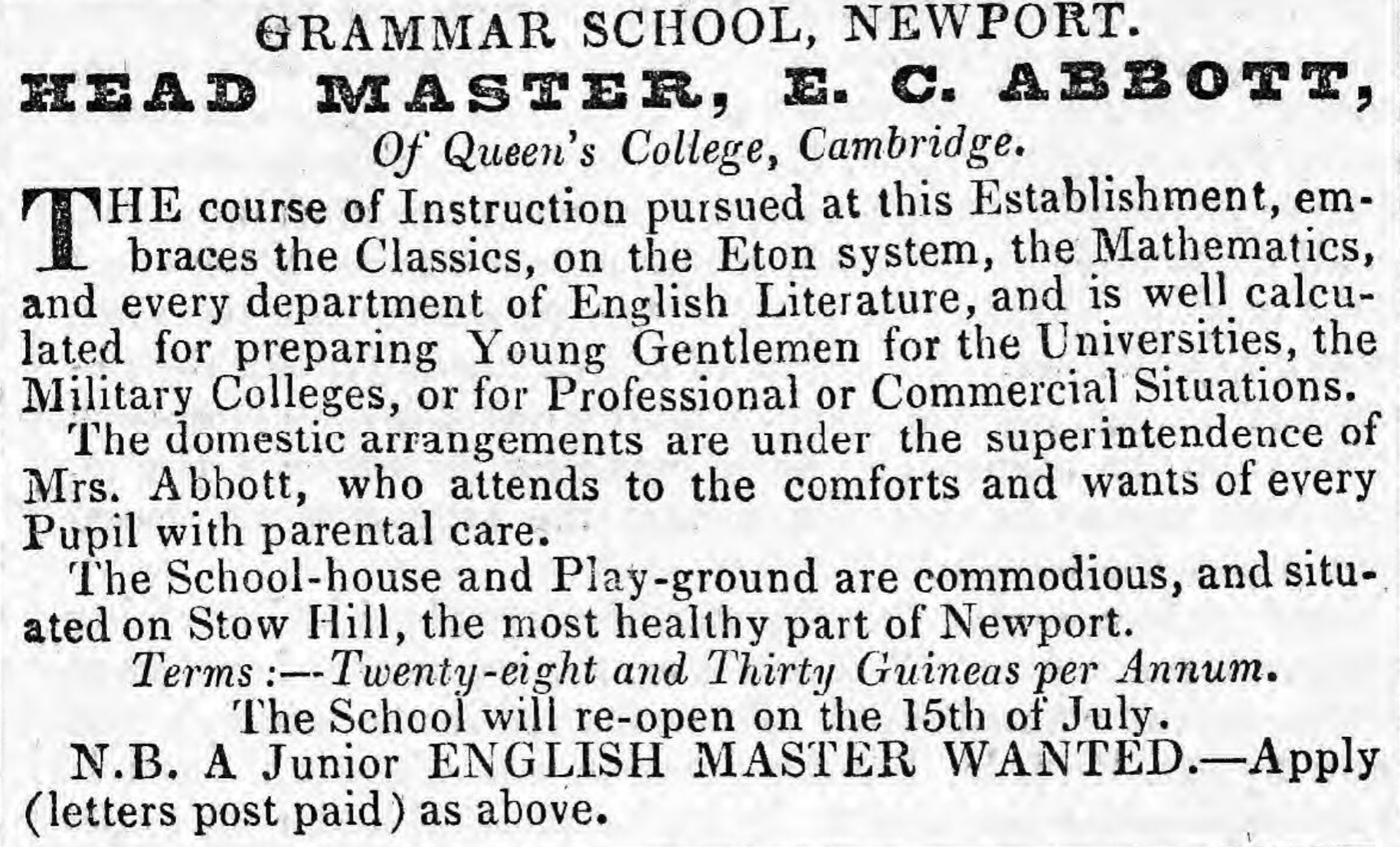
I have no intention of engaging in any controversy upon that subject, but as reference has been made in that correspondence to the propriety of ministers visiting the Union Infirmary and Hospital, a favourable opportunity seems to occur of calling public attention to a few facts which have come under my notice. These facts are such as to form a complete answer to the implied charge against the ministers of Newport, that they neglect a certain spiritual duty for the sake of political controversy. In the first place—About two years ago a benevolent lady of our town, in conjunction with some friends, was, and had been for some time, in the habit of visiting the "Old Barn" for the purpose of gaining access to the minds of the miserable girls whom vice and disease had consigned to the tender mercies of the Union. This lady was accustomed to read the Scriptures and distribute suitable tracts and religious books in the hospital. About the time which I have mentioned her husband received a polite note from one of the relieving officers, to the effect, that he was sorry to inform him that, the Board having passed a resolution that no one should be permitted to visit the hospital but the Chaplain, the visits of his wife and her friends must be discontinued.
These facts came to my notice some time since, when I was endeavouring to obtain access for visitors for a similar purpose.
Since that time two gentlemen of my acquaintance—men of true Christian benevolence—pail a visit to the "barn" to see a sick patient in whom they were personally interested. They were somewhat astonished to notice the destitution of the patients with respect to copies of the Scriptures and religious books; an,1 on returning home one of the gentlemen sent up a dozen copies of the New Testament. The next time he went to see the sick inmate he carried with him a packet of religious tracts, but on attempting to distribute them was told by the nurse that the Chaplain had left positive orders that no tracts or books should be received except through him.
So far with respect to the Hospital. You can judge, sir, how far the ministers are to blame for not visiting that abode of disease and wretchedness.
Now for one more fact, to my mind the most extraordinary and disgraceful of all:-
There exists in Newport a branch of the Society for teaching the blind to read; Mr. Charles, a well-known and much-respected inhabitant of the town, is the teacher. His duty is to visit all the blind persons he can find, and either to become their teacher, by the use of the raised letter system, or to read to them or if they are already able to read the blind alphabet, to supply them with books. I, as the treasurer of that Society, having ascertained that there were eight blind persons in the Union, three of whom are under thirty years of age, and five under forty, applied to the Board of Guardians for permission to send Mr Charles to teach these persons if they were willing to learn. Here I may observe, in passing, that at all the towns of which I have enquired, where the agents of this Society are at work they are freely admitted and warmly welcomed into the different Unions. The only response I obtained to my first letter was a polite acknowledgment.
Of course, I wrote again, and after some little delay received a reply to the effect that the Board could not permit the visits of unauthorised persons, and that therefore my request must be refused. I do not write this merely to exonerate ministers from a charge which, at the worst, no more affects them than any private Christian I write hoping that you, Sir, and the public generally, will take some further notice of a state of things which I think preposterously tyrannical and unkind. That the sick, the blind, and the wretched should thus be fenced and hedged round from any charitable effort to ameliorate their condition, appears to me shameful and unjust.
I am, Sir, Yours respectfully, P.W. Darnton
May 10th, 1866
— Monmouthshire Merlin, 12th May, 1866
'Letter from an Old Barn Nurse'
To the Board of Guardians of the Newport Union
Gentlemen,—Your advice on the subject. Mr. Knapp stated in your columns a few weeks ago the Old Barn, as he called the hospital, was in a filthy state I am prepared to report that Mr. Knapp has not visited the hospital during the last three years and nine months, that I nave been nurse at the hospital. Mr. Knapp visited the hospital on Thursday last the twenty third day of Aug for the first time. Why should the gentlemen and myself be blamed wrongfully, let any lady or gentlemen come forward to prove during, which time I have been nurse at the hospital the place have not been keep in good order and clean, the patients under my care have been very thankful that they had the old barn to come to.
I am Your obdt Servant,
JANE THORNE, Nurse
— Monmouthshire Merlin, 1st September, 1866



Member discussion