

Welcome to another issue of The Newport Cornucopia where we dig through the newspapers archives for interesting news articles and adverts. All articles are posted verbatim and most headlines are original (headlines in quotes are my own).

Out of Door Amusements
A singular, expert, and intrepid genius, of the Madame Sacqui school, who some years ago astonished the London world, at Vauxhall Gardens, has been, this week, gratifying the curiosity of the inhabitants of Newport, by his marvellous feat on the fight rope, in the public street.
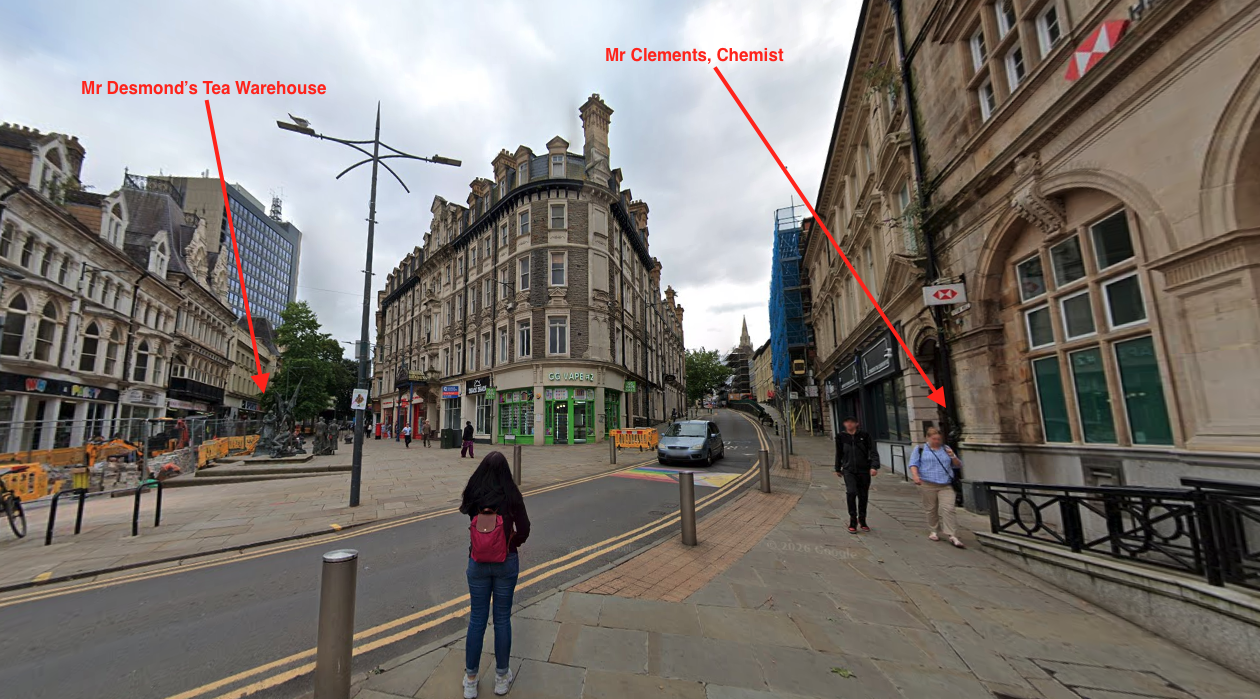
We understand that he absolutely made an excursion from a spot near Mr. Desmond's tea warehouse to the top of the residence of Mr. Clements, chemist, and back again, balancing himself on the cord as cleverly as if on terra firma.
It was certainly a wonderful rope walk. He is about crossing the river on the same narrow footing. The enterprising artist adopts the voluntary system tor remuneration.
— Monmouthshire Merlin, 22 March, 1845
To Connoisseurs of Italian Sculpture
A rare opportunity presents itself to the admirers of the most refined school of sculpture, of viewing two exquisite groups: one after Canova's Graces, and the second from Titian's Venus. They have been consigned to Mr. Desmond, Tea Dealer, 12, Commercial-street, for sale, previously to which they are allowed to be exhibited.
— Monmouthshire Merlin, 19th October, 1844
Closing Shops
It is gratifying to perceive that the drapers and grocers of Newport have published their intention to close their shops at eight o'clock each evening—Saturdays excepted—from Monday next to the first of April, 1845. We hope this kind but just concession by employers, will be rightly estimated by the assistants, who will now find opportunities both of rendering effectual aid, by membership, to the Mechanics Institution, and of improving themselves.
— Monmouthshire Merlin, 19th October, 1844
'How Much Would A Surgeon Be Paid at the Union Hospital?'
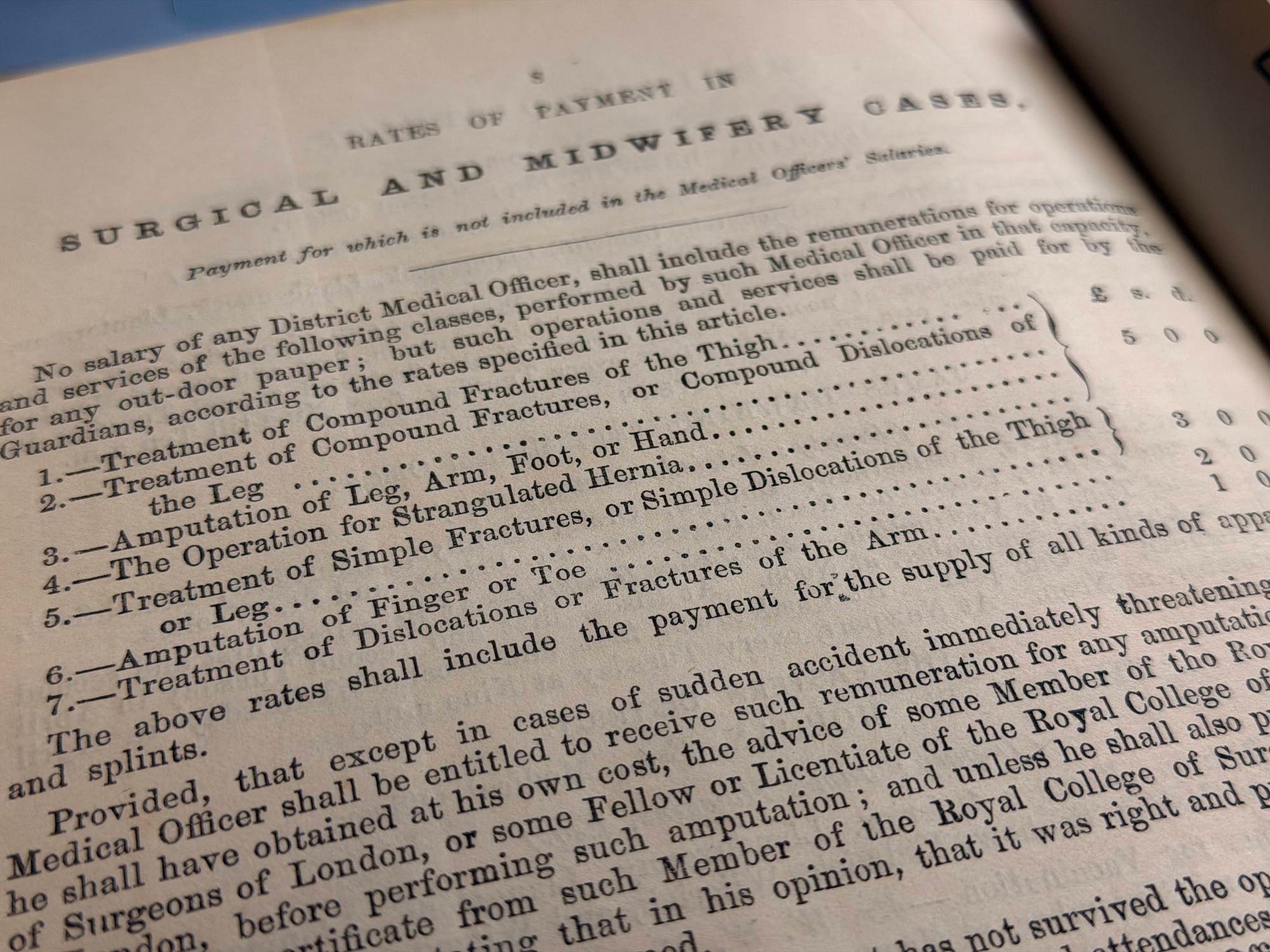
No salary of any District Medical Officer, shall include the remunerations for operations and services of the following classes, performed by such Medical Officer in that capacity, for any out-door pauper; but such operations and services shall be paid for by the Guardians, according to the rates specified in this article.
| £ | s | d | Today's Value | |
|---|---|---|---|---|
| 1. Treatment of Compound Fractures of the Thigh | 5 | 0 | 0 | £530 |
| 2. Treatment of Compound Fractures, or Compound Dislocations of the Leg | 5 | 0 | 0 | £530 |
| 3. Amputation of Leg, Arm, Foot, or Hand | 5 | 0 | 0 | £530 |
| 4. The Operation for Strangulated Hernia | 5 | 0 | 0 | £530 |
| 5. Treatment of Simple Fractures, or Simple Dislocations of the Thigh | 3 | 0 | 0 | £318 |
| 6. Amputation of Finger or Toe | 2 | 0 | 0 | £212 |
| 7. Treatment of Disclocations or Fractures of the Arm | 1 | 0 | 0 | £106 |
The above rates shall include the payment for the supply of all kinds of apparatus and splints.
Provided, that except in the sudden accident immediately threatening life, no Medical Officer shall be entitled to receive such renumeration for any amputation, unless he shall have obtained at his own cost, the advice of some Member of the Royal College of Surgeons of London, or some Fellow or Licentiate of the Royal College of Physicians of London, before performing such amputation; and unless he shall also produce to the Guardians a certificate from such Member of the Royal College of Surgeons, or such Fellow of Licentiate, stating that in his opinion, that it was right and proper that such amputation should be performed.
Provided also, that if any case the patient has not survived the operation more than thiry-six hours, and has not required and received several attendances after the operation by the Medical Officer who has performed the same, such Medical Officer shall be entitled only to one-half of the payments respectively prescribed above.
Provided also, that if several of the Fees specified in Art. 177, become payable with respect to the same person at the same time, and in consequence of the same cause or injury, the Medical Officer shall be entitled only to one of such Fees, and if they be unequal to the highest.
In any Surgical Case not provided for in Art. 177, which has presented peculiar difficulty, or required and received long attendance from the District Medical Officer, the Guardians may make to the said Medical Officer such reasonable extra allowance as they may think fit, and the Commissioners may approve.

An Unruly Apprentice
George Anstice was charged with leaving his master's service, he being an apprentice. Mr. James said Defendant is apprenticed to me. He has been in the habit of leaving without permission. He left my employ yesterday morning. He was very abusive, and refused to work. I ordered him to do so, and he kicked me, and also threw a hammer at my head. Prisoner was so bad that his parents would not interfere in the case.
— Monmouthshire Merlin, 2nd October, 1869
'Affectionate Husband'
Thomas Holmes was fined 2s. 6d., and costs, for assaulting his wife—a delicate-looking young woman, with an infant in her arms. The fellow said lie wouldn't pay—he'd go to prison, but his poor wife (forgiving, loving woman!) procured all the money, and liberated him. What acknowledgment did he make for her kindness? Why the same evening, it is said, he broke her arm! Affectionate husband!
— Monmouthshire Merlin, 6th March, 1847
Mischievous Urchins
Henry Lewis, seven years of age, was charged with hunting a sow to death. The low was the property of Mr. Irwin, of the Tredegar Arms Inn, Bassalleg. On a certain day the sow and five young pigs were turned into Mr. Price's field, and shortly afterwards the boy Lewis and a younger lad, named Davies, chased the sow round the field until she died. The bench was indisposed to send the boy to gaol and would rather leave Mr. Irwin to proceed for the damaged in an action at law. Discharged and ordered to pay 5s. 6d. costs.
— Monmouthshire Merlin, 20th September, 1856
'Naked Boys'
Five boys belonging to the village of Bassalleg were charged with exposing themselves by running about the fields naked, after they had been bathing. They were liable to be imprisoned three months. Each boy was fined 1s 6d.
— Monmouthshire Merlin, 20th September, 1856
'Requesting Dr Sutton'
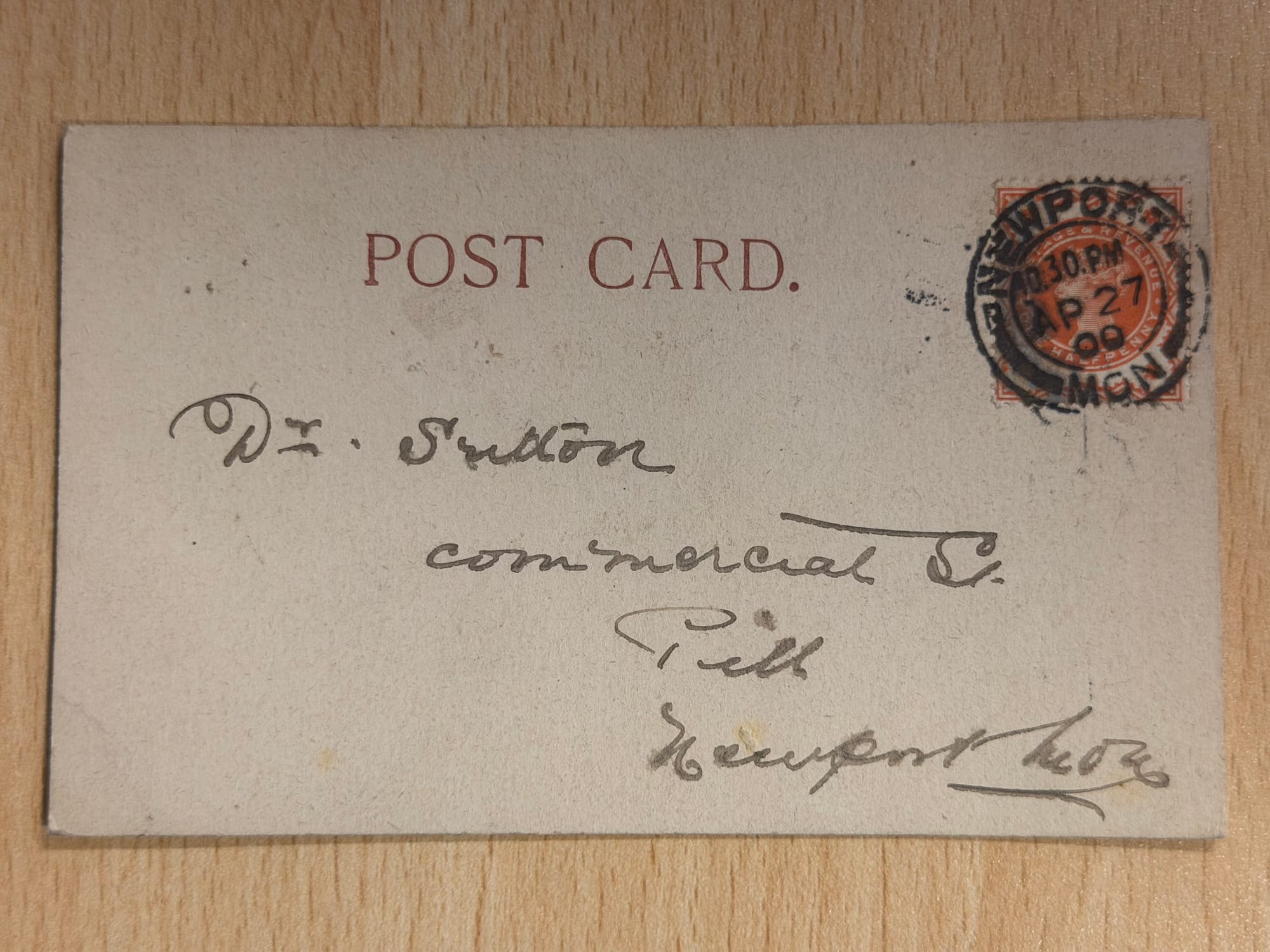
Whilst sorting through an old stamp collection I can across this post card from 27th April, 1900. It was sent from a Mr William Griffiths of 9 Lambert Street to Dr Sutton at 'Commercial Street, Pill'.
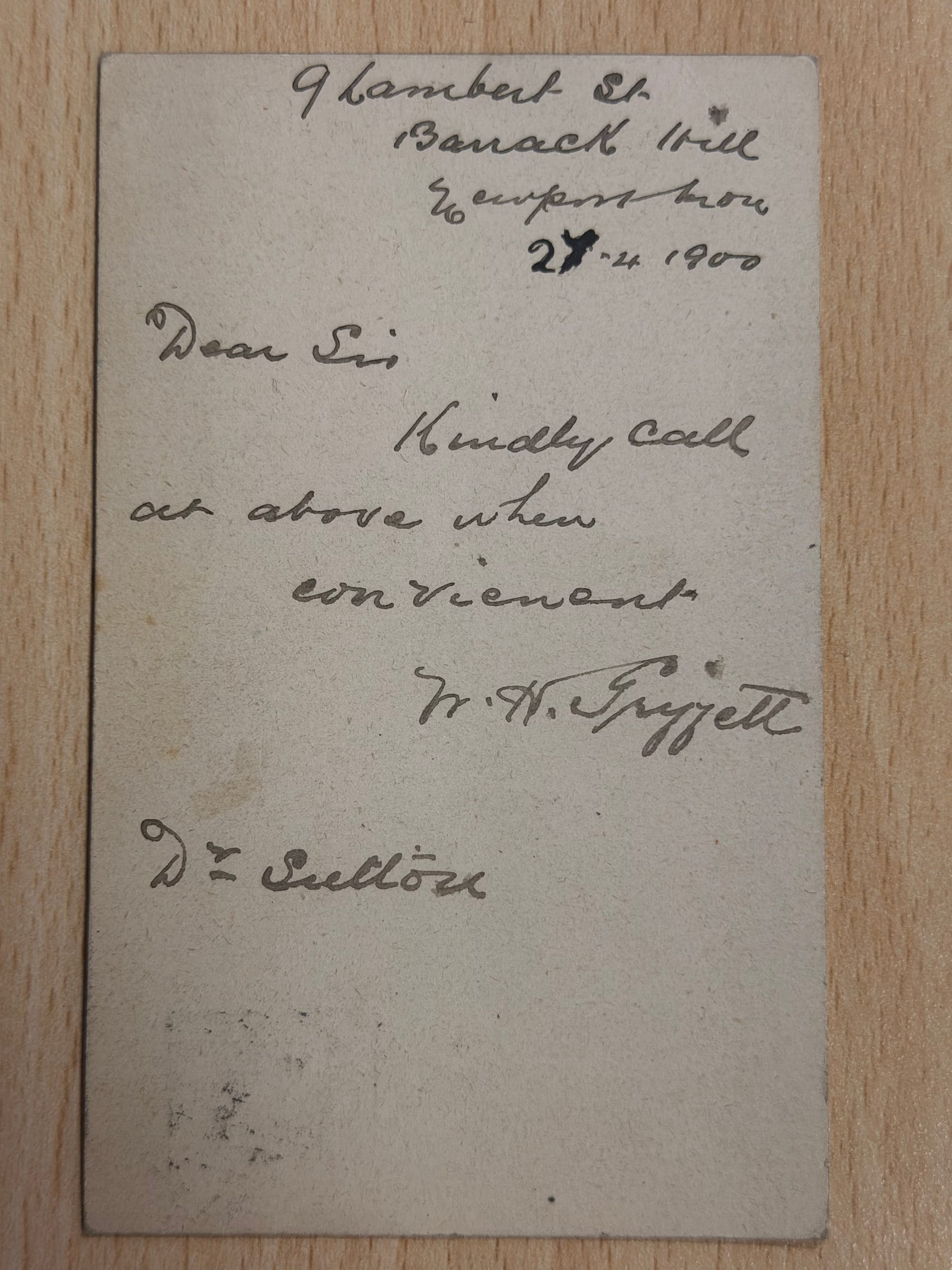
Back then, postmen no doubt knew where professional people like doctors lived and would also have known that he actually lived on Commercial Road, not Commercial Street — 174 Commercial Road to be precise.

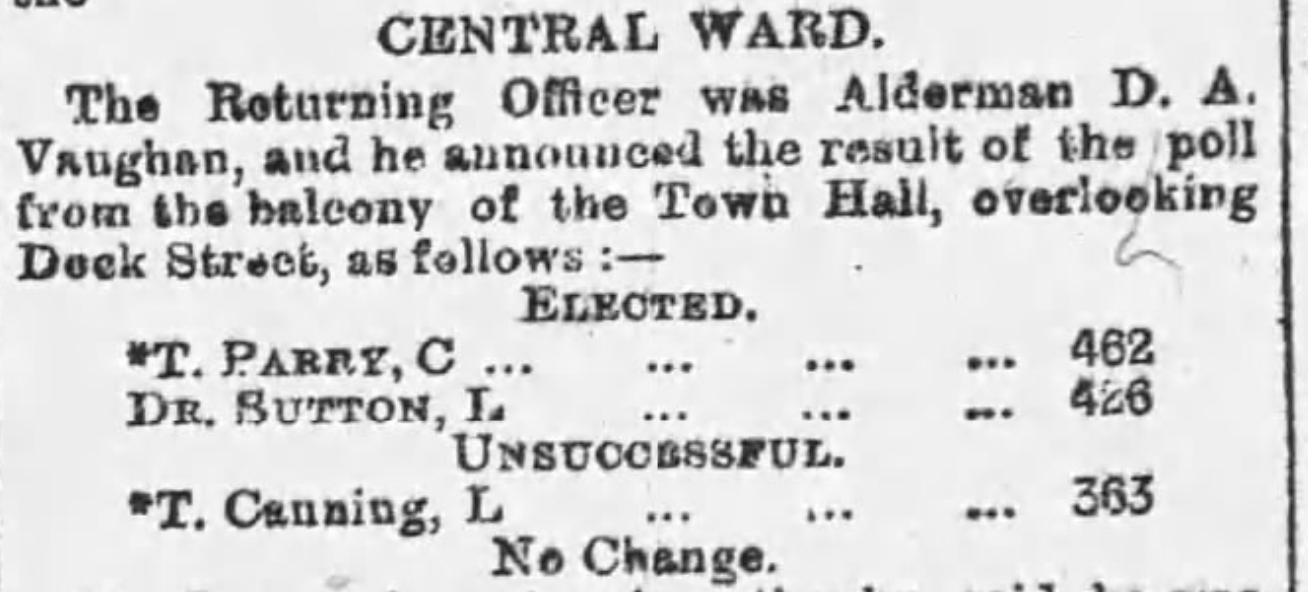
Dr Sutton, a liberal, was elected in 1900 as a councillor in the Central Ward.
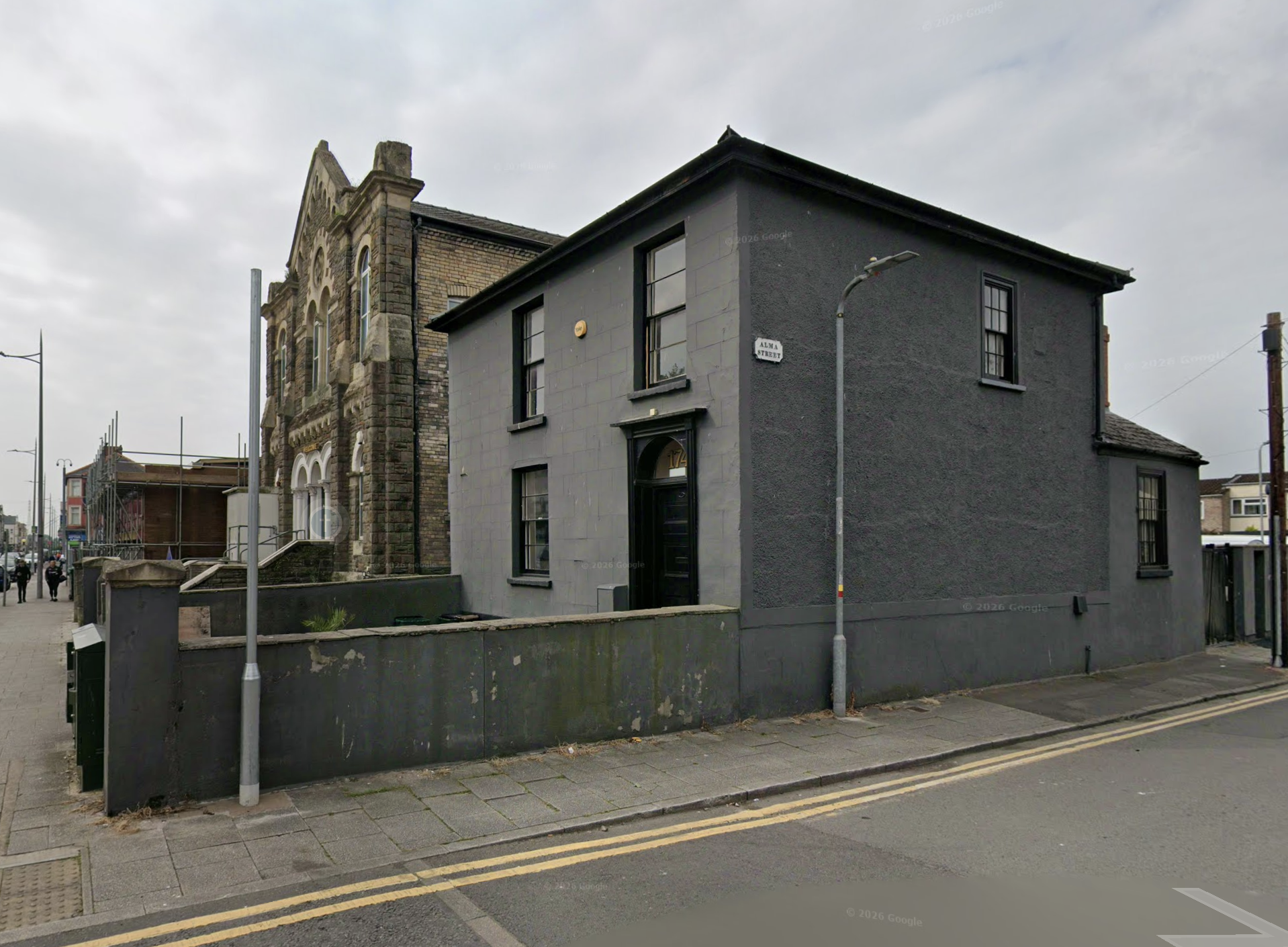
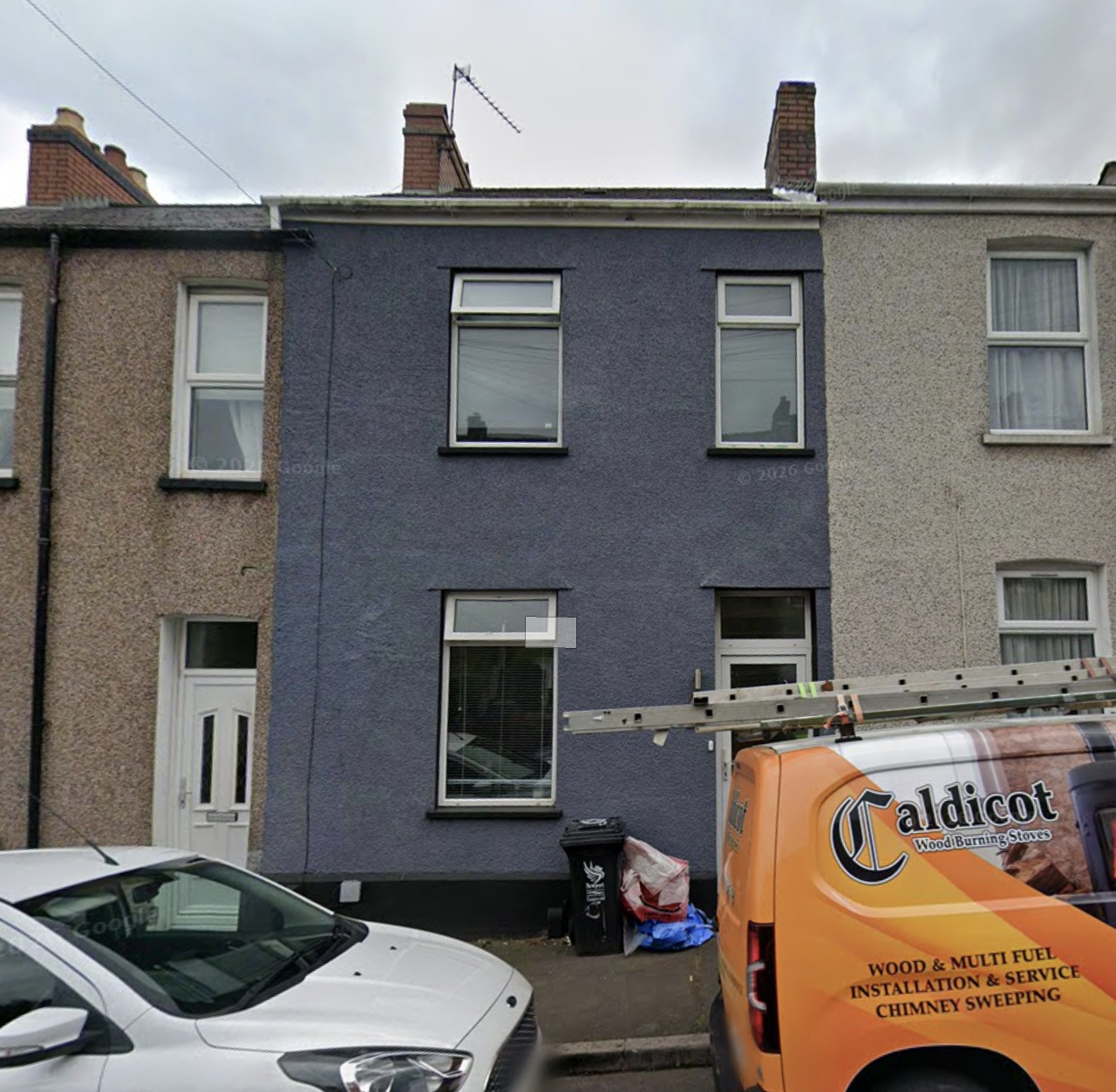
Dr Sutton's house at 174 Commercial Street on the left and William Griffith's house at 9 Lambert Street on the right.
Fire at Rope Walk
On Tuesday evening last, a fire broke out in the flax loft belonging to the rope walk, near Clarence. place, in this town, by which a considerable quantity of flax was consumed.
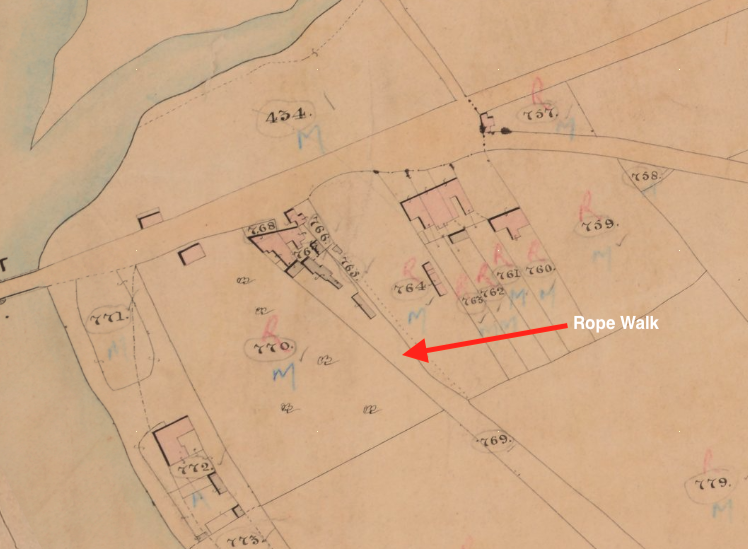
Happily, however, the fire was soon disco. vered and although it was feared that the flames would communicate with the dwelling-house and stable of Mr. Salter, immediately adjoining, the fear was removed by the prompt and vigorous measures used to subdue them, and no serious lass was sustained.
— Monmouthshire Merlin, 22 March, 1845
St Julian's Inn, Caerleon
On Tuesday evening last, a ball took place at this house, when a numerous and highly respectable party congregated together, to pay the well-merited compliment due to the enterprising and youthful Host and hostess, Mr. and Mrs. Godwin. The spread was such as to elicit the unequivocal approbation of the guests. Galopades and quadrilles were the order of the evening and those who love to trip it on the light fantastic toe," were gratified to their hearts' content.
— Monmouthshire Merlin, 20th December, 1845
'The Big House'
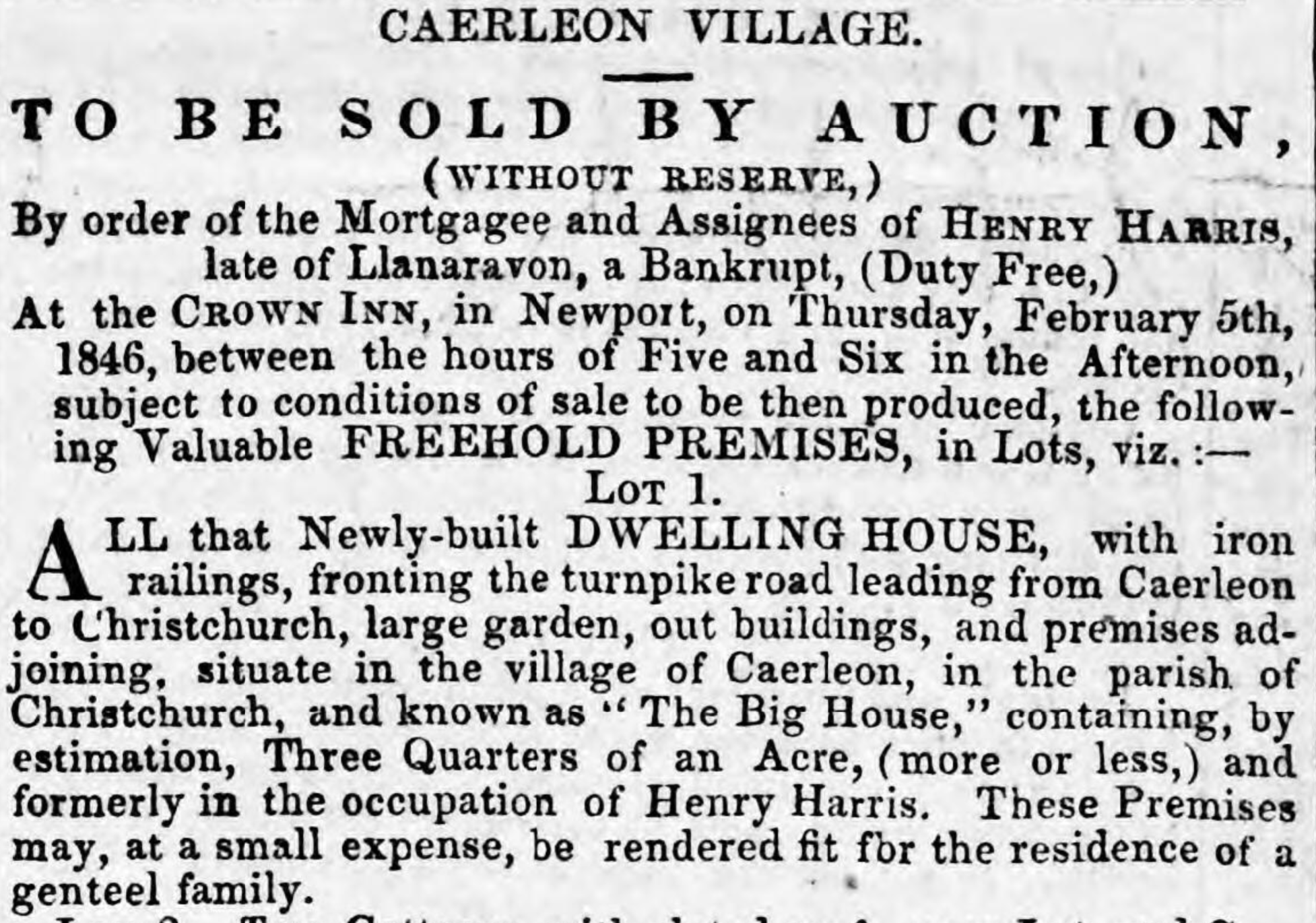
An advert appeared in the Monmouthshire Merlin in the middle of the 1840s (1844-1847) for a property in Caerleon called 'The Big House'. It was described as fronting the Caerleon to Christchurch toll road and having an iron railing in front.
The big house in the photo (The Malt House) existed at the time of the advert and along with the smaller house on the left were the only two houses on that stretch of road. It's certainly a big property so may well be the one mentioned in the advert.
Whilst researching the house I did come across a mention of another Big House in Newport — the Union hospital on Stow Hill.
SIR, In your paper of the 26th of June, I observed that there had been a saving to the Poor-rate in the Central Division of £1,100 in the twelve months. As a rate-payer, may I be allowed to ask, through you, where the Newport Ratepayers' Association is, that it has not bestirred itself to know what has been saved in the other districts and also what has been the cause of this great saving? How has it been brought about? Not, I hope, by punishing the really poor needy? Has it been brought about by the inquiry at the Big House on the hill, respecting the supply of sundry commodities not sanctioned by the Poor Law Board (and which, I trust, will soon resume its labours)? or will it, Mr. Editor, be necessary to form a deputation to wait on the Relieving Officers, to ask them the favour of furnishing us poor rate-payers with some further information how this saving has been brought about—as the trade of the town has not materially increased—and we well know that the last winter was a very severe one, on account of so many navvies being out of employment?
Yours truly,
A RATEPAYER.
— Monmouthshire Merlin, 31st July 1869
The Streets
It is the common observation, that the streets of Newport were never in a worse state than at present; deep and thick sloughs of mud abound, through which foot passengers have to drag their mire-saturated boots or shoes. Where are the scavengers? people frequently ask. But the presence of those useful officials since the enquiry was made, is effecting a sweeping change.
— Monmouthshire Merlin, 20th January, 1854
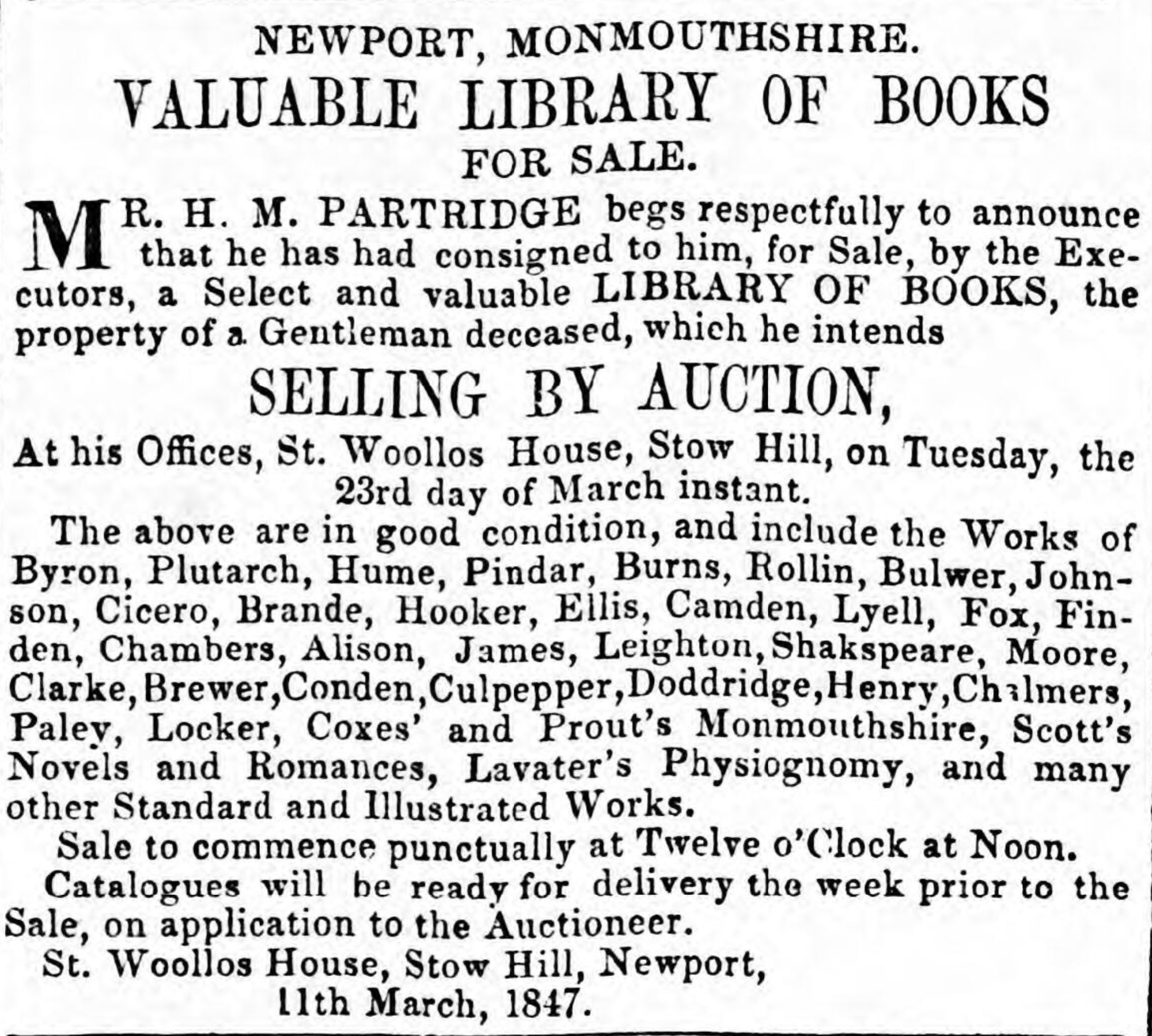
Drowned in the Mill-Pond
On Monday afternoon last, two cousins, one named John Rossiter, aged twelve years, and the other, James Rossiter, nine years and six months, sons of two labouring men, who were brothers, were at play on the ice which still remained upon the Mill-pond.
One was kicking a turnip about, when his attention was attracted by a companion on the bank—about thirty feet distance. They were talking together, when the little jousin came up, sliding along happily. In a moment, the poor child fell through a broken part of the ice, and shouted "Jimmy, lend me a hand," as he was struggling in the water. His cousin tried to rescue him, but also fell in and, lamentable to relate, both sunk, never to rise again alive.
An alarm was instantly raised but though Mr. John Rees and another man proceeded to the spot as quickly is they could in a boat (half-full of water), and threw out a grappling iron, it was twenty minutes before the body of one of the poor boys was recovered, quite dead and the other was not brought to the surface until the following morning.
William Brewer, Esq., surgeon, held an inquest on view of the bodies, at the Moulders' Arms Inn, Marshes-road, on Wednesday, when the jury returned a verdict of "Accidentally drowned."
— Monmouthshire Merlin, 20th January, 1854
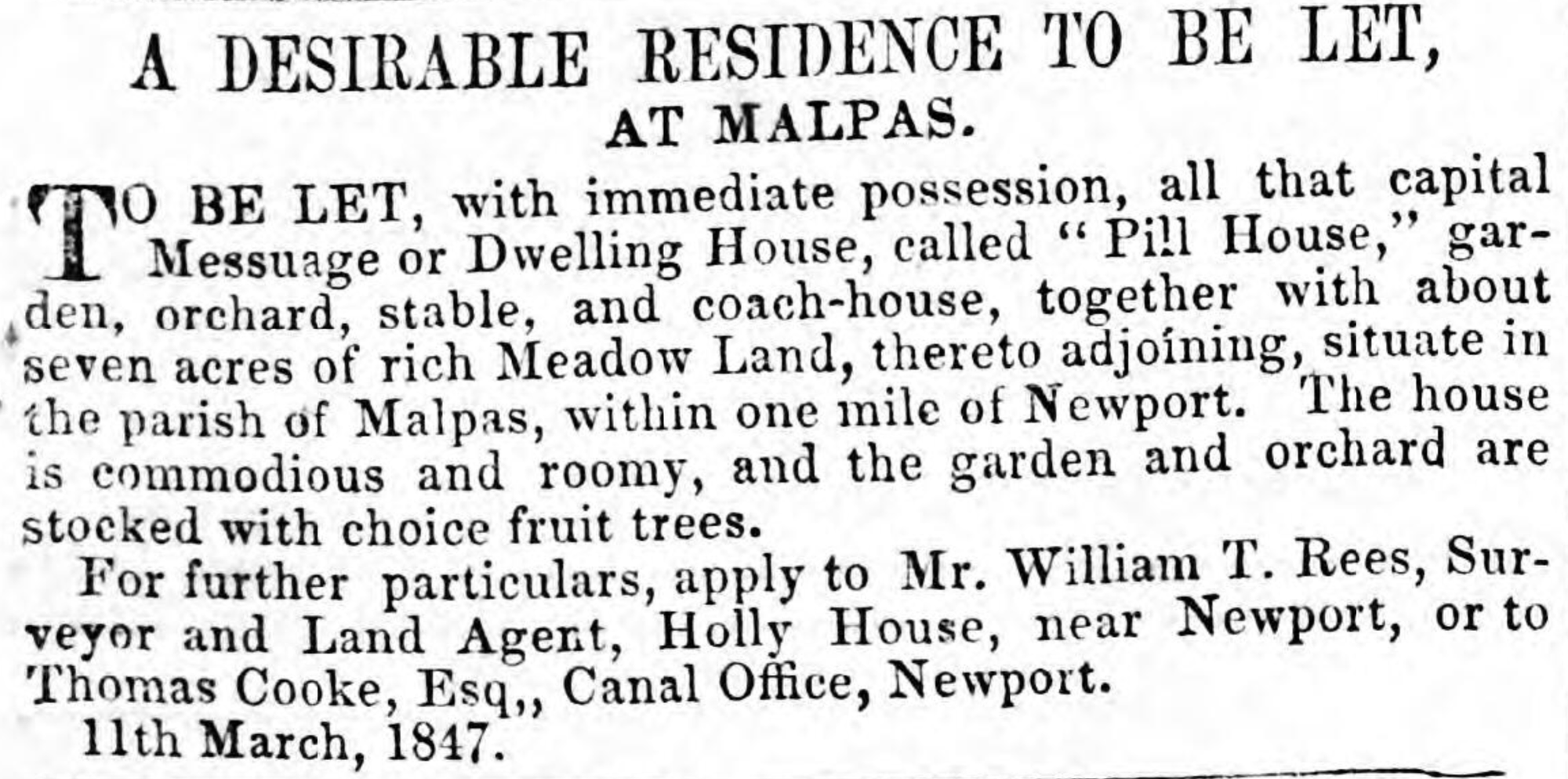
Explosion at the Town Hall
On Wednesday last, the inhabitants of this town living in the vicinity of the Town Hall, were thrown into a state of great consternation, by the noise of a tremendous explosion, which proved, upon enquiry, to have taken place in the Assembly Room at the Town Hall.
This room has been lately occupied by the proprietors of a panorama, who have been tor some time exhibiting their dissolving views in the town; and it appears that a person in the employment of the proprietors was preparing the apparatus for the exhibition to take place on Wednesday evening, which was to be the last occasion of performance in Newport. By an accident not very clearly understood by the public, some combustible gases, used by the exhibitor, got ignited, and exploded with terrific noise.
The results were most disastrous to the room and furniture but the operator, and others who were with him at the time, escaped with but trifling injury. The window-were nearly all smashed to atoms—the large door was split, in various directions—a temporary erection, in which the apparatus had been fixed, was thrown down—and some of the chairs, benches, &e., usually kept in the room, dispersed in fragments about the floor.
The damage is estimated at about £50, and is confined almost entirely to the property of the Town Council. It may, perhaps, be desirable to correct all erroneous impression which has prevailed in some quarters, it being supposed by some that the accident arose from an escape of gas from the burners used to light the Hall. Such, however, was not the case.
— Monmouthshire Merlin, 13th March, 1847
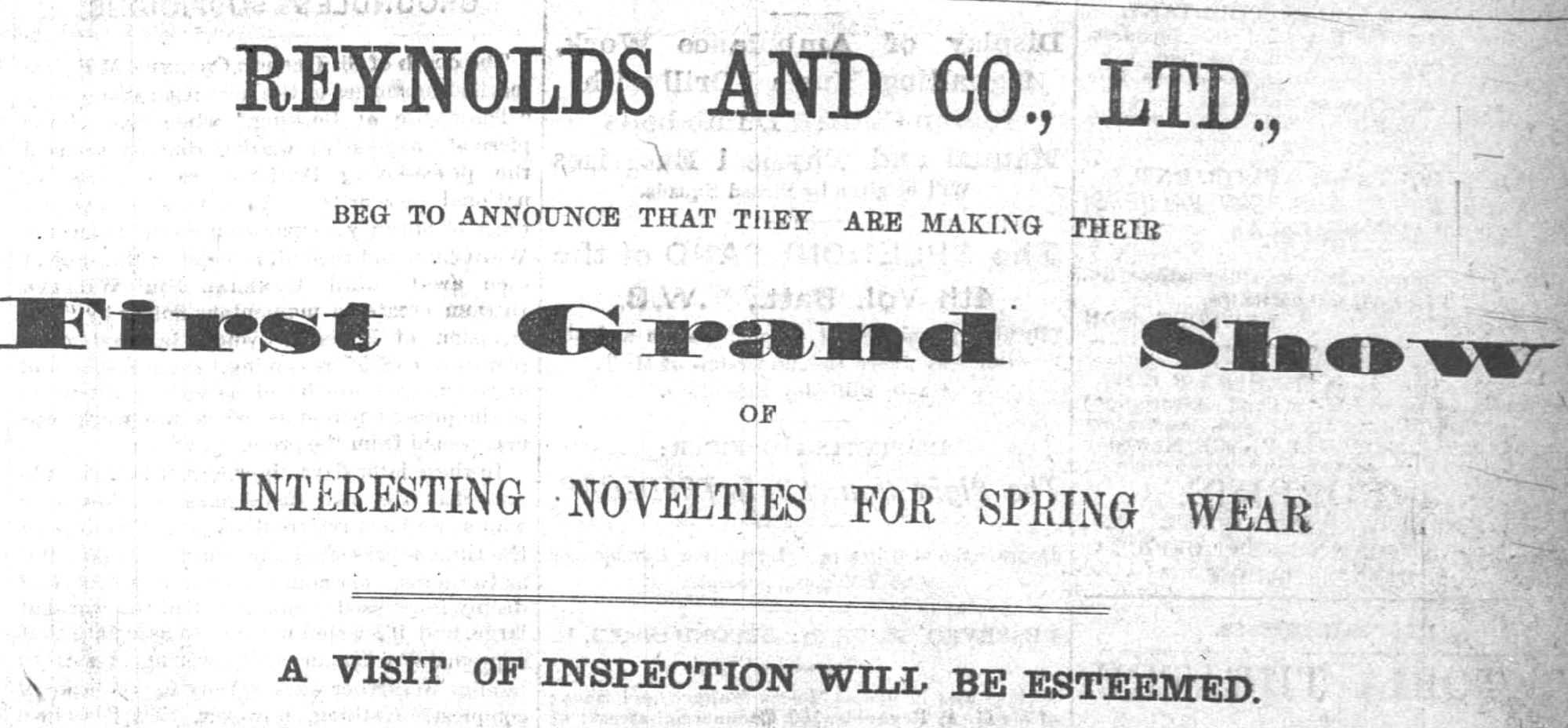
'Rock Band Visits Newport'
It will be perceived by an advertisement in this day's paper, that the celebrated performers, known as the Rock Band, intend making a tour of the Principality and will visit Newport on the 6th instant. We quote the following from the Devonport Telegraph —
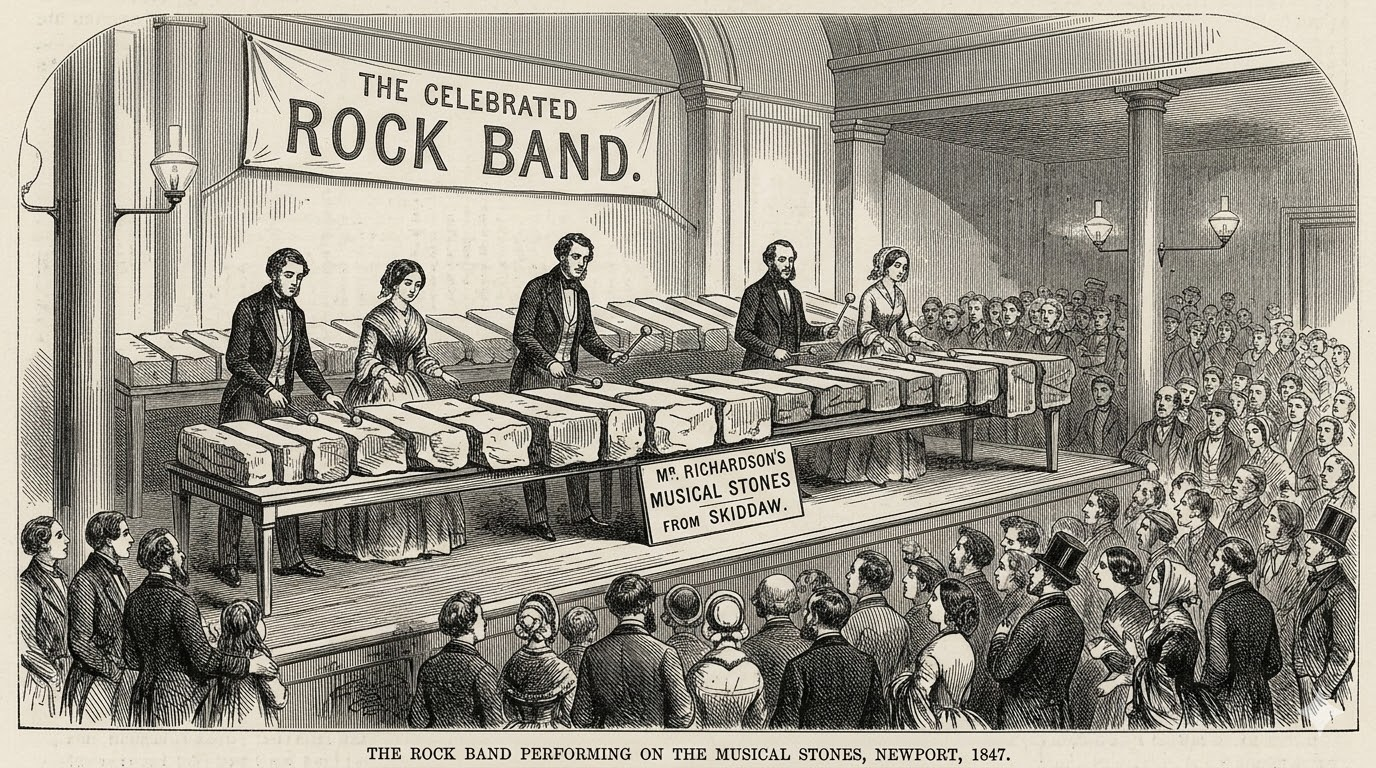
"For the information of our readers, to whom the Rock Band is unknown, we may just state that some years since, Mr Richardson accidentally discovered that certain stones in the neighbourhood of Keswick produced tones of great beauty and power. To apply this discovery, he toiled for years in the adjustment of fragments from Skiddaw, and the result of his labours is the construction of instruments, for so they may be called, which have a compass of 7 or 8 octaves; and from these uncouth blocks of stone is produced the most exquisite music that we have ever heard. These masses of stone, which vary in length from five feet to six inches, are arranged in two rows after the manner of the key board of an organ, and produce a variety of sounds, which seem to us to bear much resemblance to the tones of the harp, violoncello, and bass. At times we thought we were listening to some huge musical snuff box, so rapid was touch of the players, and sustained the effect."
— Monmouthshire Merlin, 3rd April, 1847


Member discussion