

Welcome to another issue of The Newport Cornucopia where we dig through the newspapers archives for interesting news articles and adverts. All articles are posted verbatim and most headlines are original (headlines in quotes are my own).

Overton House Academy
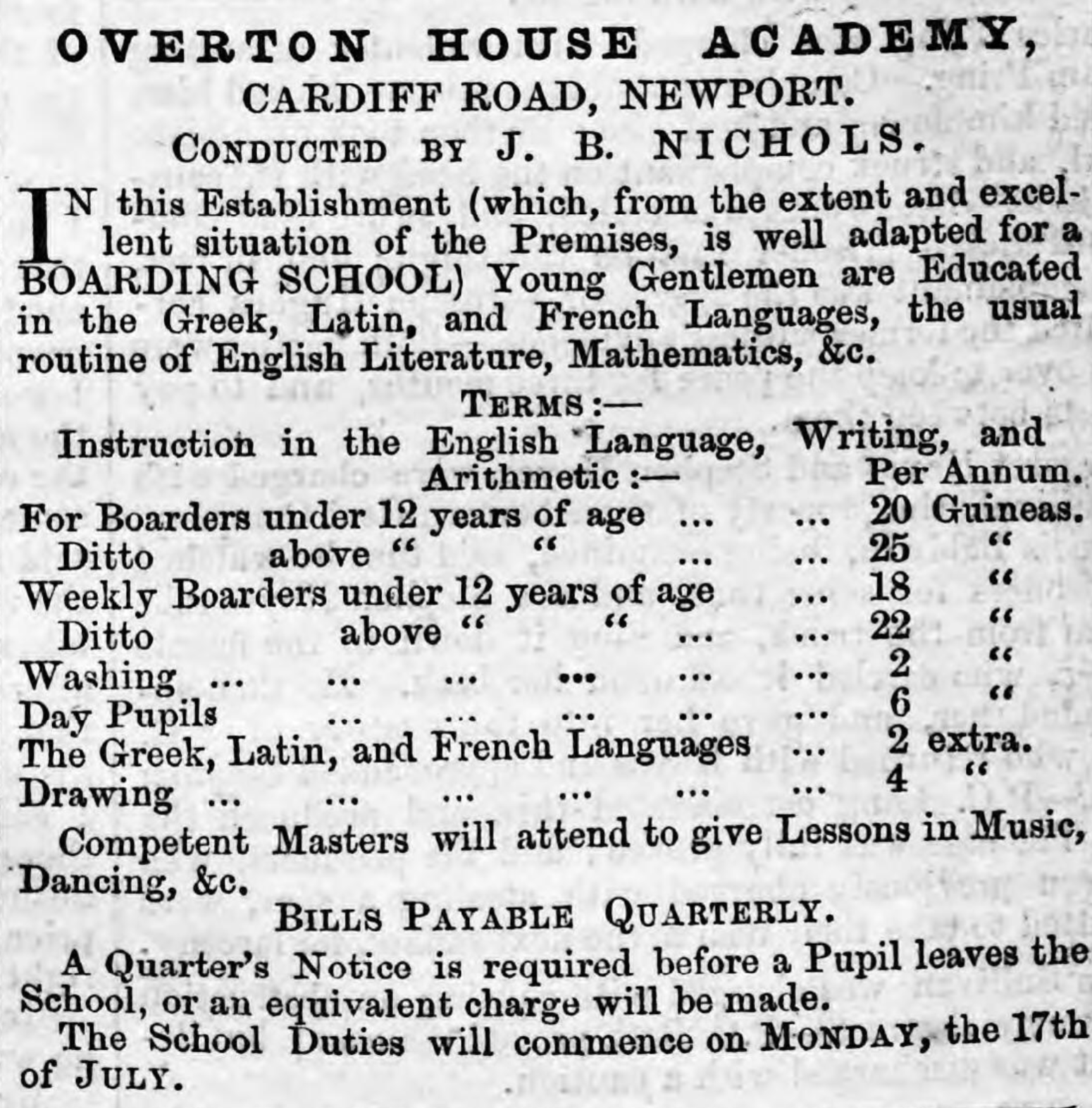
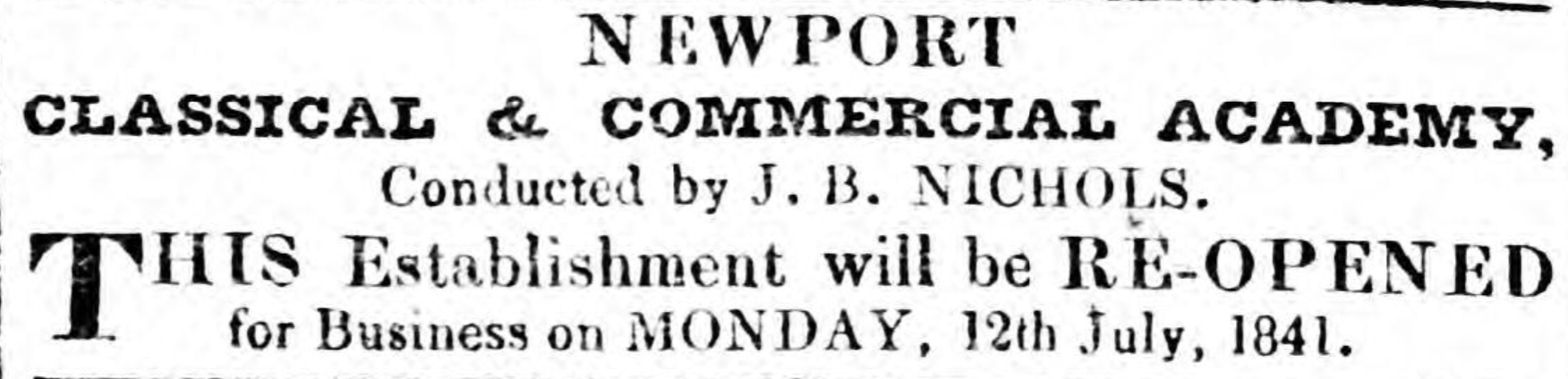
In January 1853, J.B. Nichols moved from his premises on Hill Street to Overton House which is located on Cardiff Road.
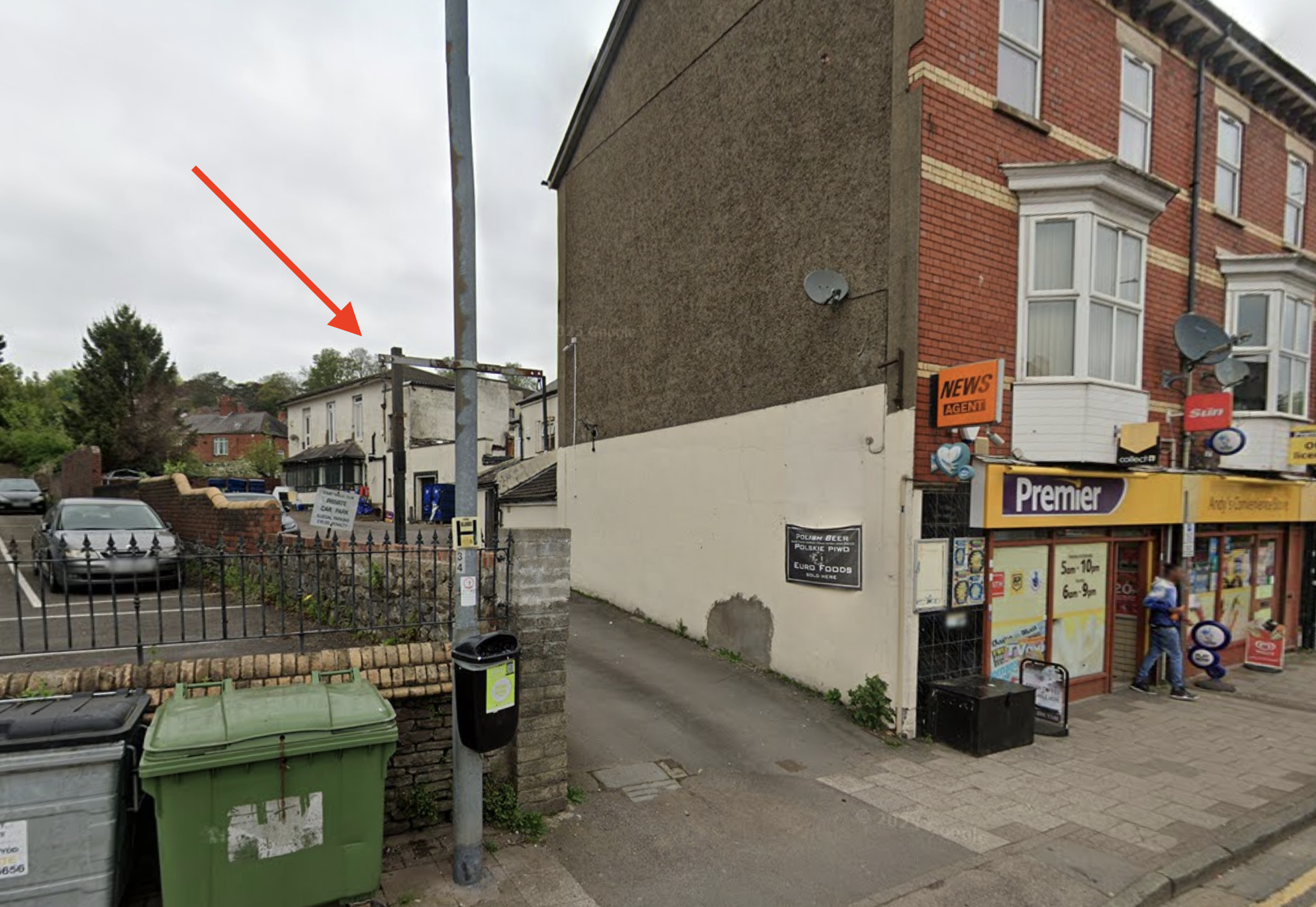
In more recent times it was the Courtybella Club but was also once owned by Lionel Digby Whitehead (steel manufacturing plant owner).
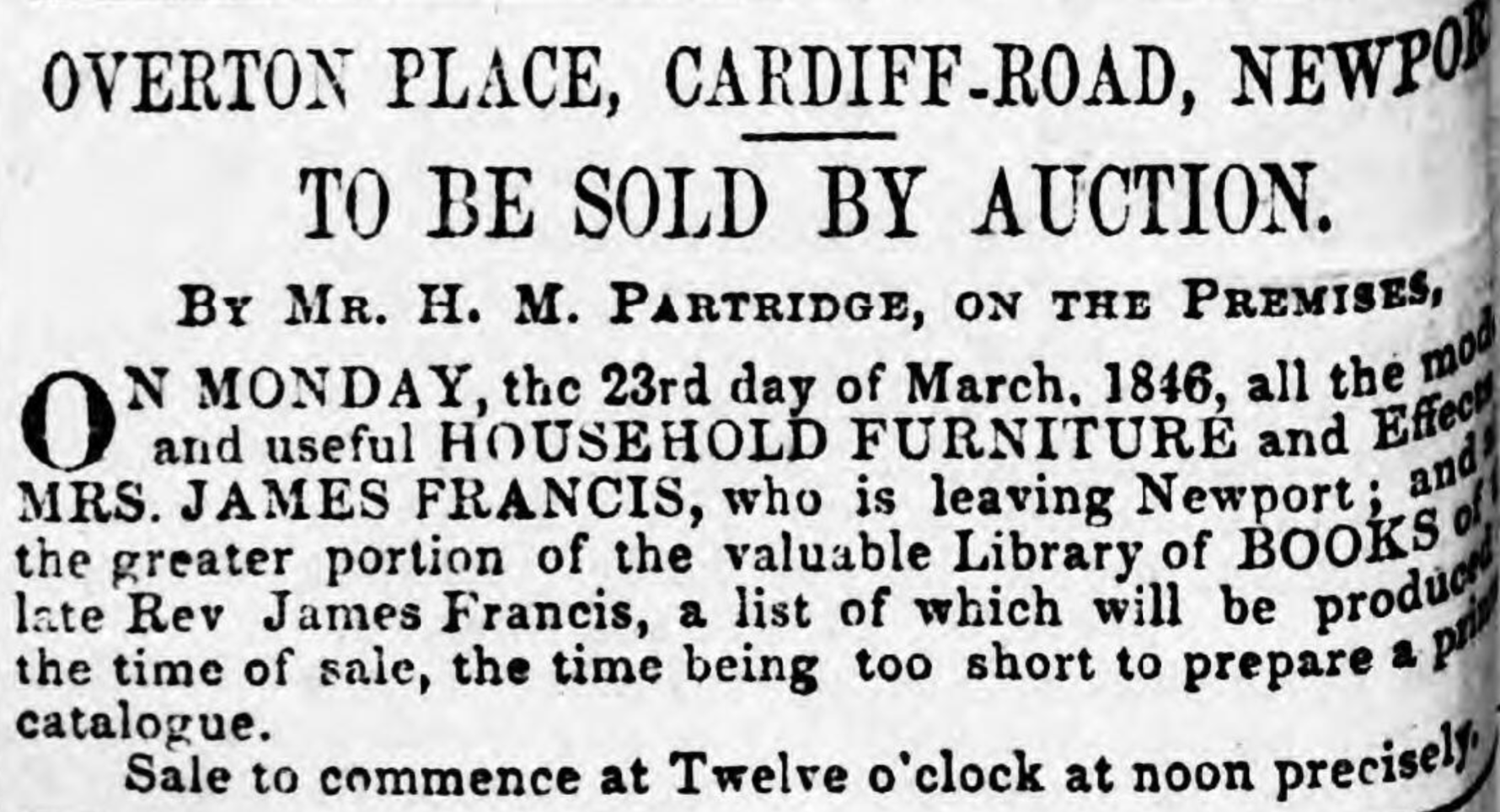
Prior to being known as Overton House, it was known as Overton Place and inhabited by Rev James Francis along with Rev Beynon.
The Business of Death in 1848 Newport
History often hides in the mundane. A price list from 1848 might seem like a dry piece of administrative debris, but the regulations and tariffs of the Newport Cemetery Company offer a haunting snapshot of life—and death—in a booming Victorian port town.
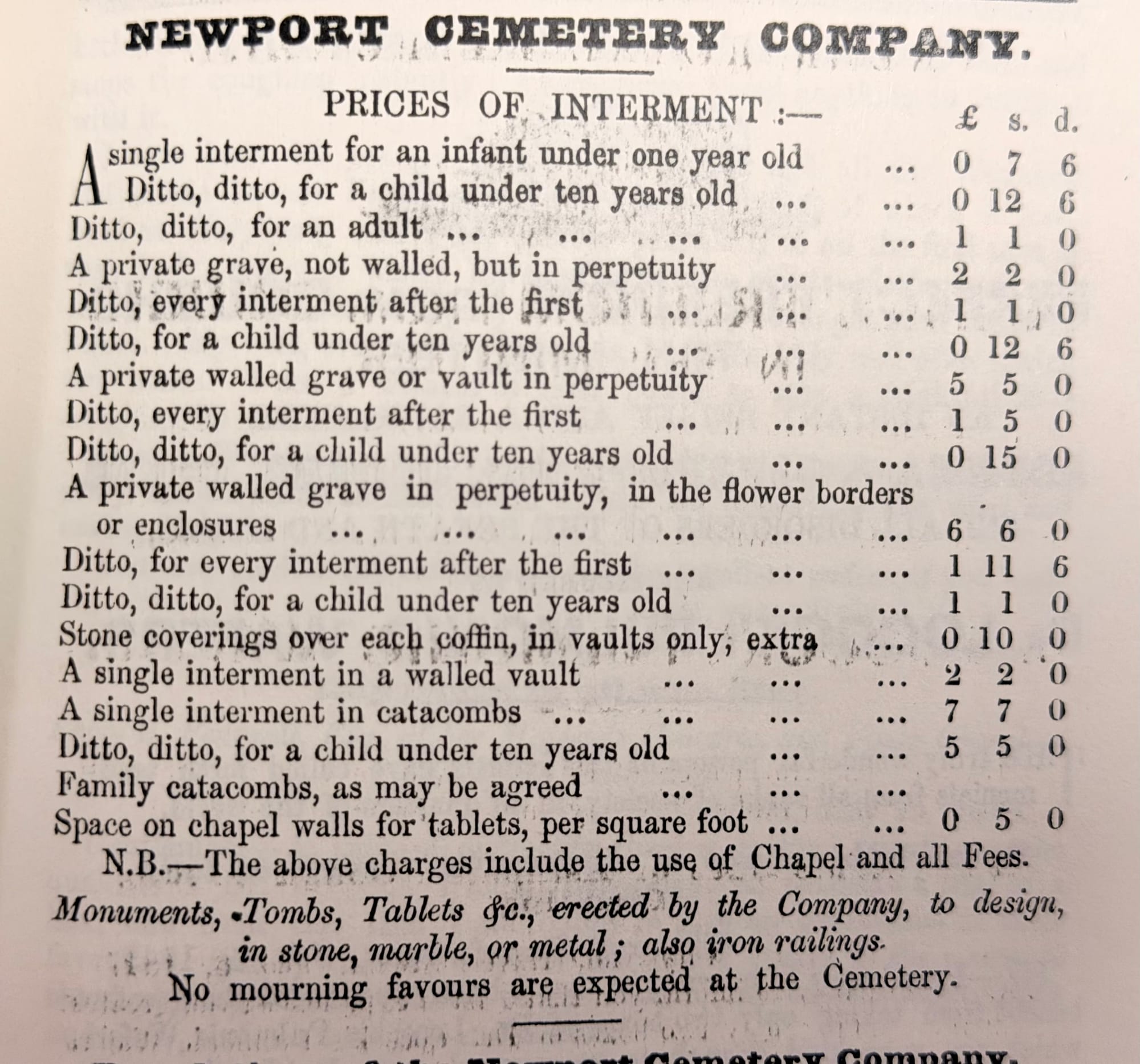
This advert, likely originating from the "Old General Cemetery" on present day Clifton Road, reveal a society deeply divided by class, terrified of disease, and operating on the precipice of a catastrophe: the 1849 Cholera outbreak.
The Cost of Dying in the Victorian Era
In 1848, Newport was an industrial powerhouse. The docks were full, the population was exploding, and money was flowing. However, for the average worker, life was precarious.
To understand the price list, we must understand the value of money. In 1848, a common laborer or dock worker in Newport earned roughly 10 to 15 shillings a week. A skilled tradesman might earn £1 (20 shillings).
With that context, the cemetery's price list becomes a stark illustration of inequality.
The "Pauper's" Grave vs. The Perpetual Vault
The cemetery offered a tiered system of burial that strictly segregated the rich from the poor.
- The Lowest Tier: A "Single Interment" for an infant cost 7 shillings and 6 pence. For a laborer, this was half a week’s wages. For an adult, it was £1 1s 0d—more than a full week's pay. These burials took place in "open ground," where the earth was eventually reused, and no permanent monument was allowed.
- The Middle Class: A private grave "in perpetuity" cost £2 2s 0d (two guineas). This ensured the grave would not be disturbed, a luxury that required a worker to save for months or join a "burial club."
- The Wealthy: The cemetery offered walled vaults in "flower borders or enclosures" for £6 6s 0d. This was an astronomical sum, equivalent to several months of rent for a working family.
Table: 1848 Prices vs. Modern Buying Power
Calculated using standard inflation and wage-value comparisons.
| Service Description | 1848 Cost | Modern Equivalent (approx.) | Context for an 1848 Worker |
|---|---|---|---|
| Common Interment (Infant <1yr) | £0 7s 6d | £45.00 | ~3 days' wages for a laborer |
| Common Interment (Child <10yrs) | £0 12s 6d | £75.00 | ~5 days' wages |
| Common Interment (Adult) | £1 1s 0d | £126.00 | Over 1 week's wages |
| Private Grave (Perpetuity) | £2 2s 0d | £252.00 | A luxury: 3-4 weeks' wages |
| Walled Grave / Vault | £5 5s 0d | £630.00 | ~2 months' wages |
| Vault in Flower Borders | £6 6s 0d | £756.00 | Exclusive area for the wealthy |
| Interment in Catacombs | £7 7s 0d | £882.00 | Equivalent to ~3-4 months' rent |
| Tablet Space on Chapel Walls | £0 5s 0d | £30.00 | Price per square foot |
Regulations: Sanitary Fears and Social Control
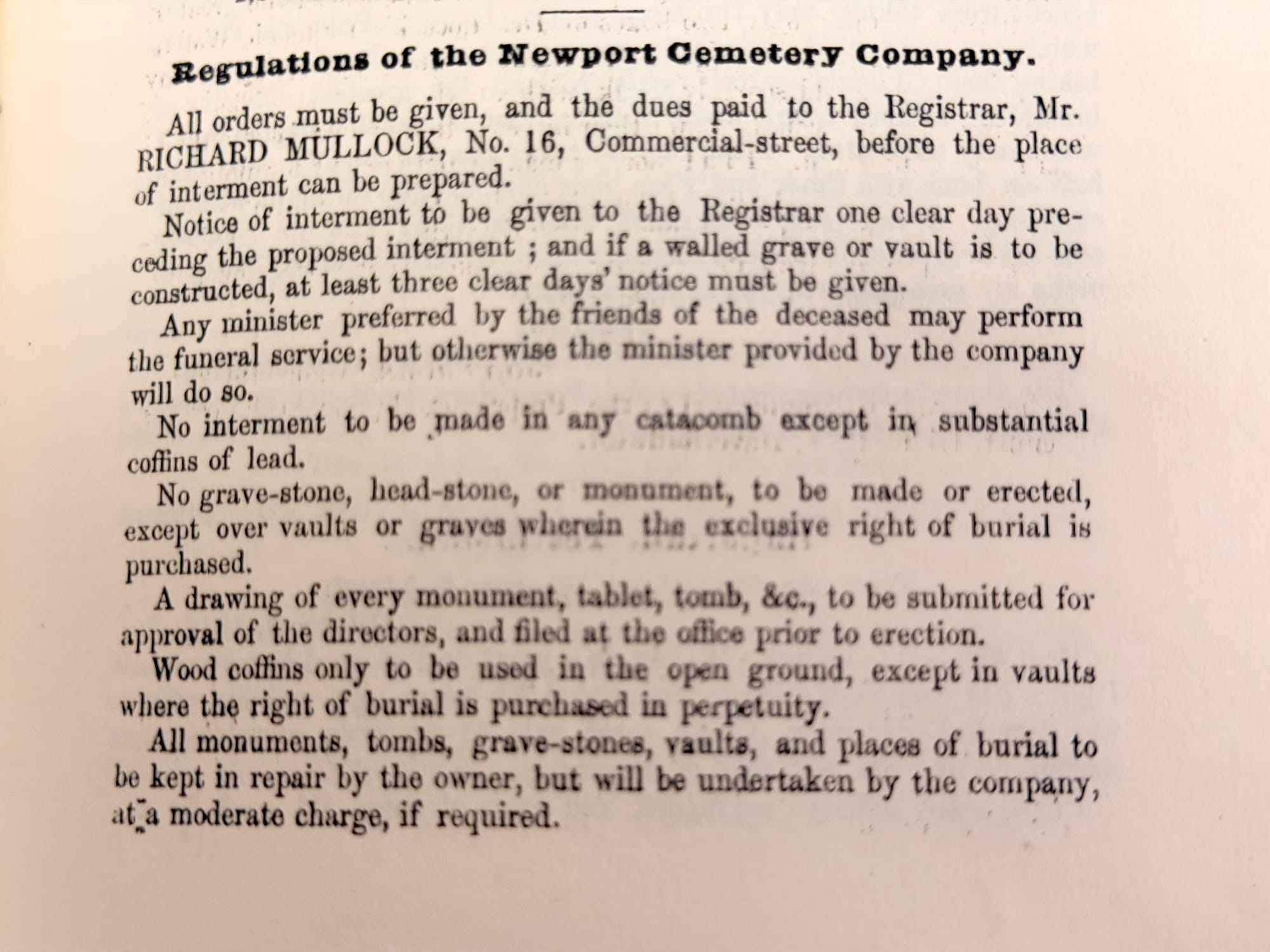
The part of the advert, detailing the cemetery's regulations, provides insight into the fears of the time. The rules were enforced by the Registrar, Mr. Richard Mullock, a former Mayor of Newport (1842-43) operating out of 16 Commercial Street.
The Fear of "Miasma"
One regulation stands out:
"No interment to be made in any catacomb except in substantial coffins of lead."
In 1848, the Germ Theory of disease was not yet accepted. Instead, people believed in "Miasma"—the idea that bad air and smells caused illness. Above-ground catacombs posed a risk of escaping odours. Lead coffins, which were soldered shut, were a sanitary requirement. However, the high cost of lead effectively barred the working class from these vaults, making "sanitary" burial a privilege of the rich.
Class Barriers in Stone
The regulations also enforced a visual hierarchy:
"No grave-stone, head-stone, or monument, to be made or erected, except over vaults or graves wherein the exclusive right of burial is purchased."
If you could not afford the "exclusive right" (the £2 2s fee), you were denied a headstone. Your family member would rest in an unmarked grave in the "open ground," anonymous and eventually forgotten.
The Shadow of Cholera
The date of these documents is chilling. In 1848, the cemetery was running "business as usual." But just months later, in 1849, the Second Cholera Pandemic struck Newport with devastating force.
The outbreak was 15 times deadlier than the previous epidemic of 1832. It killed over 120 people in the St Woolos parish alone, devastating the crowded, unsanitary slums of Pillgwenlly.
It is likely that the orderly regulations listed here—requiring "one clear day's notice" and specific coffin types—collapsed under the strain. Historical records suggest that during the peak of the outbreak, bodies were buried in mass graves at night to prevent panic.
Conclusion
This cemetery, with its strict class divisions and private price lists, represents the end of an era. The high death toll of the 1849 cholera outbreak proved that private cemeteries like this one (located on Clifton Road) were insufficient for a growing industrial town.
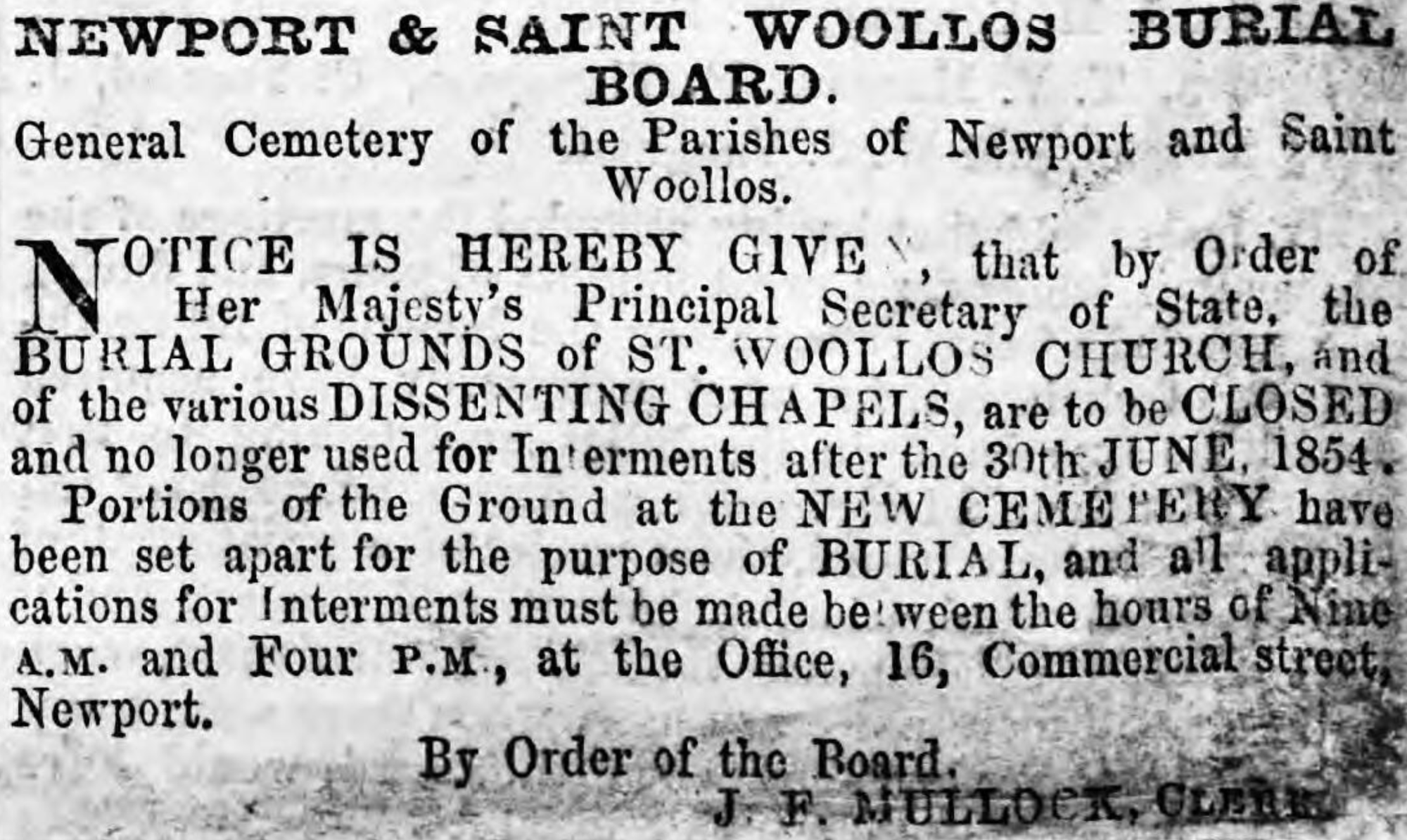
By 1854, just six years after this price list was printed, the St Woolos Municipal Cemetery was opened—the first public municipal cemetery in Wales. It marked a shift from death as a private business to death as a public responsibility.
Sir Charles Morgan at the Castleton ploughing match
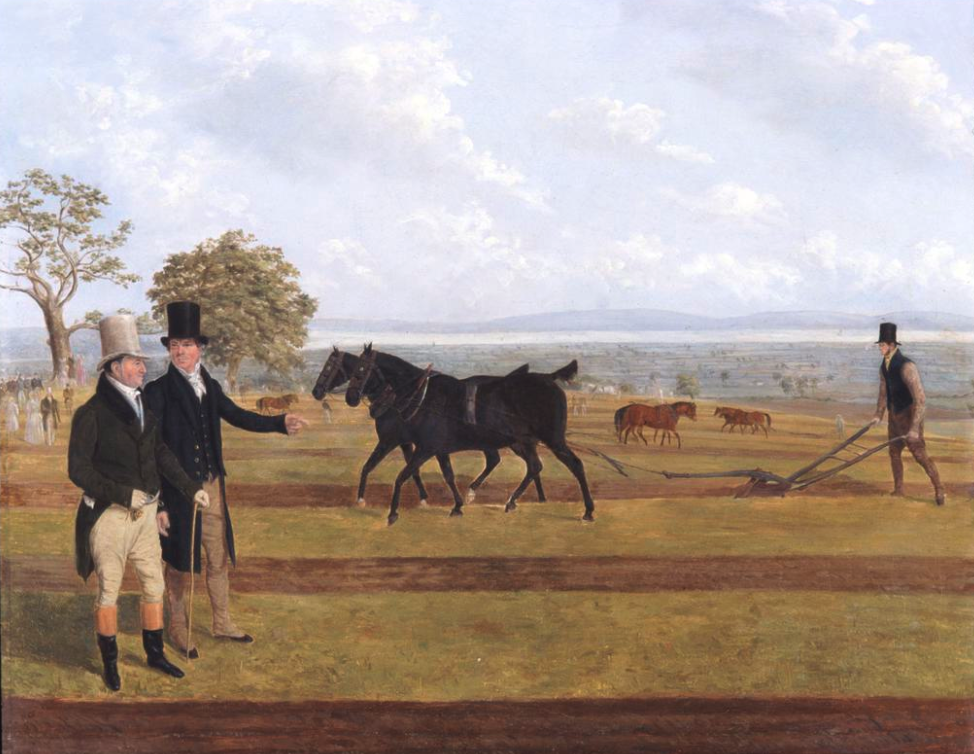
Description from the Museum of Wales:-
This painting is unsigned, but is one of his most ambitious works. It depicts the first Castleton Ploughing Match, which took place in Cae Shop Field, Castleton, in January 1845. This is described at length in the Monmouthshire Merlin 8 January 1845. There were several hundred spectators, some included here, and the elderly and infirm Sir Charles Morgan, the Castleton Ploughing Club's principal supplier, came to watch for an hour. Though set in an immediately recognisable landscape, with the Gwent levels and the Bristol Channel in the background, the picture is probably a composed record of the event, rather than an accurate portrayal of it. More work is needed to establish the identity of the man with Morgan (possibly a Mr Lewis) and the ploughman that he gestures towards. It is nevertheless unique as an image of agrarian improvement in early nineteenth-century Wales, and a fascinating depiction of the hinterland of Newport prior to its industrialisation. Ploughing scenes are rare in sporting art. Thomas Weaver painted a match between teams belonging to Lord Bradford, Sir Watkin Williams-Wynn and others in 1813, and Mullock's contemprary Richard Ansdell painted the Groundslow Ploughing Match in 1840.
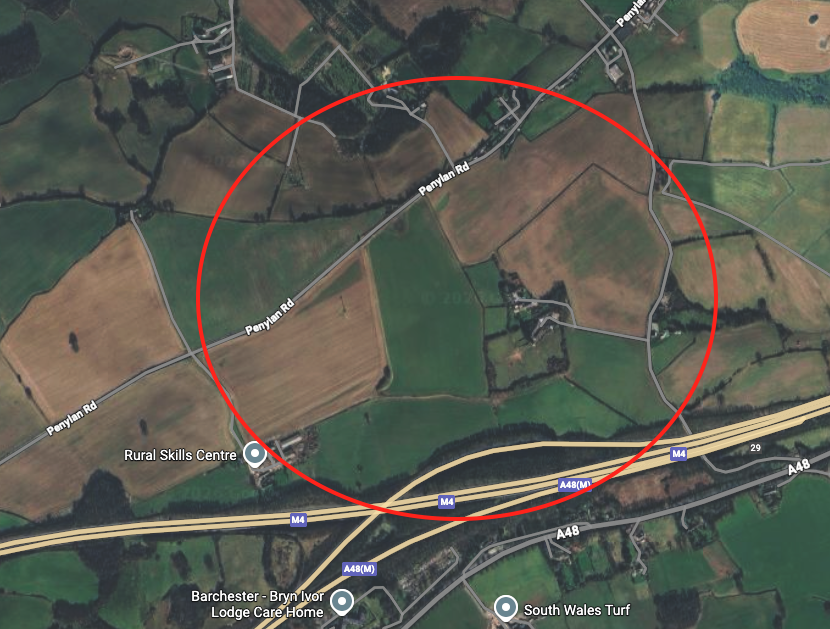
Cae Shop Field was part of New Park Farm which is where the Rural Skills Centre is on the map above so would have been somewhere in the circle. This matches the high viewpoint in the painting.
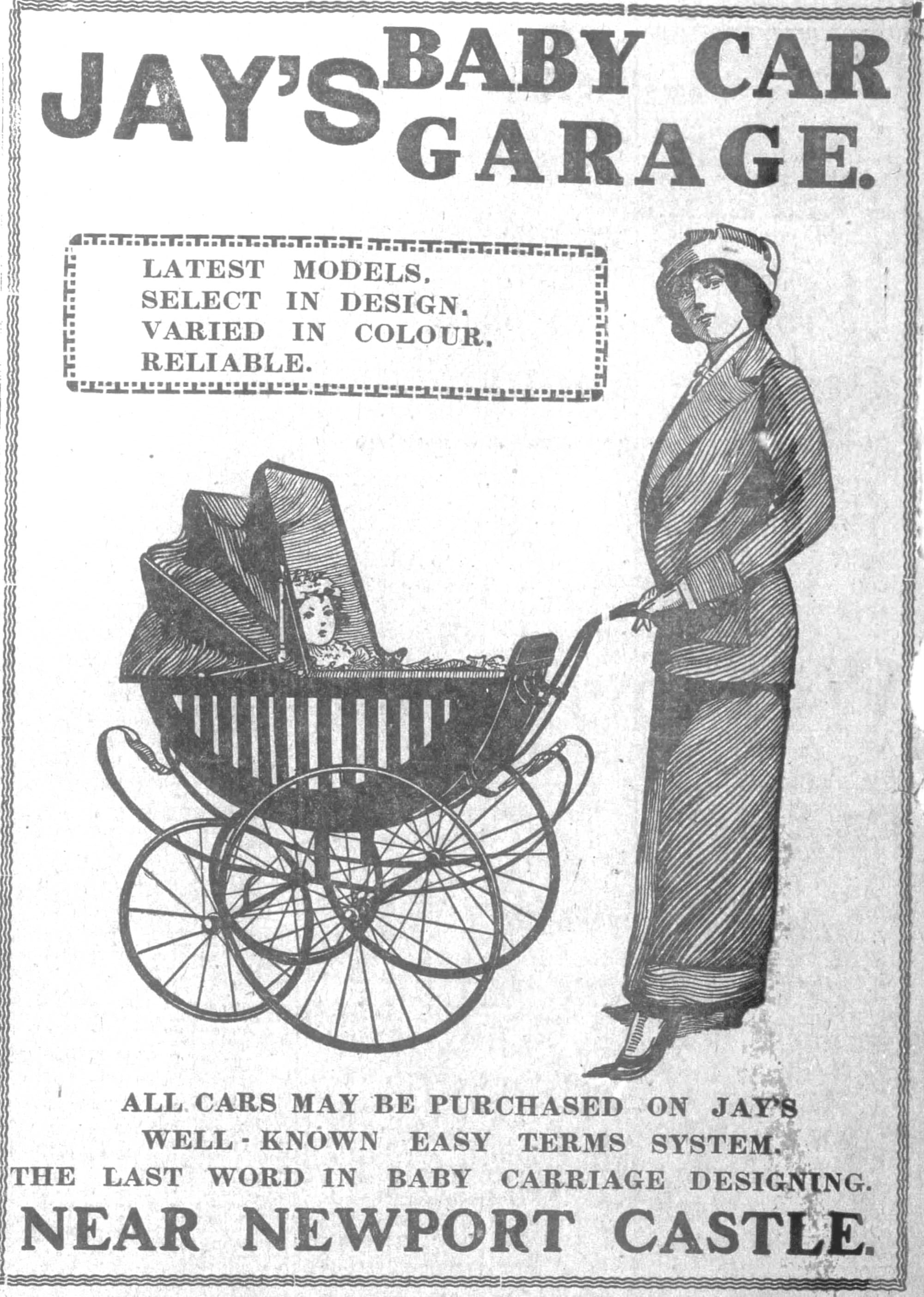
'School at Crindau House?'
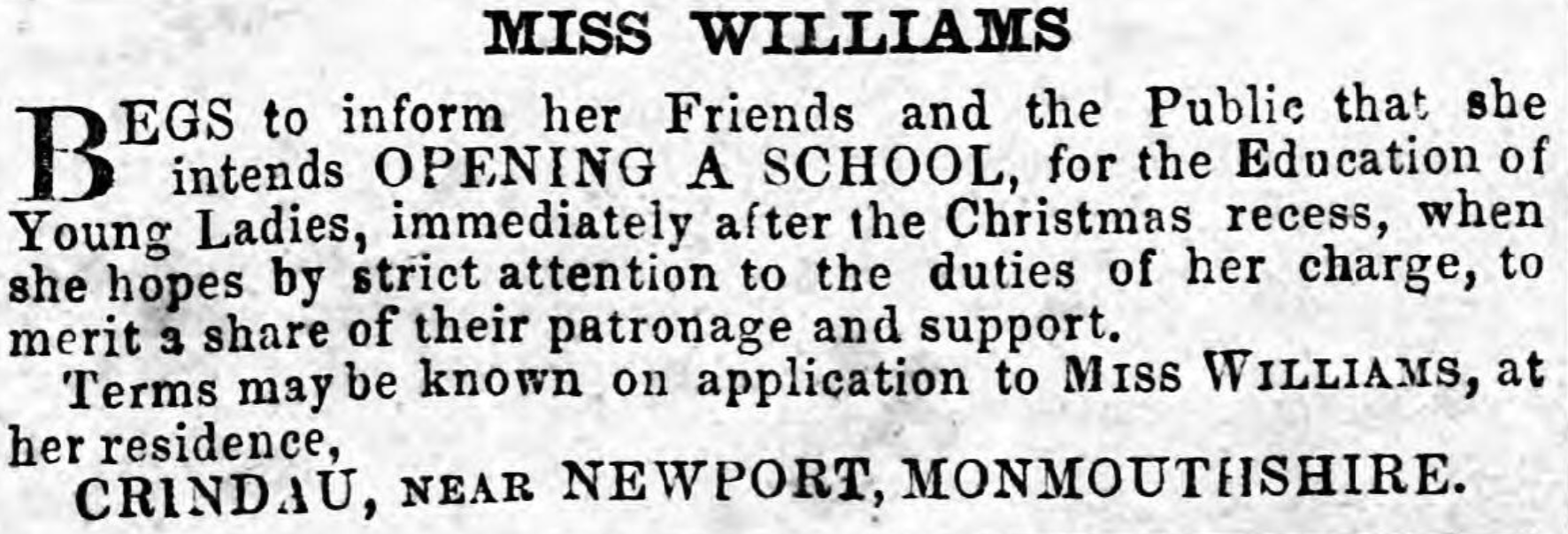
An advert in the Monmouthshire Merlin, on the 7th January, 1853 announced the opening of a school in Crindau run by Miss Williams. Around about that time (at least in the 1840s), the house was occupied by Philip Williams so would likely to have been a member of the family.
Burglary at a Clergyman's House
At about three o'clock on Wednesday morning, the lady of the Rev. Thomas Pope, of Christchurch, (who was absent from home at the time,) was aroused from sleep by a noise which appeared to proceed from some parties engaged in the lower apartments of the dwelling. She immediately called up the servant lad, who proceeded down stairs. The servant went into two lower rooms, and found all safe; he then returned to Mrs. Pope, who was on the landing, saying all was right. The lady, however, desired him to try the door of the study, on the ground floor; he did so, but found it locked on the inside, although Mrs. Pope remembered that it had been unlocked the previous evening. This, of course, excited suspicion but no further noise was heard in that or any other room, and the household retired to rest again.
Next morning it was discovered that some burglars had effected an entrance into the study through the window at the side of the house, and that on their getting inside, they locked the door for their protection from a surprise by the servants. The entrance had been effected by a hole being cut in the shutter, through which a hand had been inserted, and the fastening removed. Fortunately, the parties must have heard the alarm raised by Mrs. Pope, and probably decamped at that moment, as the only articles stolen, but it is to be regretted are valuable, were a silver inkstand, a gold thimble (from Mrs. Pope's workbox, which was broken open), a gold seal, with engraved armorial bearing (from Mr. Pope's writing desk, which was also broken open) and it was suspected that some money had also been stoeln from this desk, which could not be ascertained in the absence of Mr. Pope.
There is a strong suspicion that the burglary was committed by parties acquainted with the premises and circumstances transpiring there; which suspicion is supported by the fact that the farm bailiff who sleeps in the room immediately above the study, had obtained leave to go with his wife to see the performances at Batty's circus in Newport on the same night, and whose absence on that occasion, therefore, may probably have been calculated upon as affording a good opportunity to rob the premises. It is to be hoped that the names and addresses of the party, who are said not to be regular professional cracks men, may shortly be entered, as visitors at Mr. Kessick's office in this town.
— Monmouthshire Merlin, 3rd June, 1848
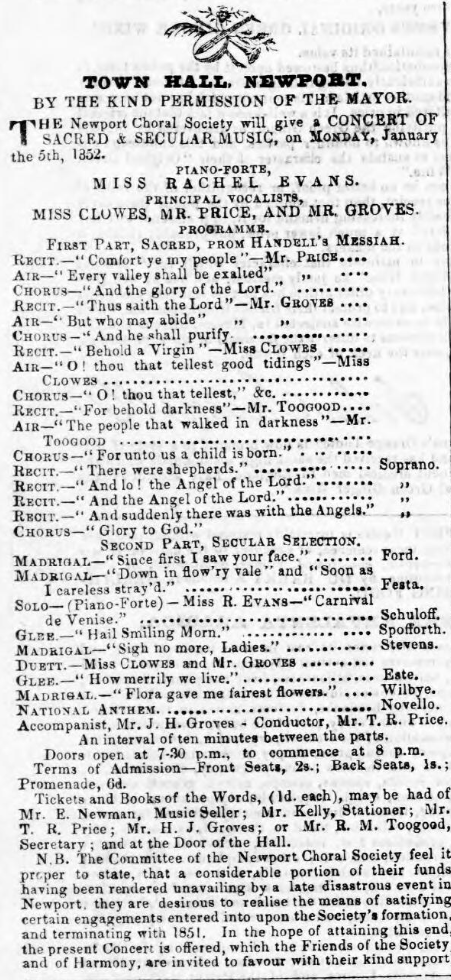
Louis-Antoine Jullien Visits Newport
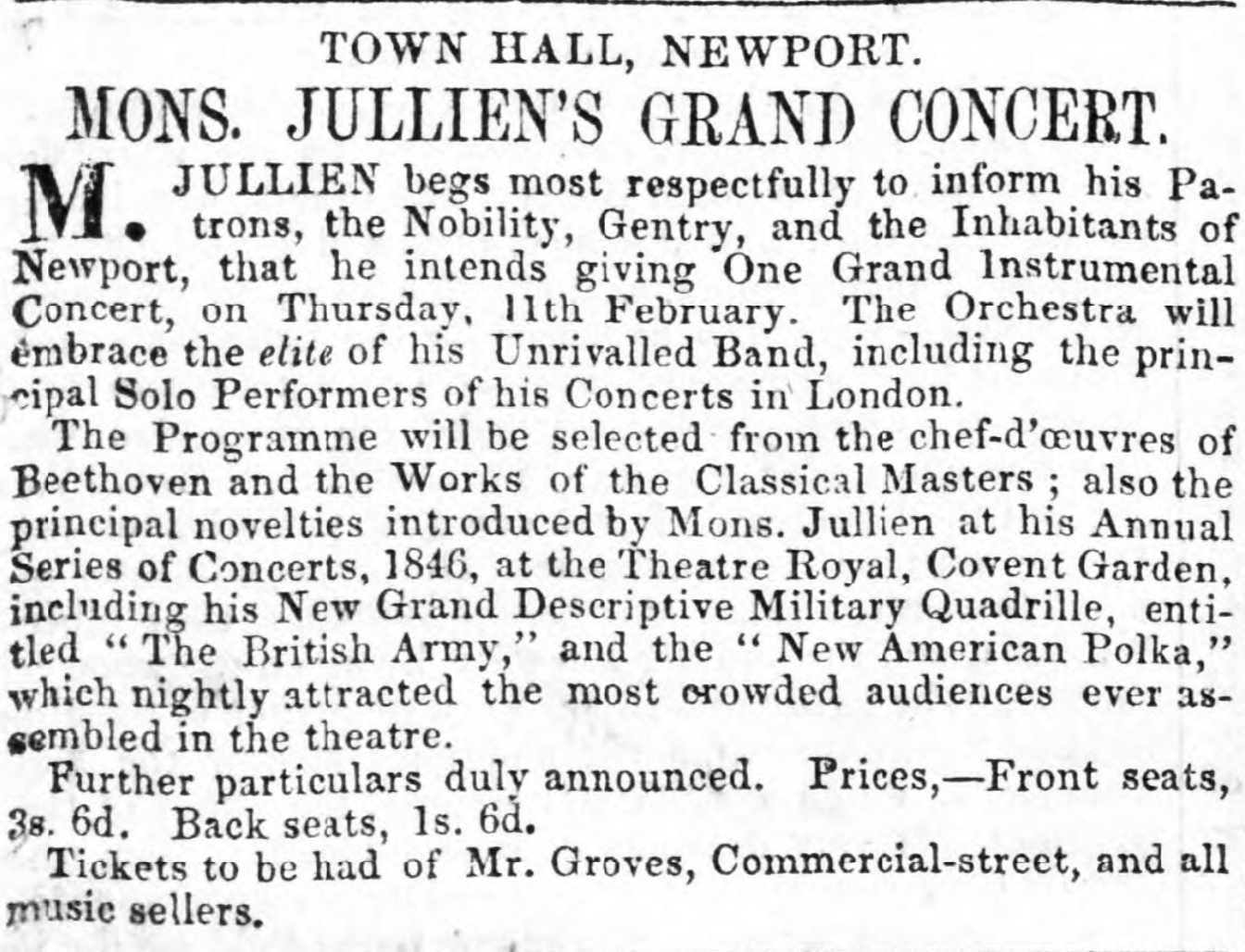
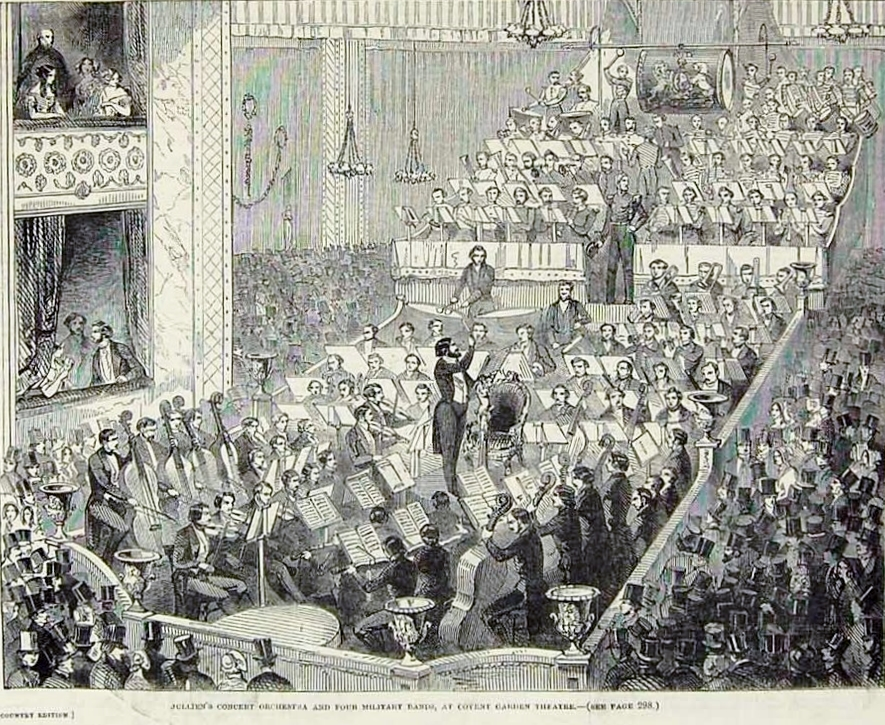
In February 1847, a Monsieur Jullien visited Newport to perform with an orchestr at the Town Hall. According to a site called 'Conversations with Keith' run by music writer Keith Horner, Jullien was a 'long-forgotten conductor and composer who was once a household name throughout the UK, Paris, Dublin and even several cities in the USA'.
Jullien, who probably has one of the longest names in the world (Louis George Maurice Adolphe Roche Albert Abel Antonio Alexandre Noë Jean Lucien Daniel Eugène Joseph-le-brun Joseph-Barême Thomas Thomas Thomas-Thomas Pierre Arbon Pierre-Maurel Barthélemi Artus Alphonse Bertrand Dieudonné Emanuel Josué Vincent Luc Michel Jules-de-la-plane Jules-Bazin Julio César Jullien) was born in Sisteron, Basses Alpes, France, April 23, 1812 and as his violinist-bandmaster father Antonio predicted him to be a musical prodigy, all 36 male members of the Sisteron Philharmonic Society insisted on being godfather hence the extra long name.

'Refusing to Take Child from Workhouse'
William Trowbridge was charged by Mr. Salter, the re- lieving officer, with refusing to take his child from th e workhouse. Prisoner offered to pay for the child, but ob jected to take it home. Bound over to appear on Monday next—in the meantime to arrange to take the child away.
— Monmouthshire Merlin, 30th June, 1854
'A Little Irish Row'
Cornelius Foley was charged with beating and assaulting Margaret Cummings. P.C. Williams described it as a "little Irish row." Complainant called two witnesses, who corroborated her statement, as to being knocked down, &c. Foley was fined 8s. 6d. costs, and was bound over, together with complainant and her witnesses, to keep the peace for six months.
— Monmouthshire Merlin, 30th June, 1854
'Taking Improper Liberties'
Margaret Kiof was charged with assaulting and beating Ellen Casey, who swore that defendant struck her upon the side of the bead, and took improper liberties with her (complainant's) husband. Fined 10s. and costs, or 21 days' imprisonment.
— Monmouthshire Merlin, 30th June, 1854
A Limb of the Old Stock
Elizabeth Jenkins, alias Betty Yarwood, alias Cripple junior, who carries ferocity and vice stamped on her countenance, was charged with being drunk and disorderly. Mr. Sharrem, the landlord of the Cornish and Devonshire Arms, proved certain acts against the young virago, which left no doubt of the correctness of the charge.
PC Bath and Sergt. Huxtable helped the creature forward on her way to the House of Correction; while she was by no means backward herself, in proving her claim to a short residence in that locality. The magistrates had no doubt of her merits on that point, and therefore desired that she might be lodged and boarded with Mr. Merrett for a fortnight; and the young Cripple appeared so pleased with the order, that she grinningly exclaimed, as she bolted from the dock, "Thank you, gentlemen! thank you!"
— Monmouthshire Merlin, 3rd June, 1846
More Street Obstruction
Jeremiah Macarthy, an old man, and John Buckley, who said he was but fifteen years of age, though he appeared twenty-five at least, were charged with obstructing the road by refusing to disperse in Cross-street, on Sunday evening.
This street has become notorious. Every Sunday evening there is a tight—or perhaps half-a-dozen—in which all the residents in the locality take part, as observers or partizans and thus the street gets so thronged, and the shouts and bellowings so uproarious, that both an obstruction and a nuisance are at once caused.
The prisoners had joined in the fight and hubbub in Cross-street on Sunday evening, and as they obstructed the road, and did not move off when ordered by the police. Cautioned and discharged on paying1s. each, prison fee.; but the magistrates said that the next similar case from Cross-street should be visited by imprisonment.
— Monmouthshire Merlin, 3rd June, 1846
'George the Navvy'
George Long, alias George the Navvy, was charged with being drunk and fighting early on Sunday morning. PC Long proved seeing prisoner knock a man down, and thereupon took him into custody. Prisoner said to witness I'll do for you on the 5th of November, and before that, if I can. Prisoner was shown to have been convicted of drunkenness and fighting be-fore, and was now ordered to pay 5s., and 1s. 6d., prison fees, or fourteen days' imprisonment.
— Monmouthshire Merlin, 3rd June, 1846
'A Month in Prison for Being Drunk'
Margaret Daniel, a young woman of bad repute, who has only left prison a few days, was again charged with being drunk and disorderly; which offence being proved by PC Govier, and she was again sent to prison for a month. She went off with a bound towards the station cell, exclaiming, "Now, then, for another change."
— Monmouthshire Merlin, 3rd June, 1846


Member discussion