

To open a copy of the Monmouthshire Merlin on July 6th, 1850 is to catch a rapidly growing industrial town at a fascinating point of intersection.
Newport was a place expanding at breakneck speed, powered by the coal and iron moving through its bustling docks. Yet, the pages of this single edition reveal that beneath the booming economic statistics sat a complex, fast-paced, and highly unequal society trying to navigate the anxieties and opportunities of a brand-new age.
Through the newspaper's columns, we are granted a remarkably clear window into the daily realities of the town's residents. For the affluent middle and professional classes, the paper served as a curated catalogue of high-status living—advertising everything from custom-made silk hats and bespoke riding habits on Commercial Street to grand townhouses in the exclusive enclave of Victoria Place. It shows an elite deeply invested in preserving social order, whether by funding private academies on Stow Hill to instil proper behaviours and teach their sons maritime navigation, or by managing the charitable subscriptions of the Newport Dispensary to keep the town's destitute residents on their feet.
Yet, look just a fraction closer at the adjacent columns, and the starker realities of mid-century Newport life immediately break through. This was an era where the arrival of the South Wales Railway was fundamentally rewriting human concepts of time and distance, forcing locals to live under the strict dictation of "Greenwich Mean Time." It was a world where the intense anxieties of business trust led colliery owners to publish blunt public warnings against rogue ex-employees, and where families looking down at the docks weighed up the high-stakes gamble of boarding a copper-bottomed ship for New York to escape the pressures of home. Most telling of all are the local crime reports; while the town's wealthy residents browsed for fine art, Newport’s judicial system was routinely sentencing hungry or cold locals to months of hard labour for stealing mere fractions of a pound of butter, coal, or bacon.
By exploring these original fragments of property, trade, transport, and tragedy, we can look past the grand Victorian statistics and discover the true, human pulse of Newport in the summer of 1850.

Shopping
The items filling the advertisement columns of the Monmouthshire Merlin were explicitly curated for Newport’s affluent middle and professional classes. For these readers, shopping along Commercial Street was an exercise in social display; the goods they purchased were vital markers of their wealth and respectability.
The specific nature of these listings reveals a lifestyle of structured leisure and formal etiquette. When a reader scanned the columns for specialised items like ladies' silk opera slippers, bespoke riding habits, or exotic imported spices, they were looking for goods that separated them from the town's industrial working class. These were products designed for formal evening balls, supervised horse rides, and high-status home entertaining—the very pillars of Victorian respectability. A stroll down Commercial Street in July 1850 offered everything required to dress, feed, and present a wealthy Newport family according to the strict standards of the day.
Teas as in London
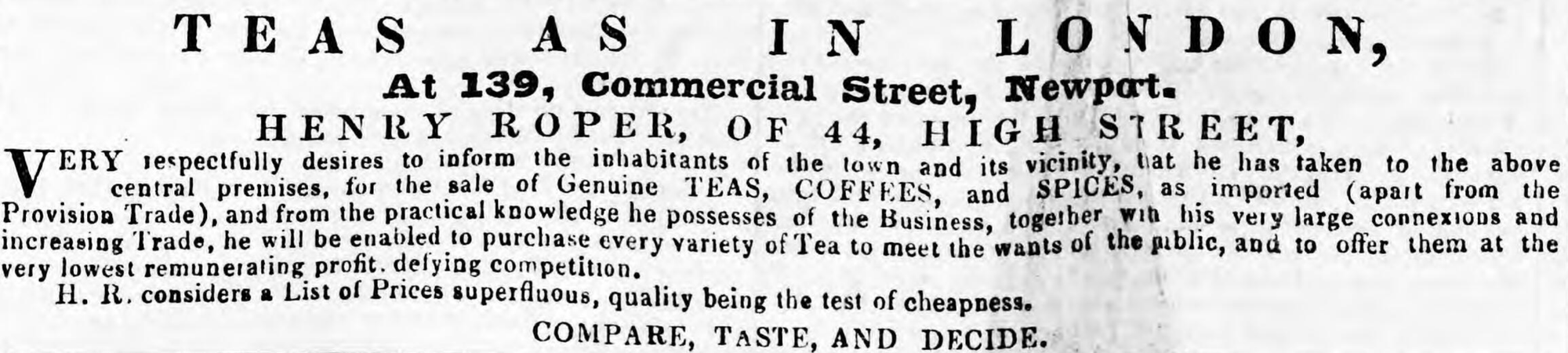
Henry Roper, already established at 44, High Street, informs readers he has taken over these central premises to sell "Genuine Teas, Coffees, and Spices." Roper makes a point to state that his business is run "apart from the Provision Trade," meaning he dealt strictly in high-quality dry imports rather than general groceries like bacon, butter, or cheese, which could taint the delicate flavours of tea leaf stock. His slogan, "TEAS AS IN LONDON," appeals directly to local buyers wanting the same standard and freshness available in the capital, claiming that a printed price list is "superfluous, quality being the test of cheapness."
Habit Maker
This advertisement marks a business transition on Commercial Street. Lewis Edwards announces his retirement after nearly 40 years of business in Newport, handing over the premises to Henry Wood.
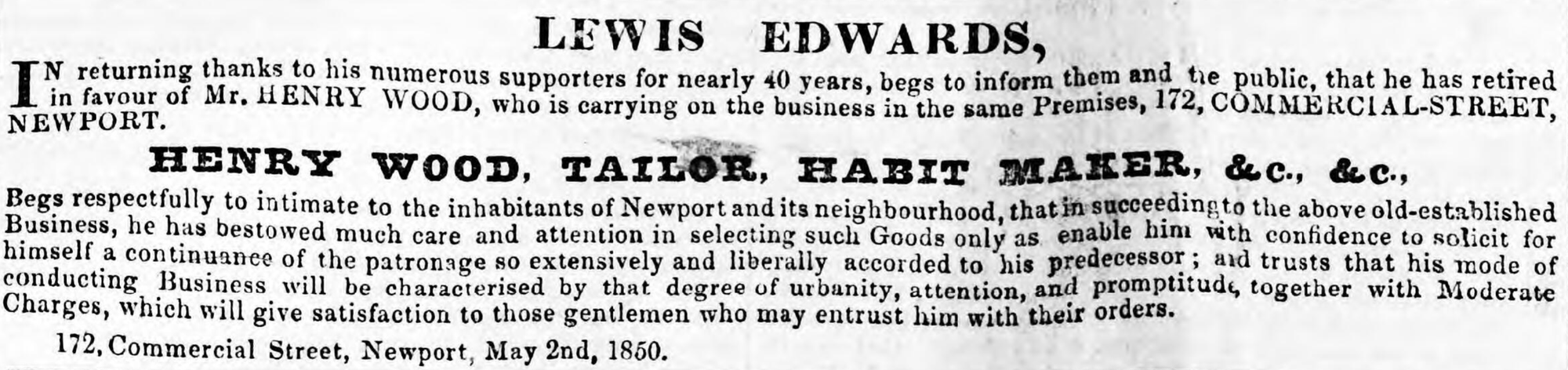
Wood advertises himself as a "Tailor, Habit Maker, &c., &c." In the 1850s, a "Habit Maker" specifically referred to a tailor who specialised in making women's riding habits—structured, formal jackets and long skirts worn for horseback riding, which required precise tailoring techniques identical to men's suiting.
Beaver Hat Manufactory
W. Watkins operated a "French and English Silk and Beaver Hat Manufactory." During this period, Beaver Hats—made from felted beaver fur—were highly prized for their water-resistance and durability, though they were increasingly being replaced by Silk Hats (top hats made of silk plush on a stiff base) as the height of gentlemen's fashion.
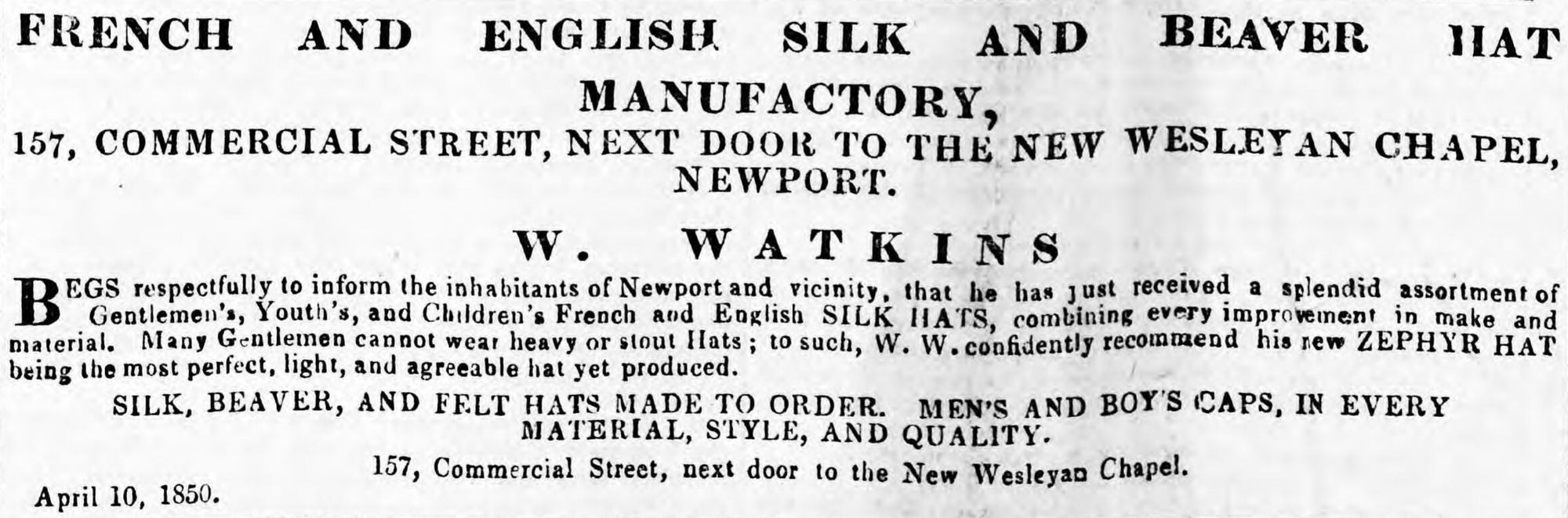
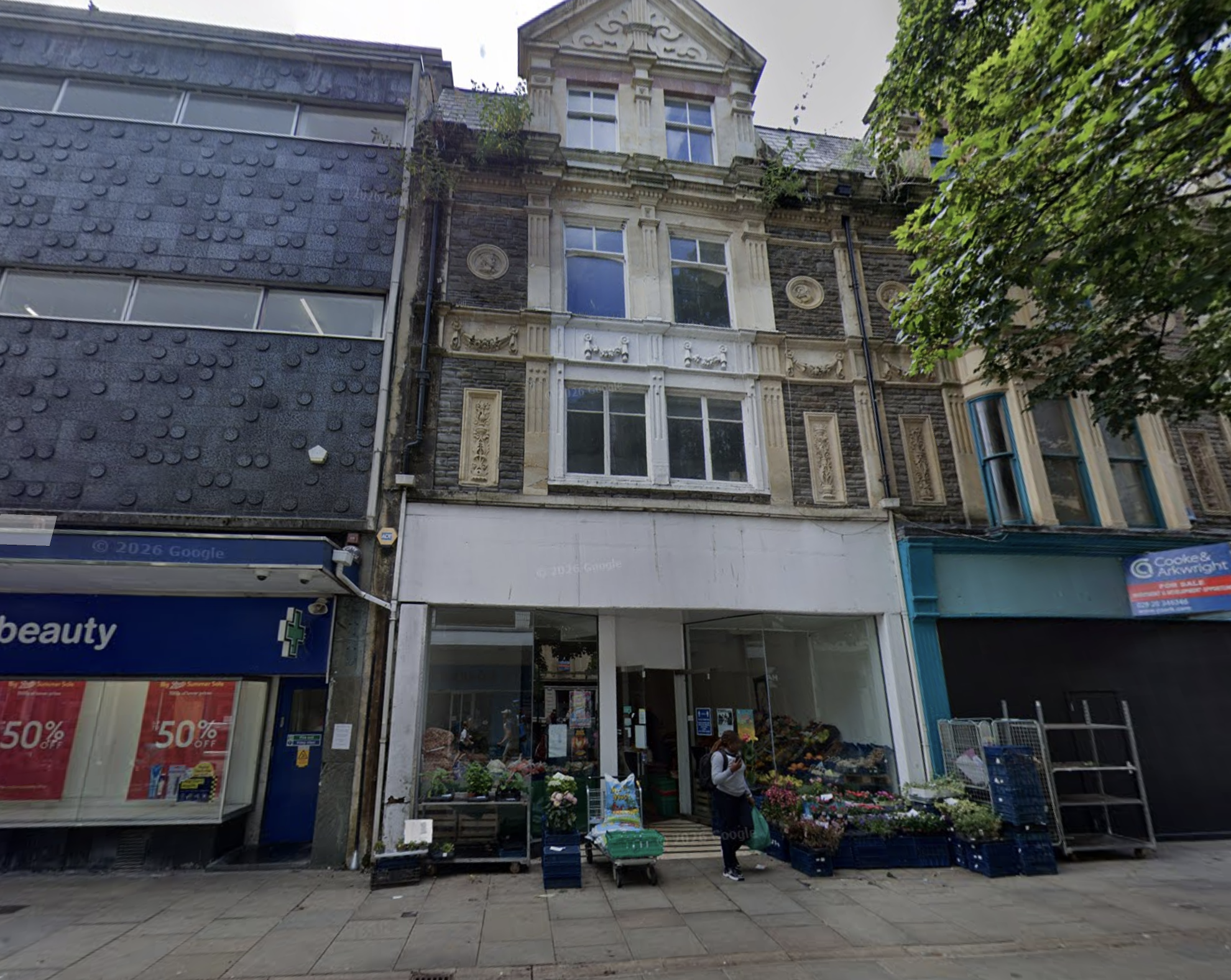
Watkins heavily promotes his new "Zephyr Hat," targeting men who found standard stout or heavy hats uncomfortable. The term "Zephyr" was widely used in Victorian textiles to denote an exceptionally lightweight, breathable, and comfortable summer style. He also offered custom-made felt hats alongside caps for men and boys.
Boots! Boots!! Boots!!!
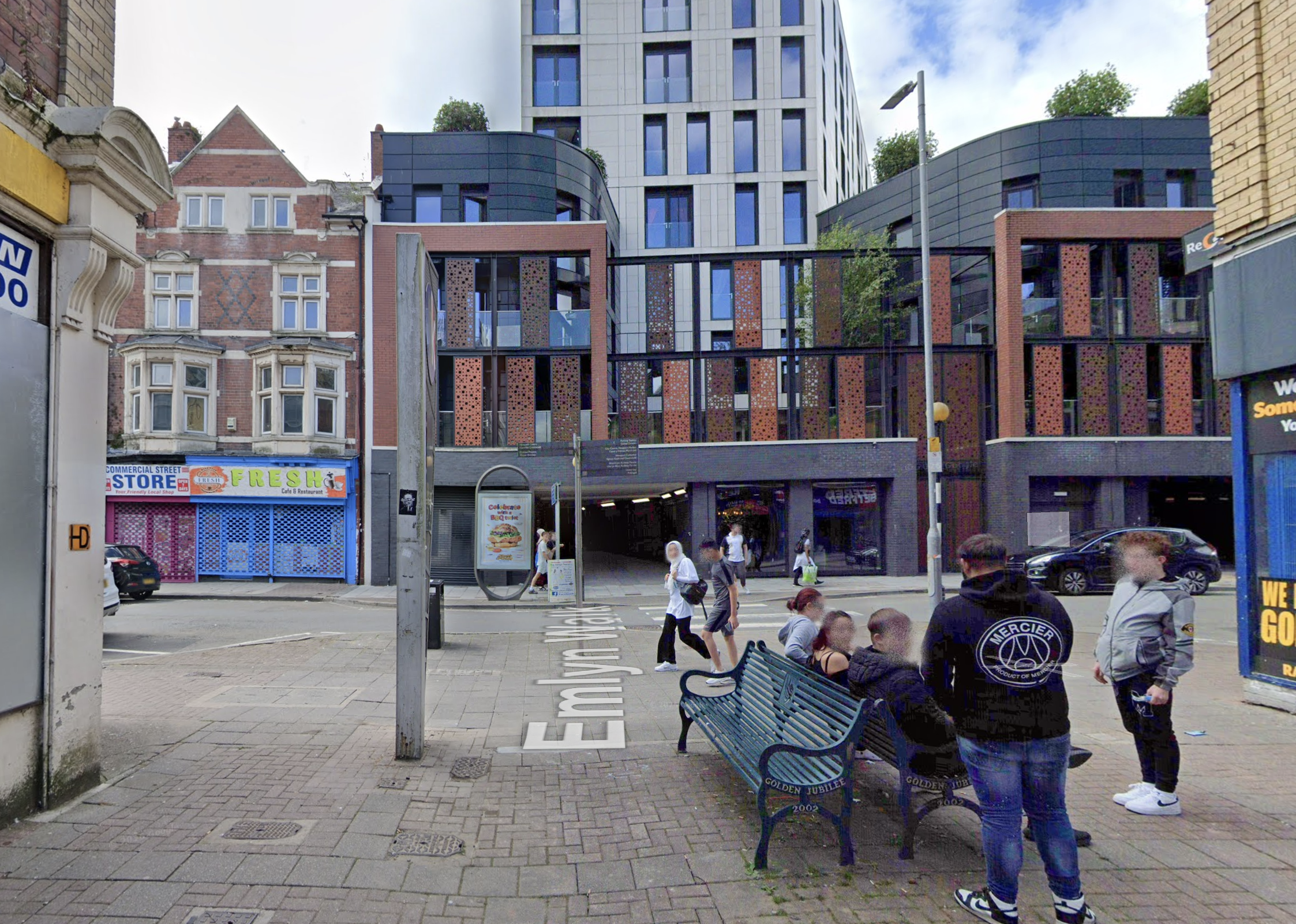
Address: Top Boot, 124-Commercial Stret opposite Cross Street
James Horner’s advertisement offers an extensive price list for Victorian footwear. Notably, the Wellington Boots listed here (selling for 12s. to 16s.) were not the rubber boots we know today. At this time, Wellingtons were leather riding boots popularised by the Duke of Wellington.
The advert does, however, explicitly mention "American and other India Rubber Goloshes" separately at the bottom, highlighting the arrival of early rubber overshoes designed to protect leather boots from Newport’s muddy streets.
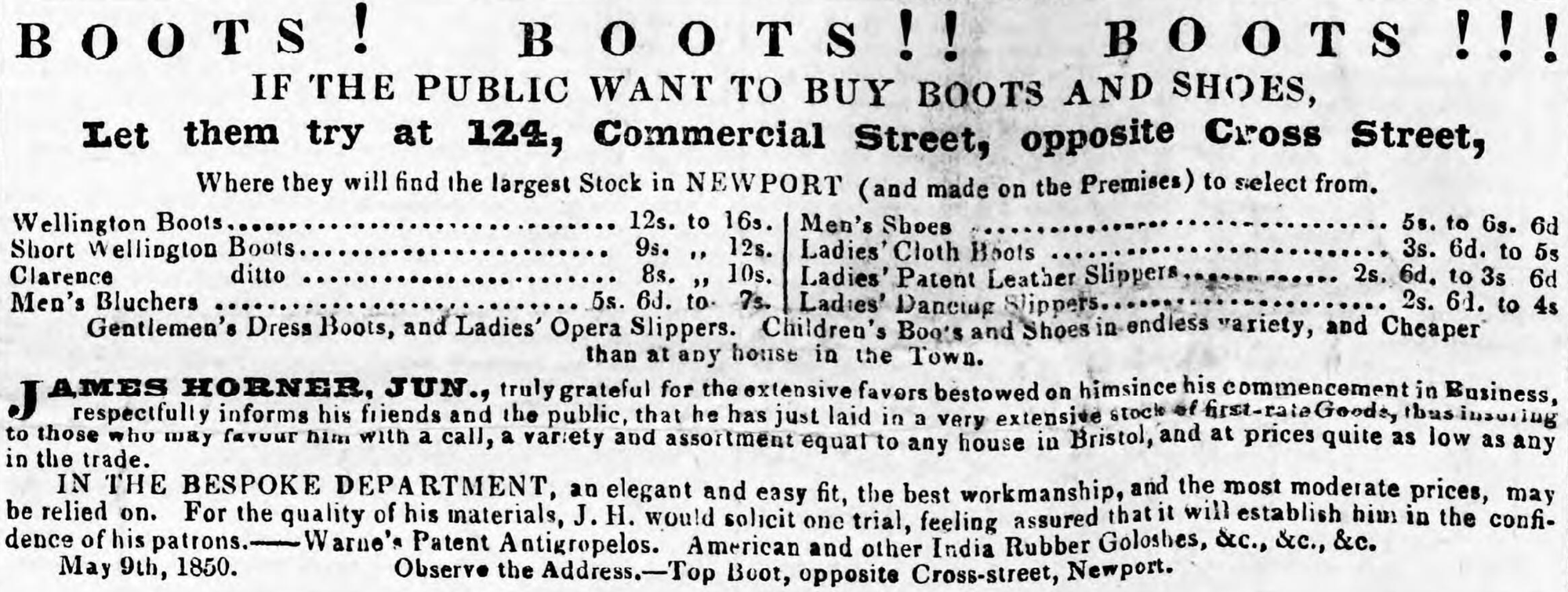
Other notable items include:
- Men's Bluchers: A sturdy, front-lacing leather work boot named after Prussian Field Marshal von Blücher.
- Clarence Boots: A popular style of short boot featuring elastic side gussets or distinct side lacings.
- Ladies’ Dancing Slippers & Opera Slippers: Lightweight, thin-soled dress shoes made of silk, satin, or soft leather, specifically designed for indoor formal evening wear and balls.
- Warne’s Patent Antigropelos: A brand of waterproof fabric leggings designed to protect horse riders' legs and trousers from mud.
Changing Landscapes: Newport’s 1850 Property Market
The property and business listings in the July 1850 edition of the Monmouthshire Merlin capture a town in transition. Some of the locations advertised are recognisable today, while others belonged to grand estates that have completely vanished beneath the modern urban layout of Newport.
The Royal Oak Inn
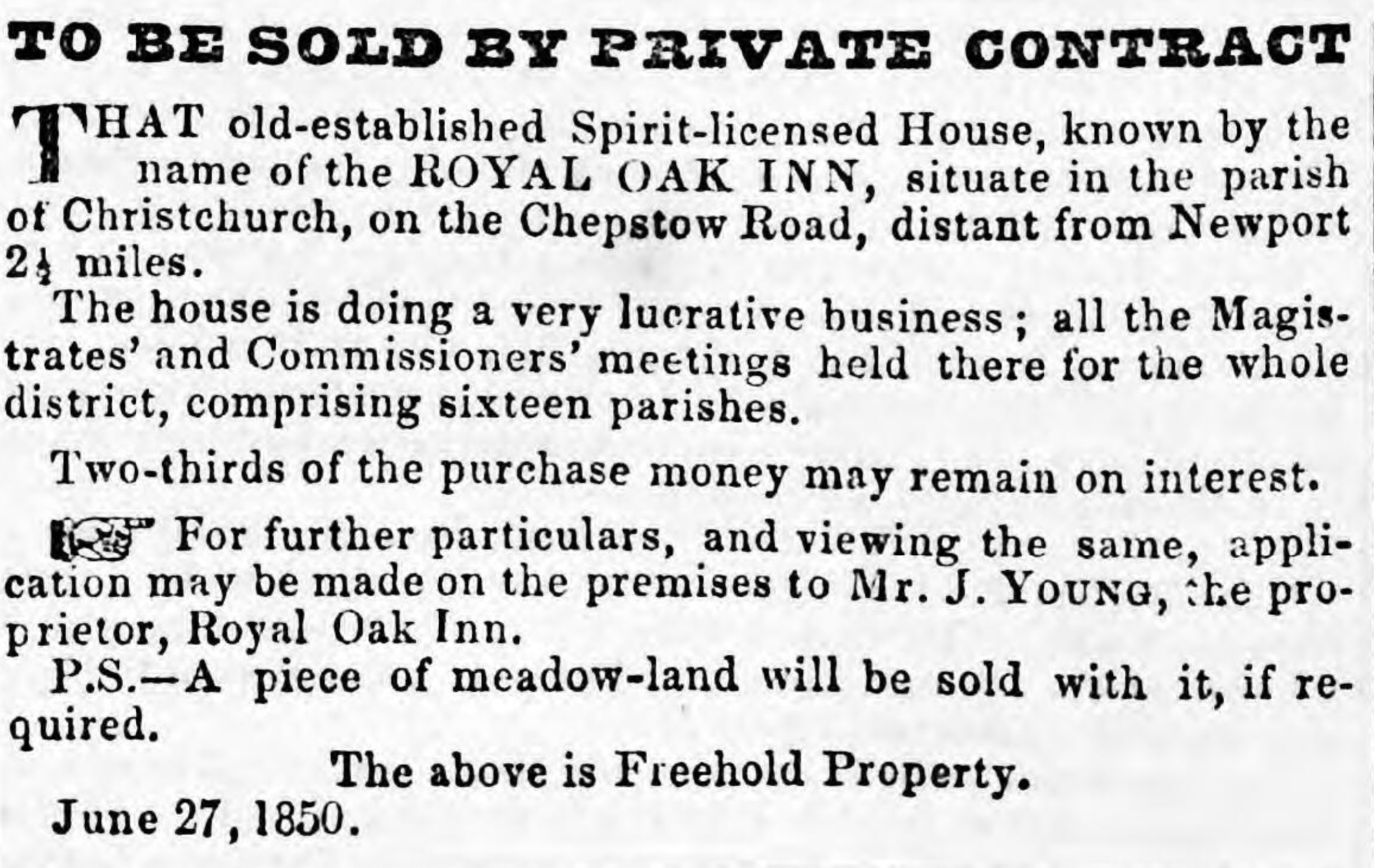
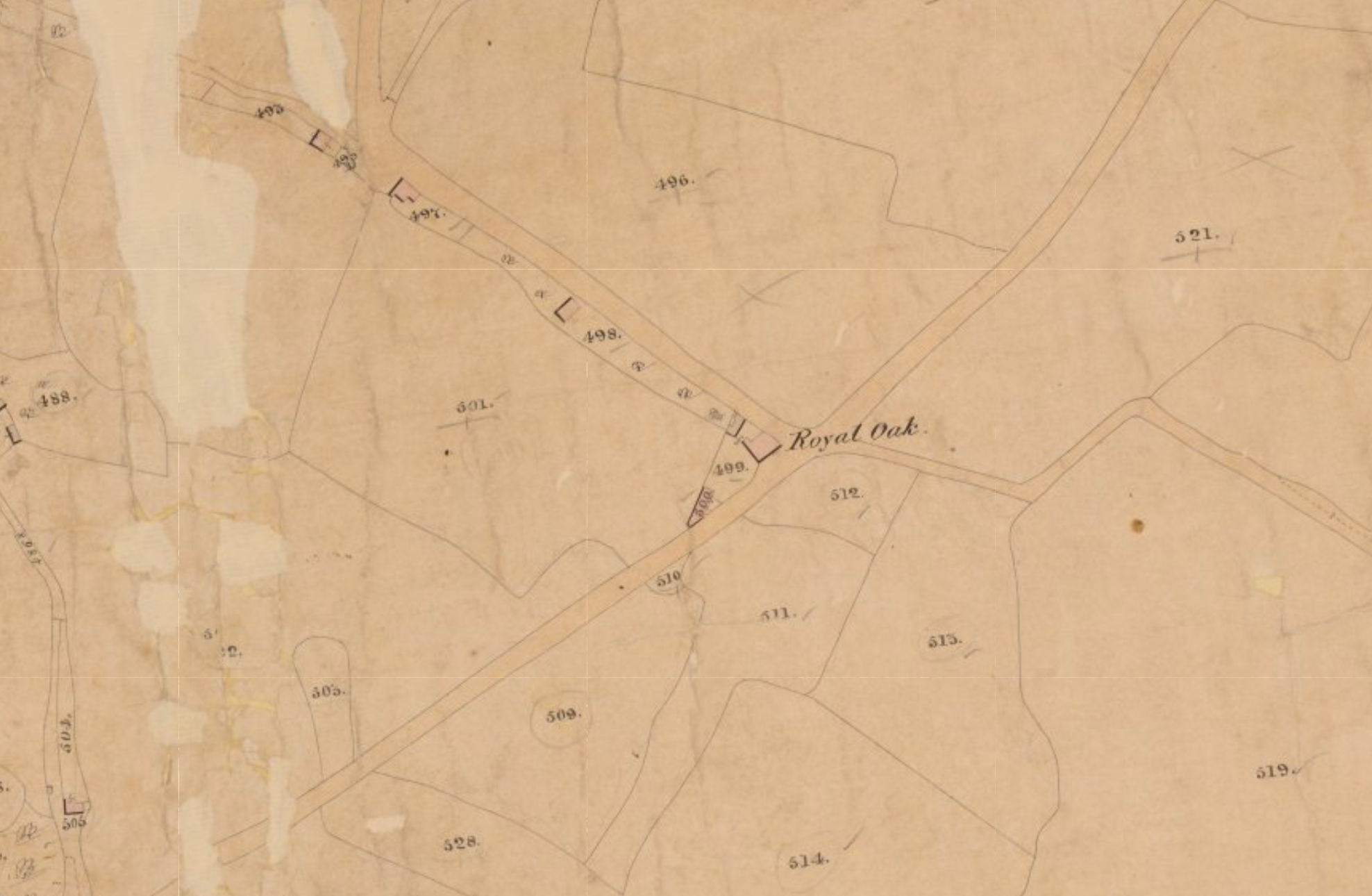
Advertised for sale by private contract, this "old-established Spirit-licensed House" is described as sitting on the Chepstow Road in the parish of Christchurch, "distant from Newport 2½ miles." In 1850, it was far more than a simple local pub; it was a critical civic hub where all the Magistrates' and Commissioners' meetings were held for a massive district comprising sixteen parishes. Unlike most other properties listed in the newspaper, the Royal Oak has survived the centuries and continues to operate as a public house today.
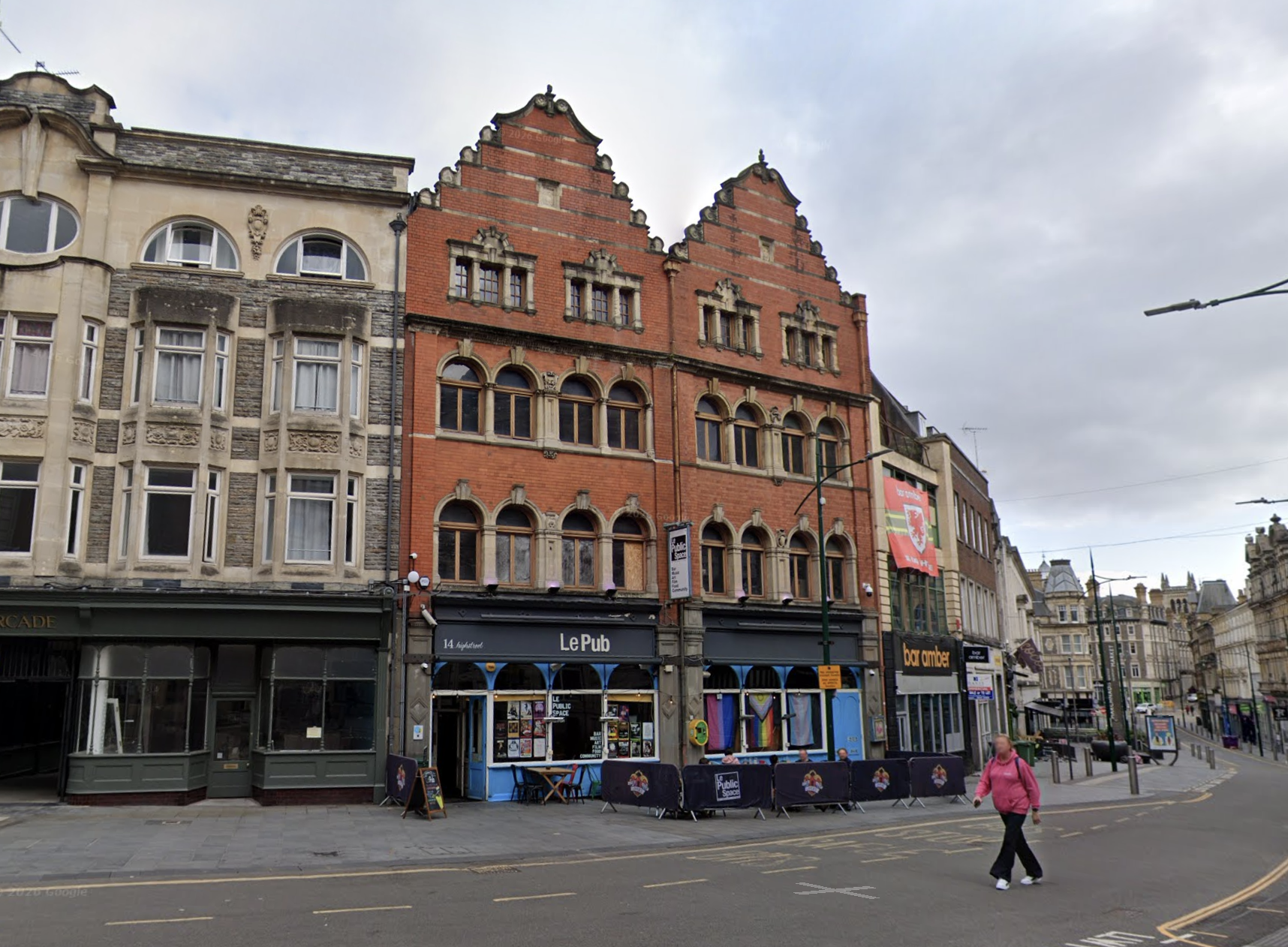
High Street Grocers
This notice offers a "capital premises to be let" situated in High Street, positioned "immediately opposite the Entrance to the South Wales Railway Station." The timing was impeccable; with the station having opened just two years prior, this shop was situated at the new gateway to the town. The listing offered the stock-in-trade, fixtures, and household furniture at a valuation. While that specific mid-century shop has long vanished, a building still stands in its place serving the changing face of High Street commerce.
Based on the research I've been doing on the High Street, the shop may have belonged to John Stewart who's grocery business appeared to have gone by 1851 and replaced by a chemist in 1852.
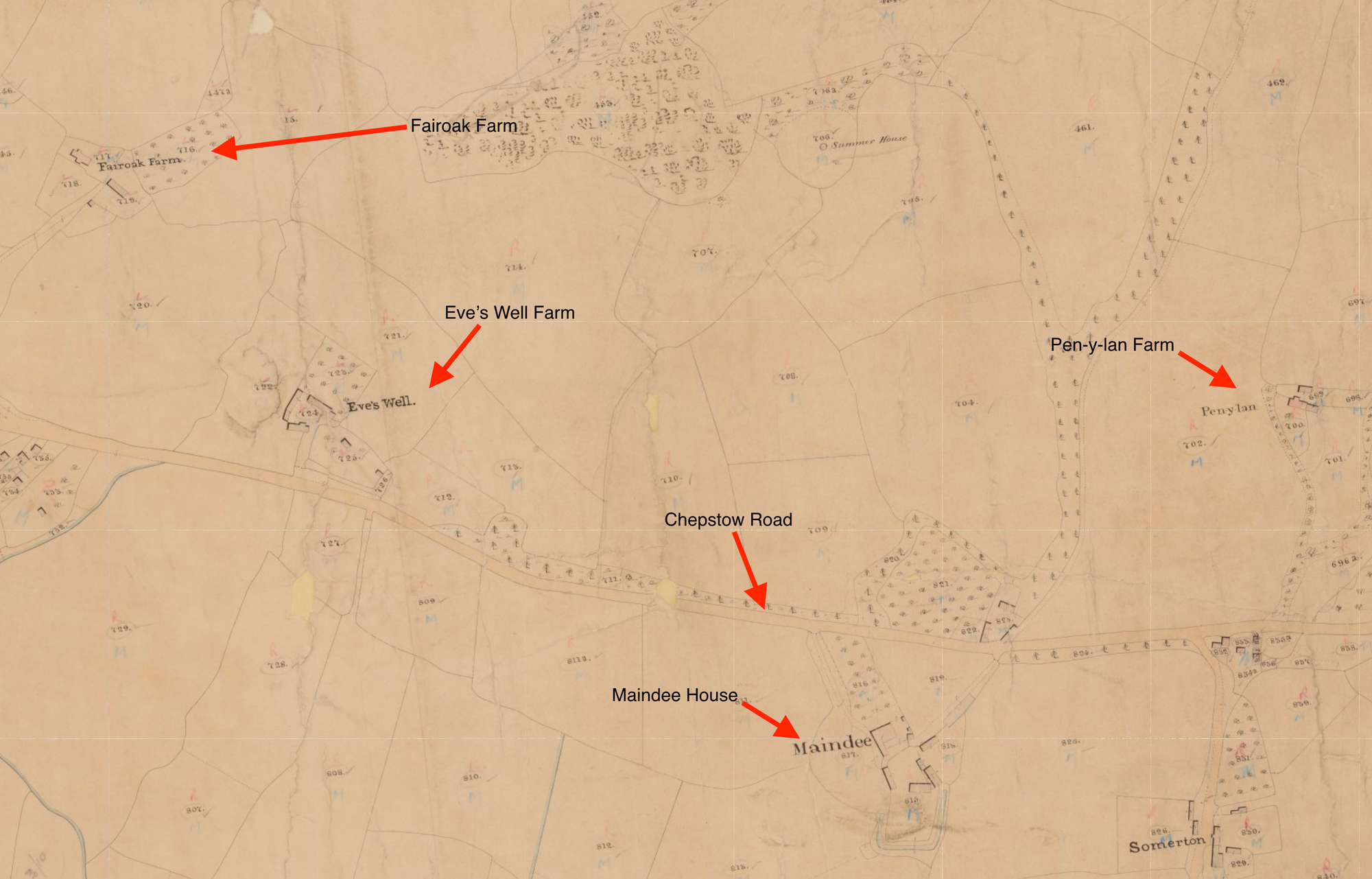
Maindee House
This major land notice marks the breaking up of the massive Maindee Estate, totaling nearly 550 acres. At its heart was Maindee House (referred to locally as "The Maindee"), a large mansion sitting within thirty acres of gardens, lawns, and "park-like paddocks" bounded by the turnpike road. The sale explicitly notes that the 500 remaining acres—which included the constituent farms of "Fair Oak," "Eve’s Well," and "Penylan"—were "chiefly eligible for Building Purposes."
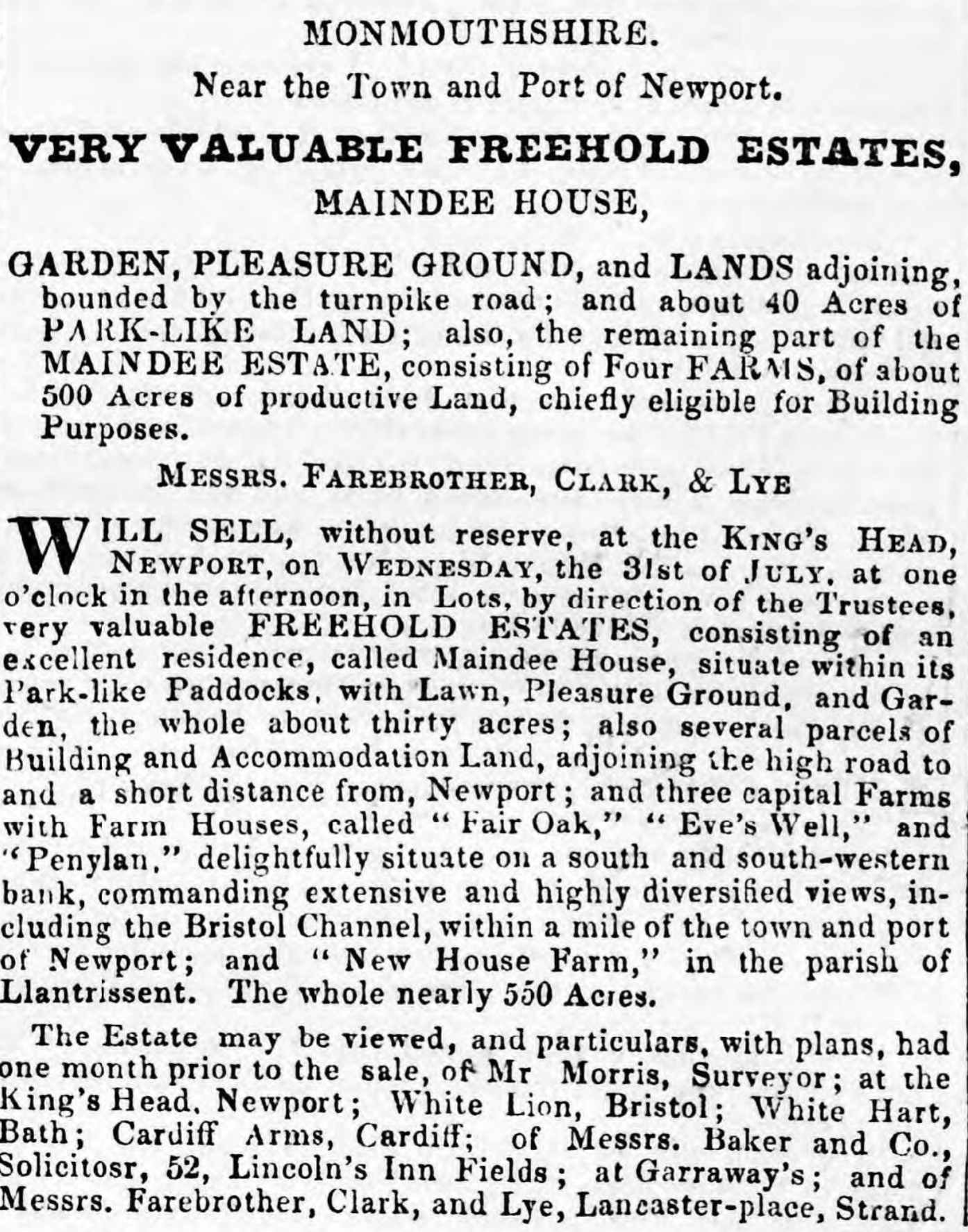
While Maindee House itself is long gone, this 1850 auction effectively fired the starting gun for the Victorian suburban development of Maindee, transforming green hills commanding views of the Bristol Channel into the densely packed streets we know today.
Dockside Industry and Entertainment in Pill
The booming maritime trade at the southern end of town is heavily reflected in two letting notices near the water:
- The Warehouse at Pill: Located adjoining the Commercial Wharf and near the Dock, this commodious warehouse featured a 50-foot by 30-foot loft with a matching store underneath divided into compartments. Offered by Mr. R. C. Magub of the Commercial Hotel, Pillgwenlly, it was designed for short-term lease by the week or month to store vital merchant trade goods like grain and potatoes.
- The Bristol Tavern: Described as a "convenient beer-house," this property was situated on the Canal-side, less than twenty yards from the entrance to the Screw Steam Wharf. It contained a parlour, kitchen, back kitchen, cellar, and a "good Three-horse stable" to accommodate travelers or heavy dray horses.
Fine Art and Fine Living
The paper also catered to the domestic tastes of Newport's wealthier residents with listings for upscale lifestyle items and residences:
- Water-Colour Drawings & Engravings Sale: On Thursday, July 11th, 1850, Messrs. Graham held a public auction at 162, Commercial-Street (with offices shared with Blue Broom, Raglan). They offered a select collection of watercolours and engravings in ornamental gilt, oak, and maple frames.
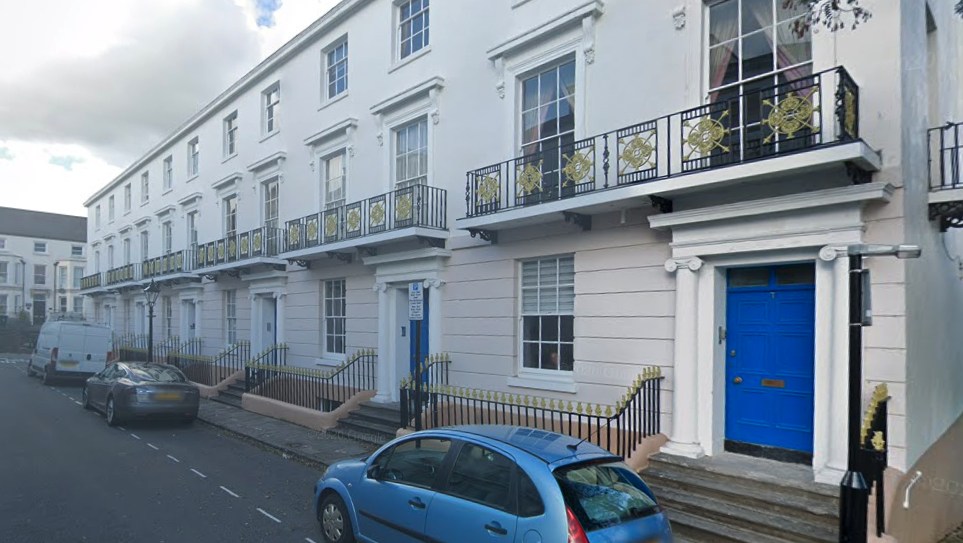
- 8, Victoria Place: For those looking to move into one of the town's most prestigious residential enclaves, No. 8, Victoria Place was offered to let, furnished or unfurnished, complete with a coach-house and stable. Prospective tenants were directed to apply to Mr. Logan next door at No. 7. Happily, Victoria Place remains beautifully intact today, still standing as a remarkably grand row of historic town houses that gives modern residents a direct, physical link to Newport's mid-Victorian prosperity.
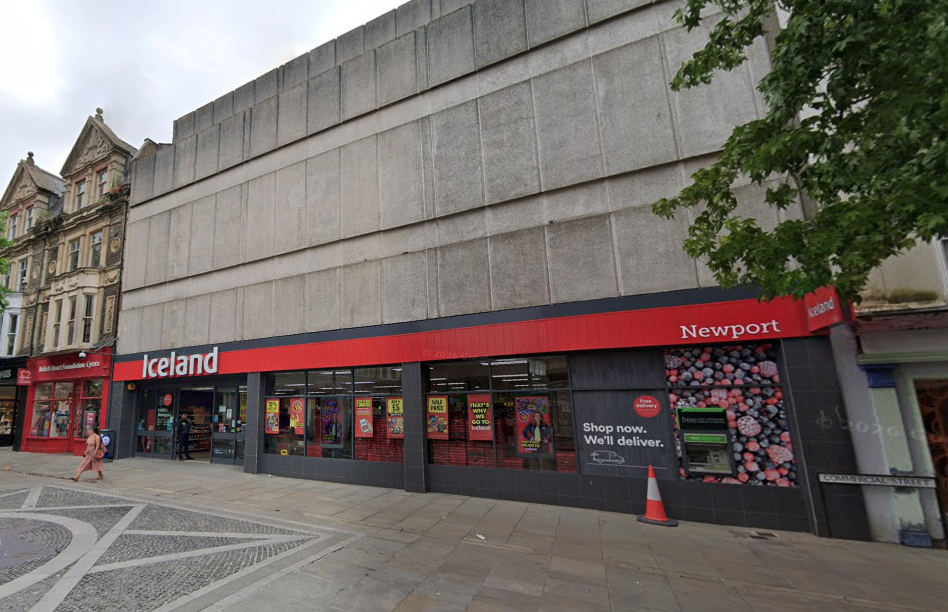
With the exception of the resilient Royal Oak, 8 Victoria Place and the altered plot on High Street, everything else in these mid-century listings has disappeared from the modern map, leaving only these printed columns as a record of their existence.
Shaping Young Minds: The Midsummer Return to School
In July 1850, middle-class parents reading the Monmouthshire Merlin were faced with an array of choices for their children’s education. This was an era before standard state schooling; education was a private commodity, run out of large houses by independent masters, mistresses, and ministers.
Stow Hill emerged as the undisputed academic hub of Newport, though options stretched to Commercial Road and nearby Caerleon. The notices reveal a strictly segregated world—not just by gender, but by the precise future mapping of a child's social and professional life.
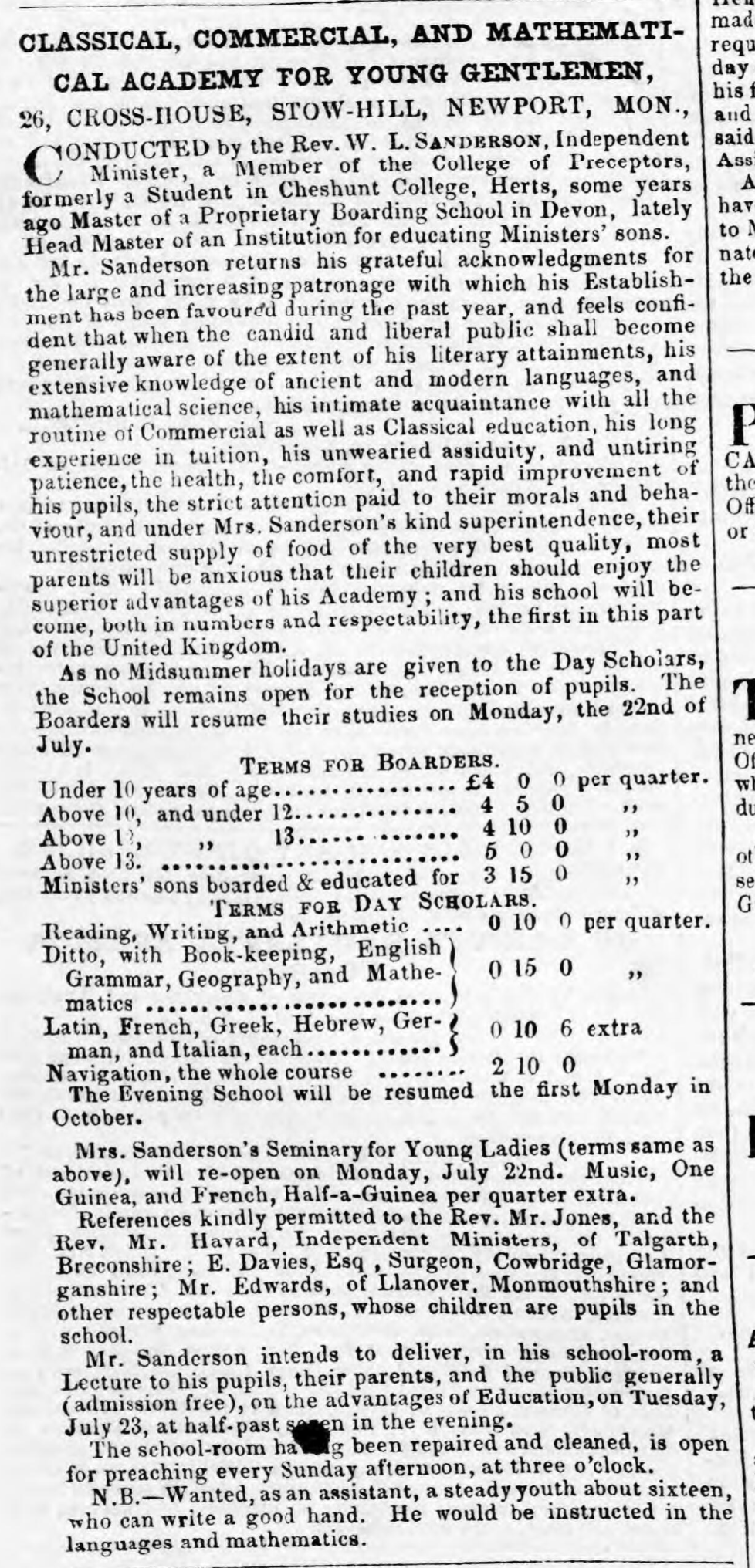
Classical, Commercial, and Mathematical Academy for Young Gentlemen
This comprehensive notice provides an incredible look at the academic expectations of the day. Rev. Sanderson offers a two-tier system for Day Scholars:
- The Basic Tier (10s. per quarter): Strictly "Reading, Writing, and Arithmetic."
- The Commercial Tier (15s. per quarter): Adds Book-keeping, English Grammar, Geography, and Mathematics—the essential toolkit for a boy destined to inherit a merchant business or work in Newport's bustling docks.
For those aiming higher, parents could pay 10s. 6d. extra per language for Latin, French, Greek, Hebrew, German, and Italian. Crucially, a specialised course in "Navigation" was offered for a steep £2 10s., a direct reflection of Newport's status as a booming maritime port where captains and maritime merchants needed advanced mathematical and charting skills.
Boarding fees ranged from £4 to £5 per quarter based on age, though Sanderson offered a discounted rate of £3 15s. specifically for the sons of fellow Ministers. The advert also notes that Mrs. Sanderson ran a parallel "Seminary for Young Ladies" on the premises, ensuring the genders were educated separately under one roof.
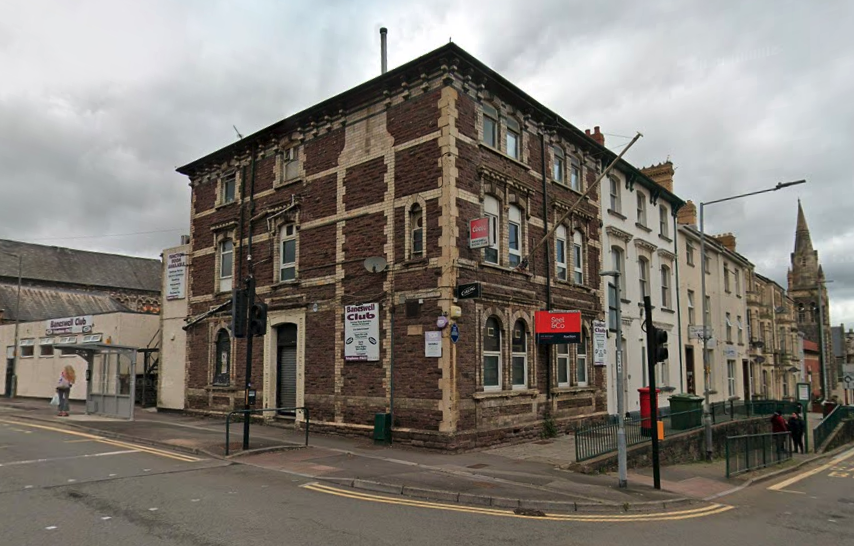
Stow Hill's Other Academies
Stow Hill hosted several competing establishments, all timing their post-midsummer re-openings within days of each other:
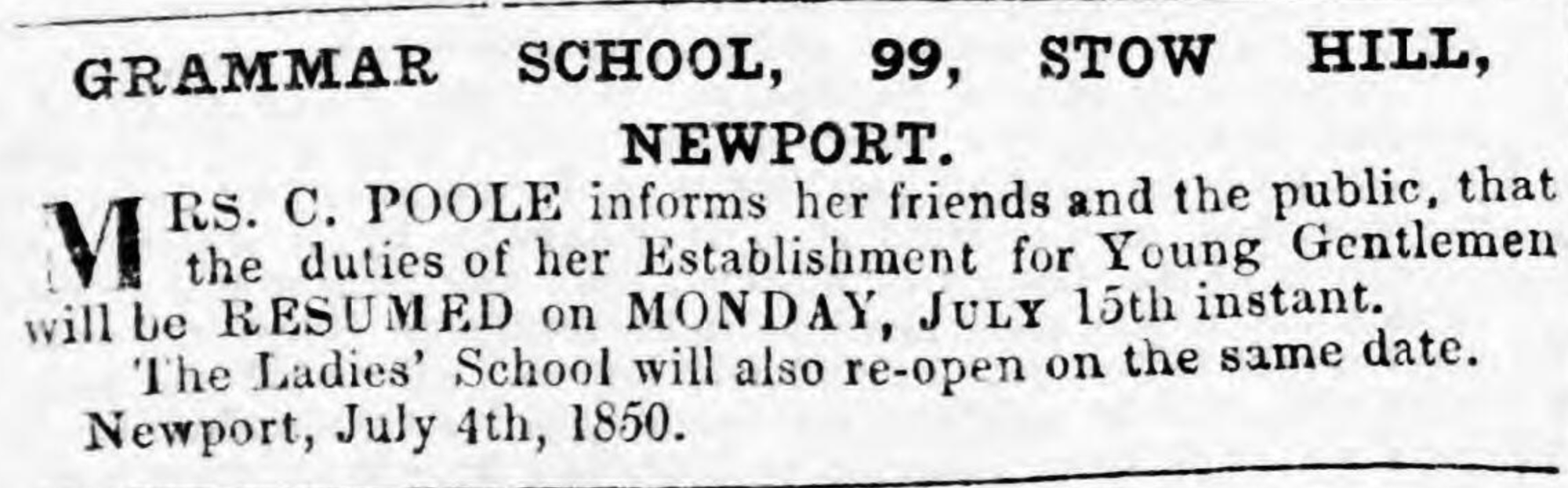
- Grammar School, 99, Stow Hill: Conducted by Mrs. C. Poole, this academy for "Young Gentlemen" reopened on July 15th, alongside a separate "Ladies' School" under her governance.
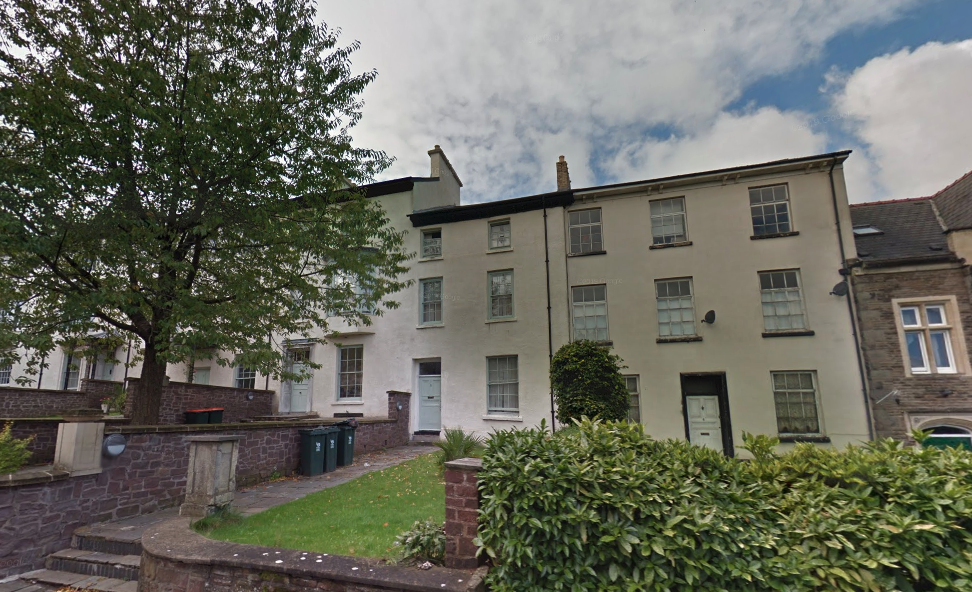
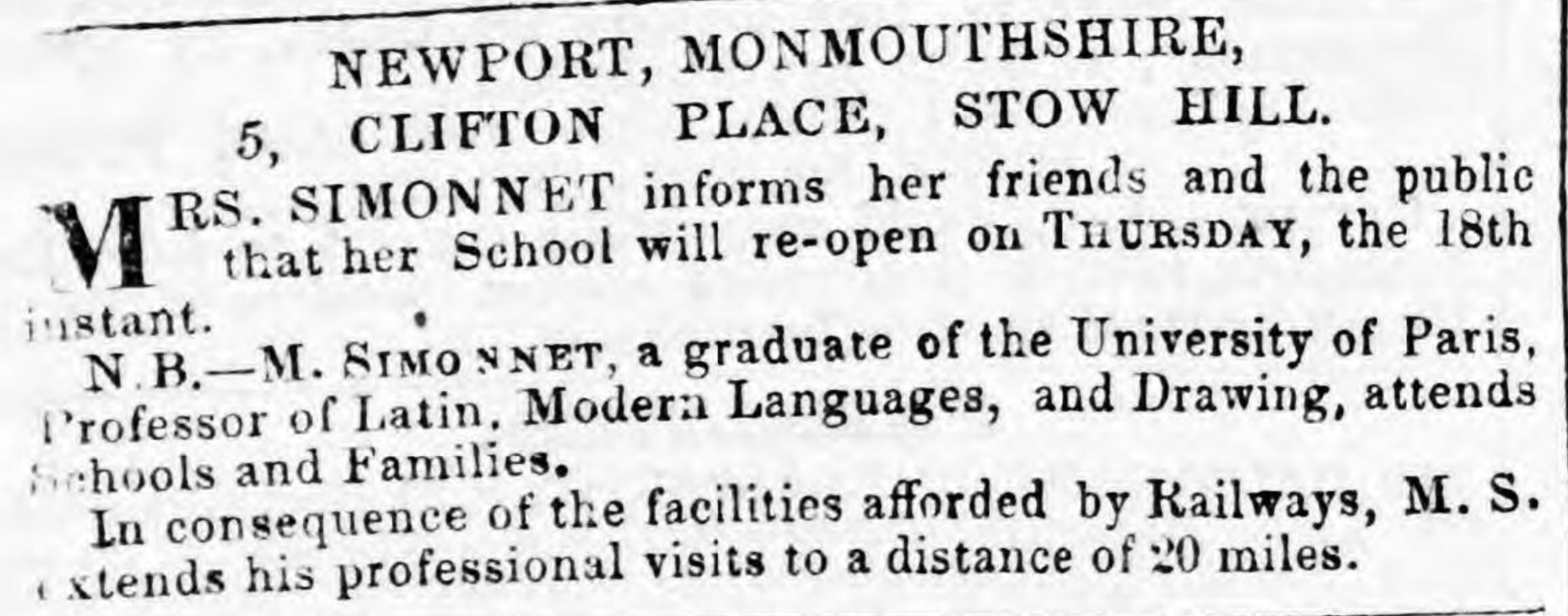
- 5, Clifton Place, Stow Hill: Run by Mrs. Simonnet, this notice highlights a fascinating aspect of the newly connected landscape. Her husband, M. Simonnet (a graduate of the University of Paris and Professor of Latin, Modern Languages, and Drawing), explicitly states that "in consequence of the facilities afforded by Railways," he was now able to extend his professional visiting teaching services to families and schools up to 20 miles away.
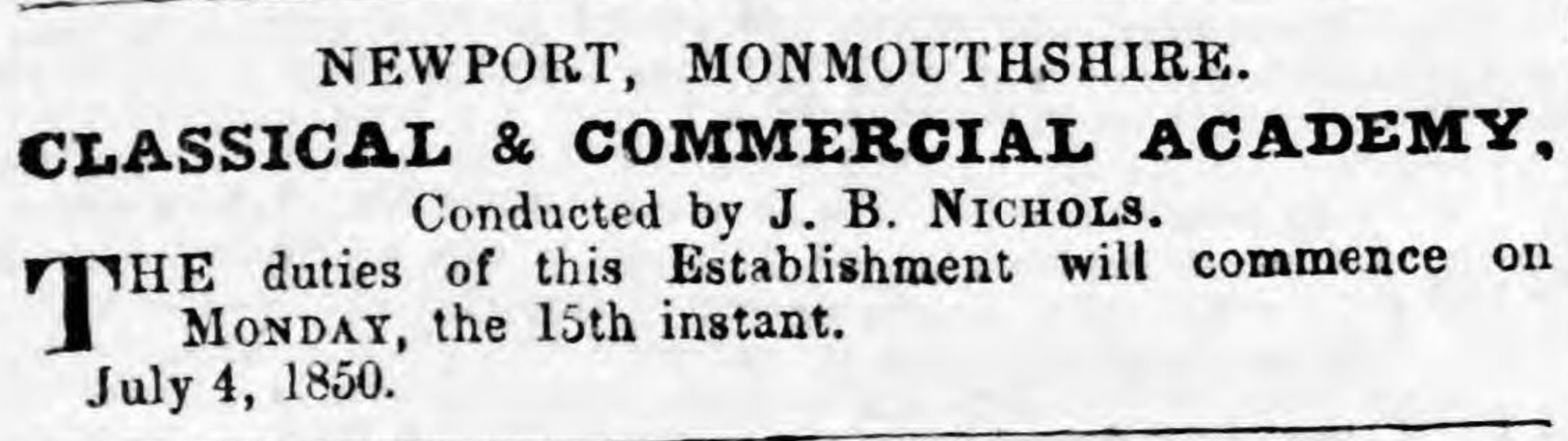
- Classical & Commercial Academy: Another central option for boys, conducted by J. B. Nichols, which resumed its duties on Monday, July 15th.
Trains Between Swansea and Chepstow
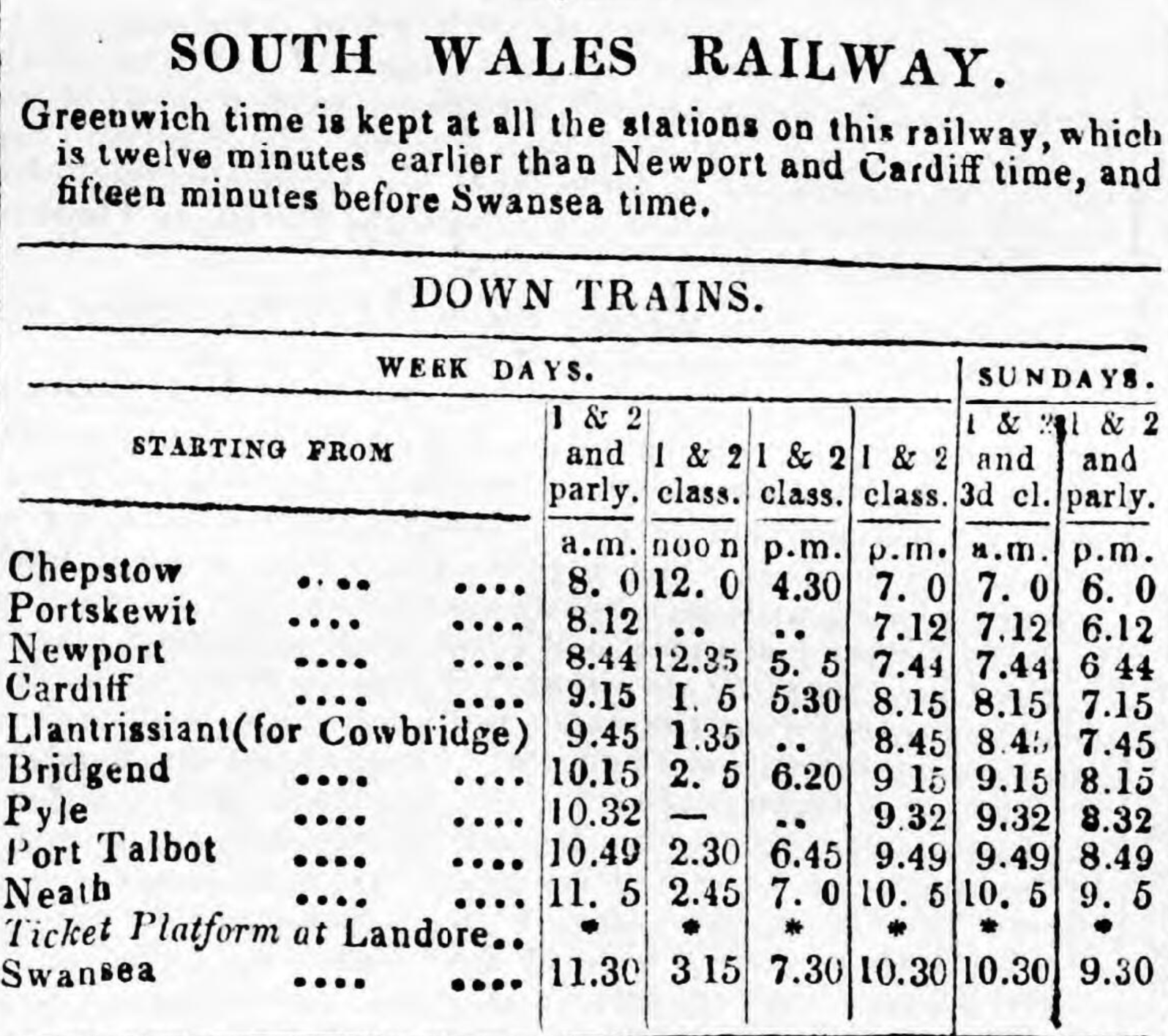
For the Newport resident reading the Monmouthshire Merlin in July 1850, the arrival of the South Wales Railway timetable was a look directly into the future. The infrastructure reshaping their daily lives was astonishingly fresh; the vital rail link and tunnel connecting Newport to Cardiff had only opened two years prior, in 1848. Before this, a journey west meant a slow, exhausting trip by road. Now, as the "Up" and "Down" timetables show, a local traveller could catch the 9:40 a.m. train from Newport and arrive in Cardiff by 10:08 a.m.—a brisk 28 minutes.
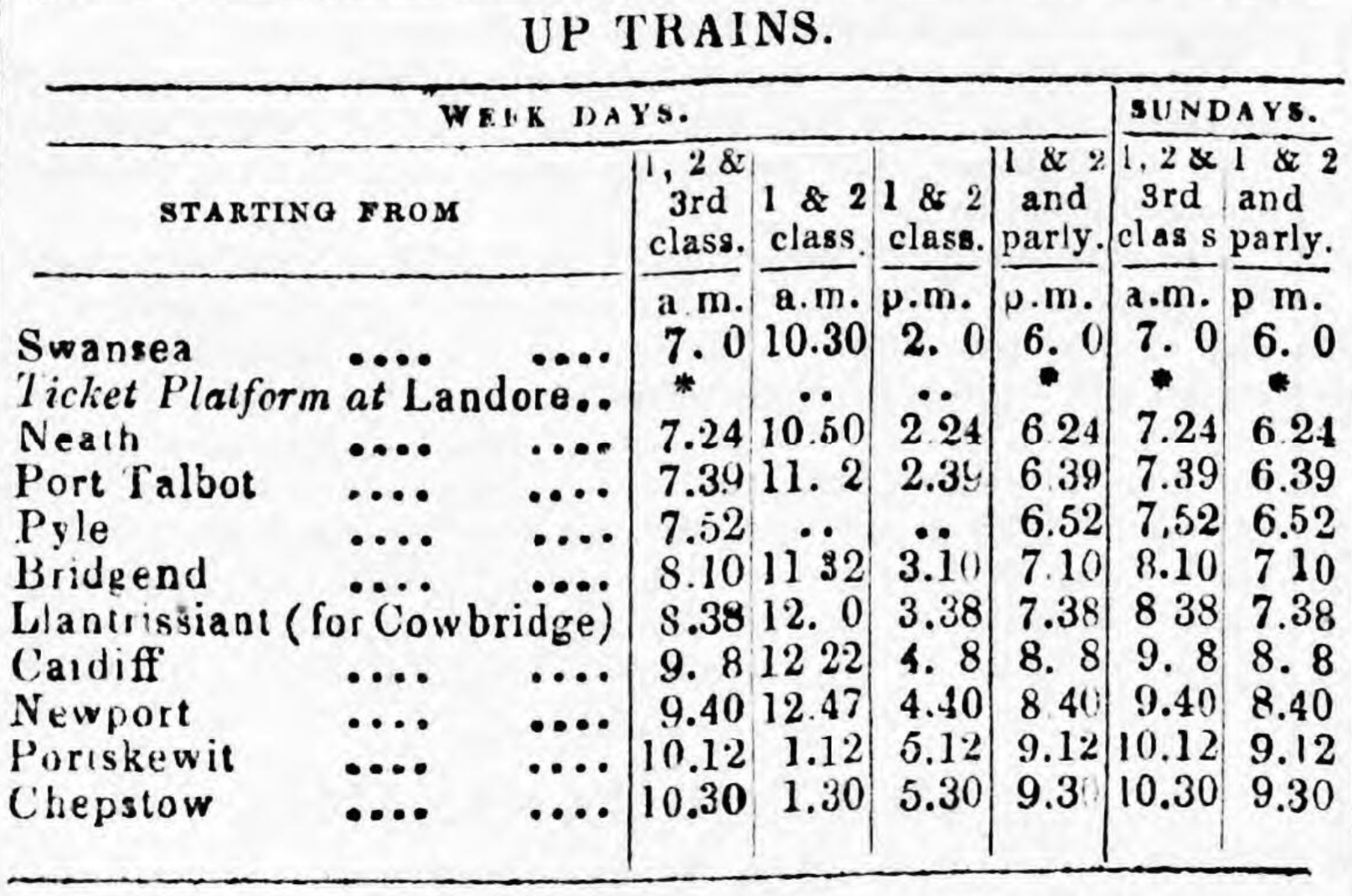
However, this unprecedented speed brought a bizarre new headache for the Victorian public: the death of local time.
For centuries, every town in Britain set its clocks by the sun, meaning true local time varied depending on how far east or west you lived. But steam trains moved too fast for a country running on disjointed clocks. As detailed in the railway notice, the company was forced to enforce "Greenwich time" across all stations.
To avoid missing their train, a passenger standing on the platform at Newport had to remember that Greenwich Mean Time was "twelve minutes earlier than Newport and Cardiff time, and fifteen minutes before Swansea time." Step inside the station, and you were suddenly living a quarter of an hour ahead of the town clock outside—a striking example of how the railway age was fundamentally rewriting human concepts of time and distance right here in Newport.
Emigration to New York
While most travel notices in the Monmouthshire Merlin dealt with local day trips or train times to Cardiff, this striking advertisement looked much further afield. In July 1850, the concept of leaving home permanently was on the minds of many in South Wales, driven by industrial shifts and economic pressures. For a Newport family looking for a completely new life, crossing the Severn to Bristol was the first step on a journey across the Atlantic.
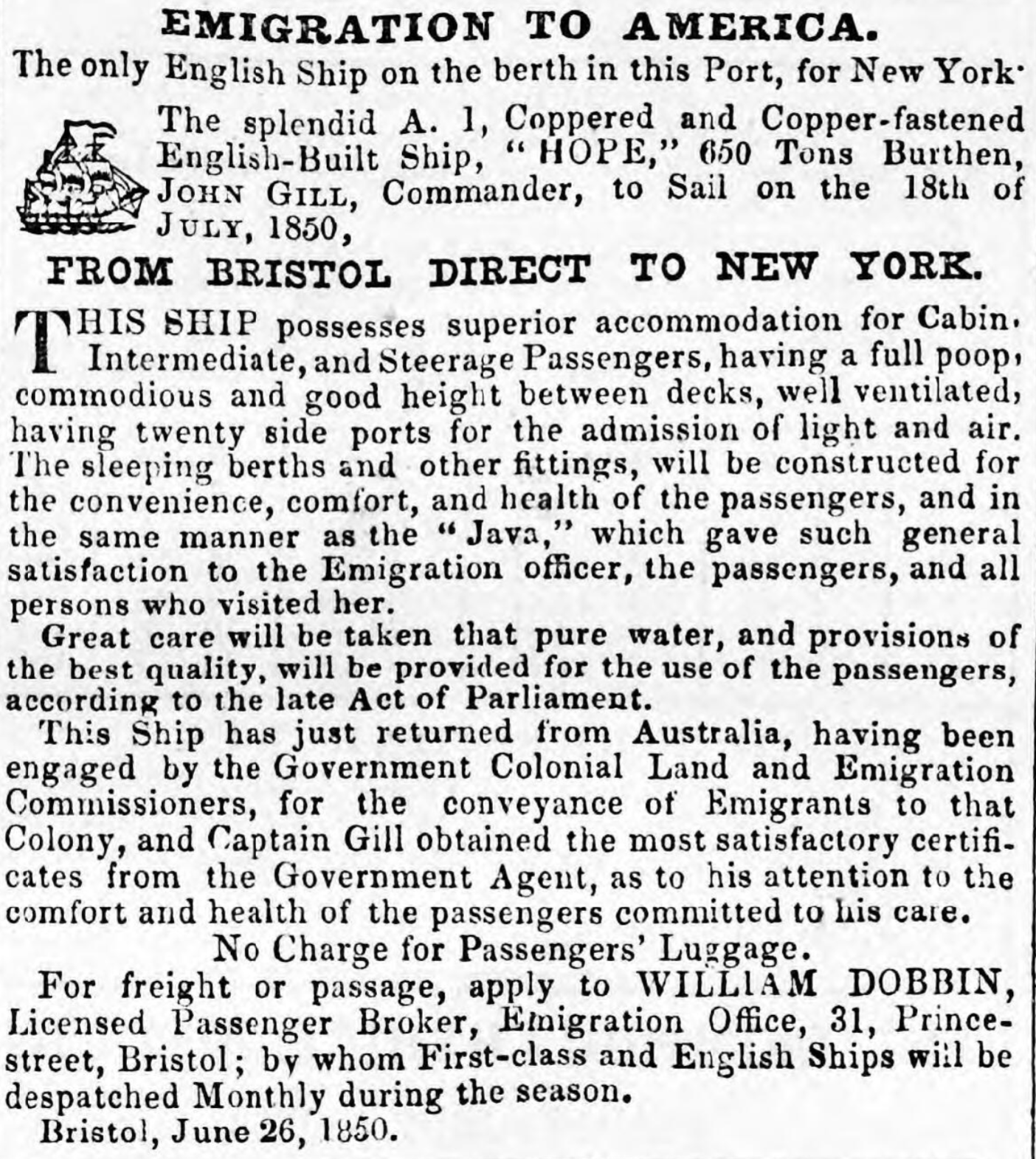
The advertisement targets those looking to cross the Atlantic aboard the "Hope," a 650-ton, English-built ship under the command of John Gill. The notice highlights several key details that provide a fascinating look at mid-19th-century passenger travel:
- "Coppered and Copper-fastened": This technical detail was a major selling point. Covering a wooden hull in copper sheeting prevented biofouling (like barnacles and wood-boring worms), ensuring the ship sailed faster and remained structurally sound during the long Atlantic crossing.
- The Three-Tier Class System: Accommodation was strictly divided into Cabin, Intermediate, and Steerage. While Cabin passengers enjoyed the comforts of the "full poop" (the high deck at the back of the ship), steerage passengers lived below deck.
- The Promise of Health and Air: To reassure families terrified of the notorious "coffin ships" of the era, the advert makes a point of mentioning that the ship has twenty side ports for light and air, "commodious and good height between decks," and sleeping berths built to look like another successful vessel named the Java.
- Parliamentary Standards: The notice promises that "pure water, and provisions of the best quality" will be provided "according to the late Act of Parliament." This refers to the Passenger Acts of the late 1840s, which the British government introduced to legally force shipowners to provide basic minimum rations of water, biscuit, flour, and rice to stop passengers starving or dying of cholera.
- A Veteran of the Colonies: Before this July voyage to New York, the Hope had just returned from a long voyage to Australia, having been hired by the Government Colonial Land and Emigration Commissioners to transport British emigrants there.
For the local reader, bookings were handled via William Dobbin, a licensed passenger broker based at 31, Prince Street, Bristol, who advertised that first-class and English ships would be dispatched monthly throughout the season.
The Nervous System of Victorian Newport: The 1850 Post Table
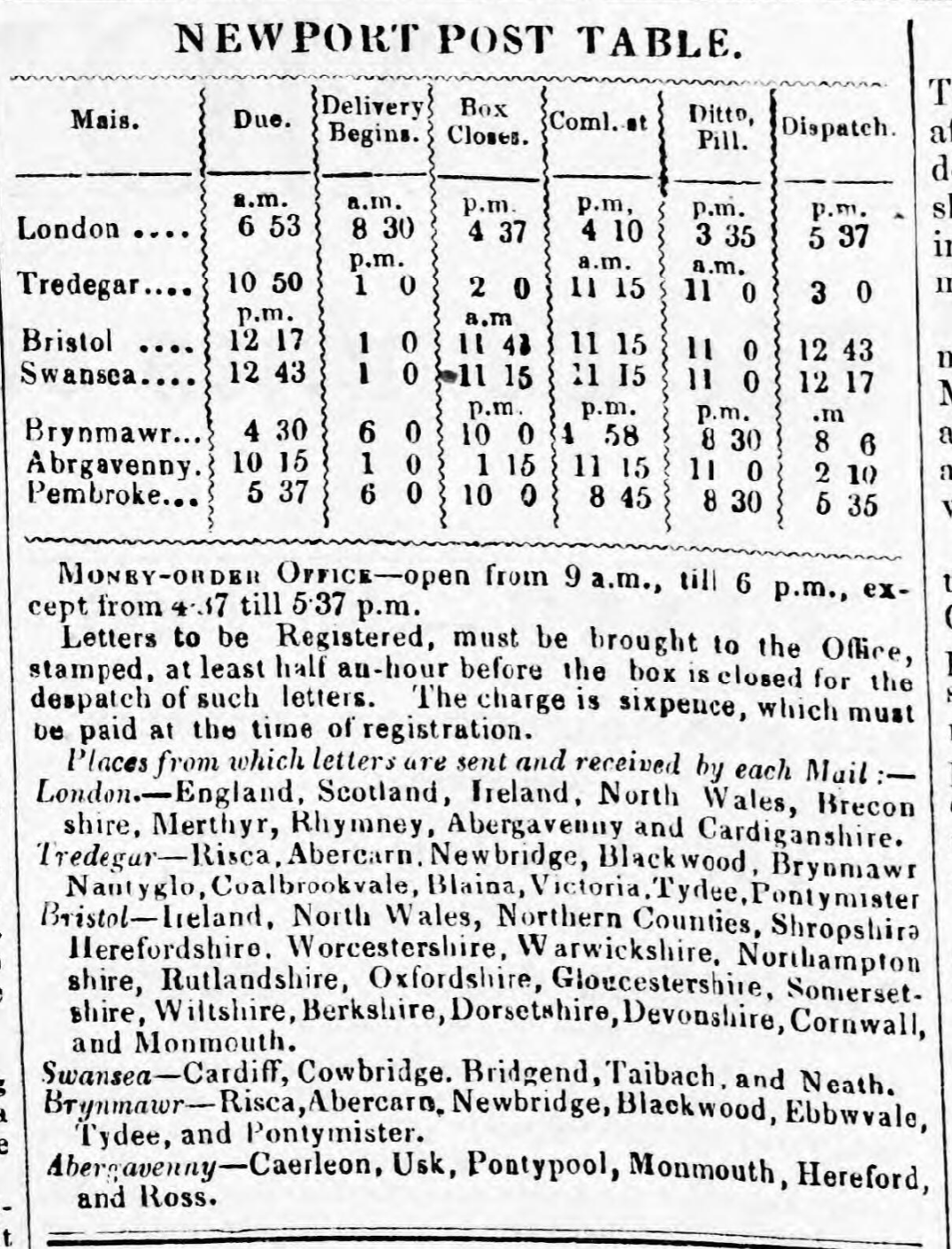
For a Newport merchant, shopkeeper, or resident in July 1850, checking the weekly "Newport Post Table" was a matter of practical necessity. In an era when business moved at the speed of paper, missing the postal deadlines meant a delay of days.
The table details the complex schedule for the arrival, sorting, collection, and departure of the "Mails" across the network, divided by major destination hubs.
Deciphering the Clockwork Columns
To understand how a day in the life of a Newport resident worked, we can track the columns from left to right:
- Due: When the incoming mail physically arrived in Newport.
- Delivery Begins: The time the postmen actually set out on the streets to deliver letters, or when the public could collect them at the window.
- Box Closes: The absolute deadline to drop a letter into the post box at the main office if you wanted it on the next outbound connection.
- Coml. st & Ditto, Pill: The specific, earlier cutoff times to drop letters off at the secondary receiving houses on Commercial Street and Pillgwenlly (Pill) before they were walked up to the main office.
- Dispatch: The exact time the mail coach or train departed the town.
Tracking the Local Patterns
Look closely at the times, and you can see a highly coordinated system operating right under the town's nose:
- The London Lifeline: The London mail train arrived in Newport early in the morning at 6:53 a.m. Sorting happened quickly, with deliveries hitting the streets by 8:30 a.m. If a Newport businessman wanted to reply to London that same day, he had until 4:37 p.m. to get his letter into the main box, or 4:10 p.m. if he used the Commercial Street box, before the train steamed out at 5:37 p.m.
- The Valley Connections: Mail from the industrial valleys arrived via separate routes. The Tredegar mail arrived at 10:50 a.m., while Brynmawr didn't arrive until 4:30 p.m., showing how deeply connected Newport was to the coal and iron hubs of the hinterland.
Postal Network Hubs
The text beneath the table lists the specific localities served by each primary mail route. It shows that in 1850, "Swansea" was the clearing hub for mail going to nearby Cardiff, Cowbridge, Bridgend, Taibach, and Neath.
Meanwhile, the "Bristol" mail acted as Newport's gateway to the world, handling post destined for Ireland, North Wales, the West Country (Somerset, Devon, Cornwall), and the English Midlands.
Hidden Regulatory Quirks
The small print at the bottom offers two brilliant details about mid-Victorian bureaucracy:
- The Registered Letter Fee: To register a letter for safety, it had to be brought to the office stamped "at least half an hour before the box is closed." The cost was a flat sixpence, paid in cash at the time of registration. For context, sixpence was more than the cost of the entire Monmouthshire Merlin newspaper, making registration a premium service for high-value items or legal documents.
- The Money Order Lunch Break: The Money-Order Office advertised regular hours from 9:00 a.m. to 6:00 p.m., with one incredibly specific exception: it completely closed from 4:37 p.m. till 5:37 p.m. This exact one-hour shutdown perfectly aligns with the rush to process, secure, and pack the outbound London Mail dispatch at 5:37 p.m.—all hands would have been pulled off the counter to bag the mailbags!
Business Precautions
Not all notices in the Monmouthshire Merlin were friendly invitations to buy fine hats or imported tea. Some were blunt legal shields, designed to protect a business from an employee who had either fallen out of favour or gone rogue.
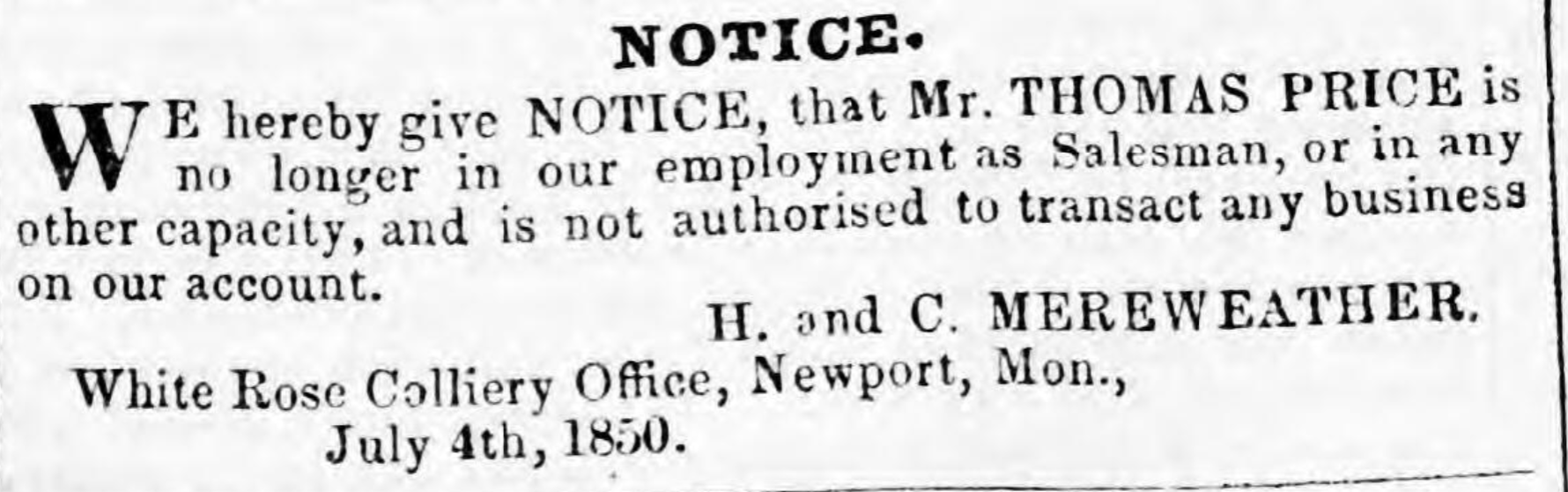
The text is short, sharp, and leaves no room for misinterpretation:
"WE hereby give NOTICE, that Mr. THOMAS PRICE is no longer in our employment as Salesman, or in any other capacity, and is not authorised to transact any business on our account."
The Context: Cutting Off Fraud at the Pass
In 1850, a colliery salesman didn't just sell coal; they frequently collected large cash payments, negotiated bulk supply contracts with ship captains at the Newport docks, and signed receipts on behalf of the colliery owners. Because there were no telephones or centralised digital banking systems to verify transactions, business relied entirely on face-to-face trust and paper credentials.
If a salesman was dismissed—or walked away on bad terms—there was a terrifying window of opportunity where they could continue visiting customers, collecting cash for "orders," and pocketing the money before anyone realised they had left the firm.
By paying to print this public notice, H. and C. Mereweather were legally covering themselves. They were telling the merchants, shipmasters, and coal dealers of Newport:
If Thomas Price takes your money after July 4th, that is between you and him—it has nothing to do with the White Rose Colliery.
It adds a brilliant bit of human drama and tension to the article, showing that Newport’s booming industrial wealth came with plenty of anxiety.
Victorian Charity: The Newport Dispensary
In 1850, a working-class person in Newport facing illness or injury could not simply go to a doctor; medical care was entirely private and completely unaffordable for the poor. Instead, the town relied on the Newport Dispensary, a charitable institution funded by a classic Victorian system of paternalistic benevolence—where the affluent paid annual subscriptions to provide basic medicine and outpatient advice to the indigent.
The July Financial Report
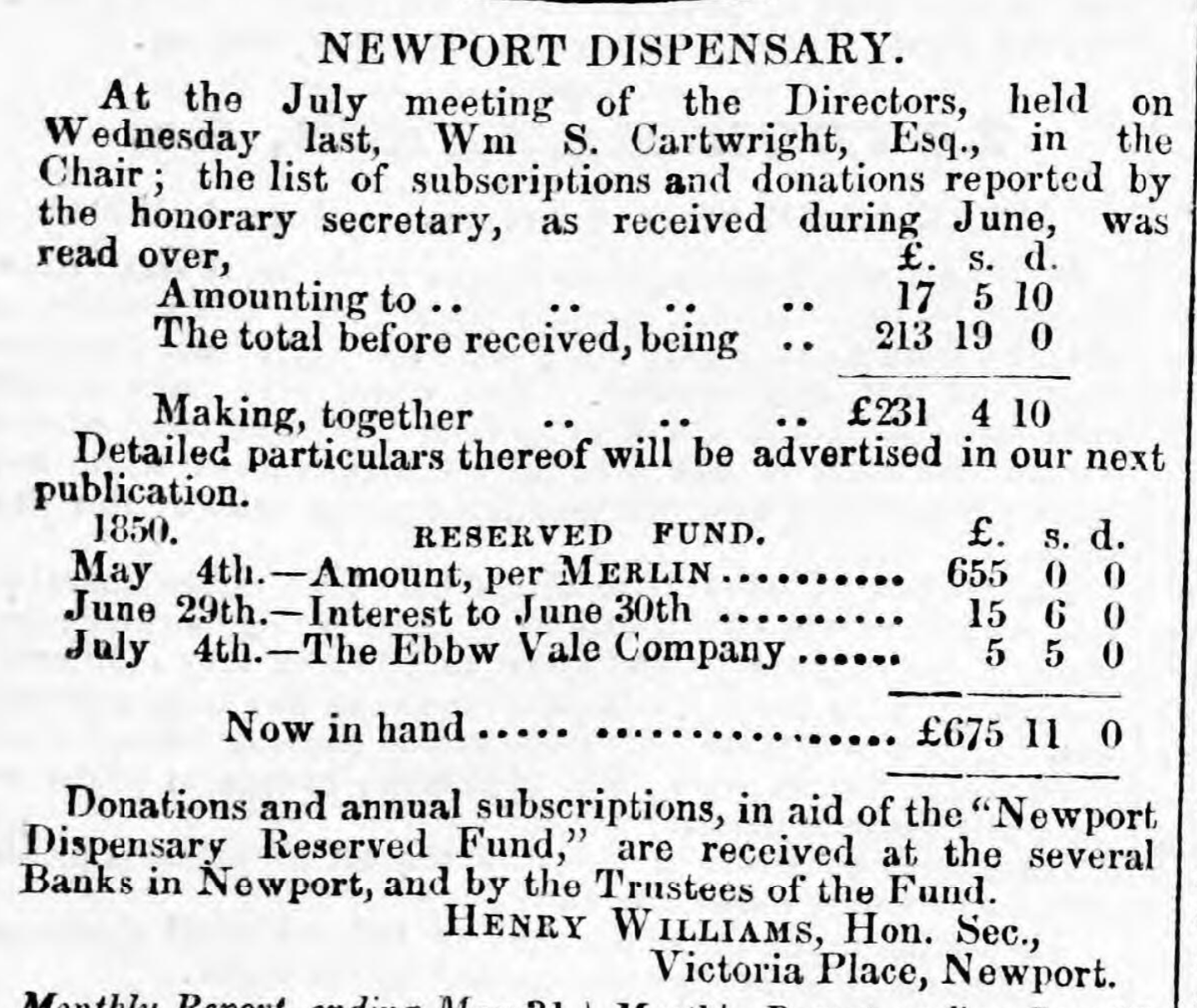
The short notice in the newspaper updates readers on the July meeting of the Dispensary Directors:
- The Chair: The meeting was chaired by Wm. S. Cartwright, Esq., a prominent local figure guiding the charity's administration.
- The Monthly Intake: The honorary secretary reported receiving £17 5s. 10d. in subscriptions and donations during the month of June alone.
- The Running Total: Combined with previous receipts, this brought the charity's immediate working fund to £231 4s. 10d.
The Reserved Fund
Beneath the general monthly numbers sat the "Reserved Fund," which stood at a healthy £675 11s. 0d. This was the charity's long-term financial backbone, funded by major lump-sum donations and corporate entities. Notably, the report logs a donation of £5 5s. 0d. from The Ebbw Vale Company, demonstrating how the heavy industrial firms of the valleys financially supported the civic institutions down in the port town.
The Connection to Victoria Place
At the foot of the notice sits the name of the man keeping the entire financial mechanism moving: Henry Williams, Hon. Sec. (Honorary Secretary).
Williams handled the administrative burden of tracking donations and managing subscriptions, telling readers that funds could be dropped off directly to him. His listed address is Victoria Place, Newport—the exact same exclusive, grand row of townhouses we previously saw featured in the property columns. This tiny detail perfectly illustrates how the wealthy residents of Victoria Place were not just living in luxury, but were actively managing the high-profile charities that kept Newport’s poorest residents on their feet.
Crime and Punishment at the Quarter Sessions
The Common Pattern: Poverty and Petty Theft
The vast majority of the crimes listed are low-value property thefts. In an expanding industrial town like Newport, people were stealing the basic ingredients of survival:
- Fuel and Food: Bulk quantities of coal were major targets—Catherine O'Brian got a month's hard labour for stealing 33 lbs of coal, while William Jenkins and Thomas Davies received a brutal six months' hard labour for taking 163 lbs of coal. Food items like a piece of bacon or 40 lbs of mutton also frequently feature.
- The Sentences: The standard judicial response was "hard labour". Sentences rarely fell below a month, and peaked at half a year for a single count of larceny.
Notable and Unusual Cases
The Case of William Spooner (A Explicit Racial Marker)
The report for William Spooner is highly unusual for its blunt, deliberate piece of description:
"William Spooner, aged 24, charged with stealing half-a-pound of butter, the property of Elizabeth Taylor, of Newport.—This prisoner was a negro."
The journalist's decision to explicitly state Spooner's race reflects how rare Black residents still were in the regional press of 1850, or how his appearance stood out to the courtroom audience. Spooner "stoutly denied any felonious intention," but was still sent to gaol for a month. His parting words on leaving the dock carry a defiant sting: if he lived to get out of gaol, "no one in court should ever see his face again, excepting Mrs. Taylor."
The Beer-House Book Thief
In a bizarre case heard by the jury, Isaac Olridge—who describes himself as both a shoe maker and a keeper of a beer-house in Christchurch—noticed his book was missing from a drawer. When he confronted a customer about to leave the house, the unnamed prisoner simply reached into his clothing and "gave me the book from inside his shirt." Despite a complete lack of further evidence, the jury promptly found him guilty, and he was handed a 14-day prison sentence.
The Servant's Premium Punishment
A case involving the theft of six gallons of porter (beer) from Edward Edwards highlights the strict legal view of employee betrayal. Three men were charged, but Wm. Jones was explicitly singled out because he was a "servant" to the victim. While his two accomplices received six weeks of imprisonment each, Jones was handed double the sentence—three months—because violating a master-servant relationship of trust was considered an aggravating factor in Victorian law.
Youthful Offenders
The court showed no leniency to children. William Bumbreay, aged just 15, pleaded guilty to stealing a coat and a silk handkerchief. Despite his youth, the court didn't hesitate to hand him six weeks of hard labour in the house of correction.
National News
The Death of Sir Robert Peel
The paper leads with a deeply mournful announcement: "DEATH OF SIR ROBERT PEEL!" The paper reports that the former Prime Minister and "mighty commoner" succumbed to severe suffering following a sudden, tragic accident—a fall from his horse, which it describes as the "momentary impatience of a brute". While modern readers best remember Peel for his foundational role in establishing the modern police force, the obituary focuses on his immense legislative legacy and a final, brilliant House of Commons speech delivered just hours before his injury. Expressing a sentiment shared across all political factions, the report laments the loss of a "pillar of the state" whose decades of administrative labours had materially advanced the nation's happiness, grandeur, and security.


Member discussion