

Welcome to another issue of The Newport Cornucopia where we dig through the newspapers archives for interesting news articles and adverts. All articles are posted verbatim and most headlines are original (headlines in quotes are my own).

Newport Nuisances
To the editor of the Monmouthshire Merlin.
MR. EDITOR,— Allow me, sir, through the medium of your paper, to enquire the cause why a policeman is so very seldom to be seen on duty in Commercial-street? Has the necessity of one being placed on duty on the bridge, and between the packet stations, been the cause ? or may one yet be seen on duty, 'in plain clothes' should a body happen to distinguish his phiz? The former may be it, but the latter I can scarcely conceive to be the case.
The police appear to me to be the property of the borough, and an equal distribution of their services is one of the main duties of the superintendent. Where the greatest traffic is, there are their services most required and where the least is, there is less need of them.
I know not the number of our police force, neither do I know how they are distributed in the borough but this I know, that Commercial-street—I mean that part of it from the Friars' Fields to the Salutation—ought not, of all places in the town, to be left from the hours of twelve at noon, to twelve at night, without one to protect, and directed to protect, the public from being molested, or grossly insulted, by the low and foul-mouthed rabble, who are ever to be found congregated at the corners of each of the streets between the places above-named.
It is surprising that, from the knowledge the superintendent must have, or ought to have, of these loudly-complained-of nuisances, that they should be suffered uninterruptedly to continue. My business calls me to and fro, through Commercial-street, frequently in the course of the day, and I regard it a very great luck indeed, if, when I come to the corner of Cross-street, especially, I shall nothave occasion to take a simicircle (sic) sweep through, at least, three inches of mud. This, sir, is what the public are obliged to do, rather than subject themselves to the unpleasant task of meandering their way through a crowd composed of the worst of characters. Obstructions in other parts of our streets are frequently caused by Punch and Judy shows, and ballad singing and it is not a very uncommon thing to witness a policeman, in uniform, in the midst of the delighted crowd, participating with them in the mirth occasioned by the cudgelling poor Judy receives from her cruel husband.
A crowd of at least one hundred persons were collected for nearly an hour, at the corner of Llanarth-street, on Monday evening last, listening to two ballad singers, choaking (sic) up the paveway and nearly the whole of the road, and thus rendering it almost impossible for any one to pass. These nuisances, sir, ought not to be tolerated, and the sooner measures are taken to prevent them, by the superintendent and others concerned, the sooner will the disgrace be removed from the corps of police in our borough.
I am, sir, your most obedient servant,
26th Nov., 1845.
M
— Monmouthshire Merlin, 29th November, 1845

A Hungry Thief
John French, a tramp, was charged with stealing aepair of Blucher boots from the shop of Win. Beer, Commercial-road, on Monday evening. Prisoner was seen by Lily Beer, the daughterof prosecutor, making off with the boots she caught and held him till assistance came. Prisoner now pleaded "That he was hard up he had nothing to eat for some time, and had no where to go he had travelled from Plymouth." Five months' hard labour.
— Monmouthshire Merlin, 12th February, 1875
A Dutiful Daughter
Johanna Mahoney, aged 17, was charged on a warrant, with assaulting her mother, Mary Mahoney, on Sunday evening. The right side of complainant's face was swollen. Johanna wanted to wash on Sunday evening, and her mother objected to her doing so on the Lord's Day. It ended in the girl striking her mother with the bottom of a cask. Defendant said that her sister put a lighted candle in her face, upon which she threw a board at her, which accidentally struck her mother. The case was dismissed, defendant being bound over to keep the peace.
— Monmouthshire Merlin, 12th February, 1875
The Case of the Female Vagrant
Gertrude Scott, a young girl, was brought up on remand charged with vagrancy at Barrack-hill by sleeping in a shed. When before the magistrates on the previous Saturday she said her father was an hussar in India, and she had a brother in the 45th Regiment, stationed at Newport.
She further said that she had been travelling with Sanger's circus, which she intended to join at Hereford. She was remanded in order that the truth of these statements might be looked into. Inspector Sheppard now stated that he had made enquiries, from which be found that her statements were false, and that her father instead of being an hussar was a waggoner at Hereford.
The Bench ordered the girl to be detained till Monday, and then forwarded to her father. The necessary expenses were subscribed for by the Bench. The girl received the decision of the magistrates with a careless grin.
— Monmouthshire Merlin, 7th July, 1876
Cutting Off a Wife's Nose
At the same court, Michael O'Shaughnessy, 50, tailor, Mill-parade, was charged on remand with wounding his wife, Jane O'Shaughnessy, on Thursday evening.
P.C. Kerr stated that on the evening named he met prosecutrix in the streets. He saw that blood was flowing from her face, the lower part of which was covered with a cloth. He went to her, and as she removed the cloth, her nose fell downwards over her mouth. He took her to Mr Cooke's surgery, and afterwards apprehended prisoner, who said he would "kill her and hang for her," Prosecutrix, whose nose was bandaged up, said the quarrel arose at the supper table about the provision of food for the meal.
Prisoner was in the act of cutting bread, and gave her a cut across the nose with the knife. An old woman, named Lewis, said there was only a bit of a row before he cut her with the knife. Prisoner declared that he threw the knife at her, and that the cut was accidental. The bench told prisoner that he might have stood in the dock on a charge of manslaughter. They reduced the offence to one of aggravated assault, and sentenced him to three months' bard labour.
— The Cardiff Times, 8th June, 1882
The Cherry Fair
The annual "Cherry Fair," was held on Tuesday, at the new Cattle Market, Newport. Stock was in more limited supply than has been known for many years past, and the quality shown was in the majority of cases inferior. Of sheep there were few pens only, and no fat beasts were shown. Cows and calves were not numerous, and store cattle were but badly represented. There was a very poor show of horses, most of the animals being suited only for rough agricultural purposes. The attendance of dealers was also meagre, and as a natural result scarcely any business worthy of note was transacted. High prices were asked, but no disposition to purchase was evinced.
— Monmouthshire Merlin, 18th August, 1871
'The Newport Gaol of 1835'
A description of the local gaol in a Municipal Corporation Report published in the Monmouthshire Merlin on 13th June, 1835.
The mayor is empowered by the charter to commit offenders to the county gaol. There is a gaol belonging to the borough, which is only used as a lock-up house until prisoners are finally committed. The gaol, which is maintained out of the poor-rate, is under the control of the mayor, and is kept by, the bailiffs. It is very inconvenient, even tor the purpose of a lock-up house. There is but one bed in the gaol and when more than one prisoner is confined, the rest are put upon straw.
— Monmouthshire Merlin, 13th June, 1835
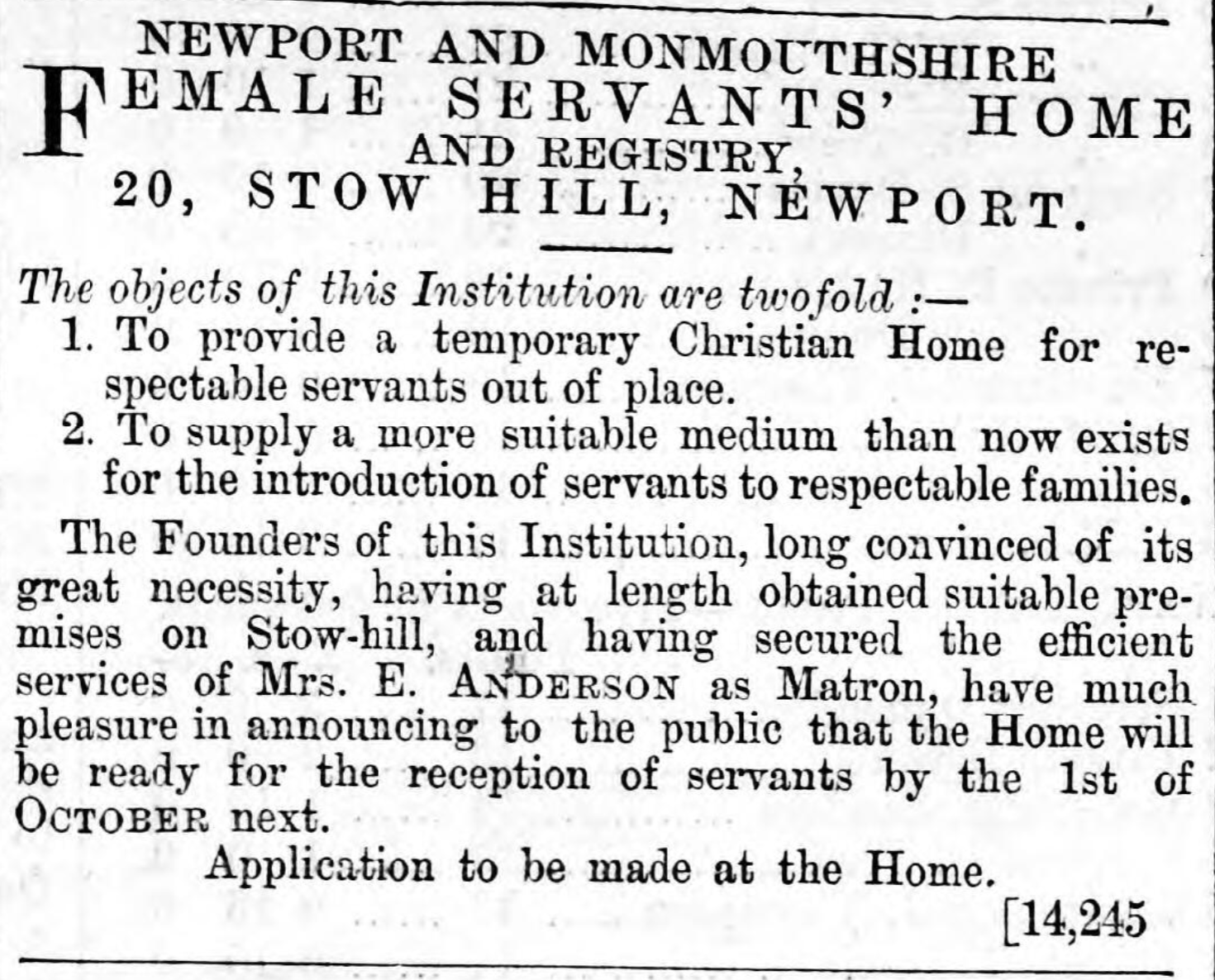
100 Mile Track Race
The annual 100 mile race organised by the Newport Safety Bicycling Club, postponed from Thursday owing to the bad weather, was commenced on the track of the Newport Athletic Club thfe morning. The club offer four medals for competition. and 17 cyclists had entered for today's race, six of whom appeared on the mark at 11.30, when a start was made.
The competitors were C, H. Gwynn, G. Webb, W. H. Cowen, G Barrett, and C. Barrett. At the first hour G. Barrett was leading with 19 miles second hour, C. Barrett was leading, the distance being 36½ miles third hour, G. Barrett was leading, 53¾ miles.
— South Wales Echo, 2nd October, 1893
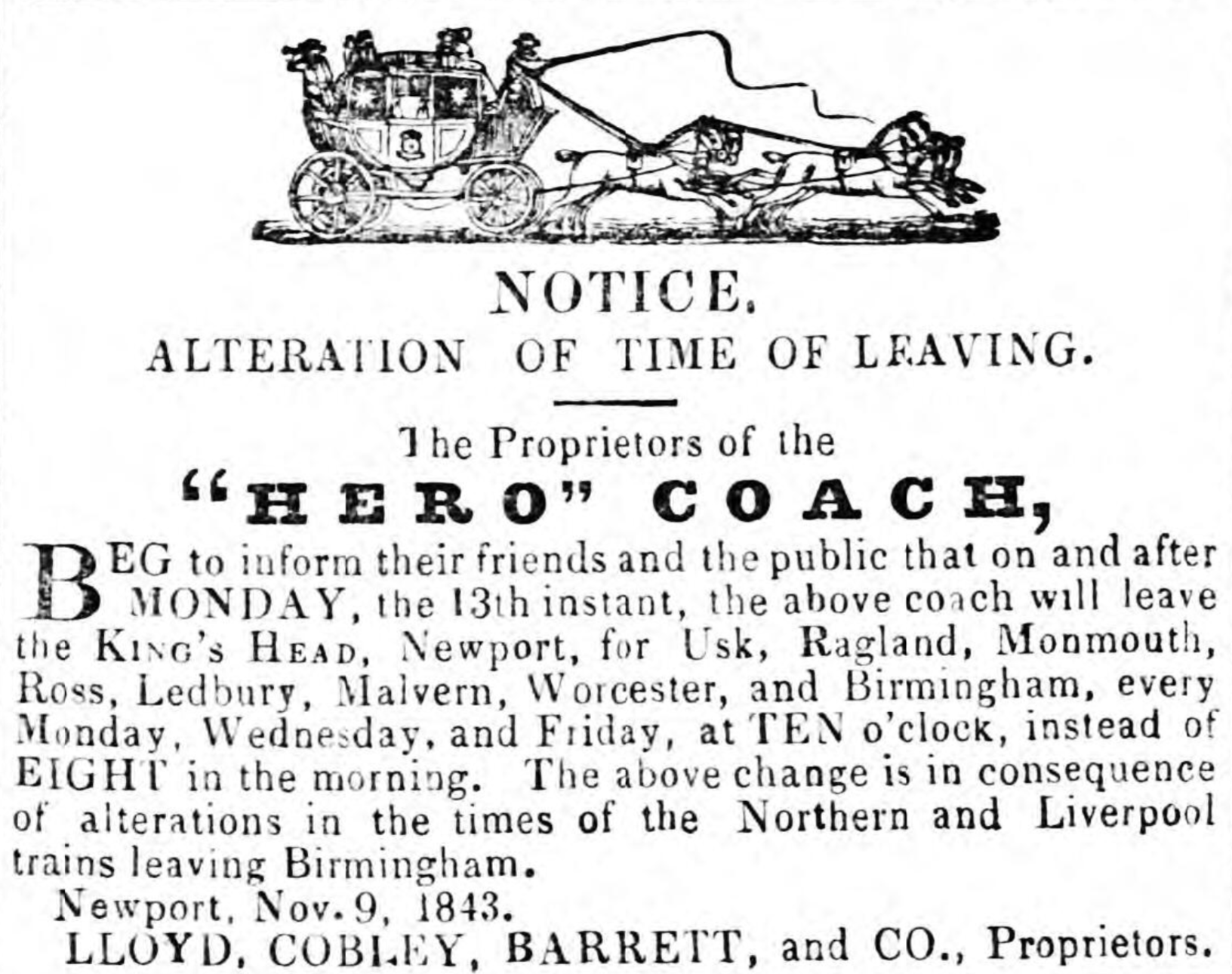
Tramcar Scene At Newport
A Seaman Who Declines to Pay a Penny has to Pay Half a Sovereign.
Daniel Harrington, a seaman, stood at the defendant's bar of the Newport Borough Police court to answer for a drunken escapade. Harrington on Saturday evening, after taking too large a supply of liquor, got on board a tramcar, as he explained, in a stupid condition. When the conductor appeared and denanded thejpassengers' fares, Harrington protested that he had no cash, and said that he would rather be locked up than pay his fare.
Officer Packer was then called, and Harrington still persisted in being locked up, and the officer obliged him. It was found at the police office that the prisoner had 153 in his pockets, and the magistrates now decided that instead of paying 1d he should forfeit 10s, or spend seven days at Usk.
— South Wales Echo, 2nd October, 1893
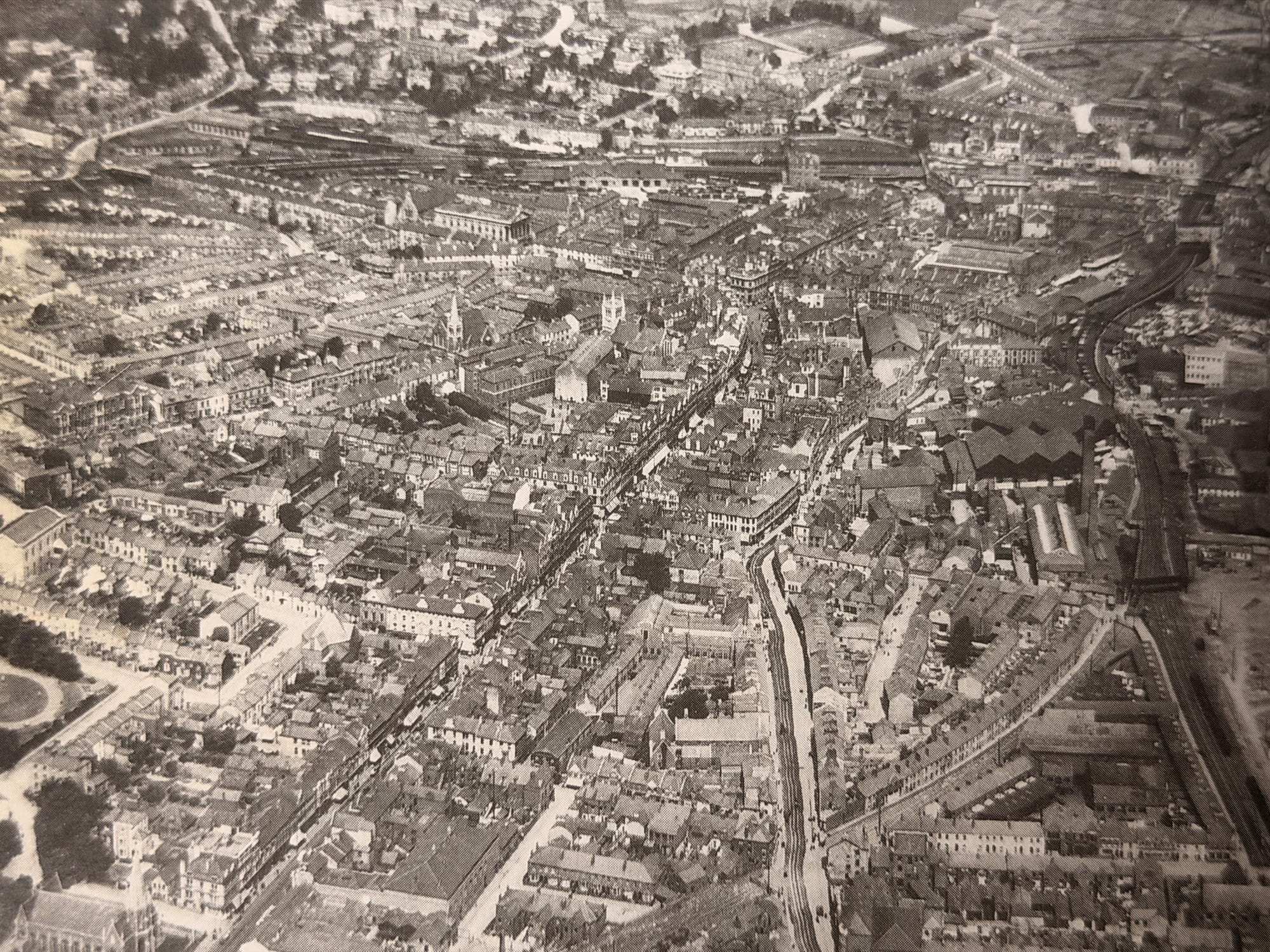
'The Need for a Shelter at Llanwern Station'
SIR, —As an habitual visitor to the delightful neighbourhood of Llanwern, I beg to suggest to the proprietors of the South Wales line, the necessity for their placing some covering in the shape of a shed, with a seat or two, for the accommodation of passengers at this station. It is in a very exposed place, and the winds from east and west sweep with greai force up and down this portion of the line, from its being so peculiarly straight and level, indeed nearly a straight line from Liswerry Bridge to Portskewett, a distance of many miles.
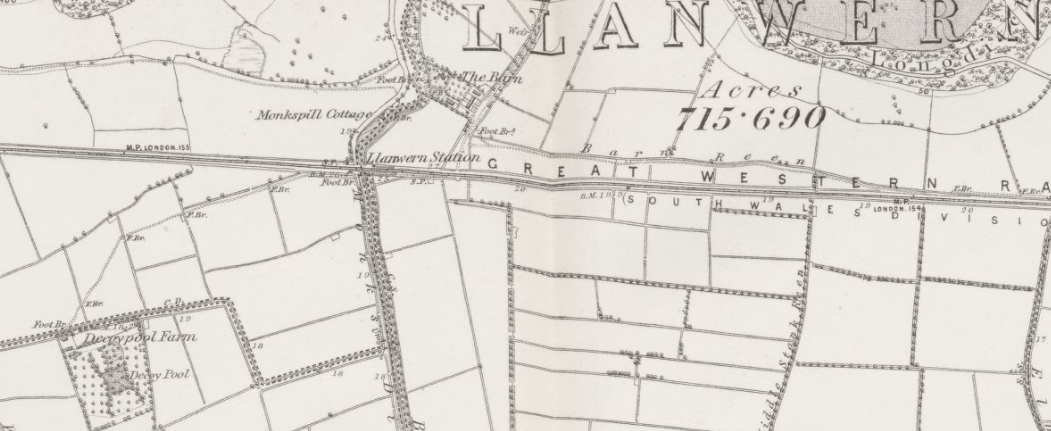
The number of passengers is considerable, and the class of persons, who for the beauty of the locality visit Llanwern, certainly deserve a little consideration from the Company. If some of the directors and officials were here with their wives and families, and had to wait a quarter of an hour on a fine day (much less a stormy one), without even a seat or a covering of any kind, they would certainly have more sympathy with the frequenters of the station.
There was an instance only last week of a lady r.nd three little children (during one of those sudden and violent storms), with other persons, eight in all, being put by the kindly-disposed station master into his little box of a ticket office, not six feet square: otherwise they would have been wet to the skin, and the consequences no one can rightly estimate.
I presume an action would lie against the Company for loss of health, much less loss of life, for neglect in not providing proper convenience for passengers by their line I can only say, individually, I would certainly try the case should such happen to any member of my family; but I trust the matter may not have been brought under the notice of the directors, and that is the reason that such an unreasonable piece of neglect has been permitted to exist so long.
I hope if you kindly give room for this letter in your columns something may be done ere the winter comes on.
I am, Sir, your obedient servant,
HUMANITAS. Newport, September 29th. 1863.
— Monmouthshire Merlin, 3rd October, 1863
Competition for a Telescope
On Tuesday a few of the members of the First Monmouthshire Artillery Corps entered into a spirited competition for a telescope, which was ended towards dusk by Gunner Durkee winning it for Dr. Christie. The firing took place at the Courtybella range, and some very fair scores were made, the conditions of the shooting being five rounds each, at 100 and 200 yards, standing.
— Monmouthshire Merlin, 3rd October, 1863
Penny Readings for Newport
[To the Editor of the Monmouthshire Merlin]
SIR,—In many of our towns and cities have become established during the winter months a class of entertainment for the "sons of toil" bearing the above title, consisting of readings and recitations from the works of popular authors, Hood, Dickens, Longfellow, Thackeray, &c., &c., with a little music, vocal and instrumental, by way of variety, carried out by gentlemen and ladies interested in the advancement of our working classes, and who give their services gratuitously, thereby enabling the "people" to have an hour's good and sound instruction for one penny; the charge giving the title to the movement.
Now, sir, in every case where these "Readings" have been tried, have they been successful, crowded rooms and delighted audiences testifying to their value, and as we have in our town of Newport, a large number of working people, who have little, if any means, offered them that would afford an evening's enjoyment during the long winter months, I ask you to aid me, by "pen editorial," in my wish that these Readings" should be started in Newport; we have gentlemen and ladies talented enough to read, recite, and sing, if they will only enter into the idea, and our mayor and town councillors, "holding their offices for the good of the town and welfare of its inhabitants," would only be too happy to give their presence and the Town-hall for such a good purpose.
You, I feel assured, will help us, and leaving the matter in your hands, and trusting to see it. taken up by some one abler than myself, believe me,
Yours, &c.,
Ap JOAN KENT.
[The kind of movement suggested by our correspondent having fully answered the object of its promoters in places of much less importance than Newport, there can be no doubt of its success here, if judiciously managed. Could not the Committee of the Athenæum carry out something of the kind ?—[Editor. M. M.]
— Monmouthshire Merlin, 3rd October, 1863
Golden Jubilee of Queen Victoria
'Preparation'
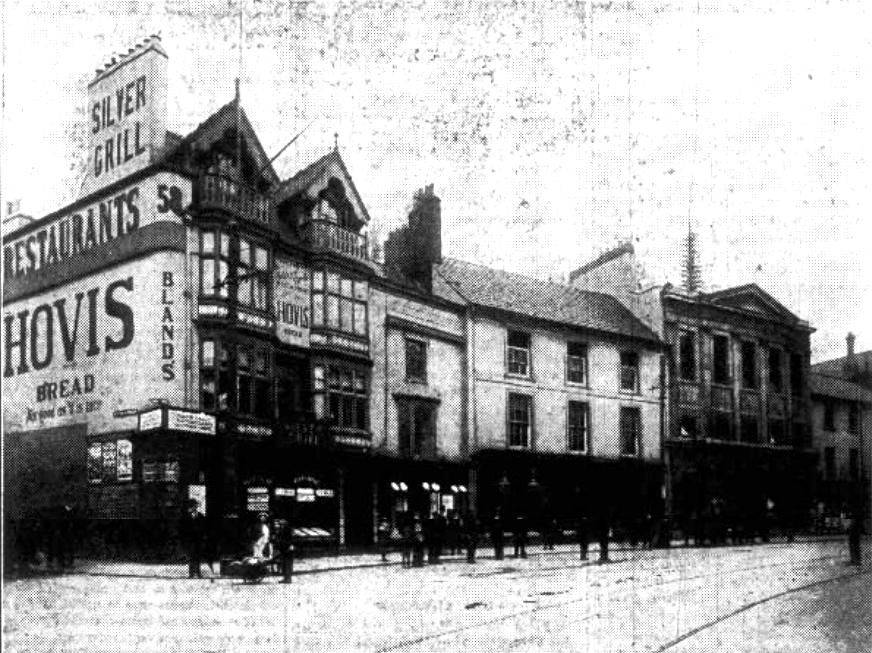
Monday was occupied in putting the finishing touches to the decorative work which has been in progress for nearly a week. The main thoroughfares are now decorated from end to end with Venetian masts and string-courses of flags. Many business premises and private bouses were decorated on Monday.
The jubilee medals were distributed for the most part on Sunday afternoon, as the children left Sunday School. The aged residents of the borough, to the number of 360 or 370, have each received a parcel of groceries, of the money value of half-a-crown.
The proceedings of to-day promise to be very successful. The trades procession will be one of the best ever seen in Newport, and the laying of the foundation stone of the children's ward, which is to be performed by the Mayoress, will be conducted under the happiest of auspices. Afterwards, a luncheon will take place in the Town-hall. The illuminations will be more extensive than was expected. Devices in gas will lead, and Chinese lanterns will also be extensively used. The fete on the Marshes promises to be successful beyond expectation.
— South Wales Daily News, 21st June, 1887
'The Main Event'
Until a late hour on Tuesday night the streets of Newport were thronged to inspect the illuminations, whilst on every hill in the suburbs from which the beacon fires could be seen, groups of sightseers congregated. Great interest, of course, centred in the huge bonfires on Twyn Barlwlm and Machen mountain. The latter led the way at 10 o'clock precisely, and blazed up successfully, whilst its twin sister height across the valley of the Ebbw was giving the final touches with rockets and red flares.
Abergavenny beacons could be seen at intervals, and Penarth was quite conspicuous, whilst Christchurch Hill, Shirenewton (near Chepstow), Worle Hill (near Weston), and Cadbury Camp (near Portishead), and other heights each gave its "twinkling point of fire" to add to the general effect. Twyu Barlwm at length blazed forth, and at Newport the effect of the high wind in carrying the flames in a longitudinal direction could be distinctly seen.
The illuminations in the town were pretty and effective. The Town-hall, with gas devices and the electric light, was of course the leading affair. At intervals during the evening from the balcony of the building coloured fires were displayed, and rockets sent up. The Talbot Hotel adopted Chinese lanterns and oil lamps, and the effect would have been charming had not the wind extinguished the lamps. The enterprising proprietor was not, however, to be vanquished, for by the aid of the oxy-hydrogen light and a white screen in front of the premises of the West of England Bank opposite, be amused hundreds of people.
All the leading personages, from her Majesty downward, were thrown upon the screen. Of the local celebrities, the mayor and the late Dr Woollett, J.P., came in for the biggest share of favour. Another hotel—the Tredegar Arms—in High-street offered a contrast to the gas crowns, stars, and devioes which surrounded it by filling every window with Chinese lanterns. The device in front of the Monmouthshire Supply Stores in High-street (Mr Cordey's) was much admired.
The walls of Newport Castle were rendered all the more for-bidding by the glare from a group of fires lighted on the top of its ruined walls. The illuminations, like the decorations, were by no means confined to the principal streets. Villas and detached residences perched upon the hill of Goldtops and flanking the high ground of the Stow Park district were made brilliant and effective by oil lamps or other suitable illuminants in every window. These were either in groups or outlining the window—drawing-room, dining-room, and dormer window —and the effect was charming.
The holiday was continued at Newport on Wednesday. The decorations had remained, and in the evening the illuminations were in many instances repeated. The afternoon saw business establishments pretty generally closed. The principal outdoor attraction was a continuation of the fete and gala on the Marshes. In the evening there were fireworks.
— South Wales Daily News, 23rd June, 1887


Member discussion