

Welcome to another issue of The Newport Cornucopia where we dig through the newspapers archives for interesting news articles and adverts. All articles are posted verbatim and most headlines are original (headlines in quotes are my own).

Pigeon Match for £10
On Tuesday last, several hundreds of persons assembled in a field, under Crindau farm, to witness a match which had excited considerable interest, between John Flowers, a blacksmith, of Pillgwenlly, and Samuel Gage, of Bristol, for £5 a side, to shoot at ten birds each, twenty-one yards trap.
The betting at starting was in favour of Gage, who was accompanied to the field by a host of Bristolians. Flowers, a modest unassuming young man, appeared friendless, until a sporting "landlord," and one or two others, laid out some money upon him. He went in, and killed his first four birds, missed the fifth, but killed the remaining five. Gage missed his first, killed the next three, missed the fifth, killed the next two, and missed the eighth. Flowers consequently won easily; it was generally thought he would have killed his fifth bird, had not the string of the trap broken, and the front part of the trap remaining up, hid the bird from his view. C
Considerable sums of money changed hands the "Gage" party, who had booked their man to win, looked unutterable things at the result. Mr. John Walker and Mr. Dowle, acted as umpires, and gave satisfaction to both parties.
— Monmouthshire Merlin, 1st March, 1851
A Smell of Gas
(To the Editor of the Monmouthshire Merlin.)
DEAR SIR, Is there no Board of Health in Newport? If not, there should be one appointed forthwith. If there is one, they are manifestly negligent of the duties they owe to their fellow-townspeople.
I am led to make these remarks by the fact that I am one of a numerous class who reside in the neighbourhood of the Gold Tops, and have to pass up and down thereto and from at least three times daily.
The horrid, abominable, and suffocating effluvia arising from—I believe the Gas Works—needs only to be sniffed to be remembered as a caution, to avoid, if possible.
How the inhabitants of the classic region, known and designated Pentonville, stand it, surpasseth my feeble powers of understanding; their olfactory organs may, perhaps, not be quite so delicate as those of...
Yours faithfully, December 9th, 1869.
COSMOPOLITE.
— Monmouthshire Merlin, 11th December, 1867
Three Day Bazaar
There being a debt of about £300 resting upon the Wesleyan Chapel, Commercial-road, it was determined to hold a bazaar, with a view of clearing it off. This bazaar was opened at the Town Hall on Wednesday under very favourable auspices, and will not close till this evening.
The Assembly-rooms rarely, if ever, presented a more charming aspect, its decorations and contents representing an amount of industry, taste, and skill, which left nothing to be desired. The amount of sheer hard work executed to produce such a result must have been immense, but doubtless those who have taken part in the good work feel fully rewarded by its success. The taste displayed by the ladies was of a very high order, and to them, especially, the warmest meed of praise is due. The stalls, including the refreshment stall, were five in number, and were presided over as follows:-
No. 1 — Mrs Trethewy, Mrs John Sanders, Mrs. Knapp, Mrs. C. Winter, Mrs. Thomas, Mrs. John Cock, and Mrs.Roberts
No. 2 — Mrs W. Ray, Mrs H. Ray, Mrs. Bailey, Mrs G. R. Pyer, Mrs W. W. Jose, Mrs. Full, Mrs. R Cock and Miss Winter.
No. 3 — Mrs. Searle, Mrs. Stevens, Miss Bessie Davies, Miss Baker, and Miss Gregory.
Young Men's stall — Rev. Thomas Trethewey, Messrs. G. F. Evans, R. Cock, Manhire, Hunt, and J. Williams
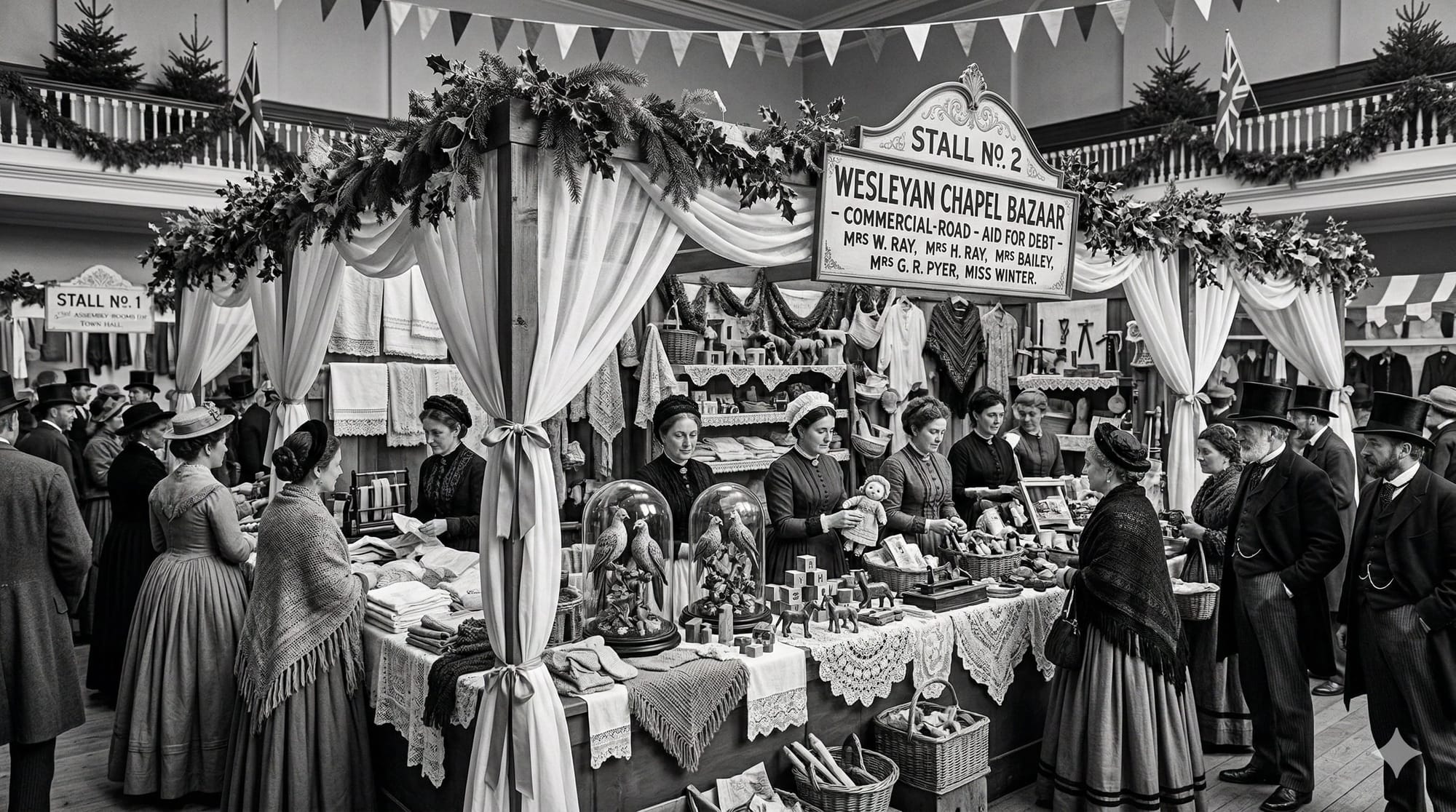
The frame-work of the stalls was draped in muslin, the tops dressed in ever-greens, while fancy and useful work of all descriptions was artistically displayed in the greatest profusion. The ceiling was hung with bunting of all colours (the flags having been procured by Mr. Fred. Stevens), while from the balcony festoons of evergreens were pendant. Plants, evergreens, and flowers occupied the staging, upon which was a piano.
In the centre of the hall was a glass fountain of perfumed water, and, as we have before hinted, the general effect presented by the hall was exceedingly animated and handsome. Where there were so many choice and noteworthy articles it is difficult so make a selection for particular notice which shall include all the leading features.
Mr. R. N. Osborne presented a model steam engine, which he had himself constructed, and which evidenced very considerable mechanical skill. It has a pair of horizontal cylinders, and is capable of driving the strongest sewing machine in the town.
Mr. John Williams gave a large model of a yacht, made by himself, which was priced at £4 10s., and which looked worth the money. Mrs. Taylor gave a pair of Sultan birds, and Mrs. J. C. Sanders a hutch of fine rabbits.
The young men's department was worthy of attention, some very capital homemade furniture, including tables, clothes presses, &c., being placed immediately outside the room, the wood-work of which was made by Messrs. Brownscombe, Moulton, Popham, and Ackford.
Other articles of a useful character were also procurable in this department. Some well-executed photographs of the chapel, by Mr. Manhire, an amateur photographer, were for sale. Our readers are so conversant with the general description of articles seen at bazaars of this character that a detailed account is not necessary.
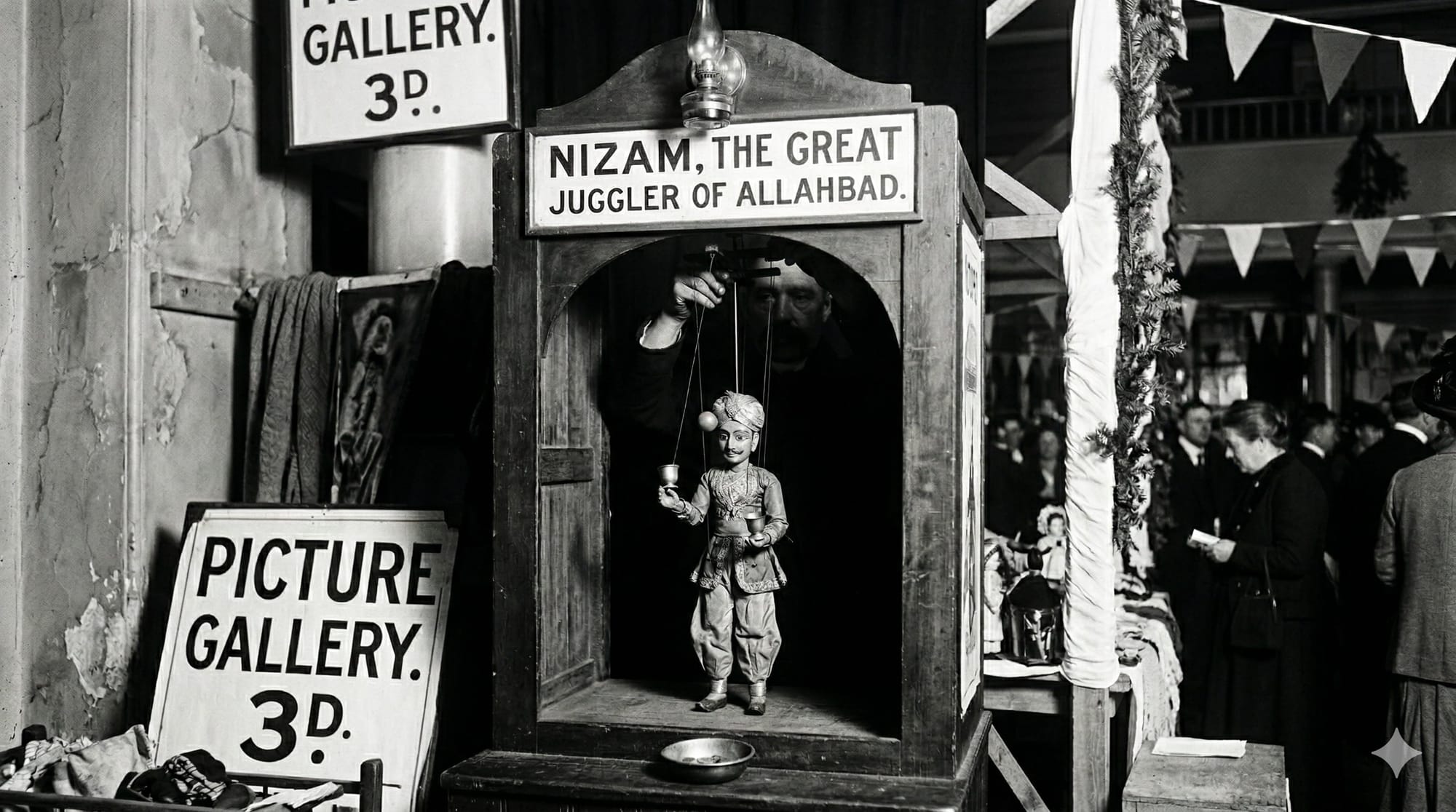
Several means of diversion were provided. Mr. Alger had constructed a marionette figure, which he exhibited behind a screen, and which was very clever. It was named Nizam, the great Juggler of Allahbad, and Nizam certainly did the cup and ball business and danced with the most amusing agility. Close by was what was termed the picture gallery, a cleverly-contrived institution which it was well worth paying 3d. to see, notwithstanding the fact that the gallery was not tilled exactly by the curiosities expected. Then again there was a post-office, the duties of post mistress being undertaken by Miss Hunt. The bazaar was opened at 12 o'clock on Wednesday, when there were a good many ladies and gentlemen present.
The well-known hymn "Praise ye the Lord, 'tis good to raise," was sung, after which the Rev. T. Trethewey offered up a prayer. The Rev. John Westlake then called upon His Worship the Mayor of Newport (H. P. Bolt, Esq.), to open the bazaar. His Worship, in doing so, expressed his sense of the honour conferred on him by the ladies in asking him to open the bazaar, at which different articles were to be sold. He trusted that they were fancy goods, and hoped the public would take a fancy to them, and pay a good price for them. (Hear, hear.)
He remarked on the object of the bazaar, an object which was characteristically national, inasmuch as it was a question of debt, and they had a National Debt. He had read of a man who was so anxious that the National Debt should be paid that he left £6 in his will towards it. (Laughter.) But the ladies adopted a different plan, and had decided on having a bazaar, which he sincerely hoped would be successful beyond even their most sanguine expectations.
Bazaars did a great deal of good by engendering sympathy, and their worthy minister would tell them that there was a time for everything a time for sorrow and a time for joy. and he hoped they would enjoy themselves.
After some further observations, His Worship declared the bazaar opened, and the business of the day was actively commenced. Inquiries made just before going to press enable us to state that the bazaar has been successful beyond the expectations of the most sanguine. The bazaar has been crowded. On Wednesday about £100 was taken, and yesterday, at a rough calculation, £76; It is anticipated that the sum realised will be sufficient to clear off the debt (£300) and leave a surplus, and we cannot refrain from congratulating all connected with the undertaking on this highly gratifying result.
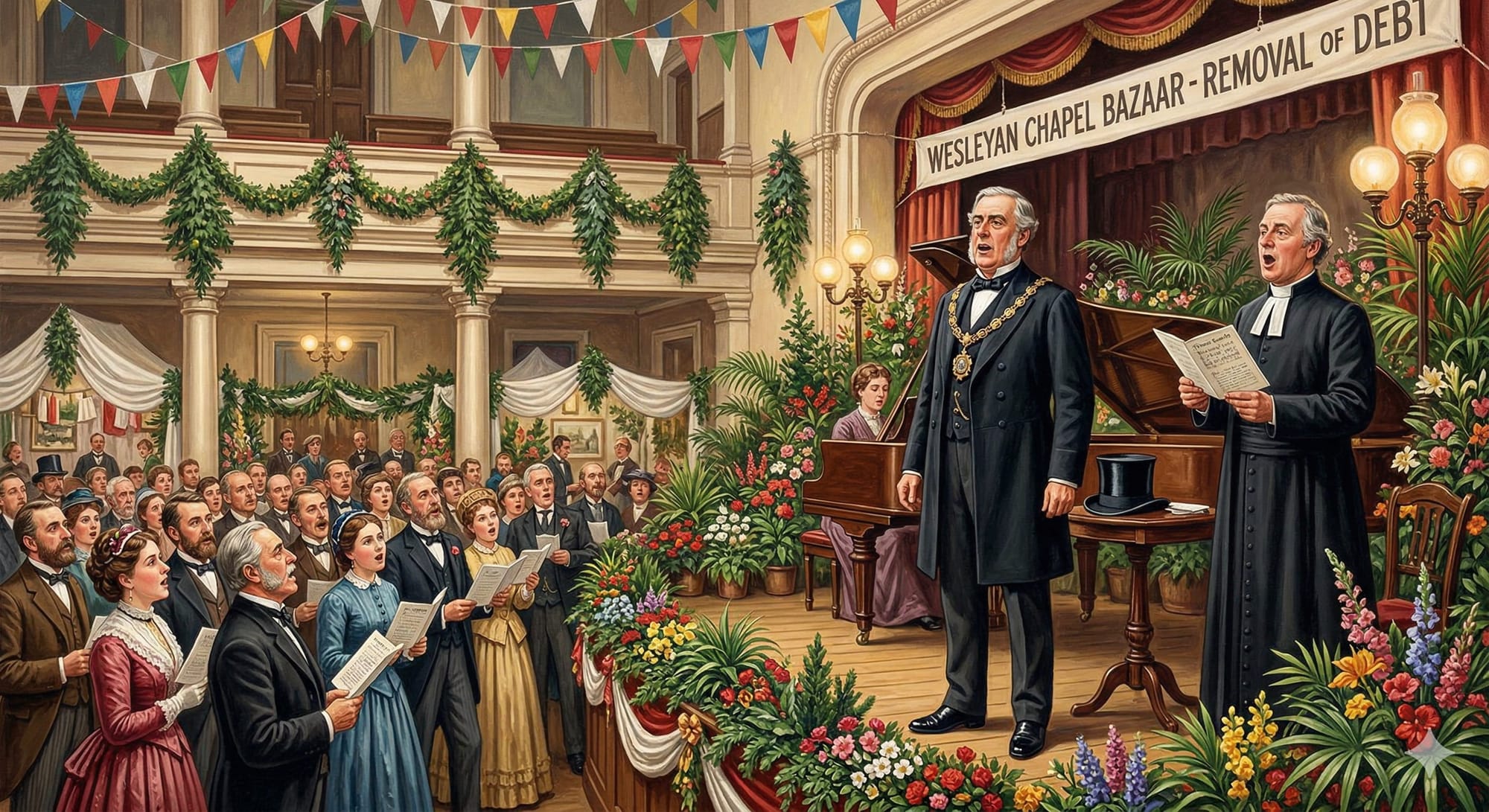
The refreshment stall was a fruitful source of receipts, as were also the "art collection" of Mr. Cock, and Mr. Alger's marionette. Selections at intervals were played on the piano by Mrs. Beynon-Hughes, with her well-known taste and facility, and the Masters Liles also played in a creditable manner.
To-night an auction of various articles will take place. The manner in which the bazaar has been carrel out reflect the highest credit on all concerned. We must not omit to state that the secretaries, Mrs. H. Taylor and Mrs. J. W. Jukes, performed their duties admirably, and that Mrs. Searle acted as treasurer.
— Monmoutshire Merlin, 12th May, 1876

Wilful Damage
George Price and Thomas Bevan, two lads, were charged with wilfully damaging a hay stack belonging to Mr. W. H. Parsons, of High-street. The hay stack stands in the old Fair-field on Stow-hill, and between twelve and one this (Wednesday) morning P.C. Goodrich went to the stack and found prisoners sleeping in a large hole which they had made in the side of the stack.
One prisoner said he was afraid to go home for "fear of a warming" from his father because he had not been to work that day. The other prisoner said his mother had turned him out.
Mr. Parsons said nearly the whole of the thatch had been stripped off by boys. Mr. H. J. Davis said Mr. Parsons was not the only sufferer in that neighbourhood. Prisoners were each fined 5s.
— Monmouthshire Merlin, 18th September, 1874
Stealing Fowl
James Gane, a boy about 16 years of age, with a very sinister expression of countenance, was charged with stealing a fowl, the property of Mr. Ewins, confectioner, of High-street. John Bowden, a boy at present in the employment of Mr. Ewins, deposed that he knew the prisoner, who had been in the service of Mr. E.
On Thursday evening last witness was in his master's stable, when prisoner and another boy named Miller came in, and prisoner asked him some questions about a stable opposite. Witness then locked the door and went into the house, at which time his master's fowls were all safe in the morning, on coming into the stable, one of the fowls was gone. Mrs. Ewins deposed that the fowls were safe on Thursday night, but that on going to feed them next morning, one was missing. There was a quantity of feathers lying about in the stable.
There was no evidence to connect the prisoner with the stolen fowl. and he was consequently dismissed with a caution not to be found sneaking about people's premises in future, or perhaps he might not get off so clear.
— Monmouthshire Merlin, 20th August, 1842
'A Rogue and a Vagabond'
William Wallace, from Bristol, was charged with being in the shop of Edward Frost, watchmaker, with intent to commit a felony. The prisoner was discovered inside the counter, about to steal some watches, when he was detected by Mr. Frost, who forthwith handed him over to the police. He was committed to prison, for two months' hard labour, as a rogue and vagabond.
— Monmouthshire Merlin, 2nd October, 1847
Sunday Amusements
At Newport borough police-court, yesterday John White and three other lads residing in Marshes-road were summoned for breaking a steam gauge, the property of Mr J. W. Price, Crindau Pottery. Mr Digby Powell, solicitor, told the court that the lads on Sunday last were throwing stones at a bird which was perched on the steam engine, and the stone thrown by White smashed the steam gauge.
In consequence the works had to be closed for two days whilst the engine was being repaired. A considerable amount of damage was done to the works by the stone throwing, which was being incessantly carried on by lads in the neighbourhood. The Bench decided to fine White 5s and other lads 2s 6d each for stone-throwing under the borough bye-laws.
— South Wales Daily News, 28th May, 1892
'Select Harmonic Society'
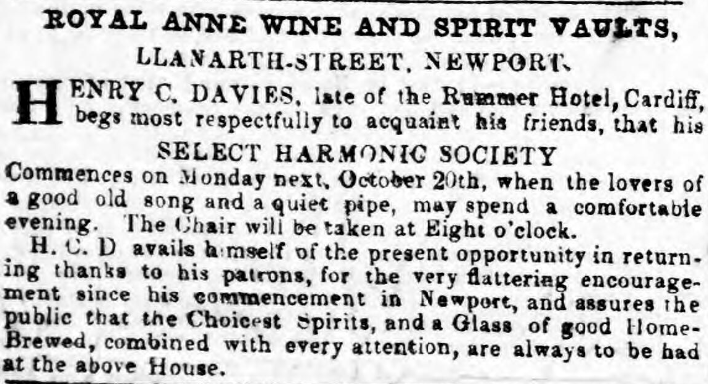
A place where one may enjoy 'a good old song and a quiet pipe.'
The Paper Selling Nuisance
A conversation ensued as to the nuisance complained of by boys shouting and selling papers late at night. The Chairman thought the matter should be seen-to, as it was a great annoyance at night. The Town Clerk said it was just the same annoyance while, a noise was made by boys selling papers, or by a man getting drunk and shouting,
Mr. West thought care should be taken, as some families dreaded almost entirely on the sale of these papers for a living.
Mr. Fothergill thought 11 o'clock was late enough.
The matter was left in the discretion of the Superintendent of Police to give instructions to his men.
— Monmouthshire Merlin, 19th May, 1876
Supposed Death from Starvation
On Wednesday afternoon, information was given at our police station that a man was lying almost insensible state near the "Royal Oak," Thomas-street. P.C. Turner at once proceeded to the spot, and conveyed the poor man to the police station, where he was recognised by the Chief Superintendent as Richard Williams, a native of the town and formerly an inmate of the Workhouse. The Chief Superintendent at once sent for medical assistance, meanwhile administering restoratives, but without effect.
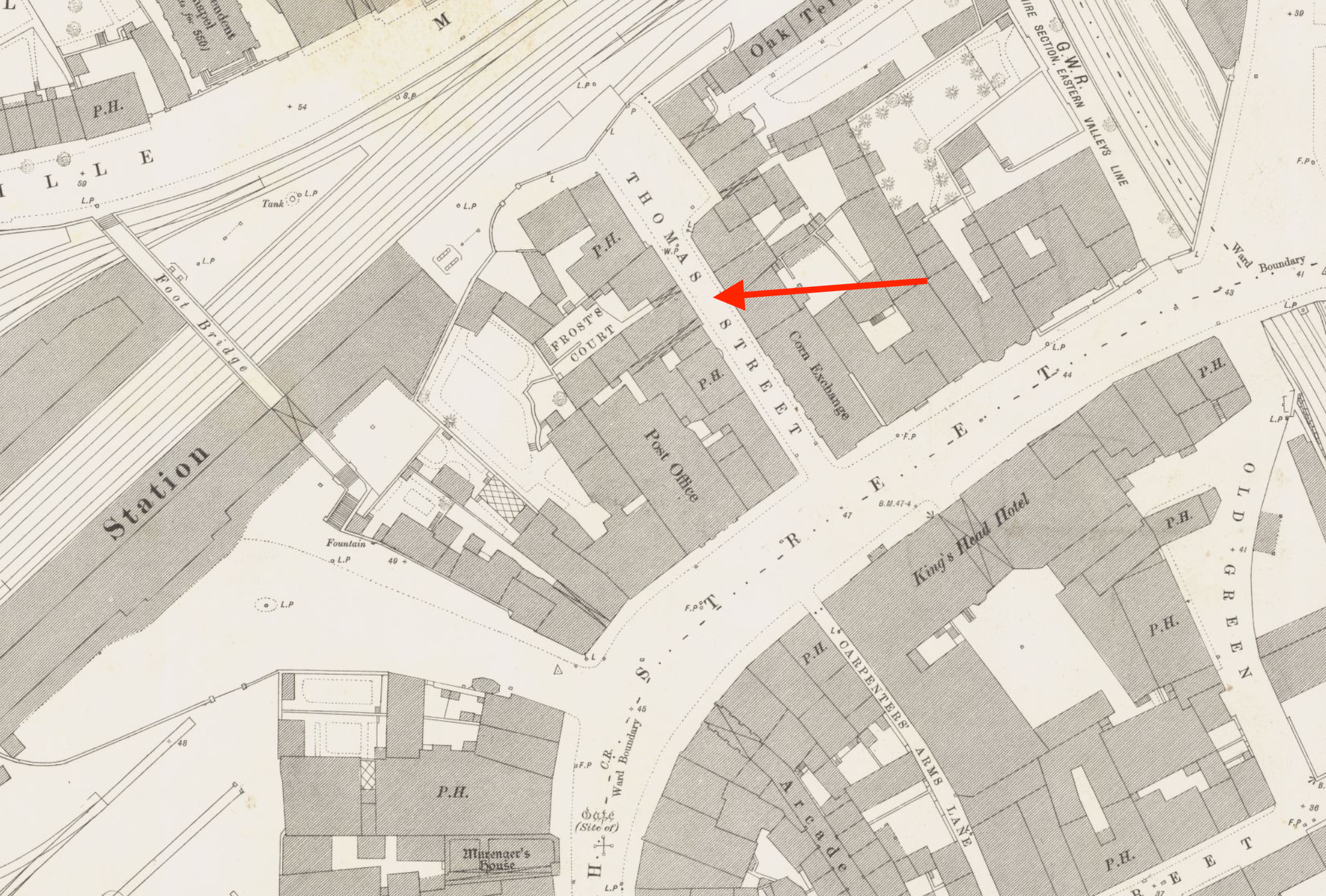
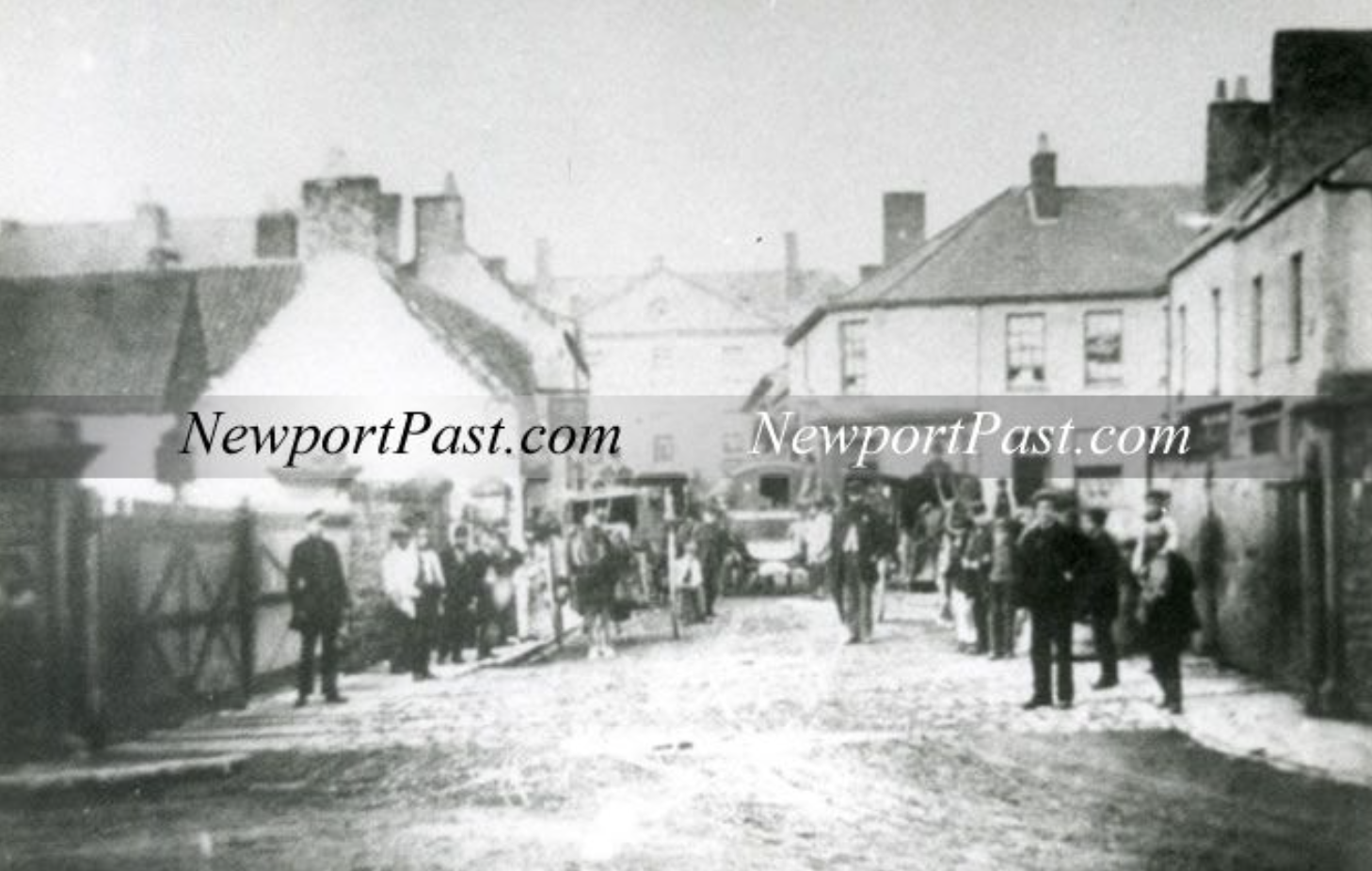
The location mentioned in the article. The Royal Oak mentioned in the article was the birthplace of John Frost.
Two medical gentlemen (Messrs. Davies and Limbrey) were soon in attendance, but remarked that the sufferer was beyond recovery, and that medical aid was "too late." Too late it was, for at nine o'clock in the evening Richard Williams ceased to breath. It would be premature to say much upon the matter at present. A Coroner's inquest will be held on Saturday and the circumstances connected with this poor fellow's death, which are of a most painful nature, will doubtless be detailed. It is said, however, he died of starvation. Deceased was 44 years of age.
— Monmouthshire Merlin, 11th December, 1869
'Man Robbed Whilst 'Napping' on Newport Bridge'
At an early hour on Sunday morning, Mr. ——, the representative of the Excise department at Caerleon, reported himself as very "wide awake" to the P.C. on duty; and stated that he had been indulging in a taste of "Tired nature's sweet restorer — balmy sleep," on the cool pavement of the Newport Bridge, the past night; but that while enjoying his somniferous luxury, some thief, catching him "napping," had stolen his nap-less hat, and moreover had carefully unbuttoned the sleeper's gaiters, and walked them off, no doubt supposing partial nudity more congenial to the influences of Morpheus, than tightly-buttoned vestments.
P.C. on duty further saith: "He appeared to have been drinking;" and wonders he didn't plunge into the Usk, instead of sleeping over it, that he might have got his full of "heavy wet."
— Monmouthshire Merlin, 24th June 1843
Rawei and his wife Hine Taimoa
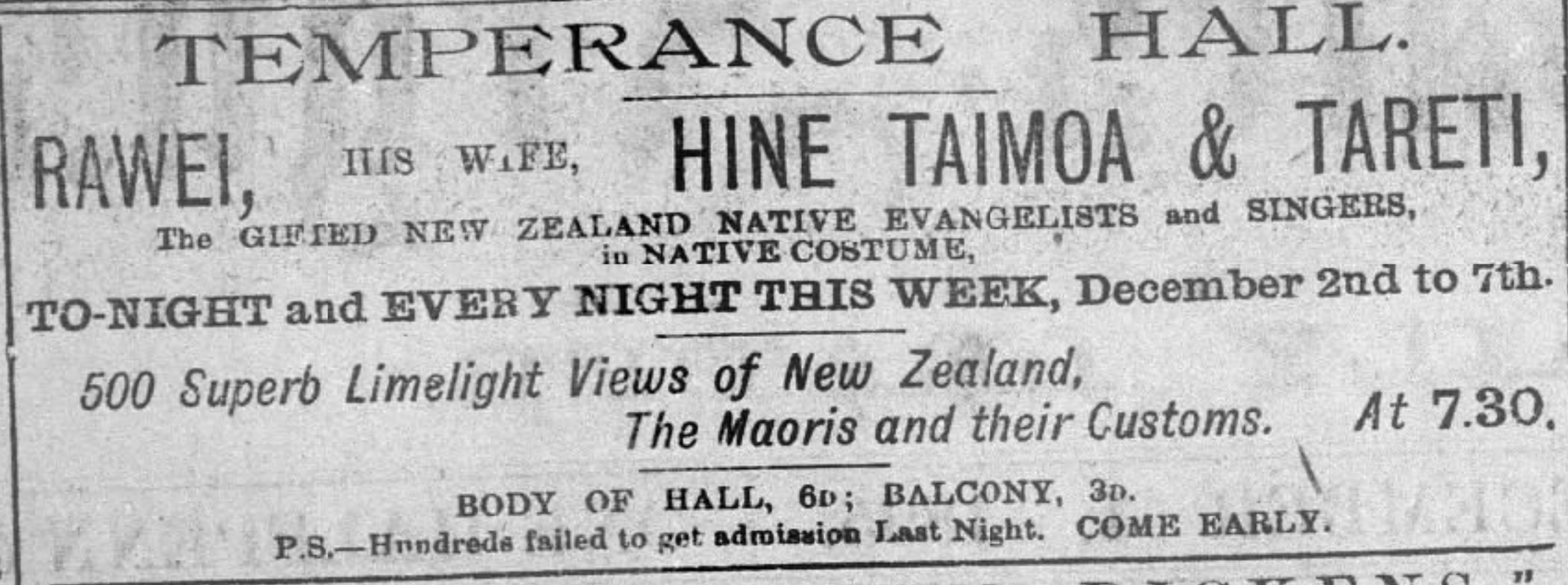
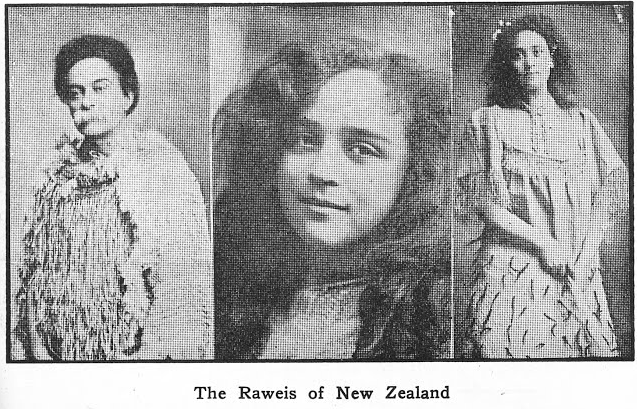
In December 1895, the Temperance Hall hosted Francis Rawei and his wife Hine Taimoa for a night of singing, stories, and presenting a magic lantern show of hand-coloured scenes from Māori life in New Zealand. The family toured internationally from the 1890s through the 1910s.
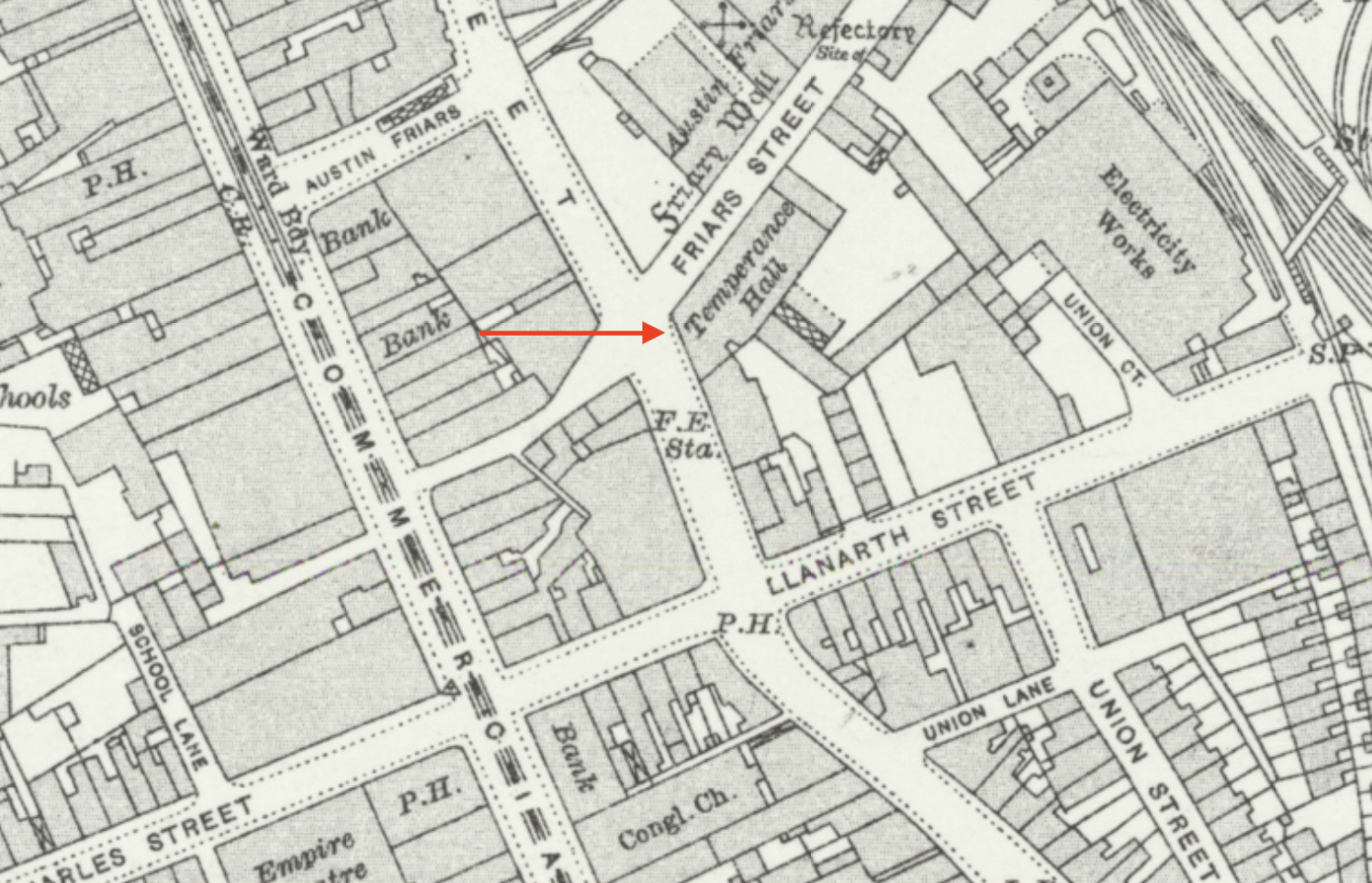
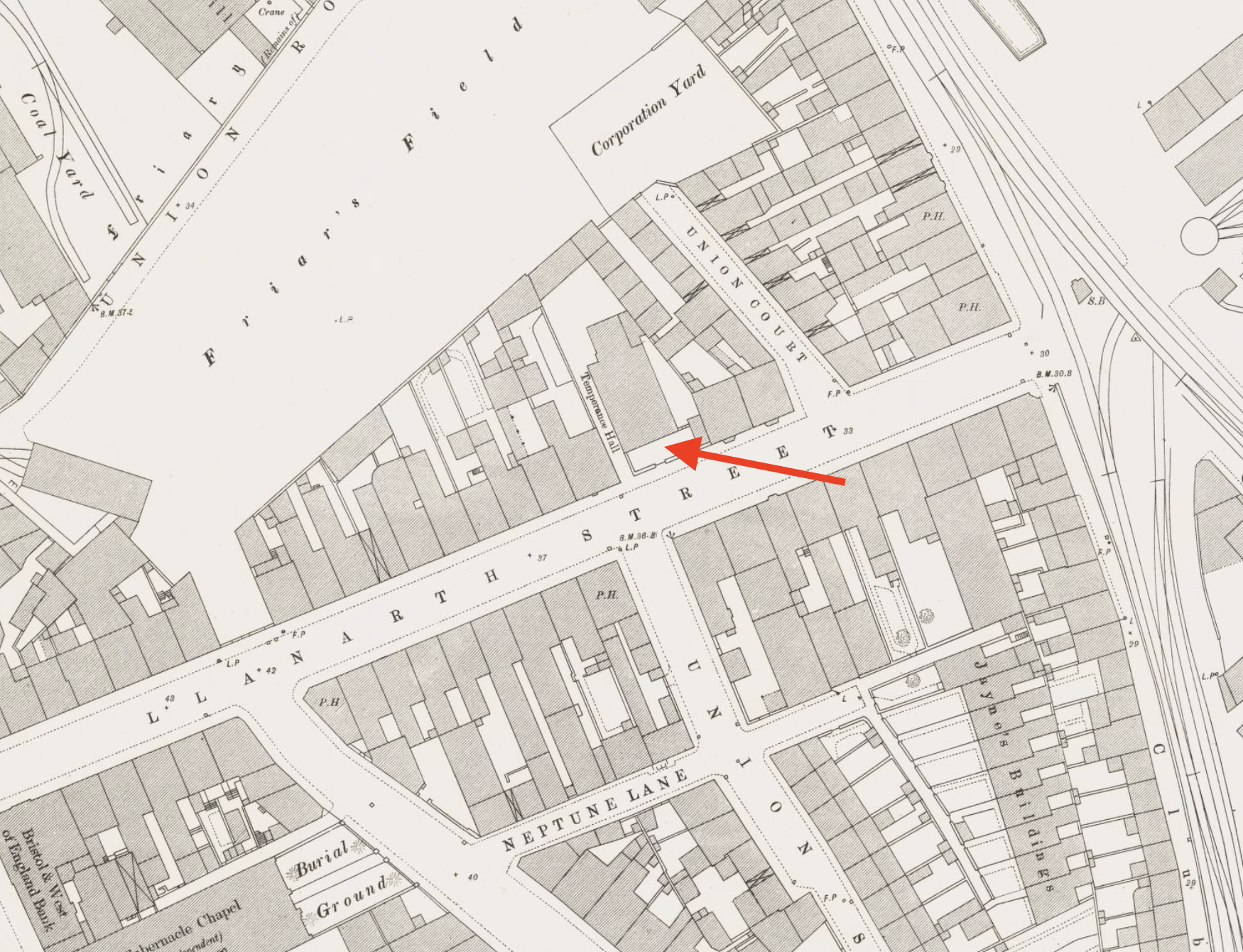
There was once a Temperance Hall where John Frost Square is today (right map dated 1881) and later there was one on Friars Street (left map). The Temperance Hall on the left map was being used in 1895 so likely that the event was held there.


Member discussion