

Welcome to another issue of The Newport Cornucopia where we dig through the newspapers archives for interesting news articles and adverts. All articles are posted verbatim and most headlines are original (headlines in quotes are my own).

A Marriage Unfortunately Spoilt
John Humphreys was charged with stealing 2½lbs. of bacon, the property of James Beard, of Christchurch. Benjamin Cook, constable, searched the prisoner's lodgings, and on finding the missing bacon, charged him with stealing it, and told him he must take him before a magistrate, whereupon he flourished a pair of stout tongs over Cook's head, and protested he would die on the spot before he would be taken.
Some little cool stratagem was adopted, and prisoner was persuaded to go a short way on the road, when a rough resistance was commenced, and now before the magistrate, although the prisoner looked very harmless, he resisted, after he was committed, having the wrist bands placed on. He put out his strength against the constable in a bold way, almost upsetting the magistrates' clerk's library, and the bench itself before the reverend magistrate and six men were called in from the King's Head yard*, who were forthwith charged in the Queen's name to aid and assist, and then the furies did begin, as the prisoner attempted to upset the men, and resisted with all his might.
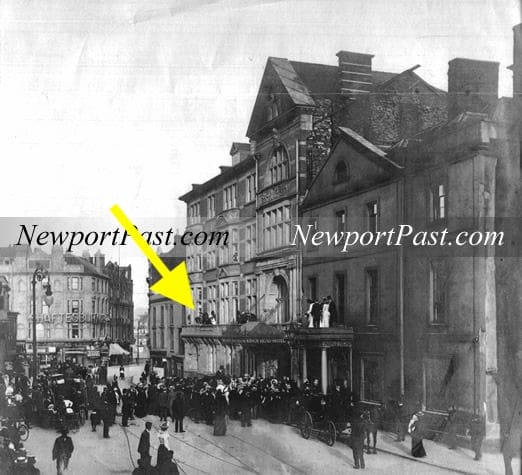
In the middle of the melee a young woman, gaily dressed with while ribbons, &c., came in, and was soon in the middle of the affray, and looking very lovingly in prisoner's face, said, "Oh, John, don't be foolish." Mr. Pope, and the magistrates' clerk, Mr. K., looked gravely on, as the row, with various upturnings and overturnings, bumped from one side of the office to the other.
At length prisoner was secured, and looked calm again, and was duly admonished for his folly. He and the party went out of the office, and prisoner ran to the bridge, where he struck the handcuffs against the stones with such force that they started loose! Hot pursuit, however, safely lodged him in the Newport police station. The prisoner was to have been married to the young woman that morning, and it was said had stolen the bacon to eat at the marriage breakfast, and along with a fowl.
— Monmouthshire Merlin, 8th September, 1849
Newport Corporation
SIR,—In reading the last two reports of the Town Council meetings in your paper I find that the great Babylonia have had a tremendous fall from tall spires, high towers, and lofty mansions to mucky places and "dirthy warther". Disputing about urinals, now seems to be the leading topic before such an august body.
Why should there be so much fuss about such places now? Why are the teetotal party to be favoured at the expense and inconvenience of other people. Why should one class of persons be compelled to put up with a nuisance more than another. The suggestions made by some of the deputation would bring Friars-field back again to its former state. The people in Merchant-street have as much right to be respected frequenters of the Temperance Hall.
The study of a Corporation should be the convenience and comfort of the general public, not the whims and fads of a few fanatics. Passing on from the above particular and would conspicuous spot, it would be well to point the great inconvenience and nuisance caused by the removal of the two urinals that formally stood in Market-street and Griffin-street previous to the extension of the market. What is the result at night. The streets are not fit for respectable men to go though, much less females.
Yet those good people, the teetotallers, would corrupt the homes paths of other people to gratify their haughty minds and secure personal benefits. So much for their in temperance.
JOHN WILLIAMS
16 Market-street, Newport
— Star of Gwent, 15th June, 1889
'Sir Charles Morgan Bronze Statue'
We understand that the colossal bronze statue of the late Sir Charles Morgan, which has just been finished by Mr.E.Thomas, will shortly be placed on its appropriate site, when the friends of that eminent agriculturist will celebrate the event in a suitable manner.
Sir Benjamin Hall has been invited to preside over the occasion; and the agriculturists of South Wales could not have more appropriately recognised the services which the worthy Baronet has rendered them, not only in subscribing largely himself, but also by inducing others to subscribe, towards the erection of the statue.
It will, we believe, be the first bronze statue that has been erected in Wales, either North or South.
— Monmouthshire Merlin, 11th August, 1849
'Females' Club'
The anniversary of the Females' Club, held the Carpenter's Arms, took place on Tuesday last. The sisterhood were in clean attire, paraded the town in procession, having heard an edifying discourse at St. Paul's, retired to the Society-house, and partook of an excellent dinner, after which the evening was devoted to St. Cecilia and Terpsichore [goddess of dance and choral song].
— Monmouthshire Merlin, 13th June, 1840
'New Church, Malpas'
The ceremony of laying the first stone of the Church of St. Mary, Malpas, in place of the rased Norman edifice, took place on Thursday, the 9th inst. Mrs. Prothero, wife of Thomas Prothero, Esq., of Malpas Court, patron of the living, and a munificent contributor to the building fund, of the intended structure, performed the ceremony, in the presence of the clergy and several friends.
The level was made of ancient oak, the plummet of old bell metal, from a church near Monmouth. The trowel, of polished steel, was neatly constructed, and the oak mallet elegantly ornamented.
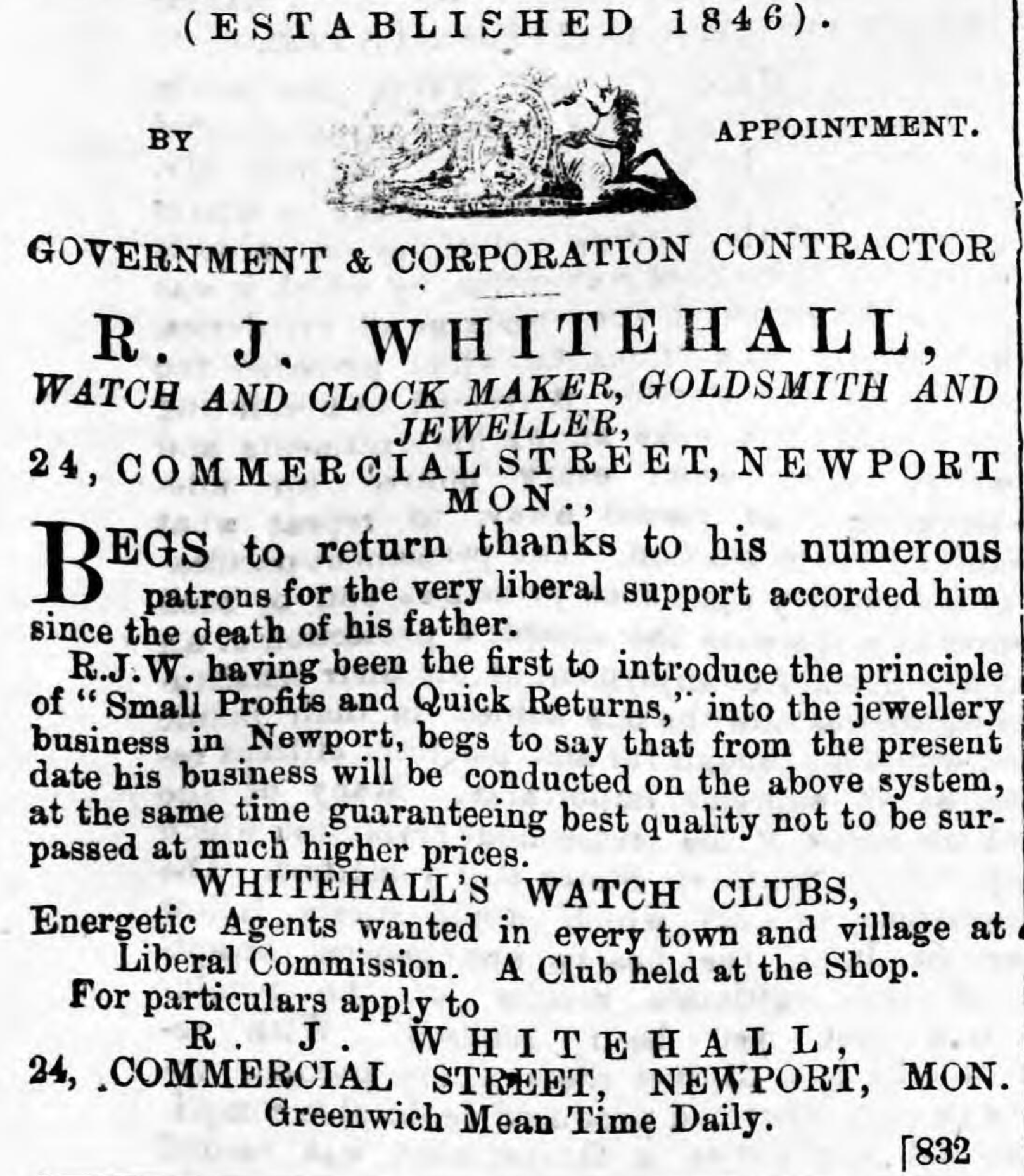
A zinc tablet, on which was engraved by Mr. Whitehall, jeweller, the inscription quoted below, was placed in a hollow of the stone — The foundation stone of St.Mary's Church, in the parish of Malpas, was laid on the 9th day of Aug., A. D. 1849, in the eleventh year of the reign of her most gracious Majesty, Queen Victoria, by Mrs. Prothero, wife of Thomas Prothero, Esq., of Malpas Court, and patron of the living. The Rev. Wm. D. Isaacs, incumbent; Mr. Henry Morgan, church warden; John Pritchard, Esq., architect: Mr. Benjamin James, builder.

— Monmouthshire Merlin, 18th August, 1849

'Threatening to Rip the Viscera'
Lath Cleaver—rather an ominous name—was charged with threatening to rip the viscera of John Whitchurch [High Street shoemaker], and challenging him to fight. To find a surely of £10 to keep the peace towards the complainant.
— Monmouthshire Merlin, 13th June, 1840
'Stealing a Pair of Boots'
William Morgan, a lad 12 years of age, was charged with stealing a pair of boots, the property of Edith Reynolds. Prosecutrix was a domestic servant, employed at a house in Cardiff-road. On Thursday morning prisoner went to the house begging, and later in the day the girl missed her boots. The police were apprised of the occurrence and P.C. Cole met prisoner in Commercial street with the boots under his arm.
When questioned by the constable prisoner coolly stated his mother sent him to pawn them for 3s. It was stated that several pawnbrokers had refused to take the boots in pledge from the lad, as he was too young,
Prisoner was ordered to be locked up for one day and to receive ten strokes with the birch rod, he having been given a very bad character.
— Star of Gwent, 17th August, 1889
A Saturday Night Brawler
William Hazell was charged with being drunk and disorderly in the streets on Saturday night last. Sergeant Hill proved the case and Superintendent English and Sergeant Harlow stated that Hazell had thrown off his Jim Crow hat and smock, and wanted to have a pitch into them by way of change. He was speedily locked up, as one of the noisiest and most drunken Saturday night brawlers with which the guardians of the night have to do. Fined 2s. and 6d. and 8s. costs, or fourteen days imprisonment.
— Monmouthshire Merlin, 1st September 1849
What's in a Name?
Timothy Couch was charged with taking sheep out of the custody of Mr. Frost, before the "tack" was paid for Frost, while explaining the case, mentioned the name of one of the parties engaged in this transaction, as, Jack, the pickpocket which was the only name, he said, by which the man was known.
Jack looked very complacently at the Bench, and it wasn't a bit of difference to him what they called him—he was quite easy about it.—The case was dismissed.
— Monmouthshire Merlin, 1st September 1849

Rescue from Drowning
On Friday a gentleman descending Barrack-hill heard a cry of alarm, and hastening to the Canal side, whence the cry proceeded, ascertained that a little boy had fallen into the water and had been swept under the bridge or tunnel which crosses the canal at the foot of the hill.
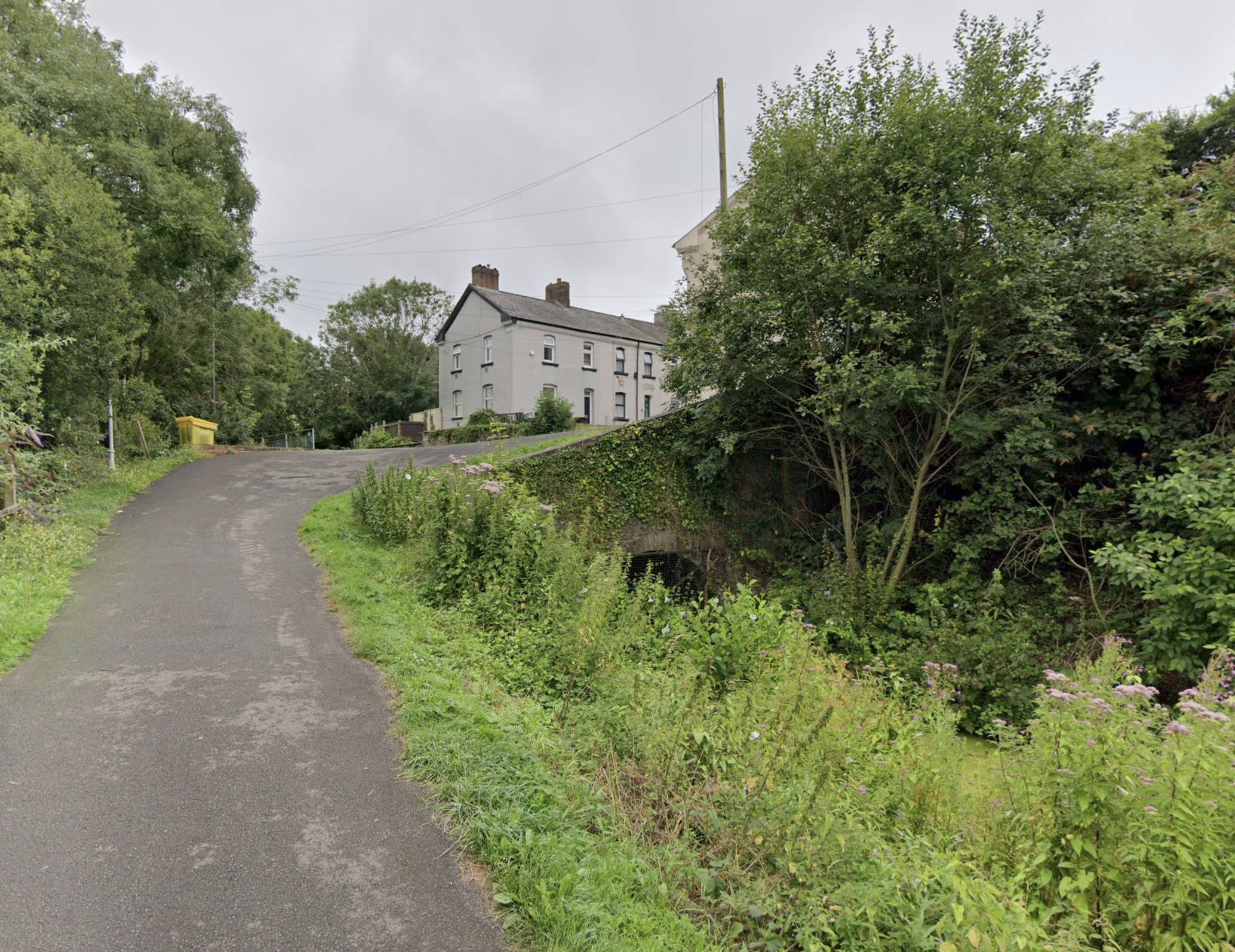
Without hesitation the gentleman jumped into the water, and subsequently throwing his stick, hat and gloves upon the bank, crept into the tunnel and brought out the child alive. We have not ascertained the name of the rescued or the gallant rescuer.
— Star of Gwent, 15th June, 1889
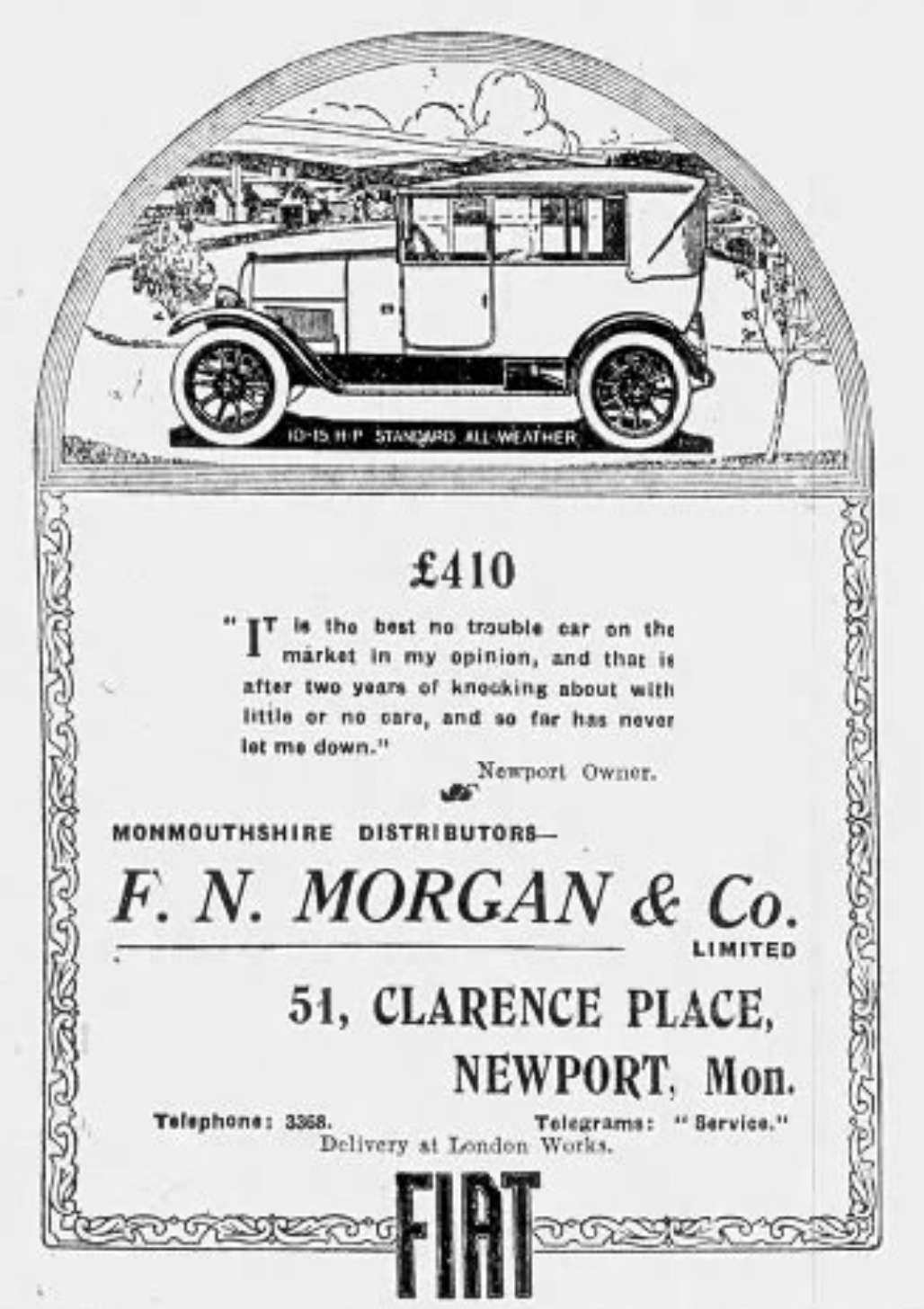
The Fish and Vegetable Market
The spirit of improvement is found busily operating in quarters where changes are most required in this town. The state of the place where fish, vegetables, fruit, &c., are vended, adjoining the meat market, has long been the cause of complaint, on the part of the Saturday visitors, and of positive danger, as affecting health, to the neighbourhood.
Scarcity of water, accumulations of decaying vegetables, and other refuse—pests to the olfactories, and hotbeds of malaria—depositories of unsound fish, neglect of cleansing, &c., called imperatively for a change, and one of a searching nature too.
A short time since, the town council made application, through their official organ, to Arthur Wyatt, Esq., agent to the Duke of Beaufort, to whom the market belongs, submitting the necessity of obviating the causes of public complaint, some of which are above enumerated.
To this communication, Mr. Wyatt gave a prompt and courteous reply recognizing the necessities of the case, he conceded, on the part of his Grace the Duke of Beaufort, all that was required, and the new system will commence as soon as the arrangements can be completed.
There will be a copious supply of water furnished by the Water Works Company. The fish department of the market, separated from the vegeiable and fruit quarter, will be fitted up with slabbed stalls, water cocks, and be properly ventilated whilst there will be a thorough drainage ot the whole premises.
The business of the market must terminate at ten o'clock, after which it most be cleansed, and perishable goods removed. We understand these alterations will be carried out under the superintendence of Mr. Lewis, surveyor.
— Monmouthshire Merlin, 1st September, 1849
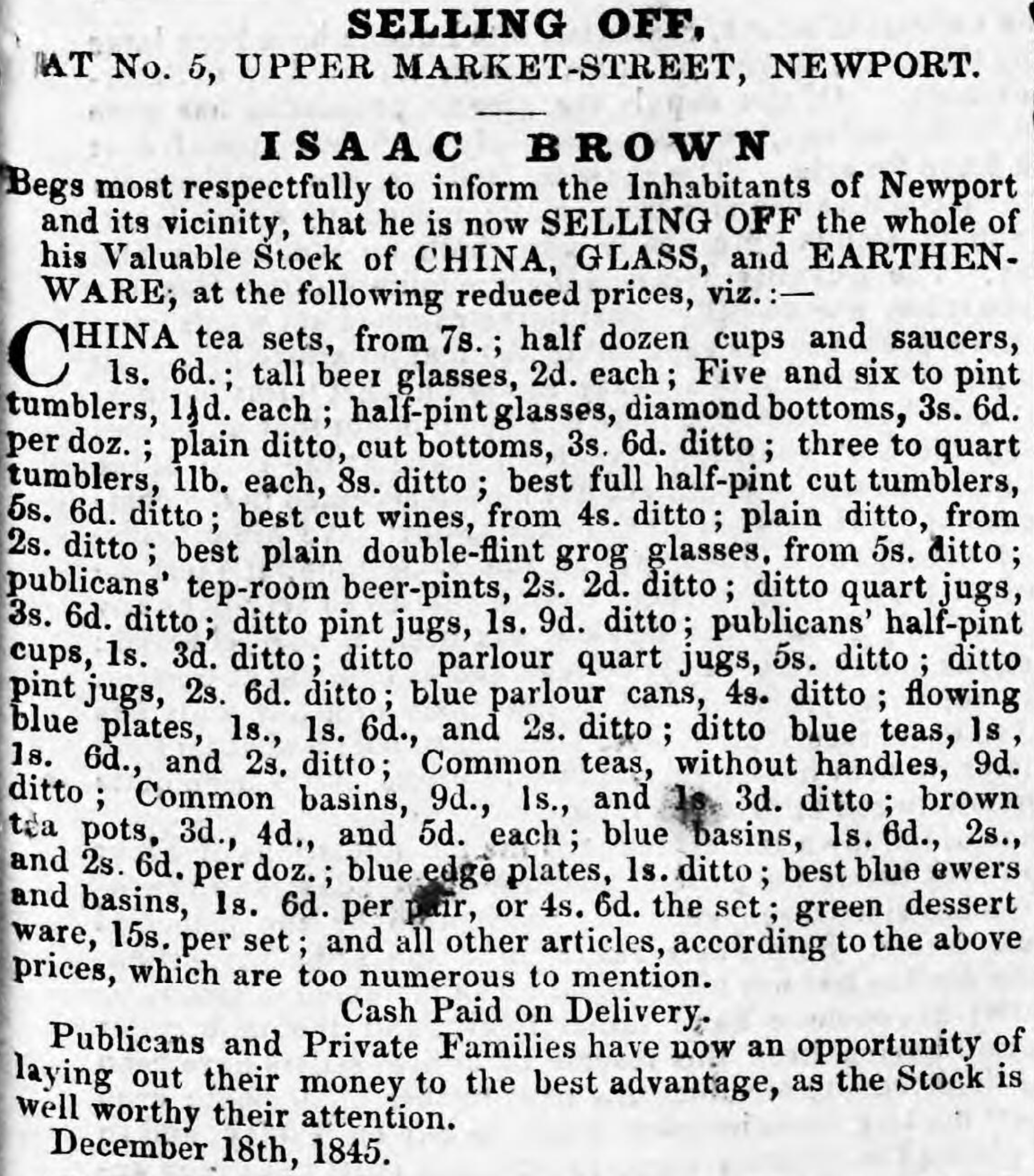
The Old Turner's Wheel at the Alexandra Pottery
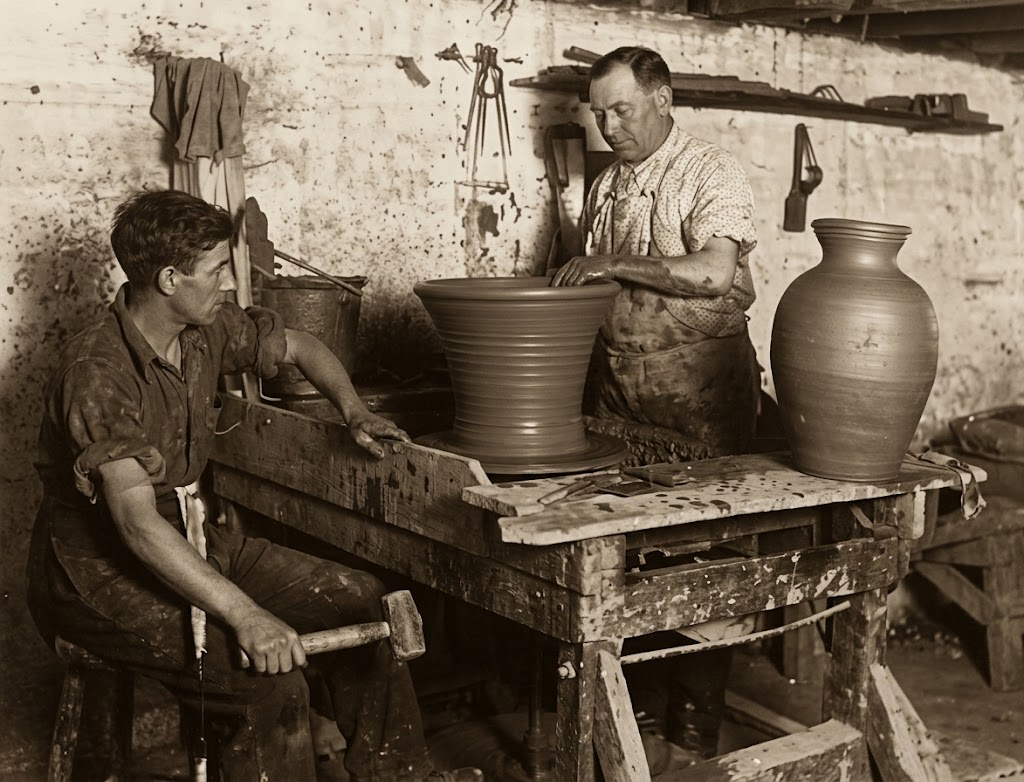
First installed at a pottery owned by a Mr. Clark, situated where the Ship Hotel, Pill, Newport, now stands, it was taken over by Mr. Rogers, who in turn sold it to a Mr Price. In the new ownership, the pottery was removed to Crindau, and traded under the name of The Newport Pottery.
A War-Time Memory
In 1915, the Newport Pottery was purchased by Mr. G. F. Lovell, J.P., and interesting memories are recalled by this transaction, which was prompted by the serious shortage of packing materials at that time. The earthenware utensils were utilised by Mr. Lovell for packing the many lines of confectionery manufactured by him.
June, 1919, saw this old wheel again moved, and its destination was the Alexandra Pottery, Dudley-street, Newport, and to-day it can be seen there, and it is being operated by Mr. E. Watkins, a grandson of the original craftsman who first worked this wheel. Flower pots and pans are moulded with the same care and pride they were a hundred years ago.
— South Wales Argus, 9th August, 1933
Charge Against a Toll Collector
Charles Hopkins was charged by John Whitchurch with unlawfully demanding and taking a toll on the night of Monday last. It appeared that Mr. Whitchurch proceeded to Tintern on Monday in a carriage and pair, with a party of friends, and paid the proper toll of 1s to the defendant, Mr Hopkins. The same party and carriage returned at a late hour, and defendant after some little delay came out, and stated that it was past 12 o'clock, and Mr Whitchurch must consequently pay a shilling. The party said it was not yet 12; but finding the toll-collector persist in his assertion that the time was up, and his demand for the shilling, it was paid.
On arriving at Mr Whitchurch's they proceeded to Mr Latch's public clock—by which the toll collector said he went—and it then wanted two minutes and 12, an it must consequently have been about twenty minutes to 12 when they were at the gate.
Mr Whitchurch stated that he had not brought forward this charge from any vindictive feeling towards Mr Hopkins, but in justice to himself and the public at large and he therefore hoped, that if the magistrates convicted the defendant, it would be in the smallest penalty.
Mr Hopkins said he was sorry, but he bad made a mistake in the time. He had sent Mr Whitchurch the shilling next morning, but it was refused.
The Bench then convicted the defendant in 1s, and 17s 6d costs, and ordered him to return the shilling which had been unlawfully taken. The amount was immediately paid, and the court cleared.
— Monmouthshire Merlin, 8th July, 1843
'A Hayrick on Fire at St Julians'
Just after six o'clock on Monday morning information was conveyed to the Newport borough police that another fire had broken out at St Julians, on land occupied by the Rev D. Roberts, vicar of Henllis.
A week ago a fire broke out on the same premises, a rick of hay being destroyed, and to-day's conflagration was due to another rick taking fire, apparently from overheating. Several members of the Fire Brigade, with the steam engine, at once proceeded to the scene of the outbreak.
— Star of Gwent, 20th August, 1889


Member discussion