

Welcome to another issue of The Newport Cornucopia where we dig through the newspapers archives for interesting news articles and adverts. All articles are posted verbatim and most headlines are original (headlines in quotes are my own).

School for Scandal
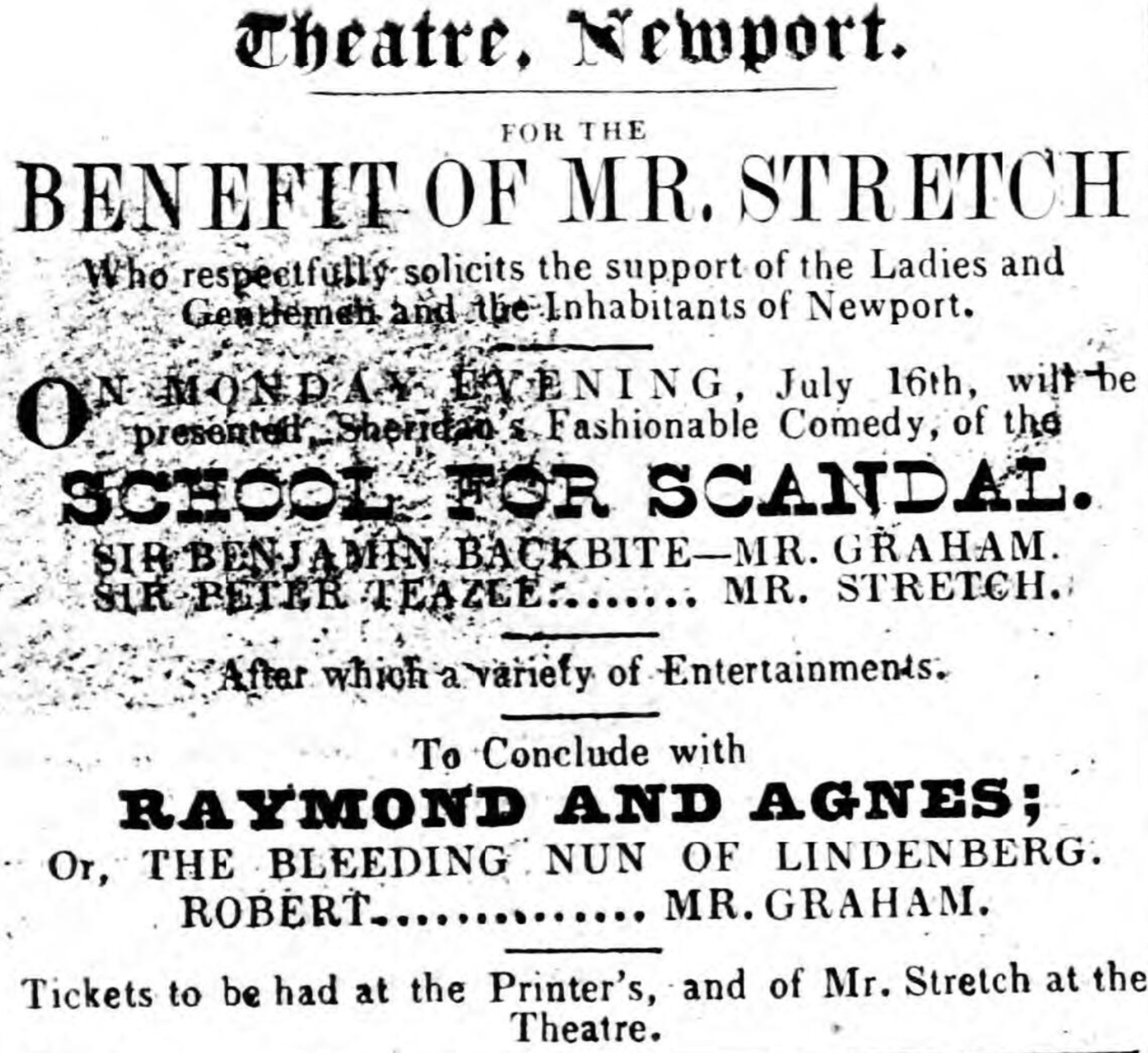
At the Newport Theatre in 1838 for the benefit of Mr Stretch (apparently a performer at the theatre) was a play called School for Scandal which was Richard Brinsley Sheridan's 1777 comedy which follows a wealthy, disguised uncle who tests his two nephews, ultimately exposing the superficially respectable brother as a scheming hypocrite and rewarding the reckless but good-hearted one, thwarting a malicious circle of society gossips in the process.
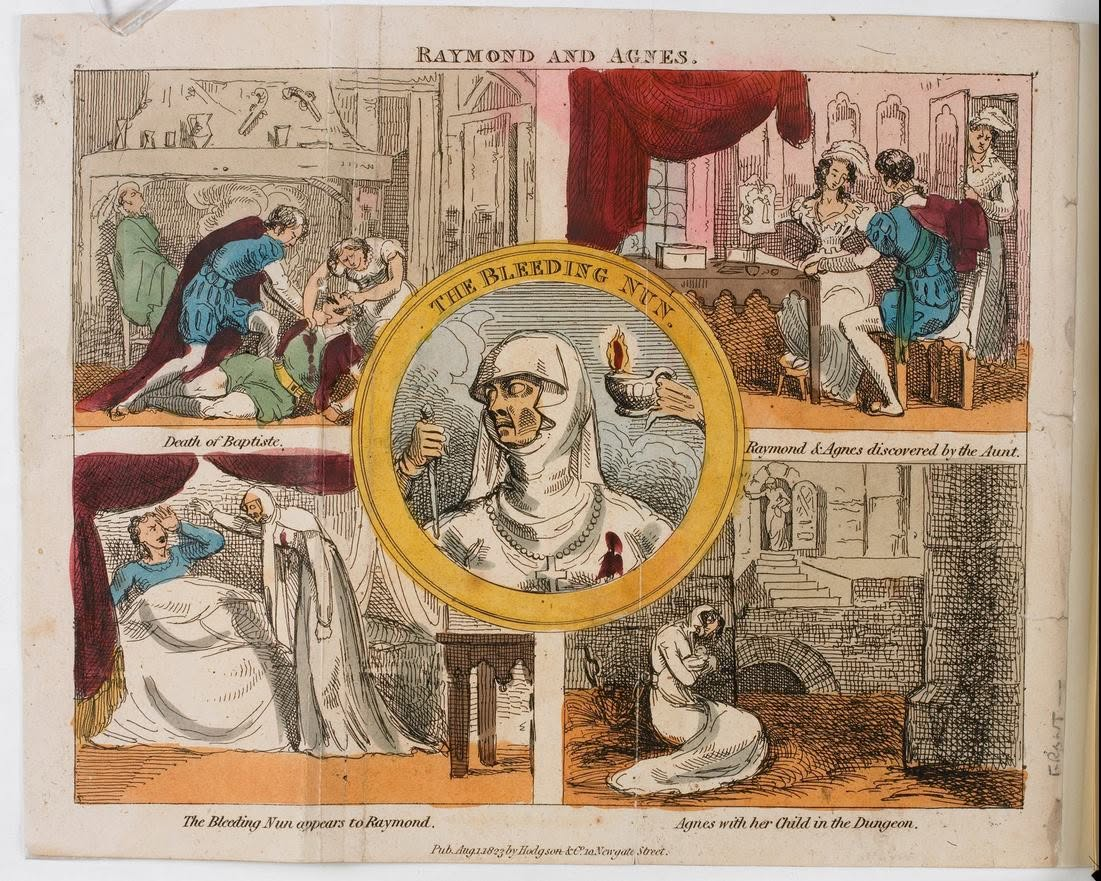
The night ended with 'Raymond and Agnes; or, The Bleeding Nun of Lindenberg' which was a famous Gothic narrative arc and inset tale from Matthew Gregory Lewis's 1796 horror novel, The Monk.
'Duel Extraordinary at Rodney House'
A startling event of this nature, which took place on Thursday evening last, has been the subject of very general comment in Newport, where, fortunately, ihe polished tube of death is so seldom brought into requisition, and where the "oldest inhabitant" does not remember a single man dying in an affair of honour.
From what we learn from a volunteer witness of competent information, but who wishes his name to be kept "honourable," as he says, lest, for coming into our office on the subject, he should be "called out," it appears that the hostile meeting arose from the following circumstances:—A young gentleman of prepossessing appearance, with an eye like Mars, — but, in addition to its qualities to "threaten and command:, glancing unutterable things at the "soft sex", -with hyperion curls, a martial nose, and in a word, like Capt. Boroughcliffe in the Pilot, "a very d__l amongst the ladies", has been for some time sojourning in out town, and his galant achievements in expectancy (from the advances already made) were freely communicated in conversation to those who have he honour of his acquaintance, and who, doubtless, envying his winning qualities for ladies' love, with which they are no so highly gifted, were determined that his course of love should not run smooth, and that the hearts of the gentle seamstresses and ingenious bonnet artizans, should, by a ruse de guerre, be protected from the assaults of this provincial Don Juan.
Acting with this "intent," certain parties addressed the gay Lothario, by letters, in words of sound and fury, threatening him with assault, battery, and demolition, if he continued to follow certain vestals, whom he "Loved not wisely, but too well." Letters were also sent in the guise of a female's hand, declaring that the writer was one of the stricken deer—that, after sighing in silence till there could be but few sighs remaining, she was determined to "declare all," and would lisp her love at an appointed place, if he would meet her, &c.
Having been will-o'-the-wisp'd in this way for some time, his suspicions fell upon a spirited young gentleman of the neighbourhood, whom he charged with gammoning and "bamboozling" him, and to whom he addressed a note, from which the following is an extract, on receiving a defiance from the inculpated party

This was immediately replied to by a young gentleman, as the friend of the accused, and, after an exchange of cards, the challenge was received and as the challenged said, they should meet on Thursday evening to "settle their affairs".
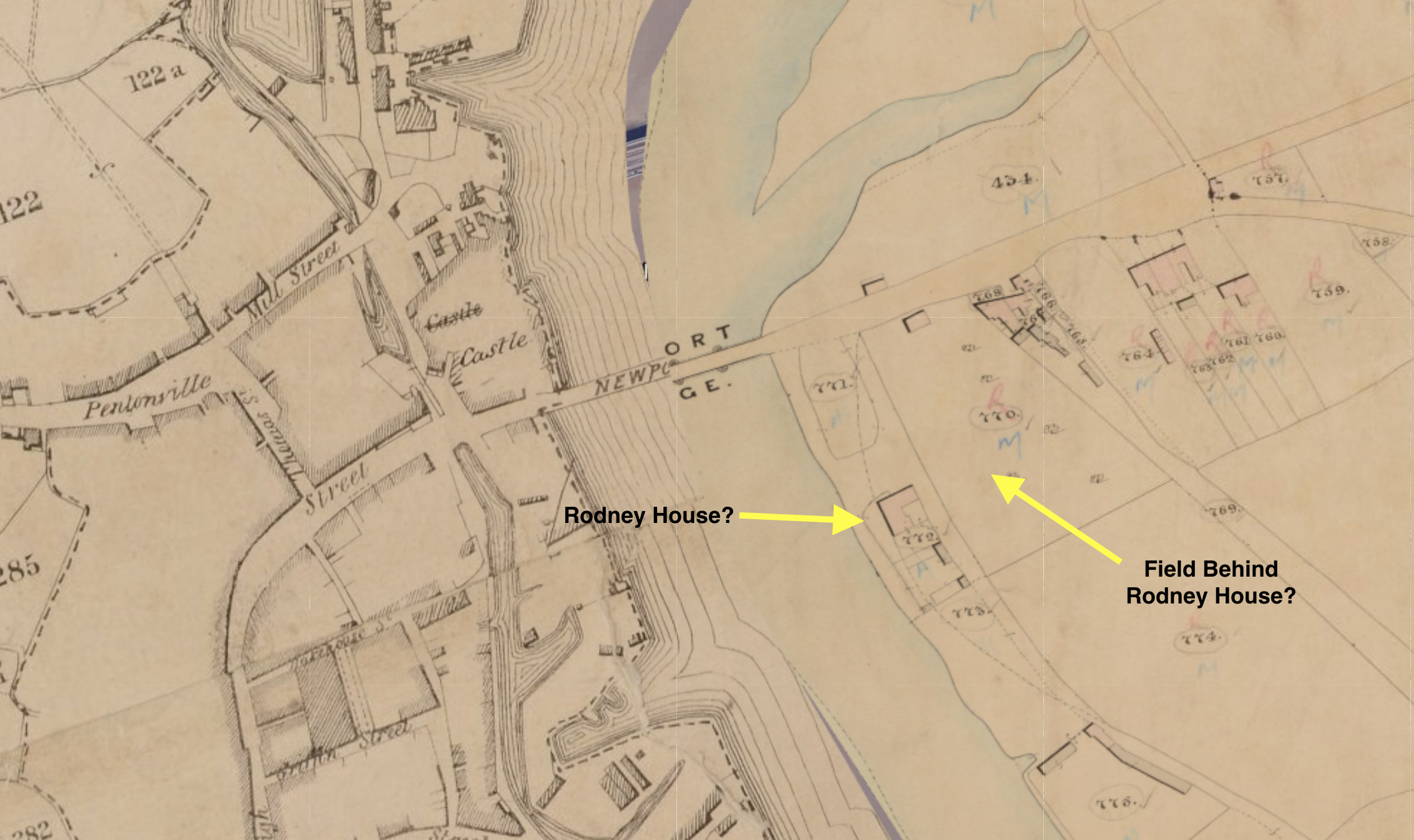
The young Don, assured that he could kill the beaux, as well as charm the Misses, borrowed a brace of pistols, and, accompanied by two aides-de-camp with the formidable names of Napier and Victory, carrying the "fire-irons" he repaired to the sand fields on the banks of the Usk, at nine o'clock on Thursday evening last.
Before going to the ground he desired that, if "any thing happened," the following pour l'adieu should be given to an acquaintance.
"If I should fall this night in the sand, mention me in sorrow to ___, he was, as Ottway the poet, says, 'my friend.'"
I know he will lament me dead; and may, perhaps, visit my grave up Stow. "Bleeding friendship long will sorrow there."
And another valedictory passage to a bright particular loved one, ran thus

Well, the eventful evening came—the duel was bruited abroad —and many daring; persons ventured near the ground—but the more prudent kept out of pistol reach, on the bridge. Ten paces were measured between the scowling combatants, fearful silence ensued—the awful word, fire! was given—two loud repoils were heard—and one man (the Constantinople gentleman) fell, seriously-frightened. He wished to be carried to a surgeon, who pronounced the wound to be—imaginary—and it is said that a Court of Honour is to be applied to, in order to ascertain if the pistols were duty loaded, as the Juan says, if it was a proper ball he would have established a tunnel through his opponent.
— Monmouthshire Merlin, 7th July, 1838

'A Coach Between Newport and Liverpool'
On Tuesday last, a coach commenced running from this Town to Ragland, to meet the Hero from Abergavenny, which proceeds to Birmingham, where it arrives in time for a first-class train, and proceeds by the railroad to Liverpool, where it arrives the same night.
It is unnecessary to expatiate on the advantages which this conveyance will afford to the mercantile community, we will only invite the attention of our readers to one fact, thatt it establishes a direct communication between this Town and Liverpool, and completes the distance in one day!
— Monmouthshire Merlin, 18th August, 1838
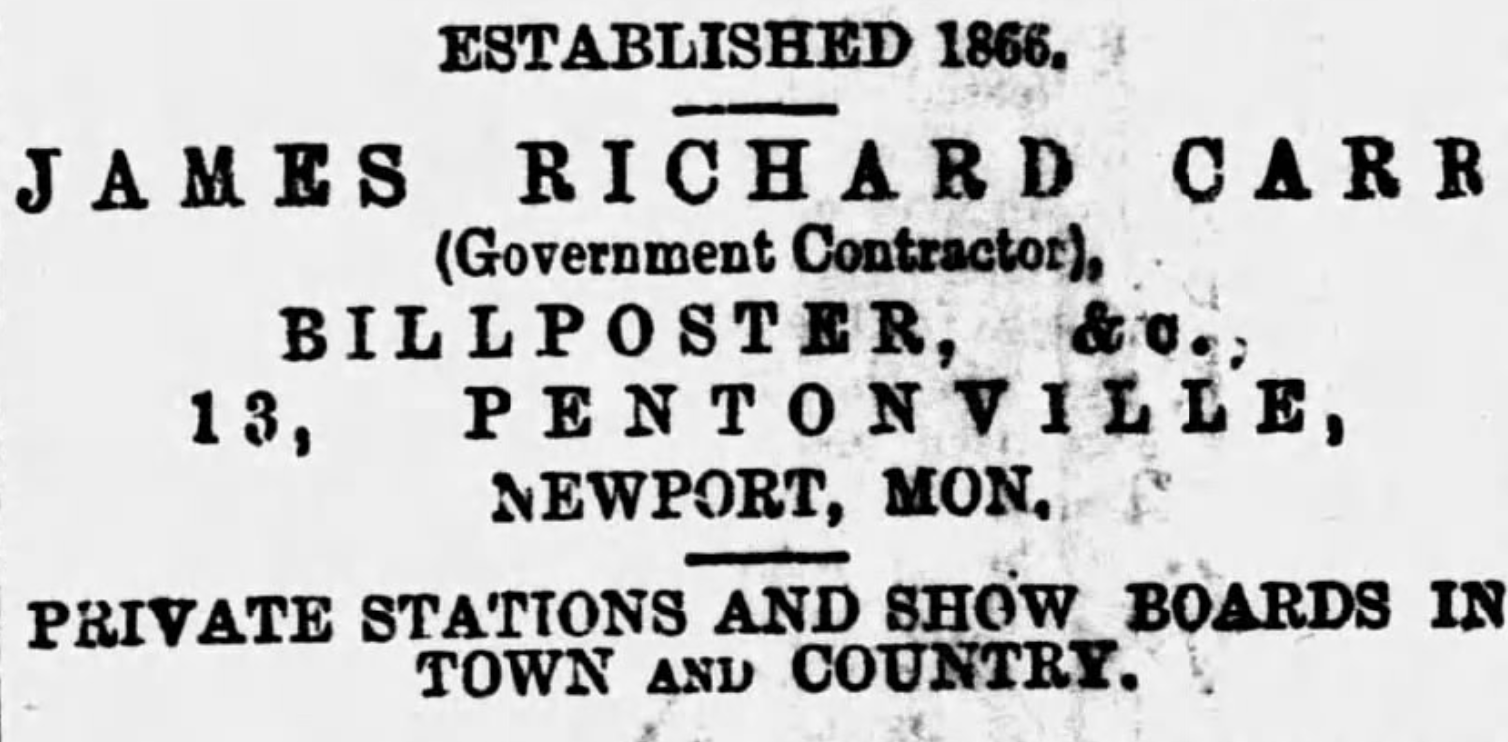
Soldier's Coffee House
This Institution has now been open for nearly four months, in a cottage on the hill opposite to the Barrack gate the object being to provide soldiers with more substantial suppers than the coftee and bread and butter they can get in the recreation room inside the barracks, and also to supply a quiet room for the use of men who wish to escape from the noise of the barracks, and avoid the temptations of the town.
With the exception of a cup of tea, no food is provided for soldiers after their midday dinner and it is therefore very desirable they should have some means of obtaining refreshment at a moderate price and of good quality. The reading room has been much used of late, and on Christmas day more than sixty soldiers availed themselves of the opportunity of escaping from the noise and confusion of the barrack rooms, and spent their afternoon and evening at the coffee house.
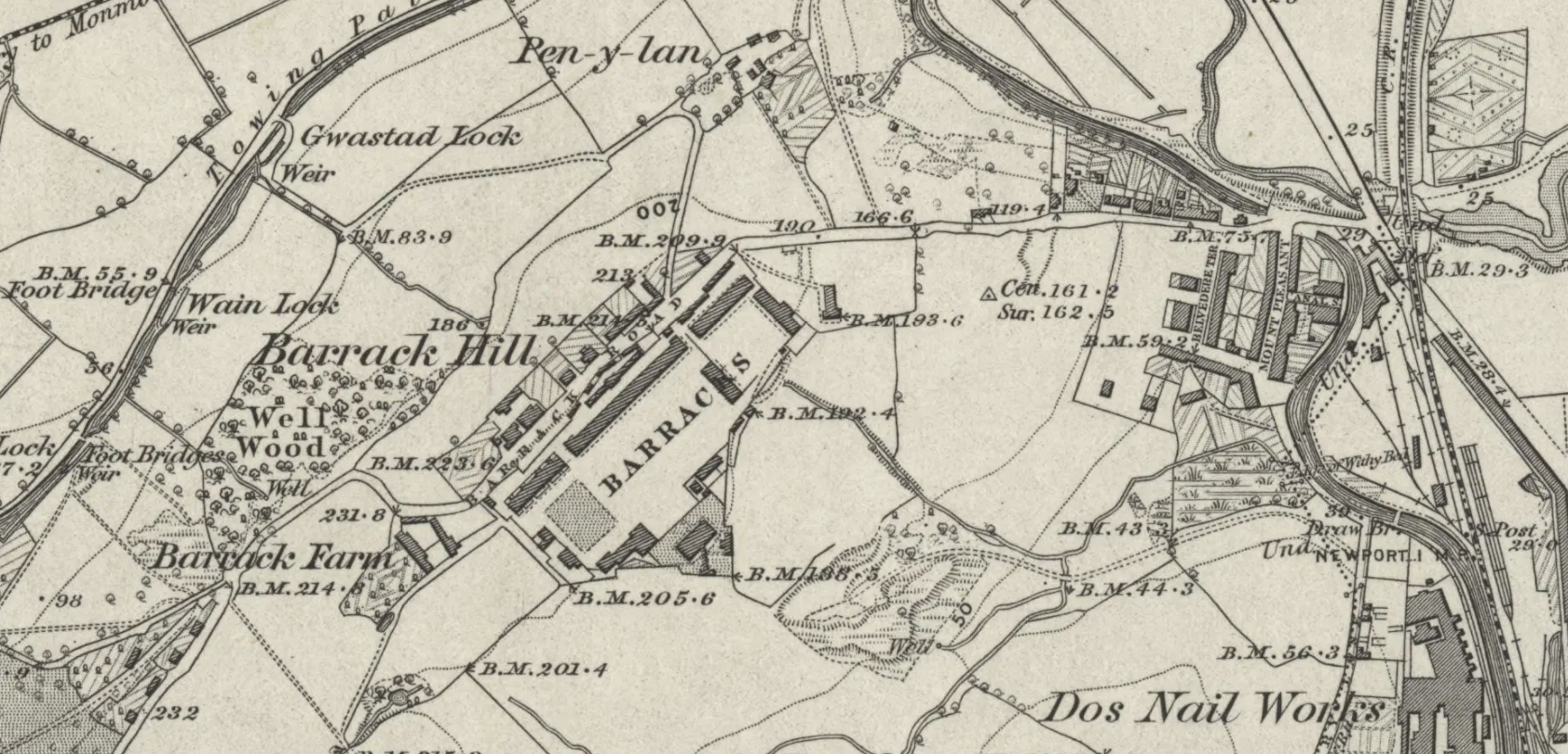
Classes are now held in a private room for those men who wish to attend them but all influences of a sectarian character are strictly excluded from the reading room, which is kept only as a reading and recreation room for men of all denominations, and is used by Protestants and Roman Catholics alike.
The expenses of repairing and fitting-up the coffee house have more than exhausted the funds originally collected for that purpose, and money is now urgently needed to carry on the current, expenses of lighting, firing, newspapers, and wages. Food is necessarily sold at such low prices that but little profit can he made, and a soldier's coffee house can never be self-supporting, as are those established for workmen.
Donations or subscriptions will be most gladly received and may be paid into the National Provincial Bank, to the account of the Newport Soldiers' Coffee House.
— Monmouthshire Merlin, 9th March, 1877
Drowned Whilst Intoxicated
Mrs. Ann Daniel, aged 49, the wife of a working jeweller with whom she was drinking at a public-house, Mill-street, on Saturday night last, went away from that house at about eleven o'clock, and on proceeding, for some reason unexplained, across the canal bridge, to go down by the canal side, she slipped her foot when about two yards from the brink of the quay wall, fell into the water, and was drowned.
A man named John Marsh, who was standing with his companion near the bridge at the time, heard the splash in the water, leaped in, and in about a minute and half he says, from the alarm being given, he had brought her ashore to the Bristol-house beerhouse by the canal side, where Mr. Hawkins, the surgeon, found that life was extinct.
Two females saw her fall into the water, evidently by accident; so that the rumour of her having committed suicide, was incorrect. An inquest was held on the body by W. Brewer, Esq., and a jury, on Monday last, when a verdict of accidentally drowned, was returned; the jury at the same time stating that the spot where deceased fell into the canal, ought to be better fenced off.
— Monmouthshire Merlin, 21st July, 1849

'Begging in Castleton'
Thomas Davies and George Purser, two vagrants, were committed to Usk gaol, Davies for 21 days, and Purser for 14 days, with hard labour, for begging at Castletown [Castleton]. They had been ordered by Sergeant Trewartha not to do so, but still persisted.
— Monmouthshire Merlin, 8th September, 1849
'Stealing Fruit from Belle Vue'
William Morgan was charged with stealing fruit from the garden of Mr. F. Justice, Bellvue (sic). P. C. Turner proved finding the prisoner, with another boy, stealing apples, gooseberries, currants, and strawberries, in the garden of Mr. Justice, on Sun-day morning last. They ran off as fast as they could, but he pursued and captured Morgan, while the other escaped.
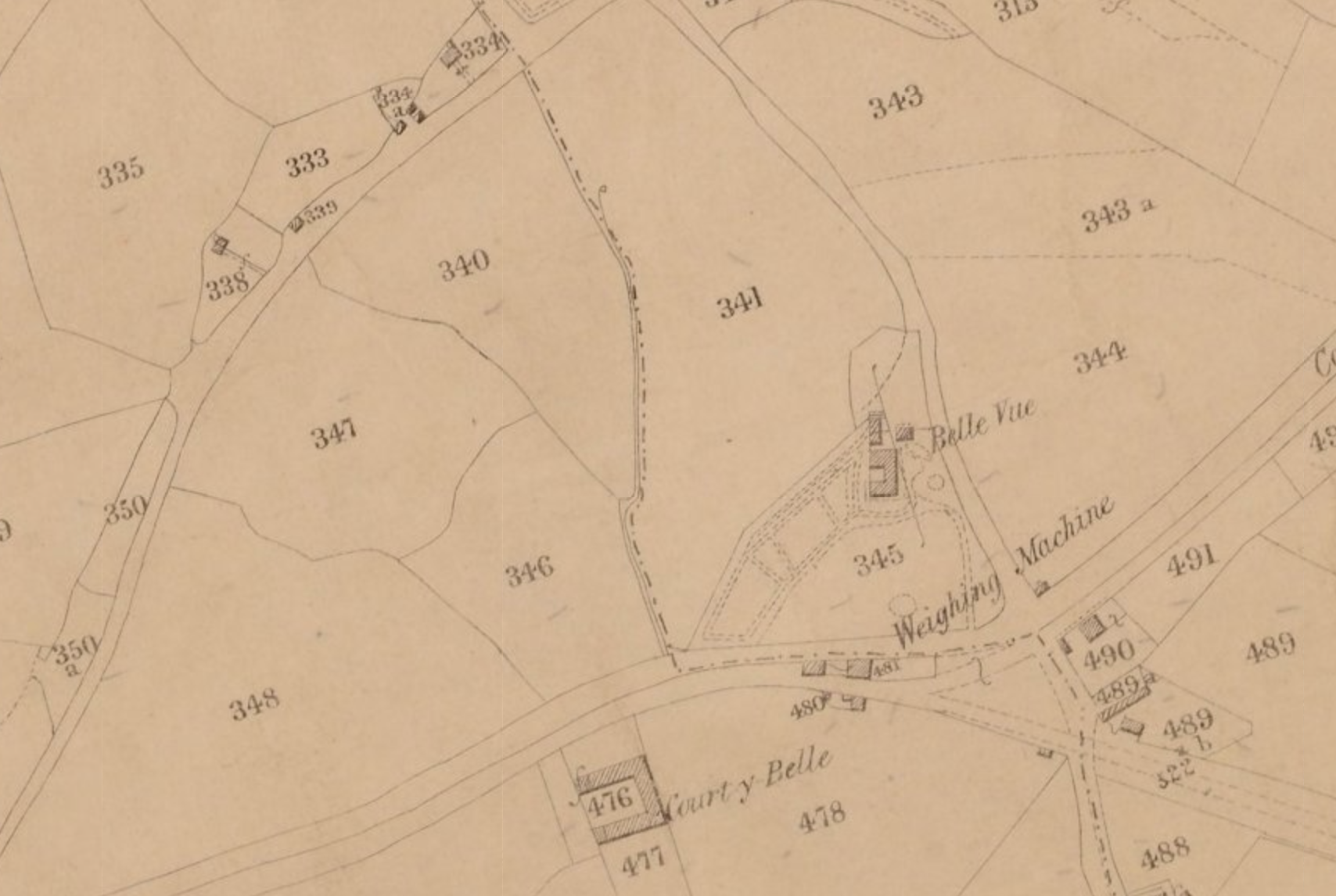
A considerable quantity of unripe fruit was found on the prisoner. The young rascal now said the policeman had eaten the strawberries. (Laughter.) Committed to the House of Correction for three months' hard labour. This should prove a warning to other garden robbers.
— Monmouthshire Merlin, 14th July, 1849

The Burglary at Woodlands
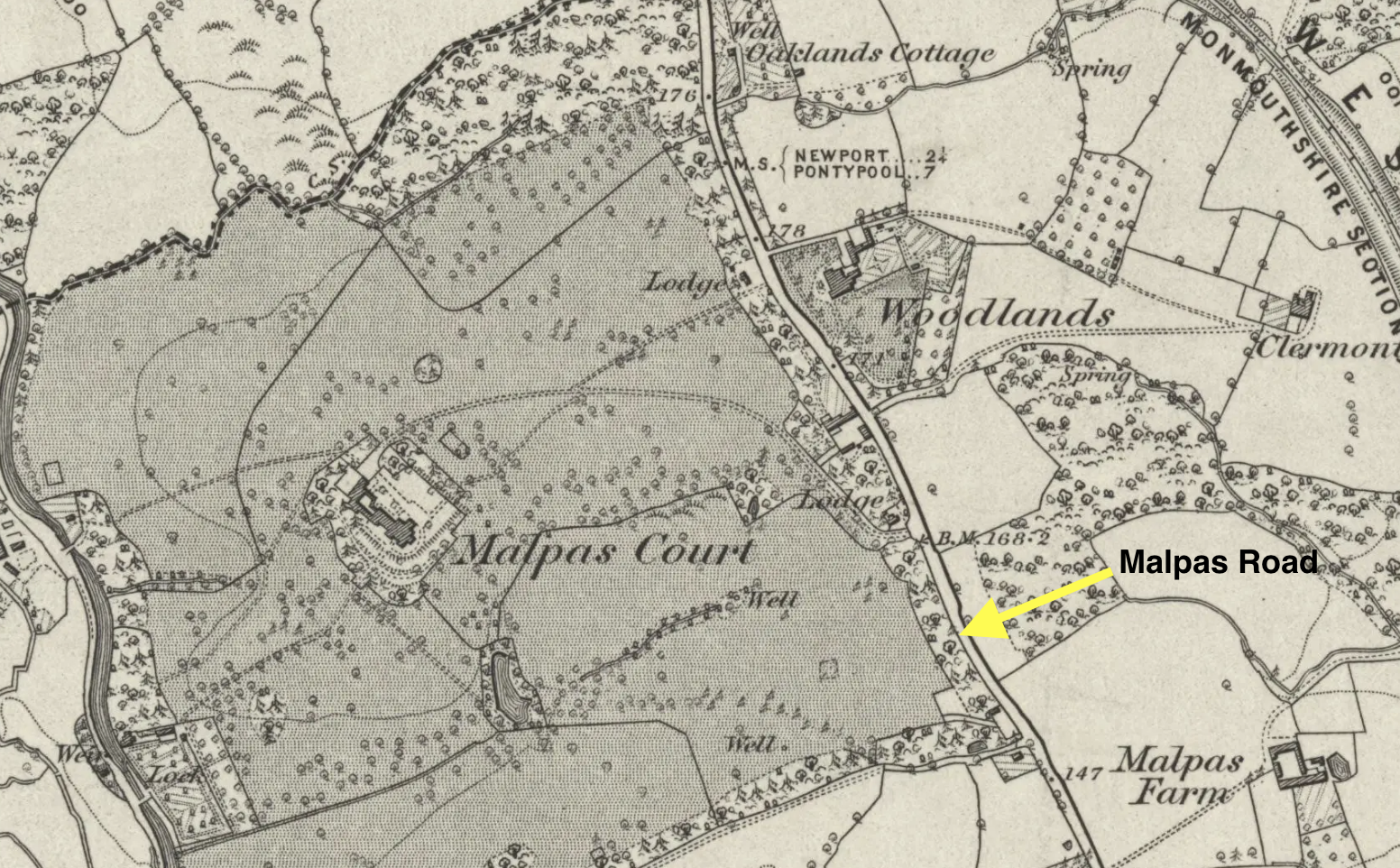
Redwick Jones, a very repulsive-looking fellow, about 26 years of age, was charged with breaking into the dwelling-house of James Jamieson Cordes, Esq., of the Woodlands, near Newport, on the 10th of May, and stealing therefrom a large quantity of silver plate. Mr. Skinner and Sir Thomas Phillips, counsel for the prosecution and Mr. Smythies for the defence. Mr. Skinner gave a brief preliminary history of the case to the jury, and Sir Thomas Phillips called witnesses in support thereof.
Mr. Cordes was first examined. He said I reside near Newport, in the parish of Malpas. On the night of the 10th of May last my house was broken into. On the previous evening, between nine and ten o'clock, I saw in the butler's pantry a silver waiter, a silver teapot, a silver soup-ladle, a silver fish-knife, a silver mustard-pot, a set of castors with silver tops and on the sideboard, in the dining-room, three silver bottle-stands, a dessert spoon, and other silver articles, all my property.
There was also in a cabinet in the drawing-room, a purse, containing various foreign coins, of small value. The articles in the butler's pantry were partly in an unlocked drawer, and partly on a shelf. This property was all stolen next morning; it was worth between £70 and £80.
I went to bed at half-past nine, and rose next morning about eight, when I found the servants assembled in the hall, in a state of great alarm, and they informed me the house had been robbed. I went immediately to the scullery window where I found a pane of glass broken, and portions of the glass removed from the putty by some sharp instrument. Opposite this broken pane of glass, the inside shutter had a round hole, from four to five inches in diameter, which appeared to have been made by some revolving instrument and it was a little splintered, as if the instrument was blunt.
The door between the scullery and the kitchen also had a hole partially cut through the thick frame and in the thinner panel a hole was also completely cut through, about the same size as that in the scullery window. I have an instrument here, received from Sergeant Huxtable, but first received by me from Emma Wait, daughter of a villager living near the Woodlands, some weeks after the robbery. This instrument I applied to the hole which had been begun in the door, and to the hole in the scullery window both might have been made by it.
The centre portion of the instrument, a long screw point, must first be fixed in the wood, before the revolving knife can be so situated as to cut and there was a hole in the thick part of the door, in the centre of the circular cutting, that had been begun, which corresponded exactly with the screw of the instrument produced. The diameter of the cuttings may be increased or decreased by altering a portion of the fittings. The handle now put upon the end of the instrument, acts as a lever by which to turn it; it is fastened on by means of a nut, and the spanner produced will fit it exactly.
The fastenings of the scullery window bar, after the hole described had been cut, might be opened by a person putting his hand through, and entrance thus obtained into the house. The bolt in the door, also, must have been drawn, through the hole cut there. There were some plated dessert knives in the kitchen, one of which had been bent nearly in two, and thrown down, and none of them were taken. Several drawers in the pantry had been broken open; and the handle of the centre-bit, when taken off, would become a jemmy the instrument was in separate portions when brought to me. (Tea-caddy produced.) This had been forced open the marks In the tea-caddy correspond with such marks as an instrument of this kind would produce there were also marks upon the drawers.
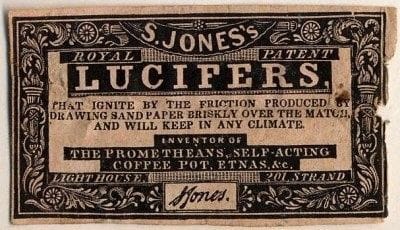
There was wine in the decanters. I gave the centre bit and other instruments to Huxtable. There was a box of lucifer matches* in the bag also, some being black and some blue and some of a similar character were found by me on the floor, on the morning of the robbery. (Produced by Sergeant Huxtable.)
By Mr. Smythies; I do net know the weight of the piste stolen the waiter was very ancient, of the time of Queen Anne, and had descended from generation to generation in my family. The information I received afterwards, about the bag of instruments, was given me by George Parkes. That person had been suspected of being connected with the burglary, and had been apprehended at the same time the prisoner was. He was first examined in Newport; then remanded; then committed to Usk gaol as a vagrant. A reward of had been publicly offered for the apprehension of the burglars.
Sarah Whitney, one of the servants at the Woodlands, said I was the first who came down stairs, on the 11th of May, at six in the morning, when I found the scullery door and window open, both having been fastened on the previous night, by myself, at a quarter past ten. There was a hole cut in the shutter, through which a person might unfasten the bar. Walter Waters sworn I live at Llantarnam, about two miles from Mr. Cordes's, and have a farm-house within two or three hundred yards of the Woodlands. I was there about three in the afternoon of the 10th of May, and saw the prisoner, who asked me if I had a house to let. I told him I had one empty, and wanting repairs but I had another house to let, on the other side of the Woodlands. Then he asked me who lived there, and I said Mr. Cordes. I then asked him where he came from he said from Staffordshire, and that he was a hawker. He then asked me if he could cross to the railway, and I showed him the way to do so.
By Mr. Smythies: The prisoner, when he left me, went towards Newport. William Clements, an aged cordwainer, next came into the witness box, with the most smiling countenance, and on being told by Mr. Skinner to "speak up," bawled out, as loud as Stentor, "Ees, sur!" which produced roars of laughter, in which he joined as heartily as any one present.
Witness then deposed: On the afternoon of the 10th of May, about three o'clock, prisoner came to my house, and sat down by the door. He asked for lodgings, saying his wife did not like living in town. I told him I had none to let. The prisoner was the man. Henry Morgan examined I am a farmer in the parish of Malpas, and on the afternoon of the 10th of May saw prisoner going towards Newport, in company with three or four men and a woman. I am sure he was the man. I saw him again on the following Tuesday, near my house, which is between Mr. Cordes's and Newport. John Wait's house is near the roadside, and nearer the Woodlands than mine. On the Tuesday he was going in the direction of Wait's house, with four other men. This was about three in the afternoon.
By Mr. Smythies: Some of this lot of men were the same I had seen on the 10th of May. Mr. Smythies here requested that George Parkes and John Davies should be brought in which was done, and witness said I saw Parkes on the Tuesday, but am not sure I saw him on the 13th, though one was very much like him. I saw John Davies on the Tuesday, but don't think he was among the lot on the Thursday previous. Out of the four or five men I saw on the Thursday, I saw two on the following Tuesday, the prisoner and Wm. Parkes, and I believe John Parkes was also among them but am not certain.
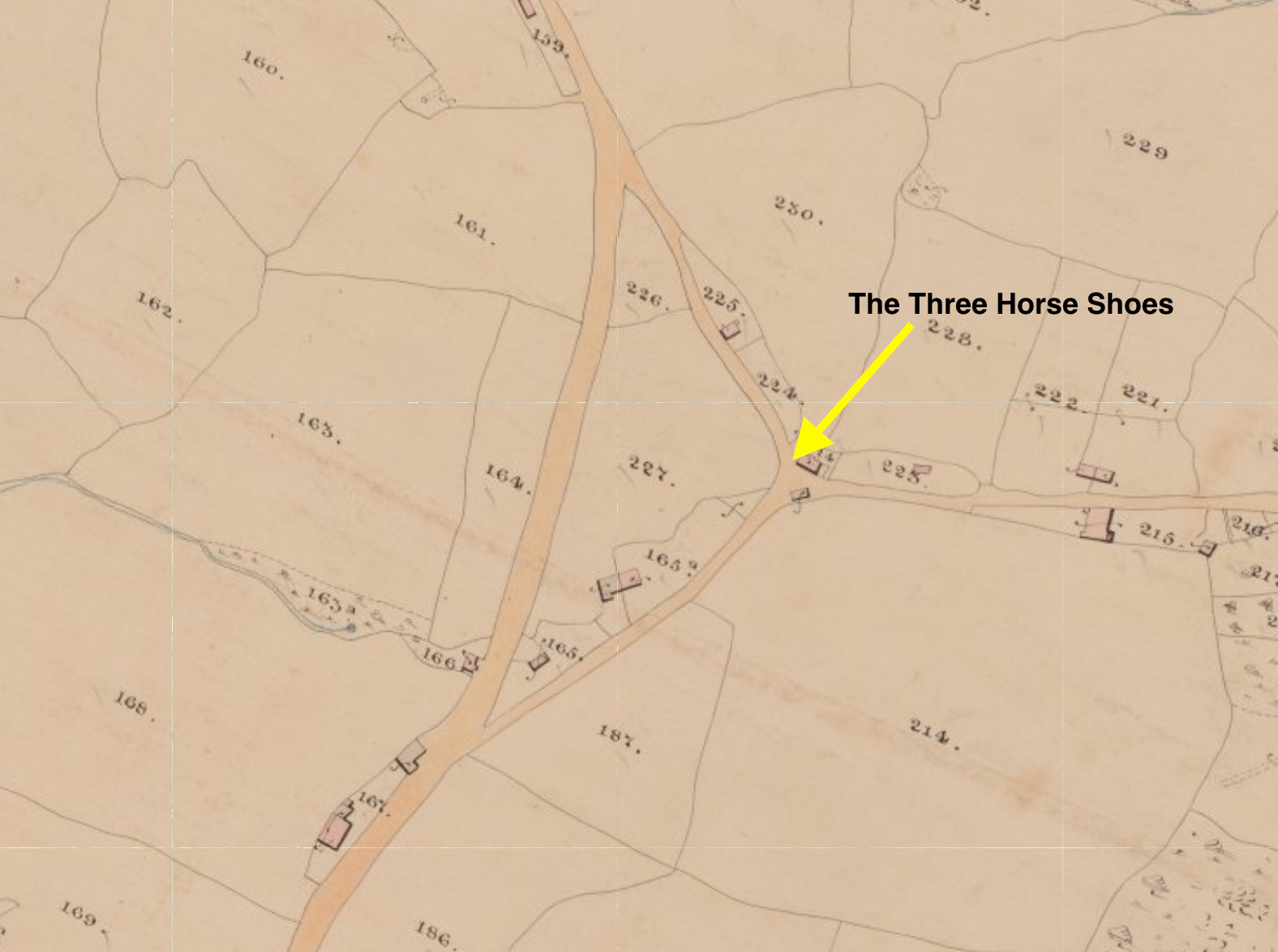
James Carter, cattle-dealer, residing at Malpas, sworn: On the 10th of May, Thursday, in the afternoon, I saw four men passing the Cherry Tree public house, in Malpas, about two hundred yards from the Woodlands, and the prisoner was one of them. They were then going towards Newport. On the following Tuesday I saw the prisoner again, passing my house, the Three Horse Shoes, Malpas, about half-a-mile from the Woodlands.
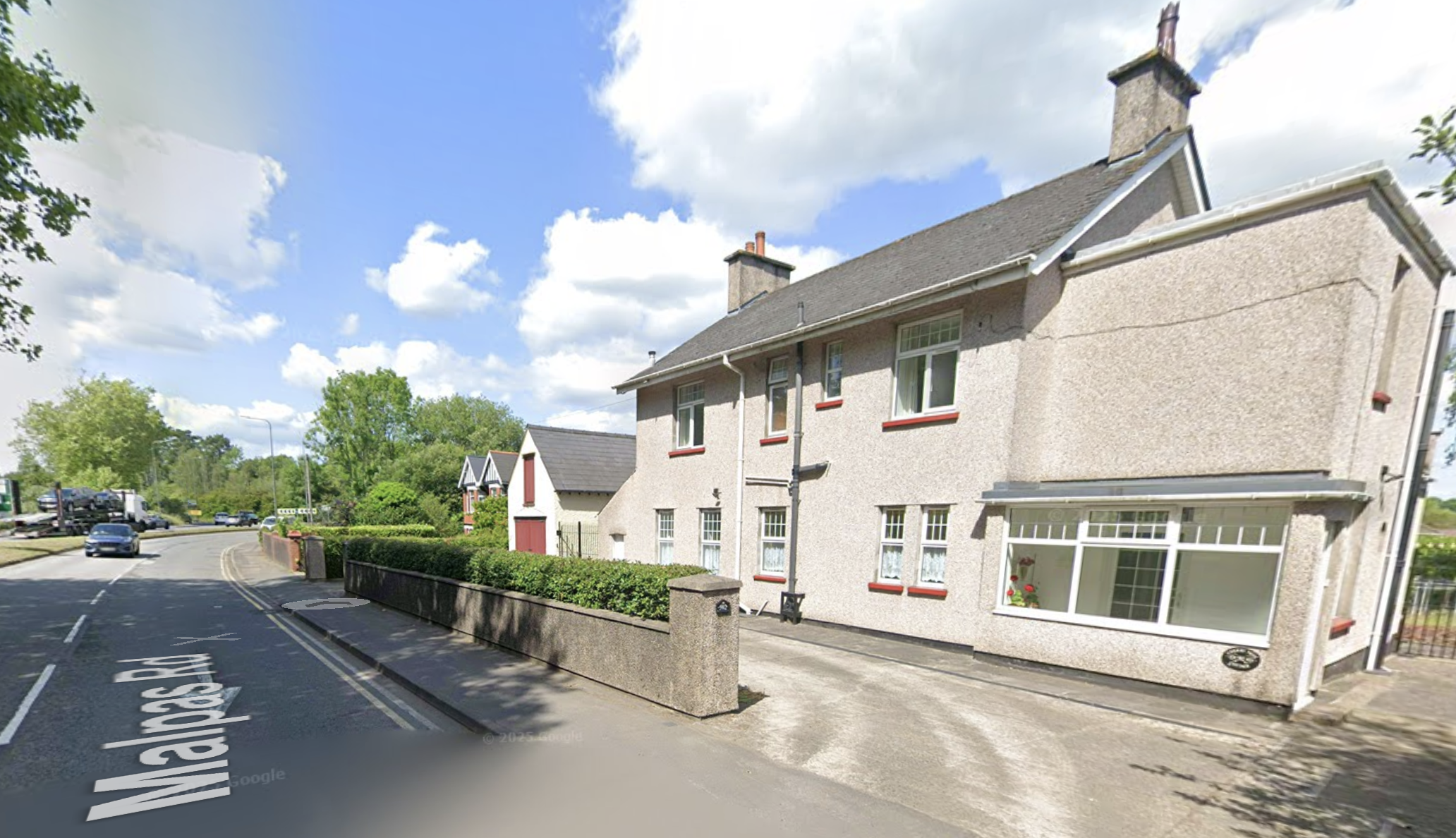
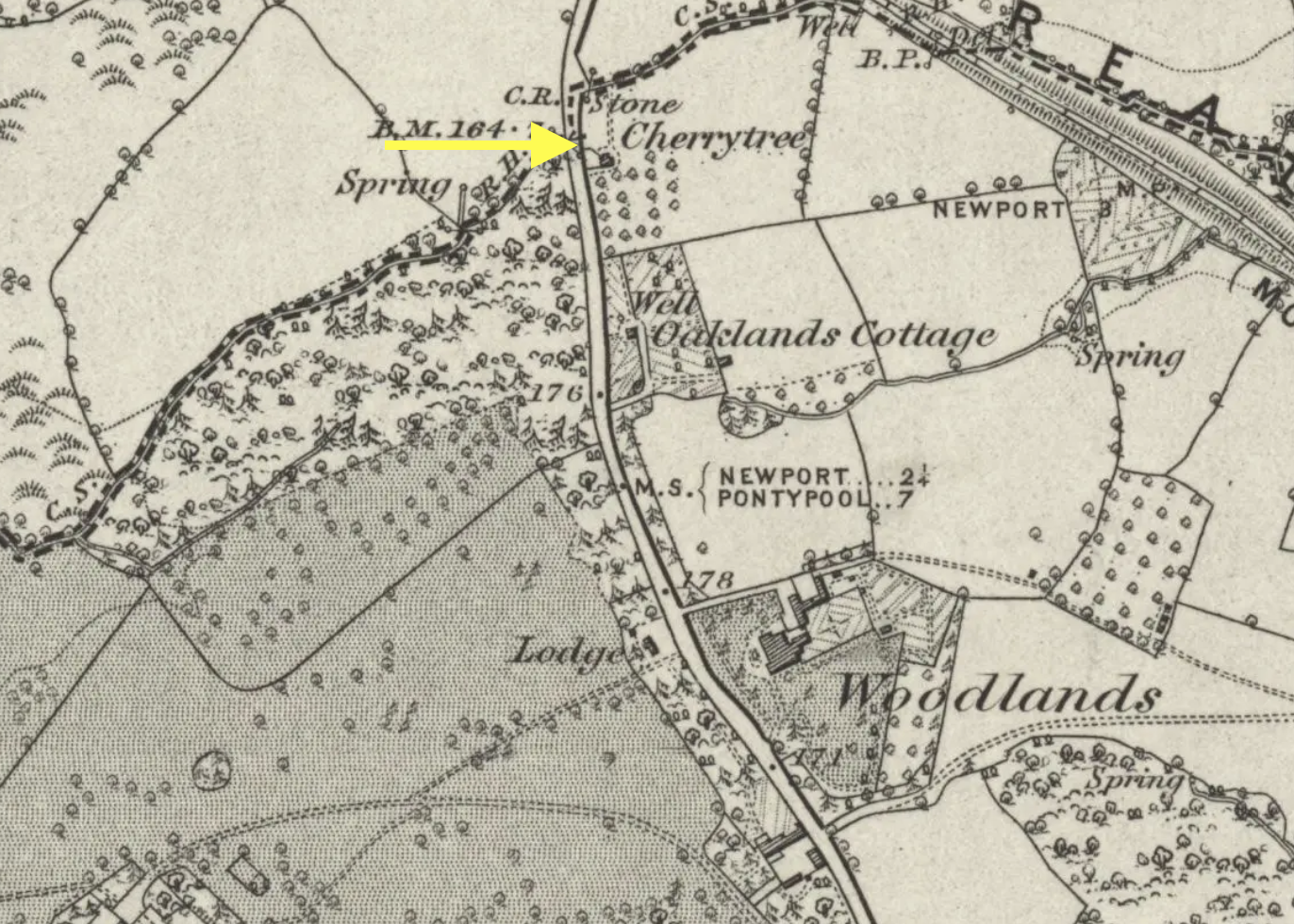
This house, called Cherry Tree Cottage, at the far end of Malpas Road near Rougemont, is the Cherry Tree pub mentioned in the article. On the 1840 tithe map there was a building on the site but it was just marked as a house. On the 1872 OS map, the building is marked as Cherry Tree.
By Mr. Smythies: I could only swear to prisoner, whom I noticed particularly, as being the tallest of the gang. I noticed the whole lot, and told last witness he ought to take them all up, for they looked a bad set. (Laughter.)
John Smith, sub-bailiff of the Newport County Court, sworn: I live near the Woodlands, passing that residence on my way home. On Thursday, the 10th of May, I returned home between ten and eleven at night, and saw a person like the prisoner, whom I believe to be the man, standing six or seven paces inside the gate leading to Mr. Cordes's house. He had been coming downwards, and when he saw me, he turned his back against me.
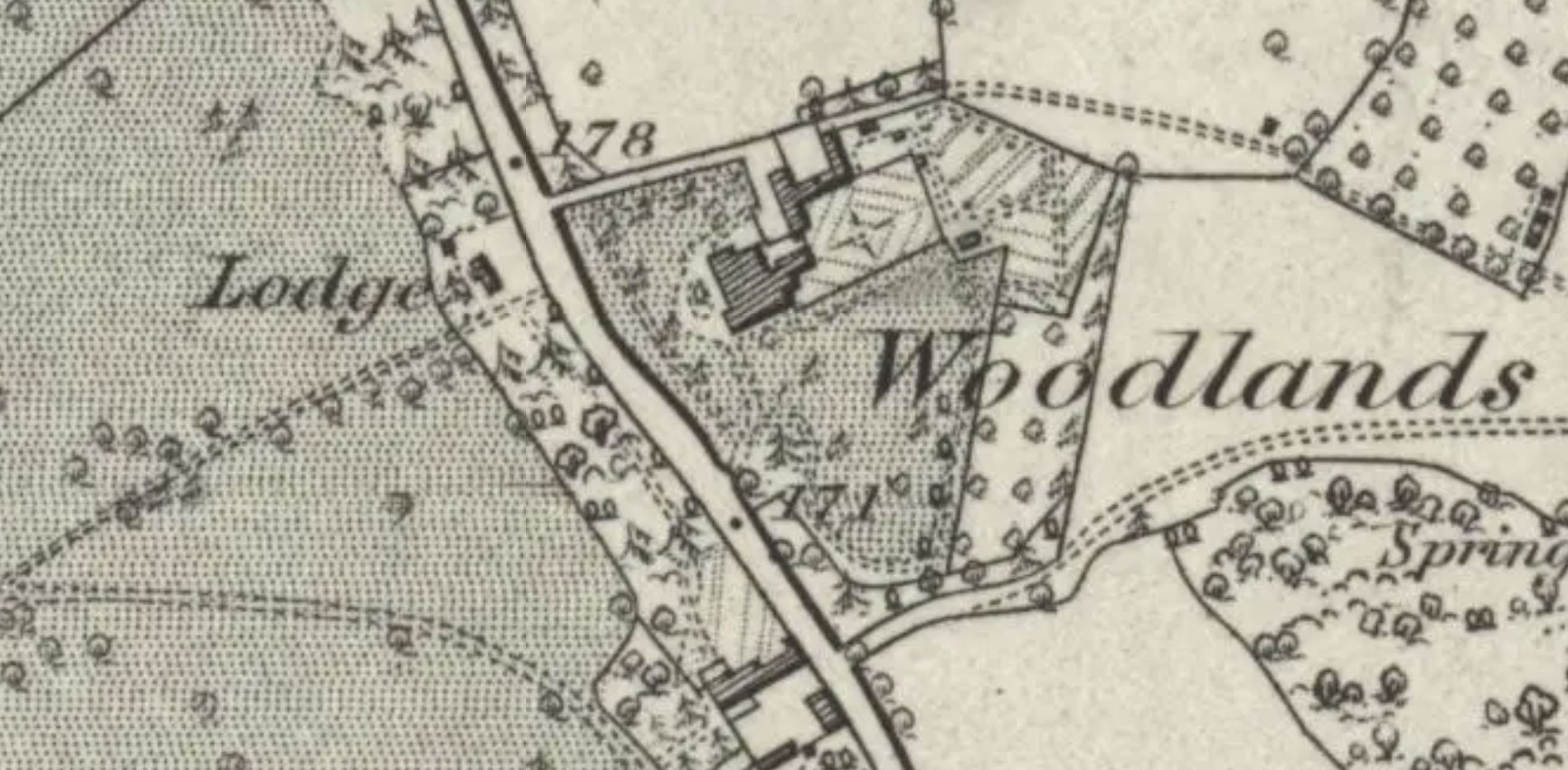
By Mr. Smythies: There was no moon that night. I noticed him particularly, because it was a private place I thought he had no right there.
Joseph Hillman, sworn corn-measurer at Newport, deposed: On Friday morning, the 11th of May, I saw my wife off per packet to Bristol, about six o'clock, and saw the prisoner also, going on board the other packet (the paddle boat). I saw him in custody on the following Tuesday.
By Mr. Smythies: The two boats start from opposite sides of the river. I saw the prisoner go into one boat, and my wife into the other, as I stood on the centre of the bridge.
Jane Wait sworn: I live in the parish of Malpas, and am the wife of John Wait. Our garden comes down to the side of the Malpas road. On the Tuesday after the burglary, I saw the prisoner by a garden hedge, with other men. He was walking along, looking into the hedge, and kicking the nettles. On the 28th of June last, my daughter found a green bag, with something in it, and shewed me where she found it, just where the prisoner had been kicking the nettles. I tied up the bag, and sent my daughter with it to Mr. Cordes. The bag now produced, with the instruments, is the same.
By Mr. Smythies: The hedge was between me and prisoner, and I saw nothing but his head. Emma Waits, daughter of last witness, sworn, she is a very intelligent child and her demeanour and decorous conduct towards the court and bar were very pleasing. She said she was ten years of age, and had come to tell the truth only. Her evidence was to the effect that she found the bag of picklocks, &c., which her mother directed her to take to Mr. Cordes.
By Mr. Smythies: The bag was not covered over by the nettles, but was in an ashen bush, and so I didn't sting my hands with the nettles. I saw it very plainly as soon as I came up to it.
Re-examined by Sir Thomas Phillips: There were nettles close to it.
By the Judge: Any person going along the road could not see it.
George Parkes, a besotted looking young fellow, was next sworn: I come here from Usk gaol, to which place I was committed from Newport for vagrancy. Before that, I lived in tha prisoner's house, Deep street, Bristol; the prisoner being a steel man. On Tuesday, the 15th of May last, I came to Newport with the prisoner, my brother William, and George Davies and having crossed the bridge, we went the road on the right hand, the way the coaches go (the Malpas road).
We went on that road about a mile and a half, the prisoner and my brother being in front of us. We proceeded to a lane which turned up to a public house at the top of it. there I saw Jones, the prisoner, and my brother looking for something in the hedge, and near the end of the lane Jones said, "I think they must be here." I asked him what was there? He said, the tools."
After that, prisoner pointed to a house, a good way off on the right hand, and said that's the house." I said, you had better come on, or the folks will suppose we are up to some harm. That evening we all four were made prisoners, and taken before the magistrates, and the knife now produced was then exhibited. We were removed to the cell at Newport station-house when the prisoner and I were by ourselves in the cell, he (prisoner) said 'Little did they think that the knife that was produced did it." Prisoner did not tell me what the tools were, nor had I ever seen them before. I saw a centre bit at prisoner's house, but it was different to this produced prisoner said it was a carpenter's tool, to make holes in closet doors.
l have a sister, Mary Willis. who lives at Cornish Mount Passage, Bristol and on the 11th of May, Friday, I saw on the table in her room something like a silver waiter, with claws, the whole being doubled up a teapot, with a white handle a sort of ladle, with a crooked handle an old coin, very much worn; and some other pieces of plate. Jones (the prisoner) was there, and he said, "There is about eight lbs. weight there."
Two men, looking like Jews, came there and I saw eleven sovereigns and some silver put on the table but I don't know who put it there, nor who took it up. The Jews took the plate away in a basket. I went out of the room, and when I returned the money was gone, and so was Jones, who had gone to the public house, in the same passage. Jones said, the same evening, in the public house, that there was a pound due by the Jew on the plate. Jones brought the basket to the house on Sunday saying he had drawn 12s., and there were 8s. coming—the Jew having but 12s. 6d., and Jones refusing to take the odd sixpence.
By Mr. Smythies: I saw the plate on Friday, the 11th May and on the previous day, I was in Lewin's Mead, Bristol—not in Newport, where I had never been before the following 15th of that month. I was not in company with my brother William on Thursday, the 10th, nor in the company of prisoner on that day. I saw my brother in my sister's home before the plate was brought there. My brother Amos was there at the time; but my sister's husband was not there. I never heard of any reward offered about the job at all.
My brother William is now in Usk prison my brother Amos and sister are still in Bristol. I do not know the names of the Jews. I rented an apartment in the prisoner's house, and lived there with a young woman. When I came down stairs on the morning of the 11th, I saw Betsey Smart there. I went part of the way with prisoner to the Jew's house on Sunday, when Jones was paid. When we were up in the lane near Mr. Cordes's, on the 10th, and I saw some people about, I said, "We had better be off, or they will think we are up to some game;" and then we returned to Newport. and prisoner and my brother were soon after taken into custody.
On board the packet, there were some men of my trade, who asked me to go into town with them but I said of I had come down with the other chap, I'd go on with them first; and Jones said, also, that I should be back again presently. We then went on to the country at once, without looking for work. I have not told this for the sake of the money, but to leave off their company. I have been offered a situation abroad; or Mr. Cordes said he would try what he could do for me on the subject. It was a situation £75 per year, and so I preferred such a place: to the company of my bad companions.
The officer belonging to the shed where I worked in the prison, told me there was a reward offered; but this was before the 5th of July, when I was examined before Mr. Prothero, and gave evidence against Jones. Re-examined by Mr. Skinner: I was in prison about a fortnight, before I told about this business; and then I spoke to the officer of it. This was the way it was. "I was working at the pump a-pumping, and lamenting I was there, acause I was go innercent" and the officer Whatley came by, and said, says he "Cheer up, cheer up, and don't cry" and than we entered into conversation and I told him I knew something about the plate, which I wished to speak to the governor, or Mr. Cordes, about. The next day I saw the reward of £25 on a bill which Whatley had.
Mr. Cordes recalled: The description of the plate given by the last witness corresponds exactly with the property stolen. In consequence of my receiving a written communication from the last witness in prison, where I found him in great distress saying he was innocent, I told him, if he were innocent I would try to procure him a a situation at Port Phillip, but this was after he made his statement.
His Lordship: I do not think your conduct in this respect at all improper.
Sergeant Huxtable was next examined; and his copious evidence is no doubt remembered by our readers, it having being recently published in the MERLIN. He exhibited throughout the whole of the proceedings, his usual skill and tact, which detected the prisoner and this morning brought him to justice.
Sergeant Summers, of the Bristol police force has also proved himself an able officer, in prosecuting his inquiries with a view to the rooting up of the den of thieves to which the prisoner belonged.
The defence set up was, that the prisoner, if guilty of participating in transactions connected wiih the latter part of the case, was not guilty of committing the burglary and that if any portion of the evidence of Parkes was true, he was a participant in the crime, by whomsoever else it might have been committed.
His Lordship having summed np with his usual perspicuity and care, the jury requested leave to retire, for the consideration of their verdict; and were accordingly removed to a private room. In about a quarter of an hour, they returned into court, and the foreman presented the verdict of Guilty against the prisoner who was sentenced, after a solemn address by the judge, to fifteen years' transportation.
A female, said to have been a paramour of the prisoner, on hearing the sentence, began to scream violently, and was carried from the court house, to her lodging, roaring all the way, at the top of her voice.
In the course of his lordship's observations, he particularly adverted to the facilities which the gangs of plunderers and housebreakers who infested Bristol, could avail themselves of, by opportunities offered by steam communication, to pounce down upon the residents in and about Newport, Cardiff, &c., and effect their villainous schemes of robbery they bad concerted in their vile haunts on the other side of the Severn.
His Lordship trusted the effect of the sentence on the prisoner, and the great, skill evinced by a very vigilant police force, would be the means, of deterring others from the same pursuit. It was stated that the prisoner's three brothers are transported, and that a fourth says he "will follow Fred as soon as possible/"
— Monmouthshire Merlin, 11th August, 1849
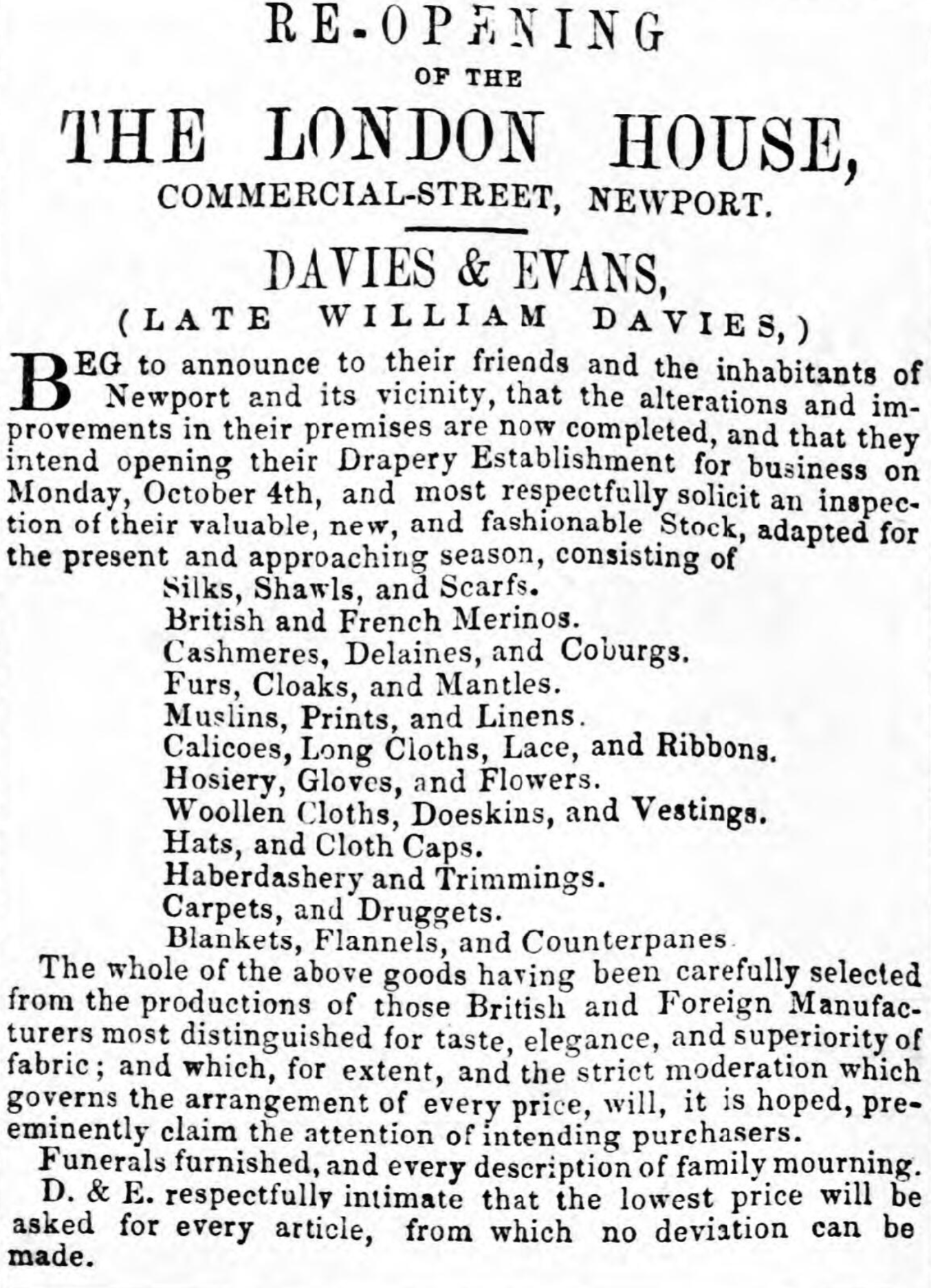
Knocked Down and Killed
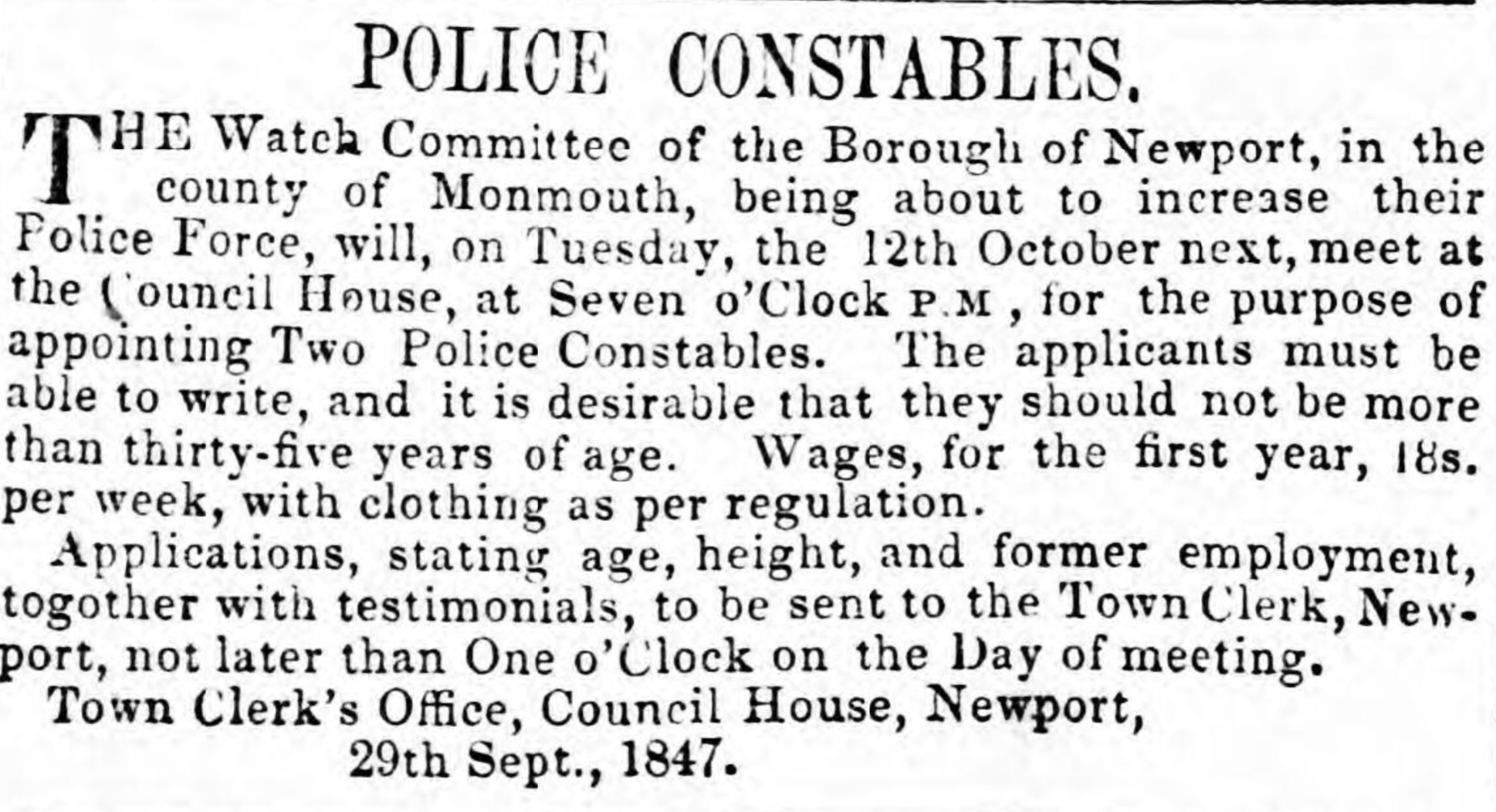
A little boy, only four years and ten months old, named William Lawrence, was running behind the Pontypool coach on the Marshes road, on Monday evening last; and suddenly letting go the coach, he was knocked down by the horse in a gentleman's carriage which was close at hand, and run over before he was noticed. He died soon after.
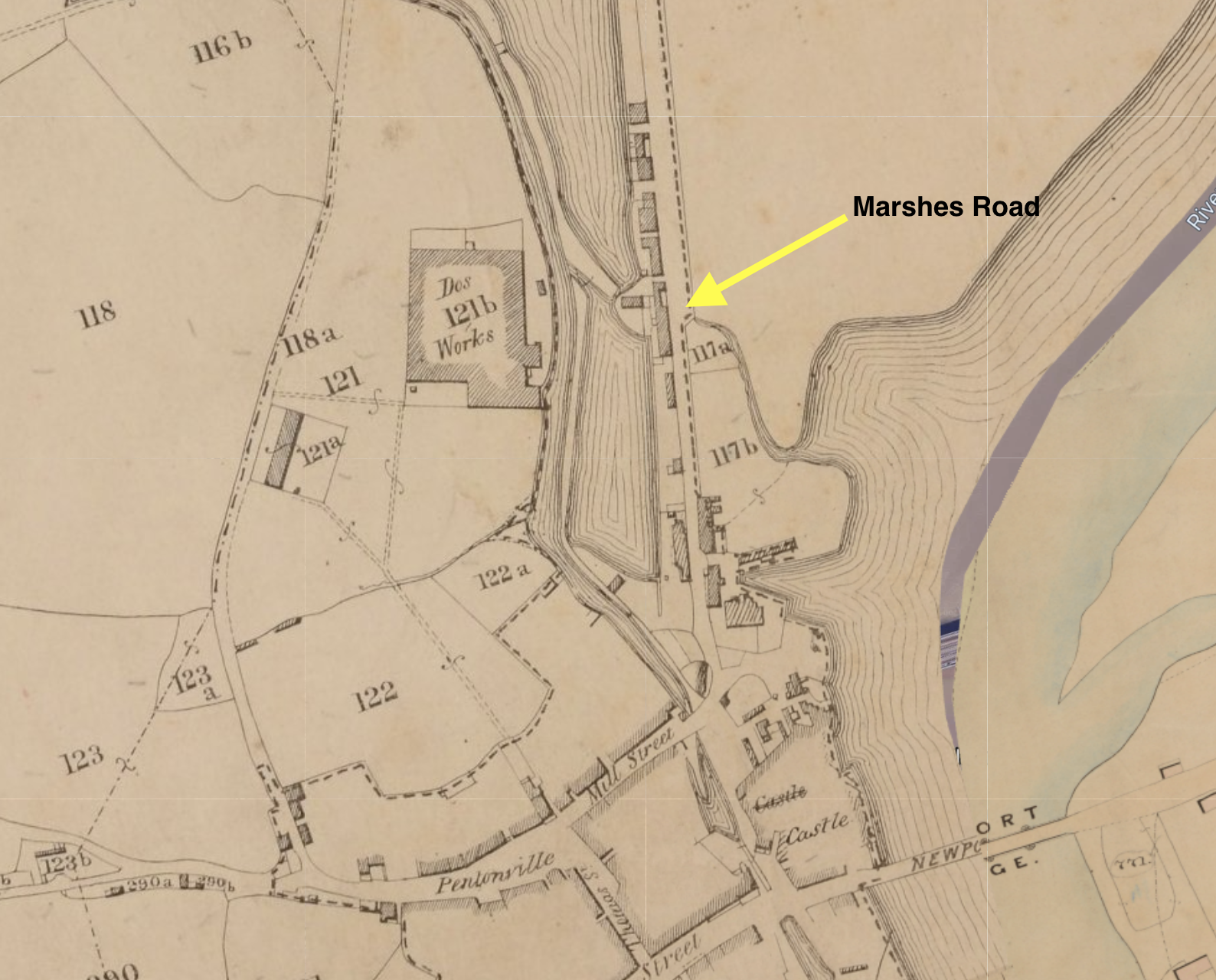
At the inquest held on the body, at the Moulder's Arms, by Win. Brewer, Esq., a verdict of accidental death was returned.
— Monmouthshire Merlin, 21st July, 1849
Drowned While Bathing
Last Saturday afternoon, a lad named Thomas Triara, aged seventeen, went into a pool near the pottery, by the canal side, to bathe with his two companions; and while there, not being able to swim, was quickly drowned. His companions tried to save him, but failed in the attempt; and were unable to recover the body. A black boy named William Spooner, from Barbadoes, jumped into the pool, dived twice, and the second time, brought the deceased to the bank, when means were resorted to for restoring suspended animation, but without avail.
— Monmouthshire Merlin, 21st July, 1849
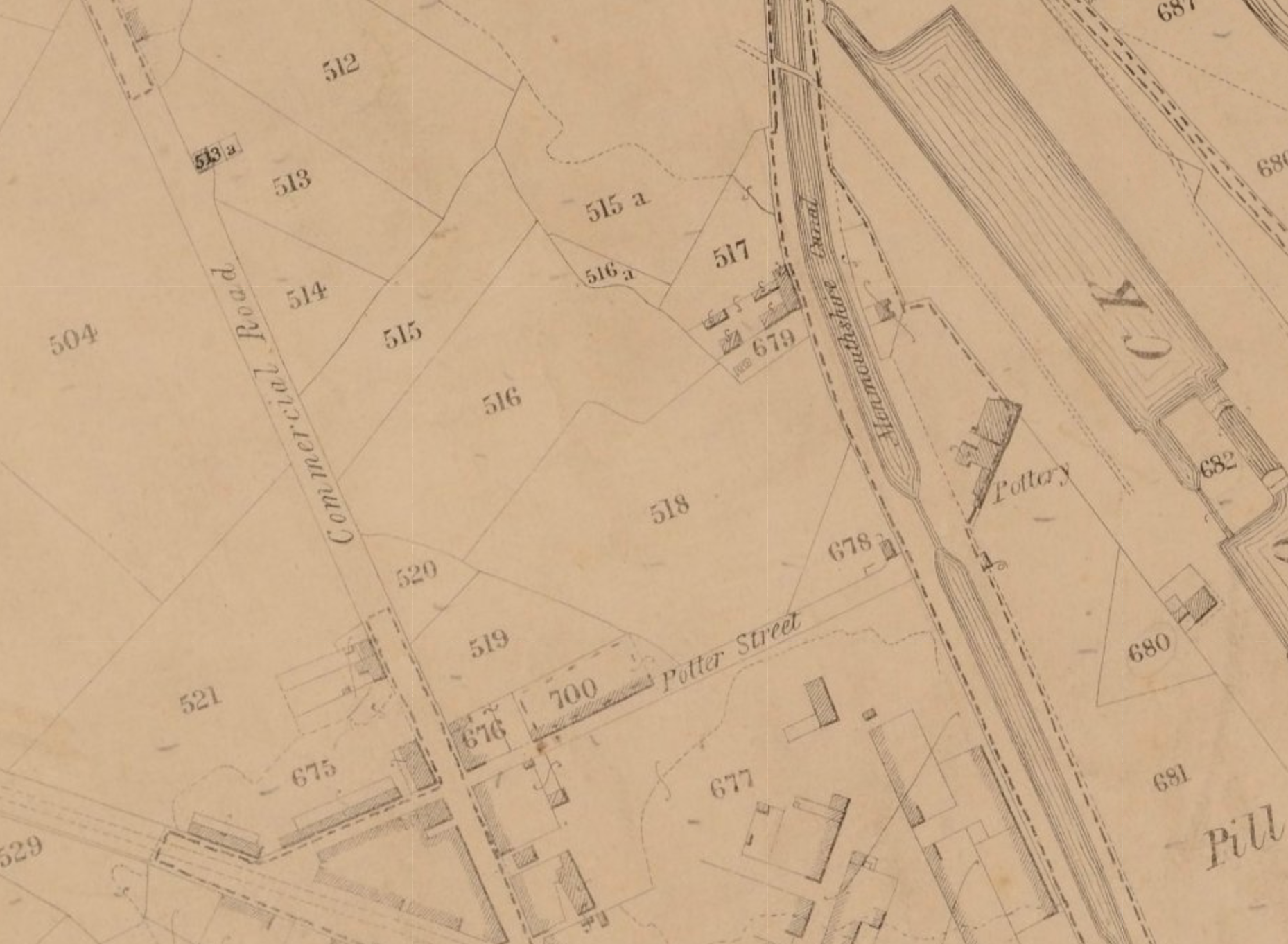
A jury sat on view of the body, before W. Brewer, Esq., on Monday, at the Tredegar Arms, Pillgwenlly, when the above facts being deposed to, a verdict of drowned whilst bathing, was returned.
— Monmouthshire Merlin, 21st July, 1849



Member discussion