

Welcome to another issue of The Newport Cornucopia where we dig through the newspapers archives for interesting news articles and adverts. All articles are posted verbatim and most headlines are original (headlines in quotes are my own).

The Placards in Front of the Town Hall
Mr G.W.Jones remarked on that on previous evenings several ladies in order to enter the Town Hall were obliged to leave the pavement and go into the street, in consequence of a number of men standing by the railings and obstructing the pavement.
In a conversation it was observed that so longs as all kinds of advertising boards were permitted to be hung on the railings it was to be expected that persons would stop to read the announcements.
Mr Jones stated that the men to whom he referred, were foreign sailors, who could not read the posters.
It was ultimately resolved that none but official announcements should be hung on the railings.
— Meeting of the Watch Committee, 16th June, 1866
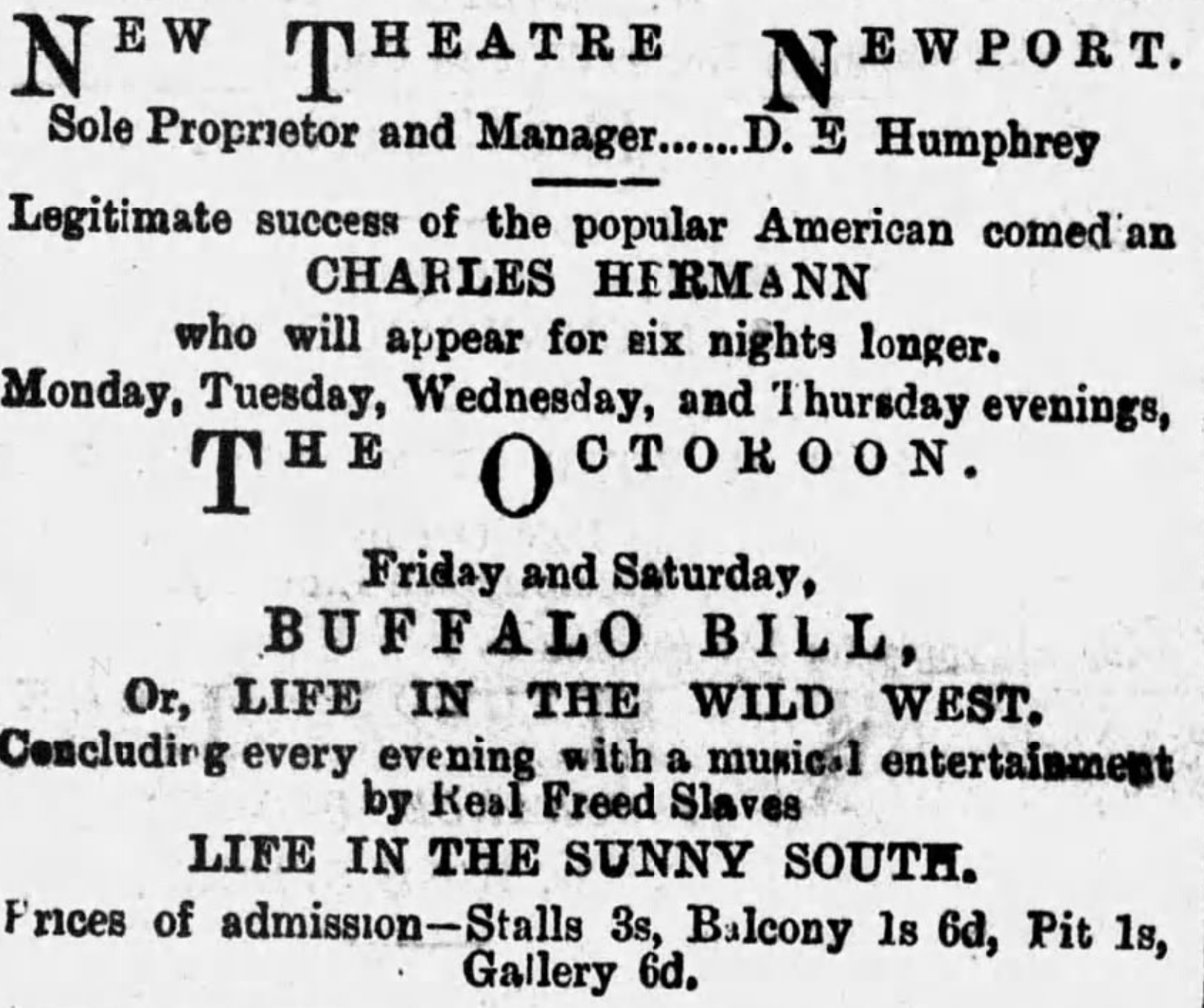
The New Bridge at Shaftesbury Park
Councilor Graham W. White, chairman Newport Corporation Parks Committee, opened the new bridge leading from Crindau to Shaftesbury Park, on Friday evening. He was supported by a Councillor R. J. Searles deputy, chairman, C. Thomas, and G.B. Rawden, Mr. H. Tremelling, the Borough Engineer was also present. It is a wooden trellis bridge 200 and six feet wide and the cost was £150.
It was built from the design of the Borough Engineer by the unemployed workmen last winter.
The path to the bridge on the Crindau side leads from Alderney street, and the bridge the Crindau Pill, emerging at a point in Shaftesbury Park to the north of the model yacht pond. It will be a great convenience those living in the Crindau district. The chairman and members of the Committee, followed others, crossed the bridge, from: Alderney-street to the park, and declared it open: White explained the circumstances loading the erection of the bridge, and certain difficulties which had cropped up the negotiation had been successfully overcome.
Councillor Thomas proposed a cordial vote of thanks to the chairman of the Committee for performing the opening regarded the bridge as a vary desirable acquisition, and it was bound to be great convenience to the public. He was very to be present at the opening a ceremony.
Councillor Searles seconded the vote thanks. He hoped that the people would appreciate the action of the Committee in providing the new bridge for their convenience; and that it would be taken every care of by them. Councillor Rawden supported. The bridge would prove a great boon, and he thought the Committee would be pleased that they acceded to the request of the applicants to it. The vote of thanks was carried with acclamation.
Councillor White, replied. He trusted that the bridge would he used by the people; for whom it was intended.
They wanted make the parks what they really ought to be, that the people should, enjoy be healthy. He was very pleased to have the honour of opening the bridge. Three cheer were then given the spectators.
— South Wales Argus, 3rd August, 1912

The Case of Scalding
Henry Nutt, 25, hawker was indicted for throwing scalding water over Daniel Jones with intent to scald him. Mr. Vaughan for the prosecution. Mr. Smythies defended.
It appeared from the evidence that a number of men were drinking in the Dock Gates beerhouse. A dispute arose between one or two of them, which the landlord endeavoured to quell, when he was attacked by the prisoner, a man named Bull, not in custody, and Thomas Jones, who was committed by the magistrates, and against whom the bill for scalding was ignored by the Grand Jury. He was assisted by Daniel Jones.
A scene of great confusion ensued, and all the parties mentioned with one or two women took part in it. The prosecutor Jones actively defended the landlord. He was got to the ground by Thomas Jones. They struggled there together, and while in that position, the prisoner went to the fireplace, took from the hob a kettle containing about four quarts of boiling water, exclaimed with an oath that if he could not kill Daniel Jones, be would scald him to death, and threw the water over both Daniel and Thomas Jones, causing a great steam in the kitchen.
The prisoner then struck Daniel with the kettle on the back part of the head. Eliza Loftus called out "Don't kill the man," and pulled Daniel Jones by the shoulder into the bar. His head and face were covered with blood and much scalded. The prisoner and Thomas Jones then went out. He too was much scalded.
Mr. Limbrey, surgeon, of Newport, spoke to the nature of the injuries received by Daniel Jones. He bad a very extensive scald on the face and forehead, rendering the features indistinct, and a bleeding wound on the back of his head, together with a slight wound on the cheek. They were of a very serious nature.
Daniel Jones was called. He was not examined for the prosecution. In reply to Mr. Smythies, he said he was getting well; he had not been drinking; would not say the other men were sober. Mr. Smythies addressed the jury, arguing that the act of the prisoner was an accident, the lid of the kettle having flown off. Guilty of intending to scald.
— Monmouthshire Merlin, 2nd April, 1859
Stabbing
Timothy Mahony, 35, carpenter, was indicted for cutting and wounding Edmund Francis. Mr. Scotland and Mr. Powell for prosecution and defence respectively. Mr. Scotland stated the circumstances of the case.
It appeared that John Edwards worked at Caerleon forge, and he was on his way from Newport to Caerleon late at night on Saturday, the 4th of December. When near St. Julian's farm, he sat down by the road side. Having had some beer in the day, and been at work during the previous night, he fell asleep, and remained so until he was awoke by a blow in the head. He got up, and recognised the prisoner, who knocked him down with a stick three several times. Edwards endeavoured to defend himself, having, however, no weapon. The prisoner cursed and swore.
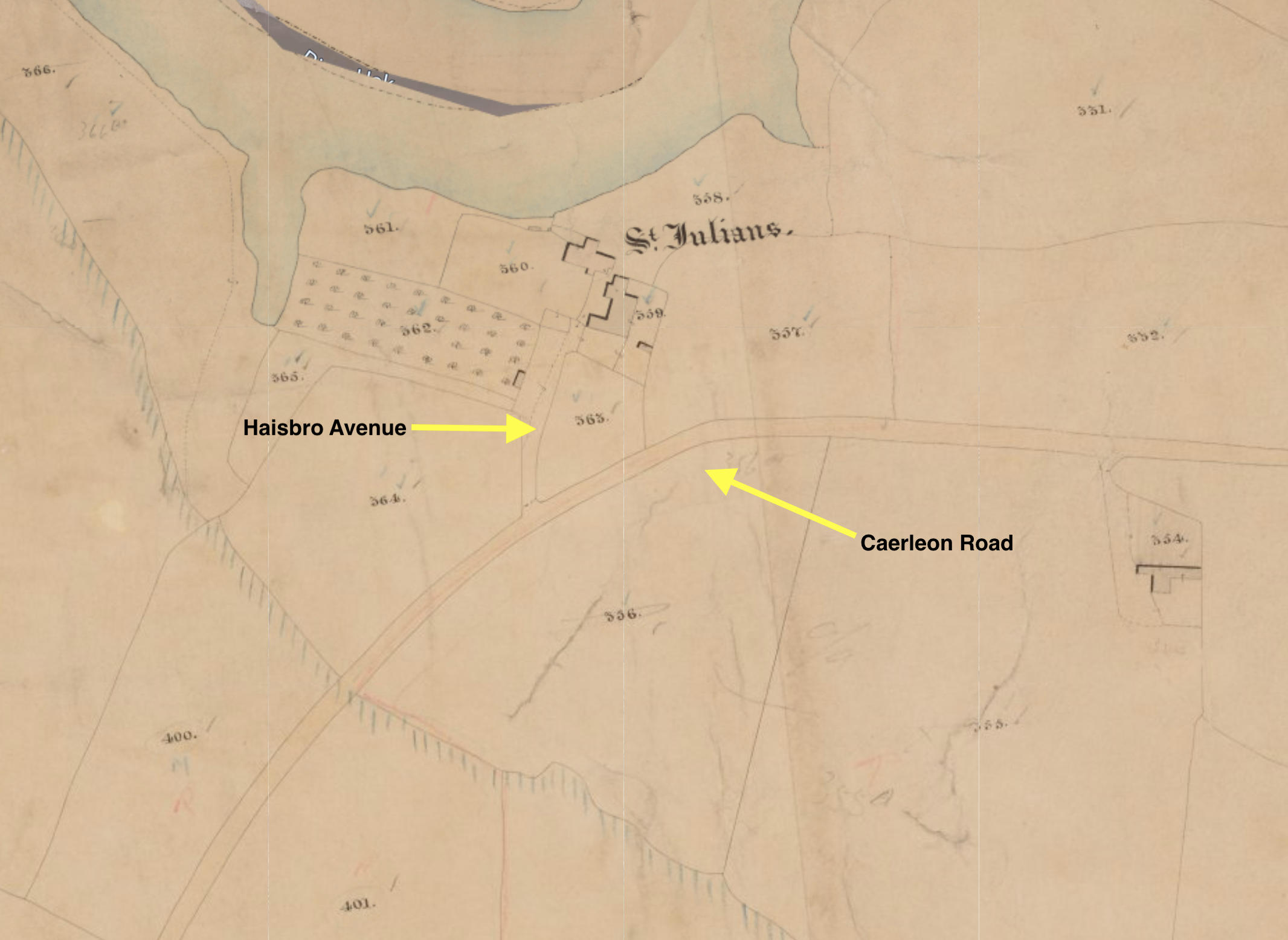
Edwards's mother had come out to look for him, and while he was on the ground, she called him by name. He answered "Hallo." She came up, the prisoner still holding the stick over him, and telling him if he didn't like it, he should have more of it. Edwards told her how he had been used, and prisoner again threatened him. Mrs. Edwards called out "murder." The prosecutor ran up, and at Edwards's request collared the prisoner as he was about to run away. They scuffled, and the prosecutor took the stick from him, and threw it away. In about a minute, prosecutor exclaimed, "Stand back, John, he has got a knife, and has stabbed me." Francis then went away followed by the prisoner. Edwards heard them running along the road. The prisoner threw stones at the prosecutor.
Next day the prisoner was apprehended. When taken into custody he made a statement to the effect that Francis and Edwards attacked and as he thought they meant to rob him, he resorted to the knife for his protection. The wounds were very slight. After the evidence had been gone into at some length, the Learned Counsel for the defence addressed the jury. He urged that the prisoner seeing Edwards asleep by the road side supposed him to be lurking there tor a wrongful purpose—an impression still farther confirmed by the prosecutor's arrival.
While wrestling with them, the knife doubtless was used, but prosecutor, he contended, did so under the belief that he was about to be robbed. That supposition was strengthened by the prisoner running and throwing stones after Francis, and by the fact that he himself lodged a complaint before the magistrates and with the police, taking with him the prosecutor's cap, which he had picked up on the ground, to the station, for the purpose of identification.
After the Learned Judge had summed up, the jury returned a verdict of unlawful wounding, and recommended the prisoner to mercy. The prisoner having been four months in confinement was further sentenced to two months' imprisonment.
— Monmouthshire Merlin, 2nd April, 1859
'Taken to the Station House on a Truck'
Ellen Macarthy, who was taken to the station house on a truck, being quite incapable from drunkenness, was fined 5s. and costs. The superintendent stated that the woman got her living by playing a fiddle in public houses.
— Monmouthshire Merlin, 9th April, 1859
'Stealing a Turnover and Apron'
Mary Cramer, a married woman, was charged with stealing a turnover and apron from Mary Phillips. The prisoner visited the prosecutrix, prayed by her sick bed-side, and seized the opportunity to carry away the articles, which were immediately afterwards pledged.
The prisoner's husband appeared to be a respectable hard-working man, and for his sake a sentence of only fourteen days' imprisonment was passed; but the Mayor remarked that such wicked hypocrisy deserved far heavier punishment.
— Monmouthshire Merlin, 9th April, 1859
'Wilfully Breaking a Door'
Alfred Robert Armstrong was charged with being drunk, wilfully breaking a door, and assaulting Charles Howlett. Complainant lives at No. 4, Charles-street. At a late hour on Satutday the defendant rushed in on the door being opened. His mother was seated at a table, and when she saw her son she ran to the stairs. He ran after her and beat her most unmercifully.
Defendant exclaimed, in a state of great excitement, that he had never touched his mother—only asked for his money. Witness continued his evidence, explaining that defendant's mother was in great poverty, and he had given her the use of a room as an act of charity. When defendant was beating his mother witness's wife ran to see what was the matter, and he knocked her down. Witness then turned the defendant out, and went for a policeman. Defendant kicked the door to pieces. Witness produced the splinters.
He then stated, in answer to the Bench, that he had married defendant's sister. He further said that defendant ought to be sent to an asylum. The family were in "dread of their lives."
Mrs. Armstrong was called, and stated that her son had at one time been in an asylum. Defendant persisted in telling a rambling tale, in the course of which he said he had been at "Grove Hall," because he had had a dream, and he was ordered to sit down in the dock.
Mrs. Armstrong confirmed her son-in-law's statement, that defendant had beaten her. Ultimately defendant was remanded to Wednesday, in order that he might be examined by a medical man. He began to talk incoherently about having been defrauded out of a farm, and that he said was the reason they were "all down on him."
— Monmouthshire Merlin, 17th March, 1866
'Dandelion Coffee and Reindeer Tongues'
In 1847, the residents of Newport could source a surprising array of local and international goods from William Compton, a merchant located at 58, High-Street. The advert, shows Compton presenting himself as a "Purveyor to Her Majesty's Forces," offering a choice supply of both everyday staples and exotic luxuries.
For traditional provisions, Compton stocked "Home-Cured Breakfast Bacon" and "York Hams" weighing between five and ten pounds. Preserved savoury items were also available, including potted meats, as well as anchovy and shrimp paste.
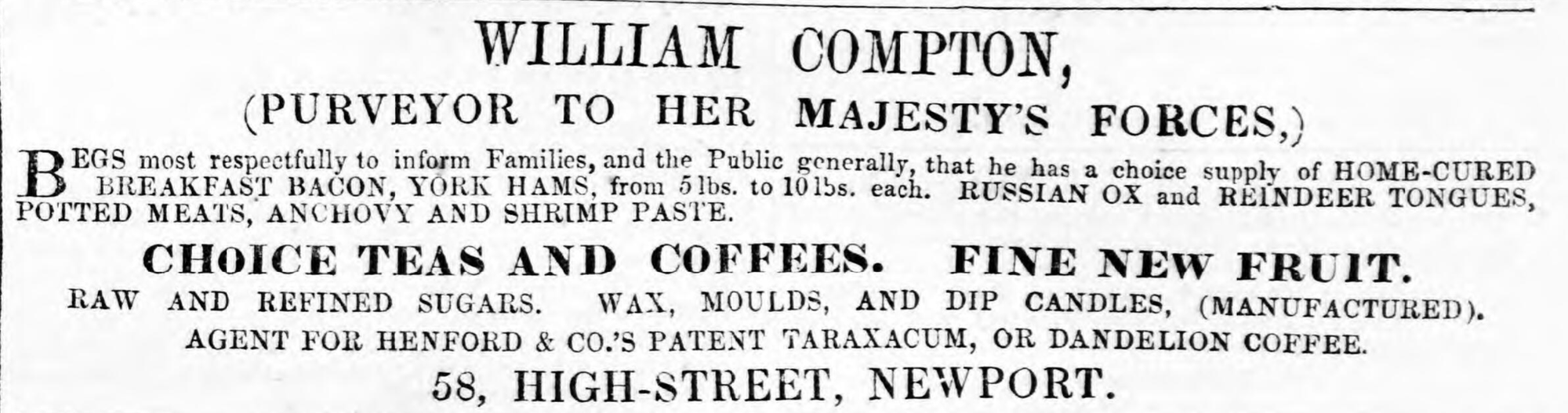
Reflecting the expanding global trade networks of the Victorian era, the merchant advertised "Choice Teas and Coffees," "Fine New Fruit," and both "Raw and Refined Sugars". The most unusual item by modern standards was his stock of "Russian Ox and Reindeer Tongues". According to culinary history publications such as The Evolution Of British Cuisine, smoked reindeer tongues were imported from regions like Lapland and Russia as a high-status delicacy for wealthy tables.
Alongside groceries, Compton manufactured and sold household necessities, specifically "Wax, Moulds, and Dip Candles". He also acted as an agent for "Henford & Co.'s Patent Taraxacum, or Dandelion Coffee". Botanical and historical archives note that Taraxacum is the scientific name for the dandelion; during the 19th century, its roasted roots were widely brewed as a caffeine-free coffee substitute and marketed for their supposed medicinal and digestive benefits.
Professor Anderson
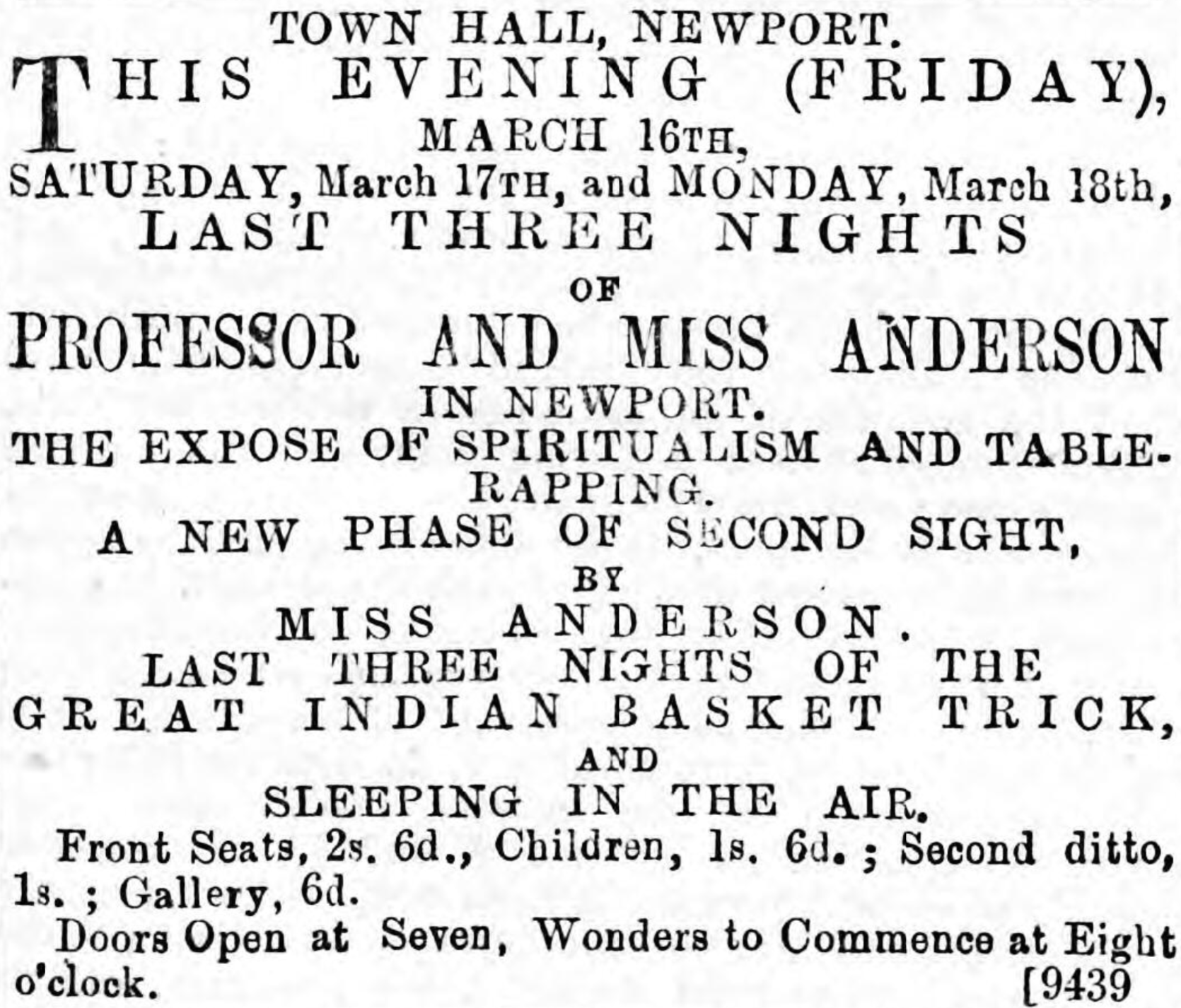
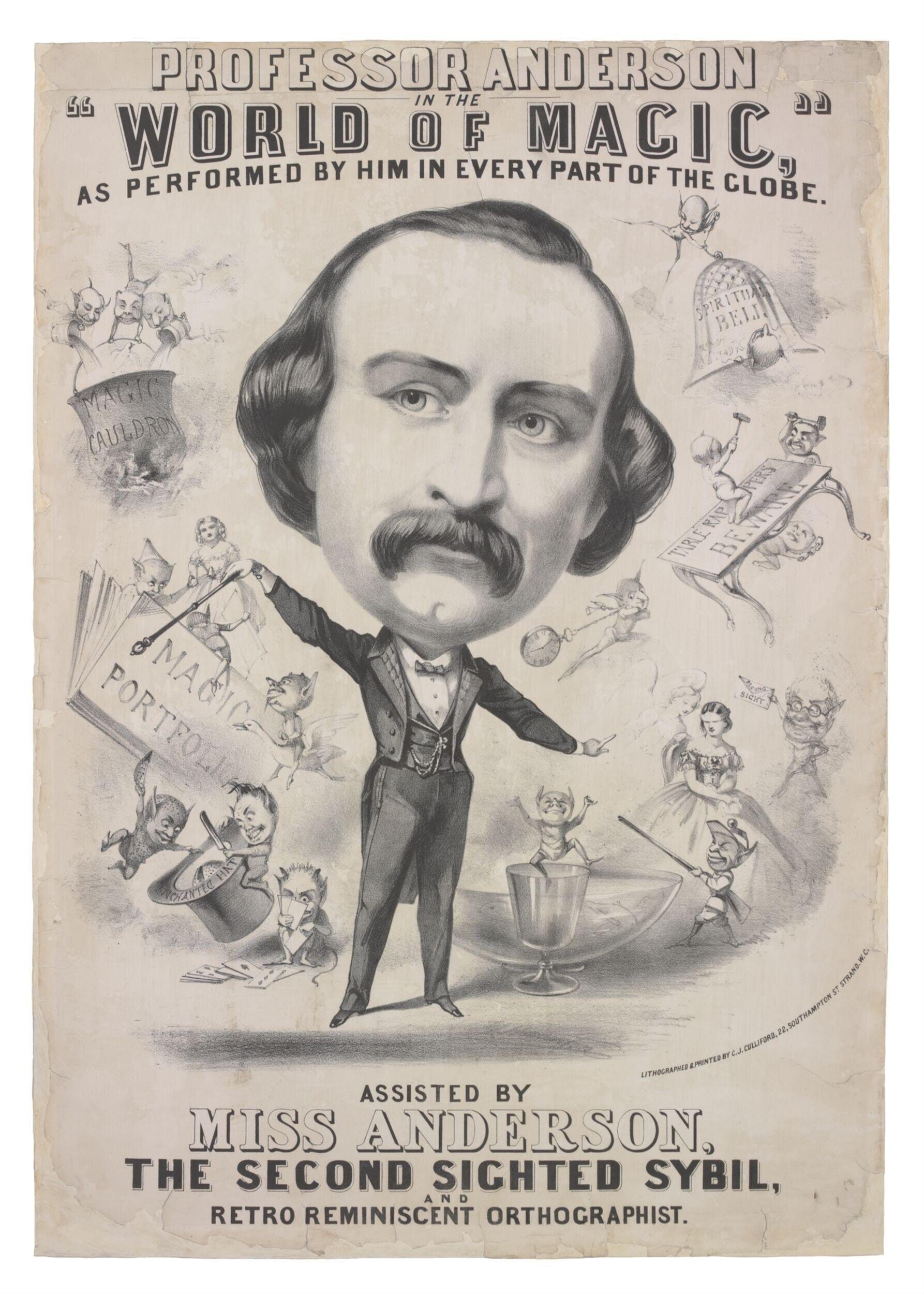
The Scottish conjuror 'Professor' John Henry Anderson, known as the Great Wizard of the North, was famous for his stage performances and for his books on conjuring and 'parlour magic'. He is credited with originating the trick of producing a rabbit from a top hat, and he also conjured live geese from a magic book, a trick which was said to be a favourite of Queen Victoria's.
He visited Newport in 1866 along with his second-eldest daughter Alice Hannah Anderson who worked with him between 1858-1868 performing 'Hindu decapitation' and singing.
A Narrow Escape
A lamplighter named Matthew Kelly was cleaning a lamp in Dock-street on Tuesday, threw the ladder on which he was standing slipped, and he was thrown on the ground with great violence. He was at once taken to the adjacent residence of Dr. Christie, when it was found that he had sustained concussion of the brain and spine, his life being almost despared of; and two hours elapsed before he was in a condition to be conveyed home. Ho has since been constantly attended by Dr. Christie, and there is now a probability that he may recover.
— Monmouthshire Merlin, 17th March, 1866


Member discussion