

Welcome to another issue of The Newport Cornucopia where we dig through the newspapers archives for interesting news articles and adverts. All articles are posted verbatim and most headlines are original (headlines in quotes are my own).

Henry Liston's 'Merry Moments'
Ou Thursday evening Henry Liston's party appeared before a good audience at the Town-hall, and went through an excellent programme in capital style. The ladies and the gentlemen did their utmost, and their efforts were loudly applauded.
It is indeed an entertainment in which there is genuine "fun without vulgarity."
— Western Mail, 29th October, 1870

The Parcels Post
The system of sending parcels through the post was commenced on Wed. nesday, and with a view to provide for the consequent increase of business, sundry alterations of a temporary nature have been made at the head post office in High-street, pending the enlargement of the building by adding to it the premises known as the Royal Oak Inn, Thomas-street.
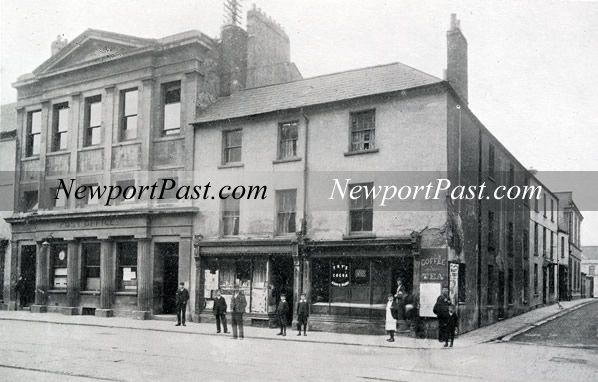
For the present an extra counter has been placed in the general office opposite the entrance doors, and there the parcels will be received, storage room being found for them in the space between the counter and the sorting-room, and in the room which the postmaster has hitherto used as his private office. The new department is to be worked by an extra staff of clerks, and parcels will be delivered twice a day in the borough by means of light carts. No parcels post business will be transacted on Sundays, Christmas Day, or Good Friday.
— Monmouthshire Merlin, 3rd August, 1883
Paying for Nuisances
Mr. Thomas Jones, shopkeeper, Mellons Bank, was charged with causing a foul and unhealthy nuisance, in having conveyed from Mellon's Bank to George-street culvert, the contents of a privy. He was fined by the magistrates, 40s. for the nuisance, and ls. 6d. costs. He was also ordered to pay for two cart-loads of lime, and 12lbs of chloride of lime, which the Sanatory Board had directed to be used in the purification of the neighbourhoods poisoned by the disgusting nuisance. This was a stringent measure to discountenance and abate a nuisance but it was essential and imperative.
— Monmouthshire Merlin, 21st July, 1849
'House for Sale on King Street'
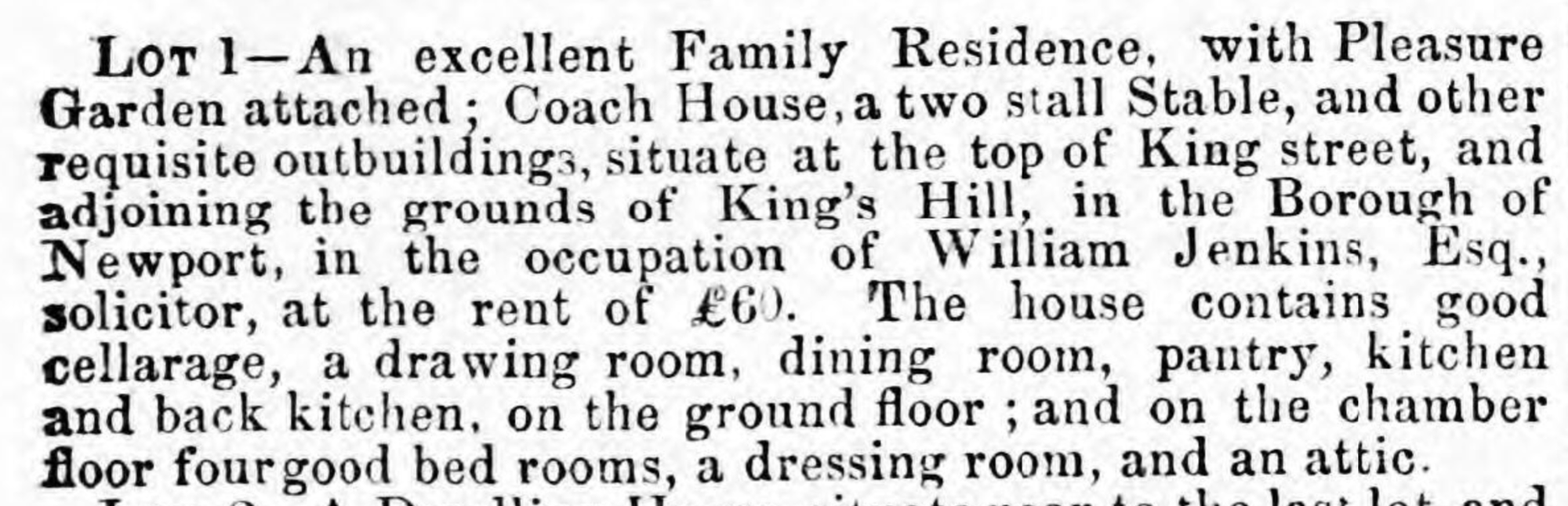
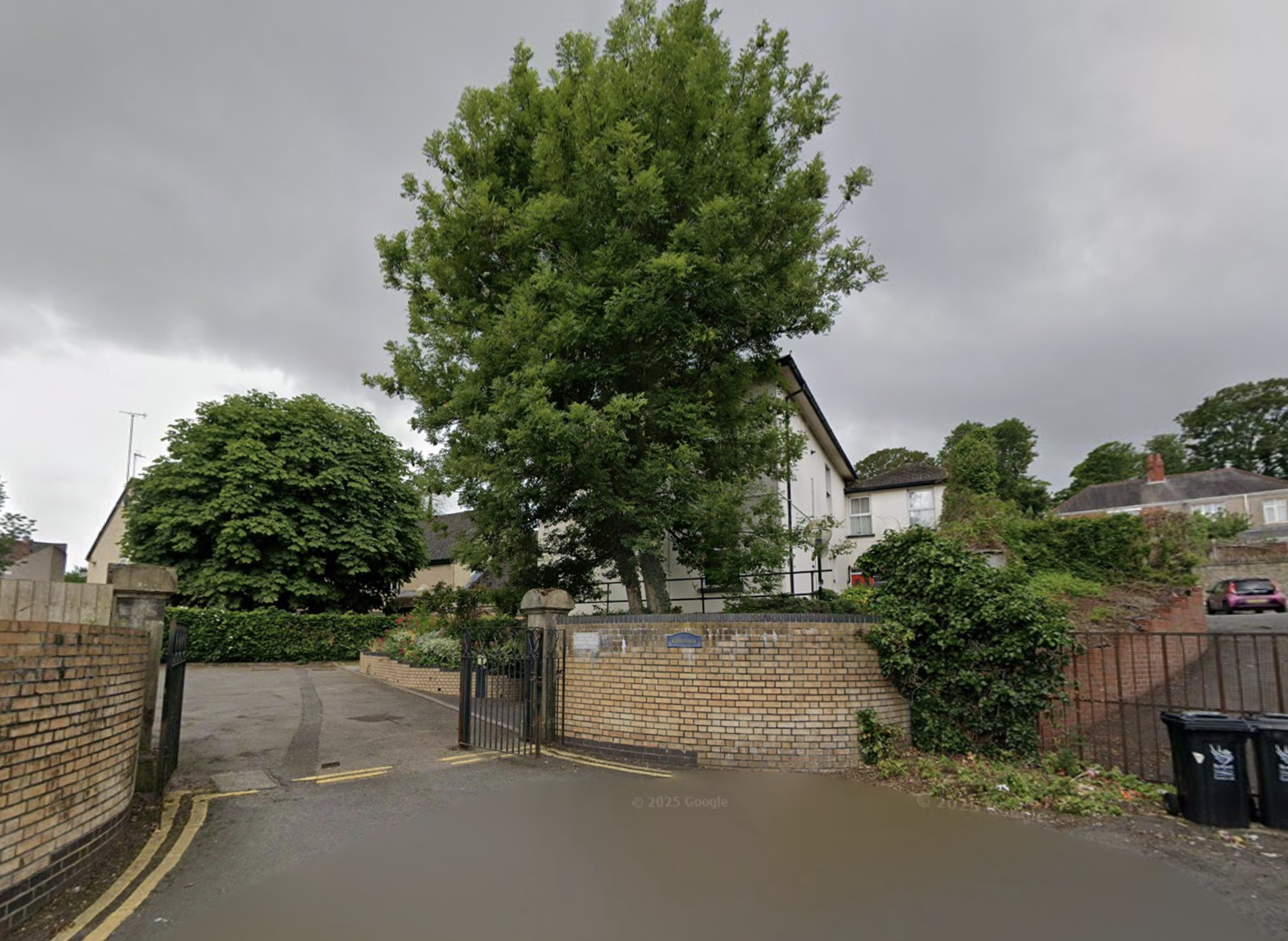
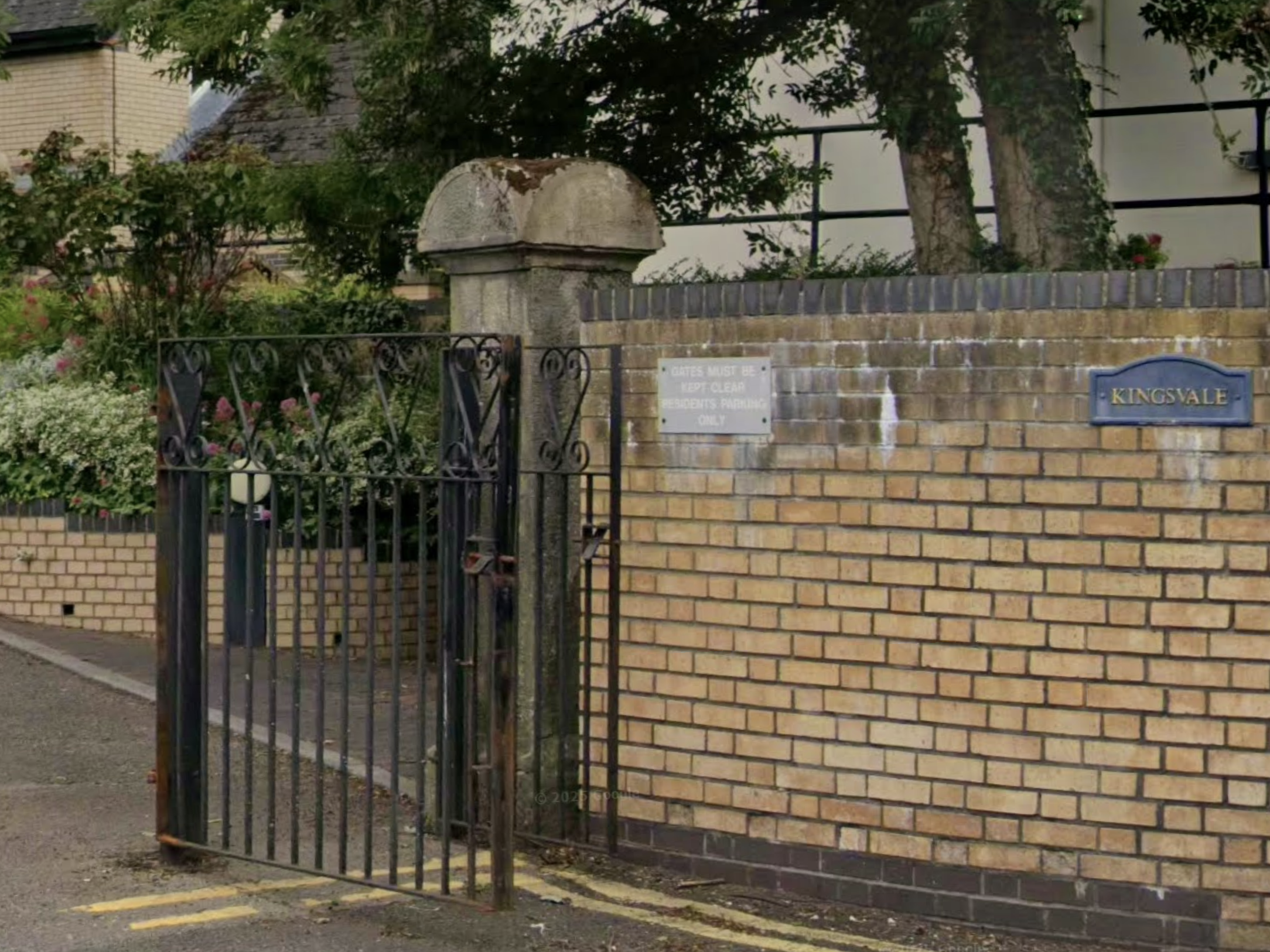
A page in the Monmouthshire Merlin on 3rd September, 1852 listed a large number of properties for sale across the town including one for a house on King Street with 'pleasure garden' and stable adjoining the grounds of King's Hill.
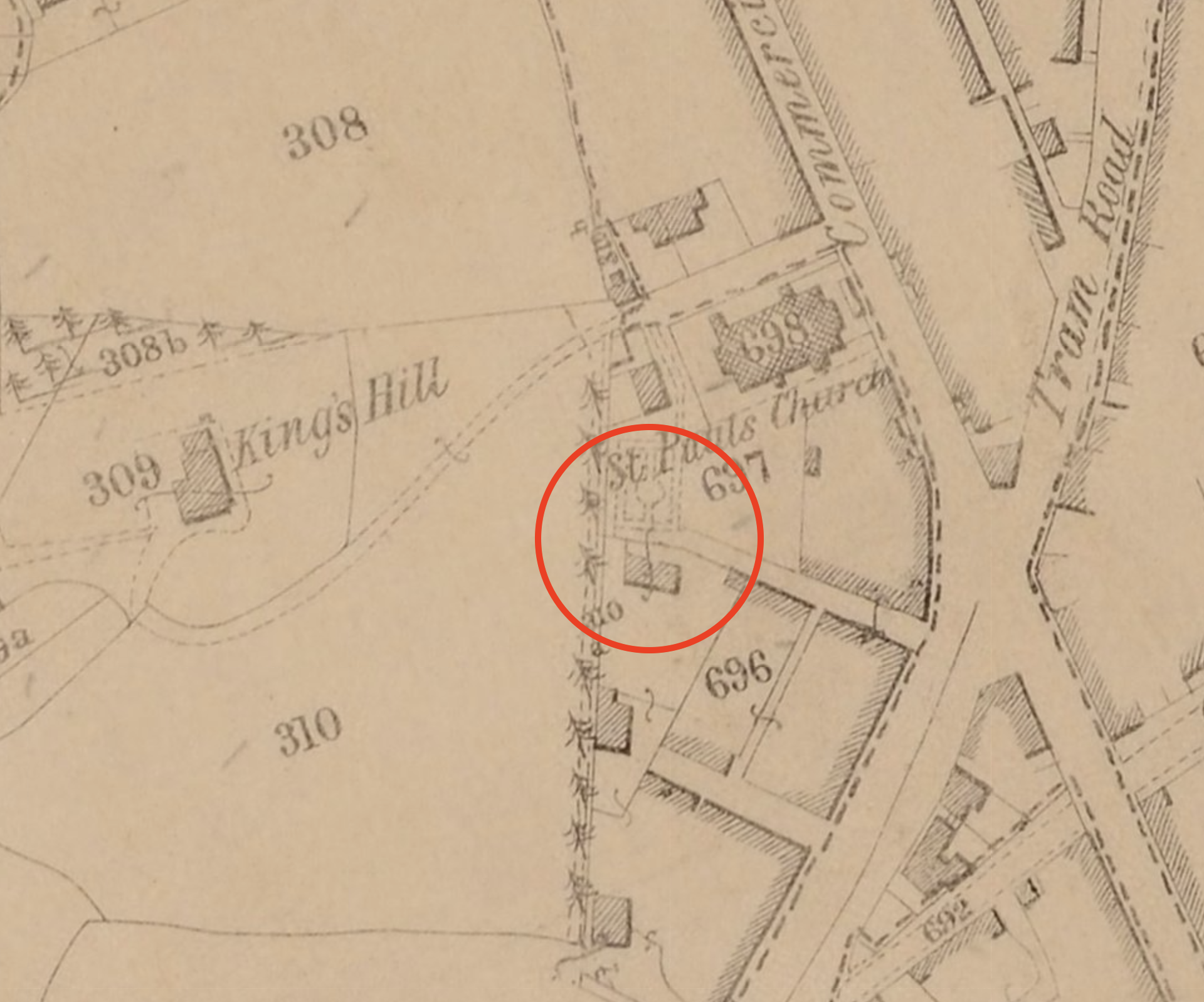
This building at the end of King Street is on the same plot of land as the one on the tithe map and I'm wondering if those pillars either side of the gate are original or at least dating back closer to the time of the advert?
Curious Circumstances
One night this week, just as people in general were retiring to rest, a mysterious chest was conveyed through Commercial-street on the shoulders of four women, who, with other women, were heard muttering incessantly, "Quick, quick; or we shall be caught!". The apprehension in the minds of those who witnessed the movement was, that a human body was about to be interred in that unusual shell, perhaps that it might not spread the terrible cholera through the neighbourhood where the last breath of the enclosed person might have been drawn; and the police were at once required to set foot on an active search, to prevent so remarkable and unseasonable a sepulture.
The next morning this mystery was unravelled. The police had tracked the parties, and discovered that they were, "club women," who, having had a "rumpus" with the landlord of the club-house, had run off with the money box, to a more approved-of hostelry!
— Monmouthshire Merlin, 21st July, 1849
Newport Cemetery
The first interment in this Cemetery took place on Wednesday morning, when the infant child of the Rev. Thomas Parry, Minister of the Hope Chapel, in this town, was buried there, the Rev. Messrs. J. Jones and D. R. Stephen, officiating. The chapel and keeper's house are in progress of erection in a short time it is expected the work will be completed, and the cemetery opened for sepulture to all classes, creeds, and colours, without distinction or preference.
— Monmouthshire Merlin, 29th October, 1842
'Man Falls from High Street Window'
Walter Browning, an elderly man who followed the occupation of a painter, was killed on Monday by falling from an upstairs window on the premises of Messrs. Nugent Wells and Son, jewellers and silversmiths, High-street, where he was at work.
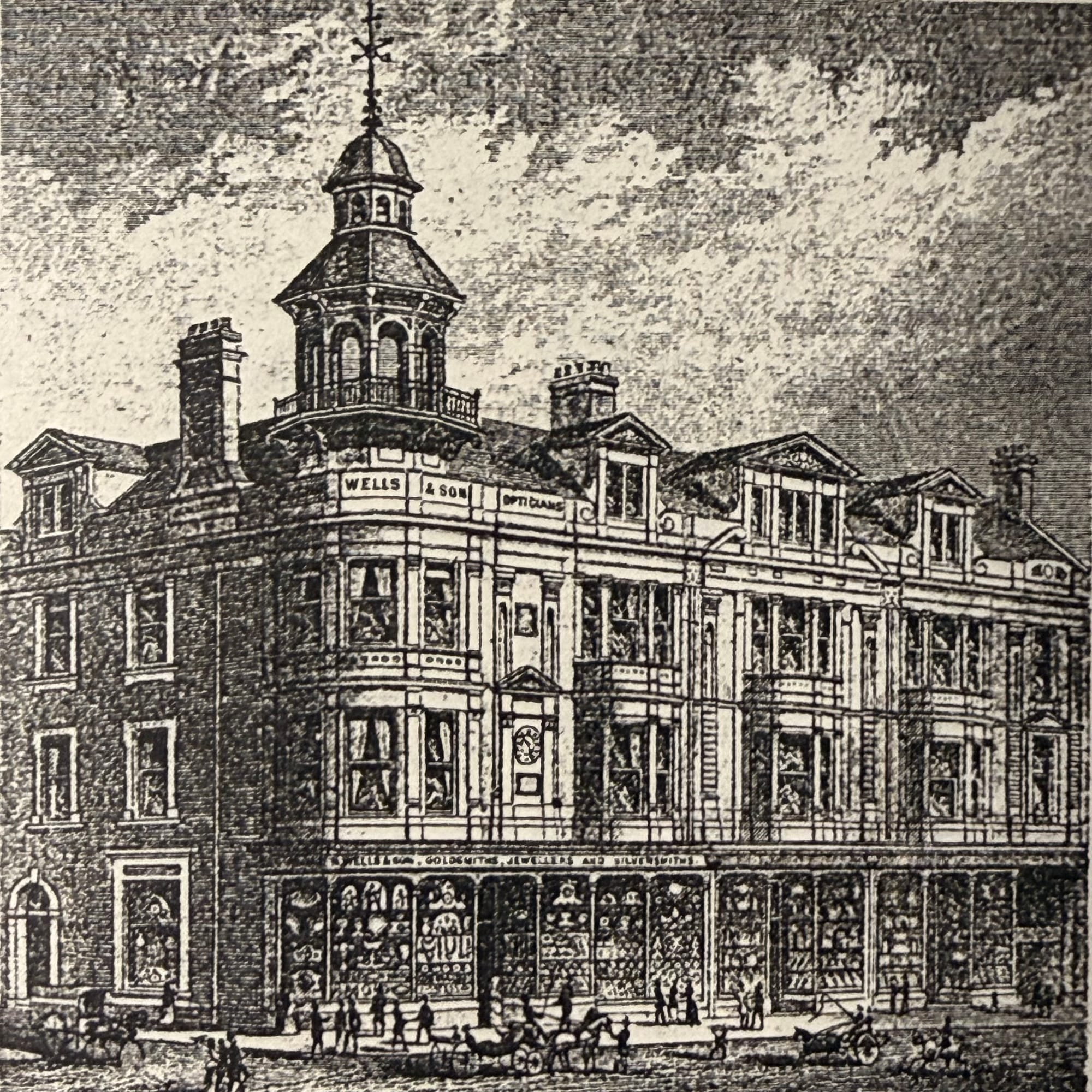
The deceased expired at the Infirmary the same night from concussion of the brain. The inquest took place at the Queen's Hotel on Tuesday, when the above facts were deposed to, but there was no evidence given as to what caused Browning to fall. The jury returned a verdict to the effect that deceased was accidentally killed. He leaves a wife and one daughter.
— Monmouthshire Merlin, 3rd August, 1883
'Fire at Pen-y-Lan Homestead'
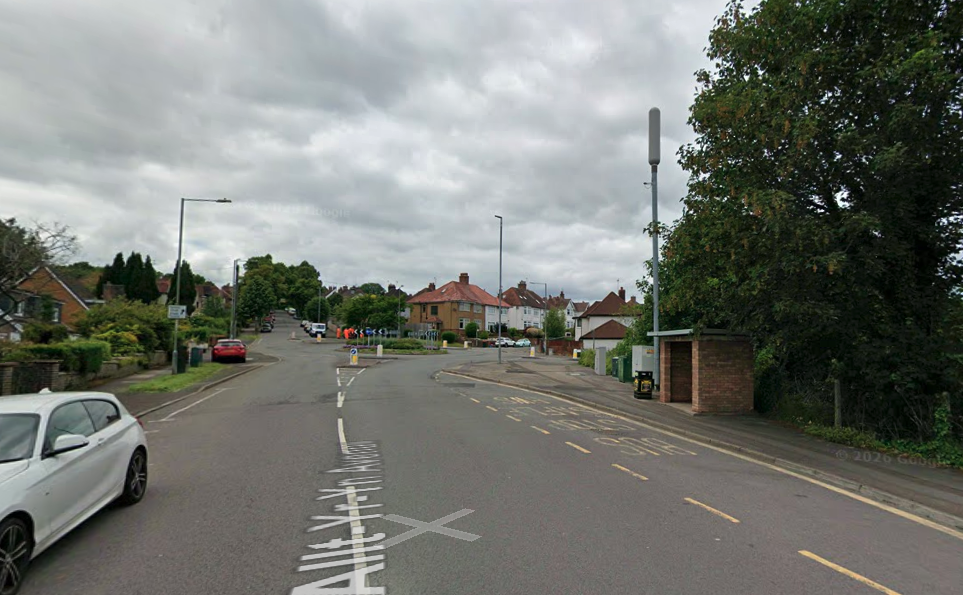
On Monday afternoon between three and four o'clock. a mow of hay, containing about 14 tons, belonging to Mr. William Morgan, of Pen-y-lan, and situated on the Cold tops (sic), was observed to be on fire.
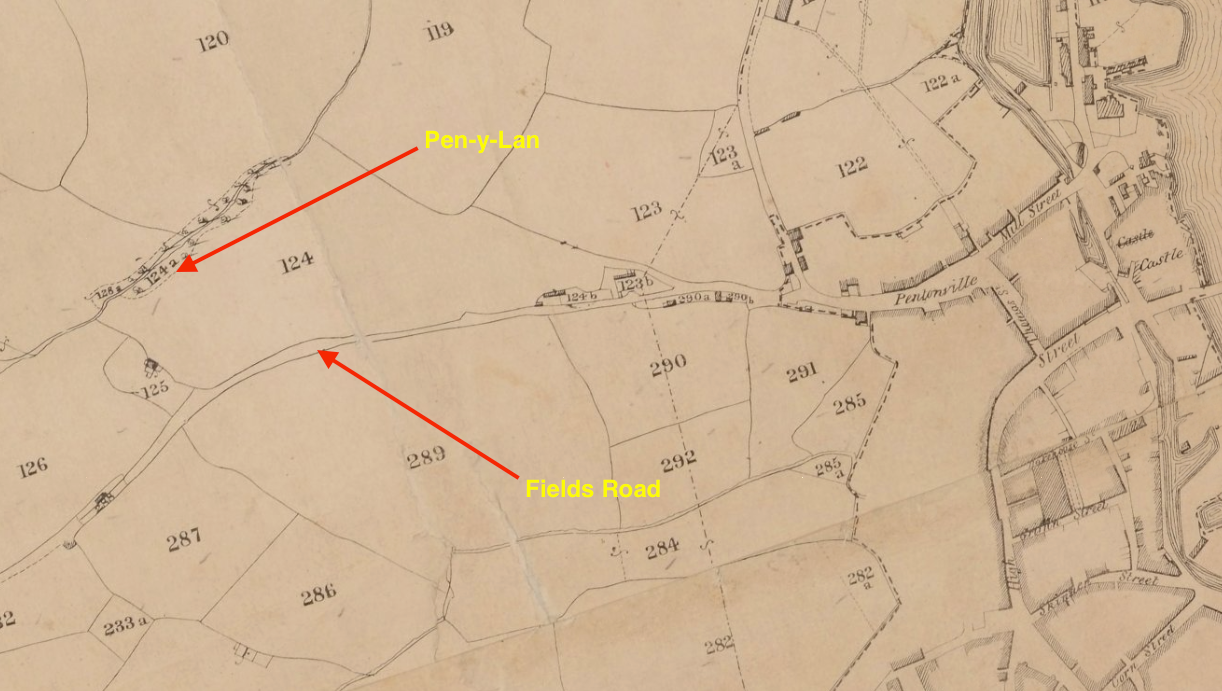
Several persons immediately repaired to the spot, and about four o'clock that curious machine, which, by courtesy is called "the Newport Fire-engine" lucus a non lucendo was observed lumbering to the scene. After three or four hours labour by the crowd present, the fire was extinguished, and about five tons of the hay saved.
We understand it originated in the thoughtlessness of some mischievous boys who made a bonfire in the immediate neighbourhood, the sparks from which fell upon the mow, and caused the conflagration.
We have been informed by persons who were present, and assisted in subduing the flames, that the thing called a fire-engine, which was dragged to the place, was in a state of such inefficiency, as to be a disgrace to the town in which it is the only protection against the destruction of property in similar cases.
We have over and over again called the attention of the authorities to this subject but as they have neglected to take the proper steps to provide an efficient engine, we think it it a matter of sufficient importance to recommend that a public meeting be held for the purpose of adopting measures to furnish the town with an engine of sufficient power to act with effect.
— Monmouthshire Merlin, 29th October, 1842
A couple of weeks later, the children mentioned in the article were in court...
Fire at 'Penyland'
On Saturday last, three children, named Joseph Powell, Hannah Powell (brother and sister), and David Jones, who resided with their parents in the immediate vicinity of the field in which Mr. William Morgan's hay mow was situated, an ac- count of the burning of which appeared in the MERLIN of the 29th ult were placed at the bar.
Some suspicion being entertained that the children were incited by some malicious person to burn the mow, the present enquiry was very properly instituted for the purpose of ascertaining whether that suspicion was well founded or not. The principal witness was a girl named Mary Anne Blakemore, servant to Mr. Millar, of Pentonville, who stated that she knew the three prisoners.
On the day when the mow was burned, she was going on a message to Alteryn, through the field where the mow was situated, and saw the three prisoners and two other children sitting round a fire of sticks, which was placed within 6 or 7 feet of the mow the youngest prisoner, David Jones, went to the mow to get some hay to add to the blaze Joseph Powell, the elder boy, then lighted a small candle at the fire, and as there was a high wind at the time, he covered it with his hands, to prevent it from being blown out, and went to the mow and deliberately set fire to it.
A man, with a cart, happening to come up at the time, was observed by the girl Hannah Powell, who said to the other prisoners, "here is a man coming, and we must cut"— when she picked up her little sister, who could not walk, and the whole of them ran to the other side of the mow to hide.
The witness did not give any alarm at the time, as she did not think that anything would come of it, and went on to Alteryn and on her return she found the mow in a blaze, and several persons with the fire engine endeavouring to extinguish it. This was the only witness, and there being no proof of instigation or concert with any other person, the magistrates ordered the children to be discharged.
It appeared by the statements of Mr. Morgan and others, that the children, though young, are incorrigibly mischievous, and before they were dismissed Mr. Coles administered a severe and most called-for reprimand to their parents, for rearing them up in such a manner as may lead to their ultimate ruin.
— Monmouthshire Merlin, 12th November, 1842

Caution to Owners of Steam Thrashing Machines
John Davies was summoned for having an engine and thrashing machine belonging to Edward Charles, of Bassaleg, too near to a public highway. Police-constable Stead and Police-constable Benfield proved the charge. The proper distance, as required by Act of Parliament, was 25 yards, but defendant was within one-half of that distance. Fined 5s. and the costs.
— Western Mail, 31st October, 1870
William Price, farmer, Llangstone, was summoned for having placed a threshing machine within a certain distance from the highway, as required by Act of Parliament. Defendant denied the offence. P.C. Hughes stated that on the 21st October he was patrolling between Catsash and Hambourg, and saw a steam threshing machine at work in defendant's field. Measured the distance from the highway to the engine, and found it was only 12 feet.
Spoke to the engine driver about its being too near, and he said the fault lay with Mr. Price. Whilst he was there Mr. Price came in, and made use of the most abusive language that he ever heard in his life. This defendant denied, and said that denial would be substantiated by witnesses.
It was the way of policemen always to make up a case, and to swear anything. The Bench interposed, and said they could not hear such statements made. Defendant said Mr. Sheppard, the inspector, had a vindictive feeling against him, but Mr. Phillips replied that all the police did was to carry out the requirements of the law.
Inspector Sheppard said it might be a relief to Mr, Price to know that none of these cases were proceeded with unless by instructions from the Chief-constable. The Bench said they were bound to uphold the Law. Fined 11s. including costs.
— Western Mail, 7th November, 1870
Disorderly
James Williams, of Baneswell, was fined 5s. for being incapably drunk in Baneswell-road. Edward Welsh was charged with being disorderly, and breaking a square of glass in Mr. G. Fothergill's shop. He had arranged to pay for the damage, and the bench discharged him en paying costs.
Daniel Clark was charged with being drunk whilst in custody of a horse and cart. A policeman found this man asleep in his cart outside the Marshes turnpike gate. The united efforts of the policeman and gate man could not rouse him, and it was not until the officer had driven the horse to the Eastern Valleys Hotel that defendant woke up. He told the bench that he had been to Abersychan, and drunk two glasses of brandy on the road. He was fined 5s. and costs.
Sarah Bradwell, who did not appear, was summoned for being drunk and disorderly in Clarence-street, Pill. Her husband appeared, and stated that she was too ill to attend the court.
She was in the habit of having fits, and he accounted for her condition in that way. The Superintendent said the woman was frequently drunk.
Fined 10s. 6d., or 14 days. John Seymour, for being drunk and disorderly on Sunday night, was fined 10s. 6d., or 14 days. Edward Miles was brought up for being disorderly in Charles-street. Ordered to be detained until this Tuesday morning.
— Western Mail, 1st November, 1870
Breaking a Shop Window
John Holland was charged with breaking a window in the shop of Mr. Whitehall, jeweller, on Monday afternoon last. The damage done was about £5. Mr James Ewins saw the prisoner throw a stone at prosecutor's window. Sergeant Winmill took the prisoner into custody, and he then said he did it from want.
Mr. Bothomley, agent to the Plate-glass Insurance Company, pressed the case, as the company was subjected to heavy losses through wanton conduct of this kind. Prisoner was here a few weeks ago, aud then he stated, as he did now, that he had fallen into a miserable condition through drink. Two months' hard labour.
— Western Mail, 3rd November, 1870
A Domestic Picture
William Chown was charged with disorderly conduct at two o'clock on Tuesday morning. Police-constable Gadd said he heard a cry of "Murder" in North-street, and went to the defendant's house in Wedlock-court, where he saw two children in the street in their night-dresses, and the defendant was beating their mother, who was on the floor. She appeared to be insensible.
Defendant said the woman he lived with was not his wife, and she was very violent when she got drink.
It was not very pleasant to have a poker, fender, or other missile thrown at his head, and there was no wonder he got exasperated.
Several times he had gone away from her, but as soon as he returned to the town and went to lodge elsewhere the woman followed him and would not let him have quietness until he went back to her house. He was fined 5s. and costs.
— Western Mail, 3rd November, 1870
'Sleeping in a Limekiln'
Elias Grammage, a young fellow, was charged with sleeping on a limekiln. Discharged on promising to leave the town.
— Western Mail, 3rd November, 1870



Member discussion