

Welcome to another issue of The Newport Cornucopia where we dig through the newspapers archives for interesting news articles and adverts. All articles are posted verbatim and most headlines are original (headlines in quotes are my own).

'Grand Annual Evening Concert'
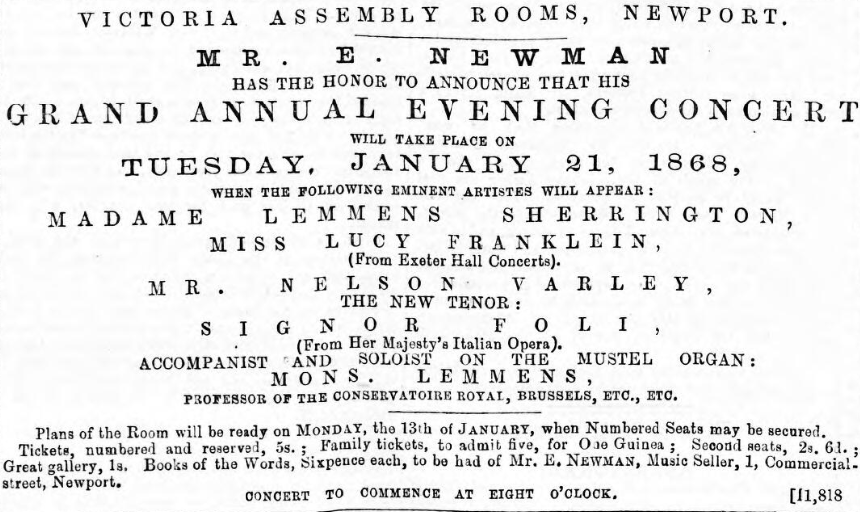
On Tuesday, January 21, 1868, music lovers gathered at the Victoria Assembly Rooms in Newport for a grand annual evening concert announced by Mr E. Newman, a local music seller based at 1 Commercial Street.
Who was Madame Lemmens-Sherrington?
Born Helen Sherrington, Madame Lemmens-Sherrington was one of the leading English sopranos of the Victorian era. Following the retirement of Clara Novello in 1860, she had barely any rivals on the concert stage. She was particularly renowned for oratorio music, shining in works like Haydn's Creation, and was one of the original musicians awarded the Gold Medal of the Royal Philharmonic Society.
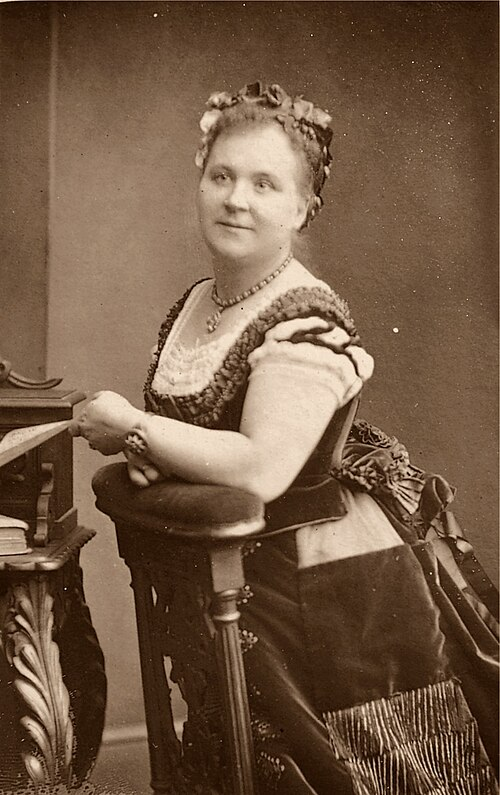
Also playing that night was Mons. Jacques-Nicolas Lemmens, a Belgian organist and composer, who was the husband of Helen Lemmens-Sherrington.
— Monmouthshire Merlin, 18th January, 1868
The Storm King’s Dream: Easter Entertainment at Newport’s Theatre Royal, 1857
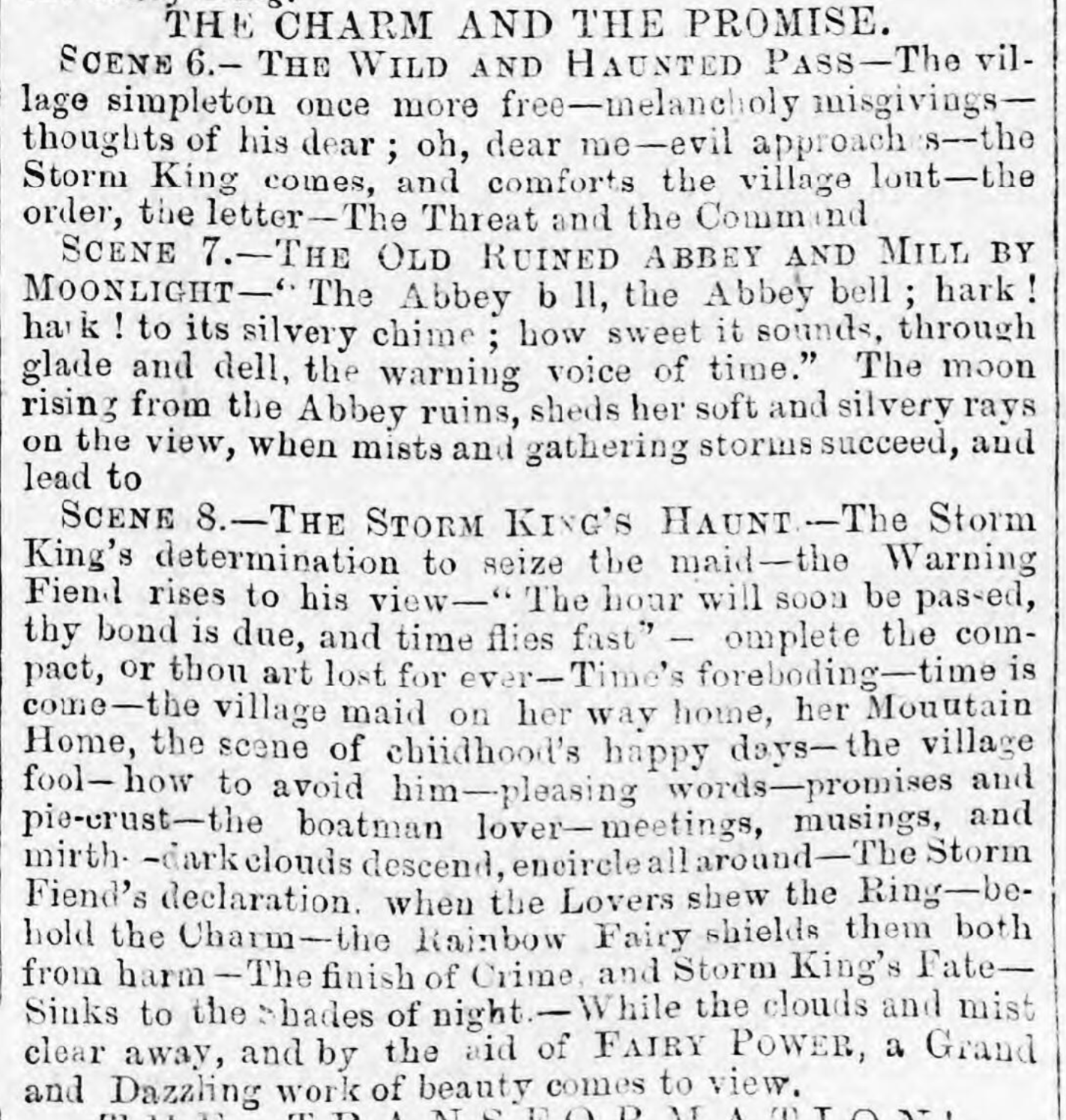
During the Easter holidays of 1857, the Theatre Royal in Newport presented a spectacular array of dramas, comedies, and a lavish pantomime. Under the management of lessee Mr. J. P. Chadwick, the theatre secured the celebrated London comedian and singer Mr. Warlow, alongside Mr. James Pitney Weston, widely billed as the "Grimaldi of the Day".
The week’s performances culminated each evening with the grand comic pantomime, The Storm King's Dream! Or, Harlequin Rainbow and the Fairy of the Sun-lit City of the Sea. Directed by Weston, the production featured extensive local talent and elaborate staging, including new scenery by Mr. J. N. Hicks and tricks machinery by Mr. J. Harris.
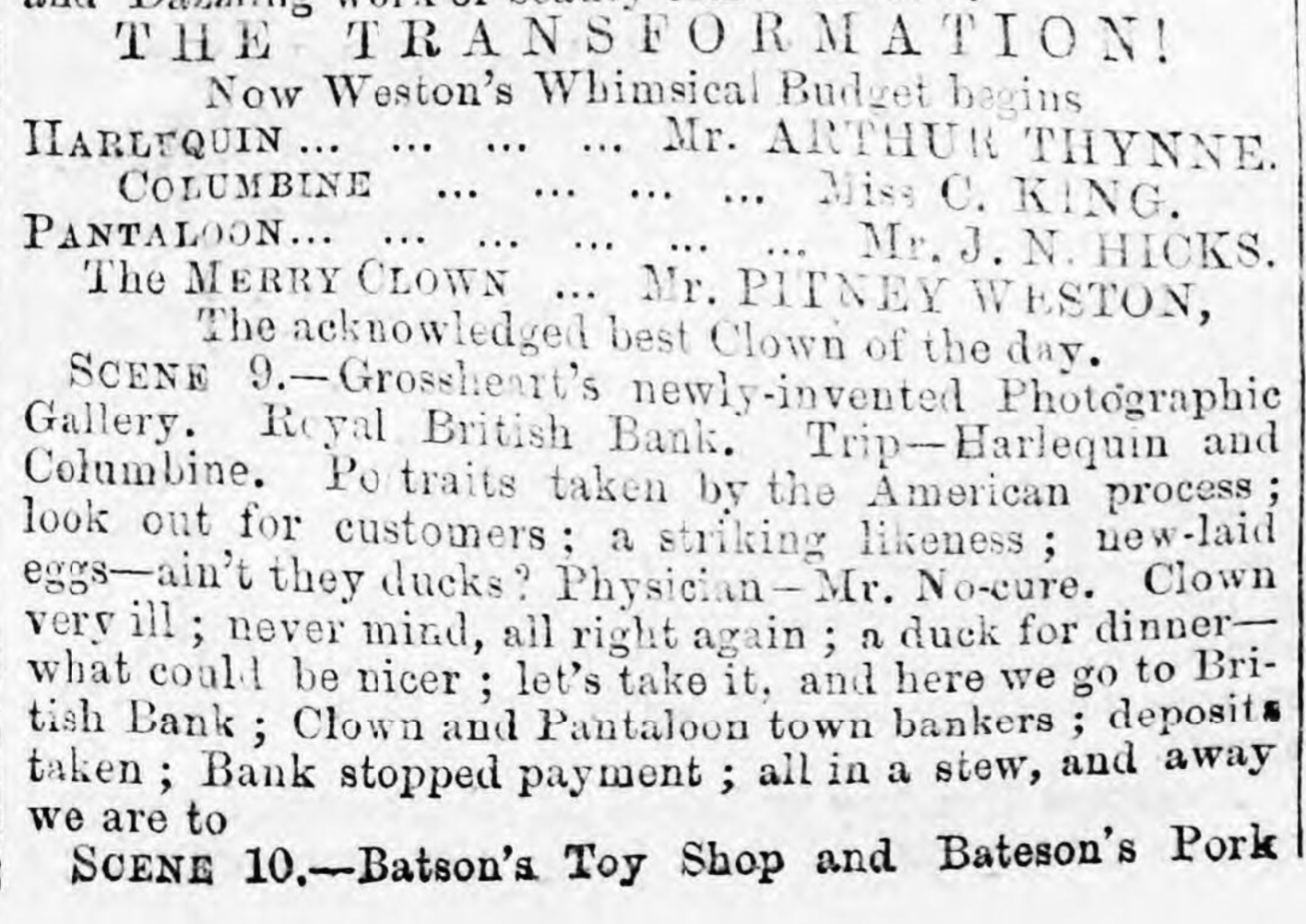
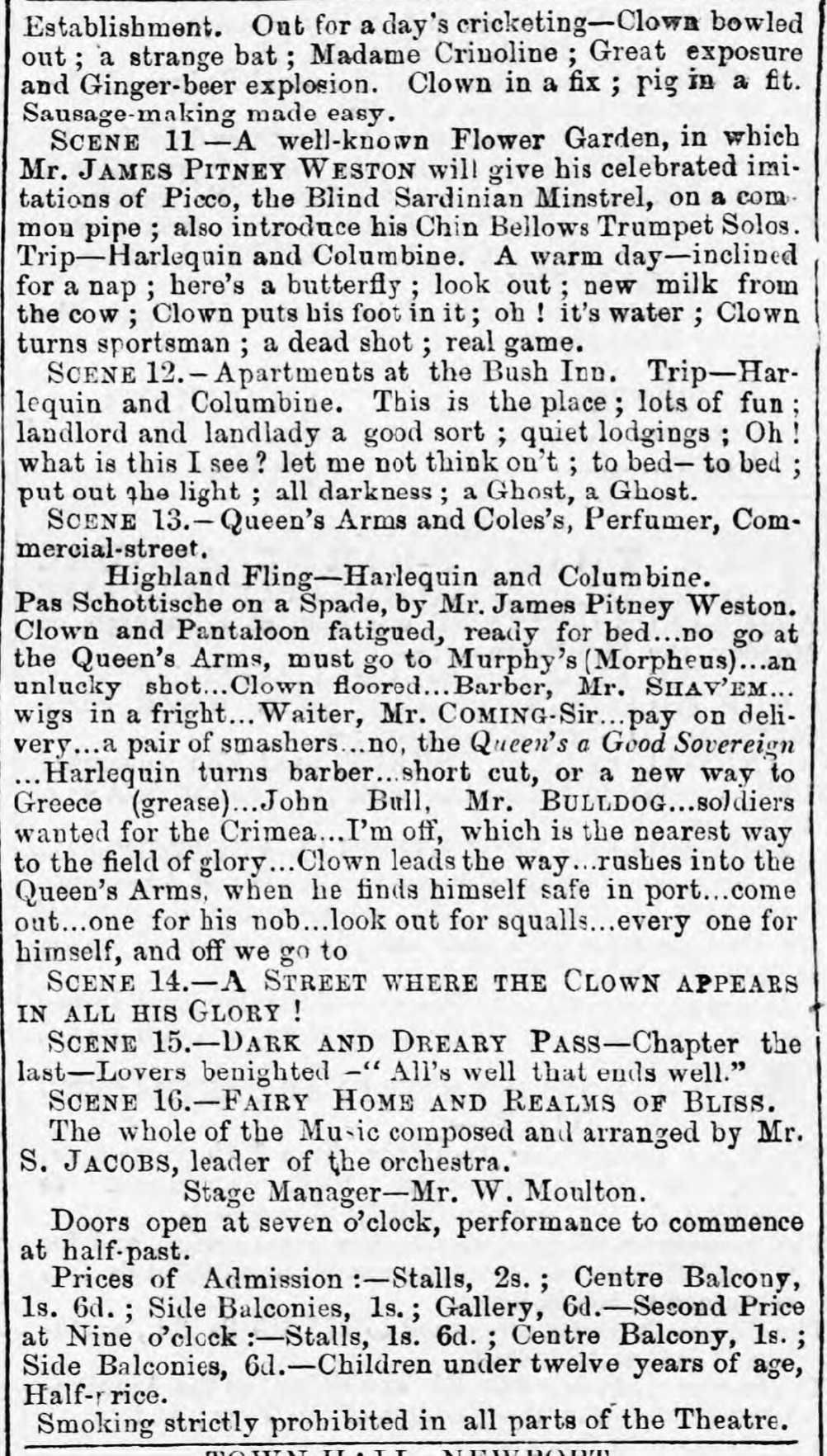
The pantomime's plot followed the "Bad and Evil Genius" Rubaldo, known as The Storm King, and a Good Fairy trying to protect two young peasants from his snares. It was a sprawling 16-scene production featuring a grand ballet by upwards of twenty fairies, a comic "Highland Fling," and a satirical scene at "Grossheart's newly-invented Photographic Gallery" poking fun at the recent American process.
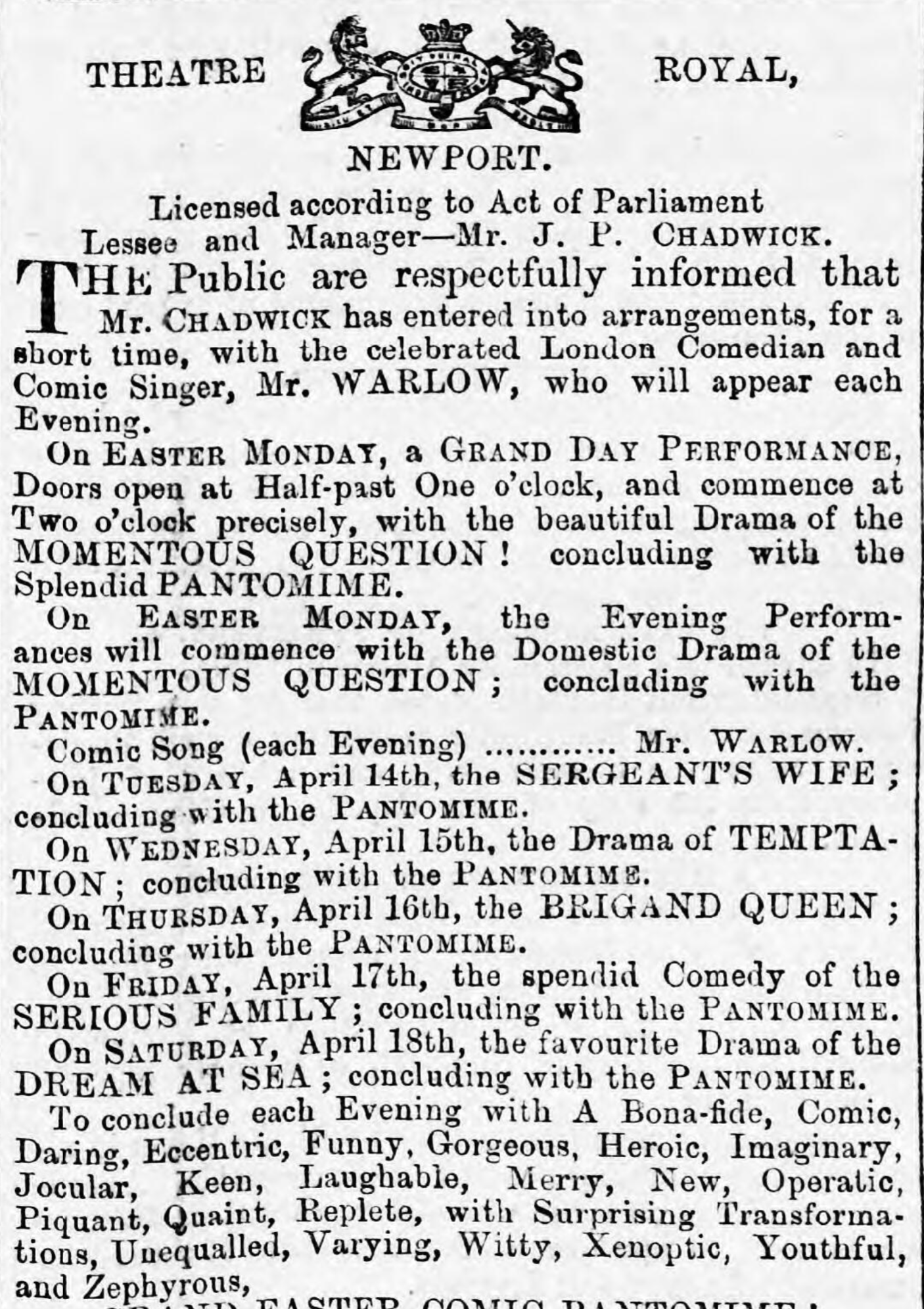
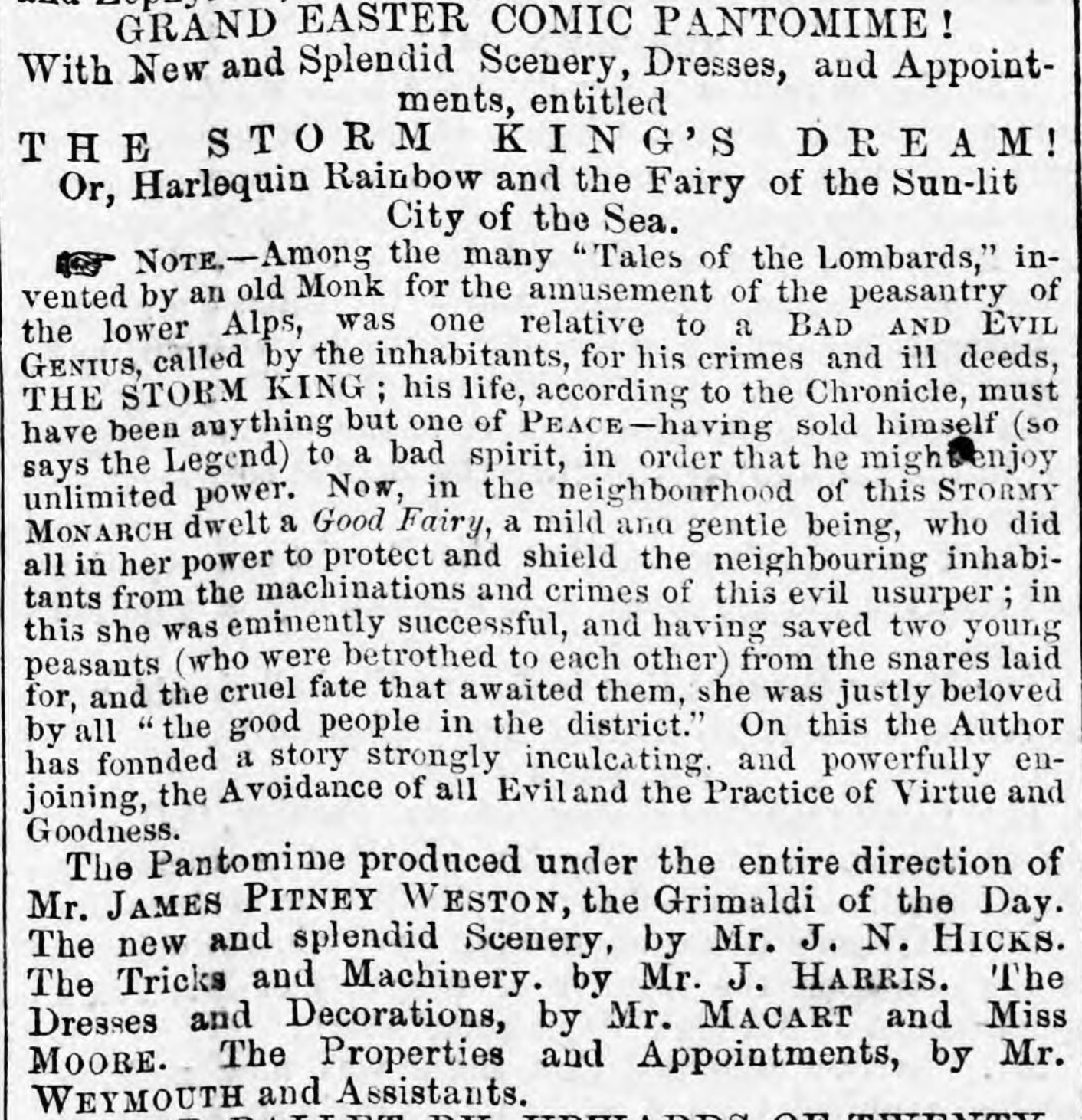
Easter Week Schedule (April 1857)
| Date | Main Feature | Conclusion |
| Easter Monday | The Momentous Question | Pantomime |
| Tuesday, April 14th | The Sergeant's Wife | Pantomime |
| Wednesday, April 15th | Temptation | Pantomime |
| Thursday, April 16th | The Brigand Queen | Pantomime |
| Friday, April 17th | The Serious Family | Pantomime |
| Saturday, April 18th | The Dream at Sea | Pantomime |
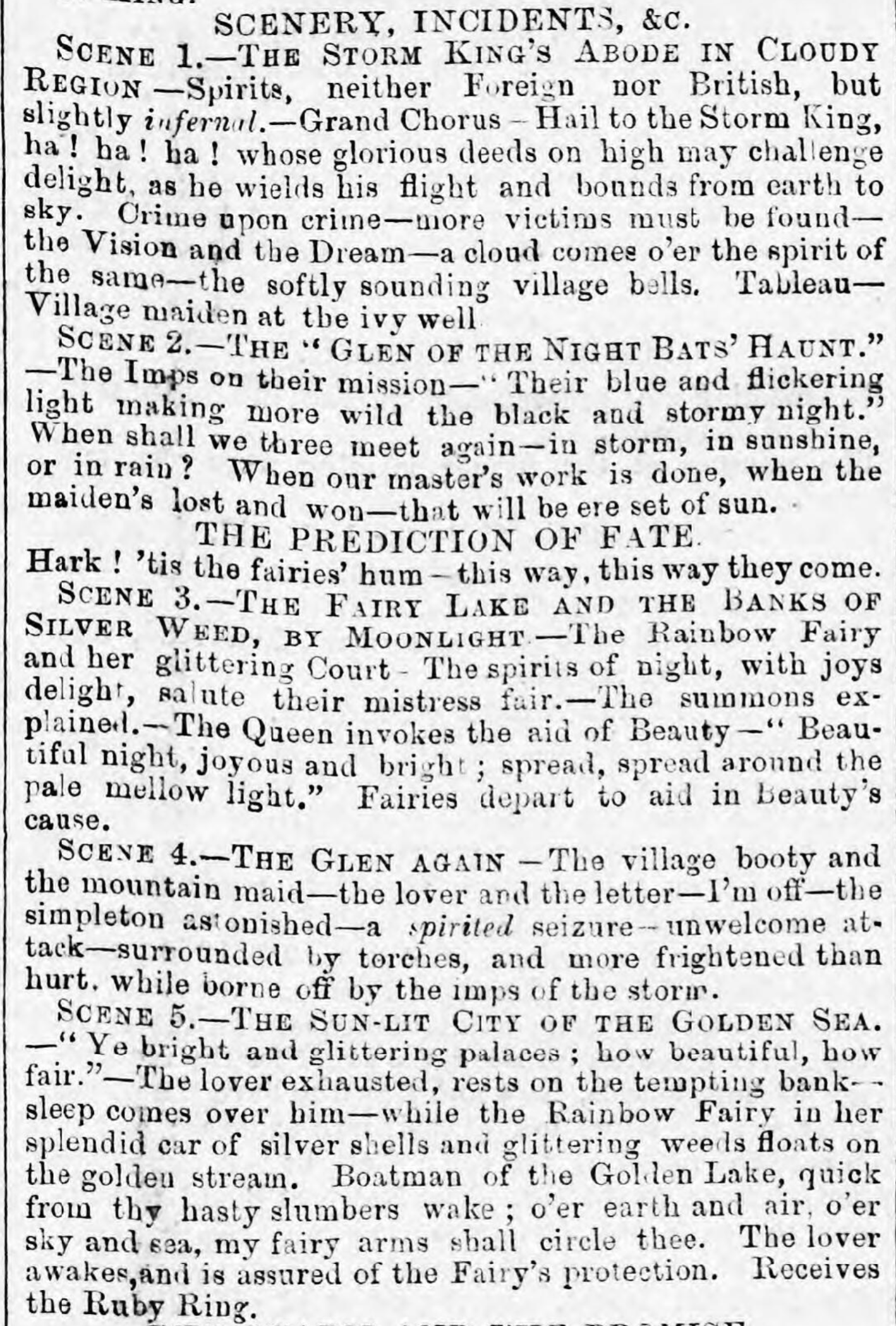
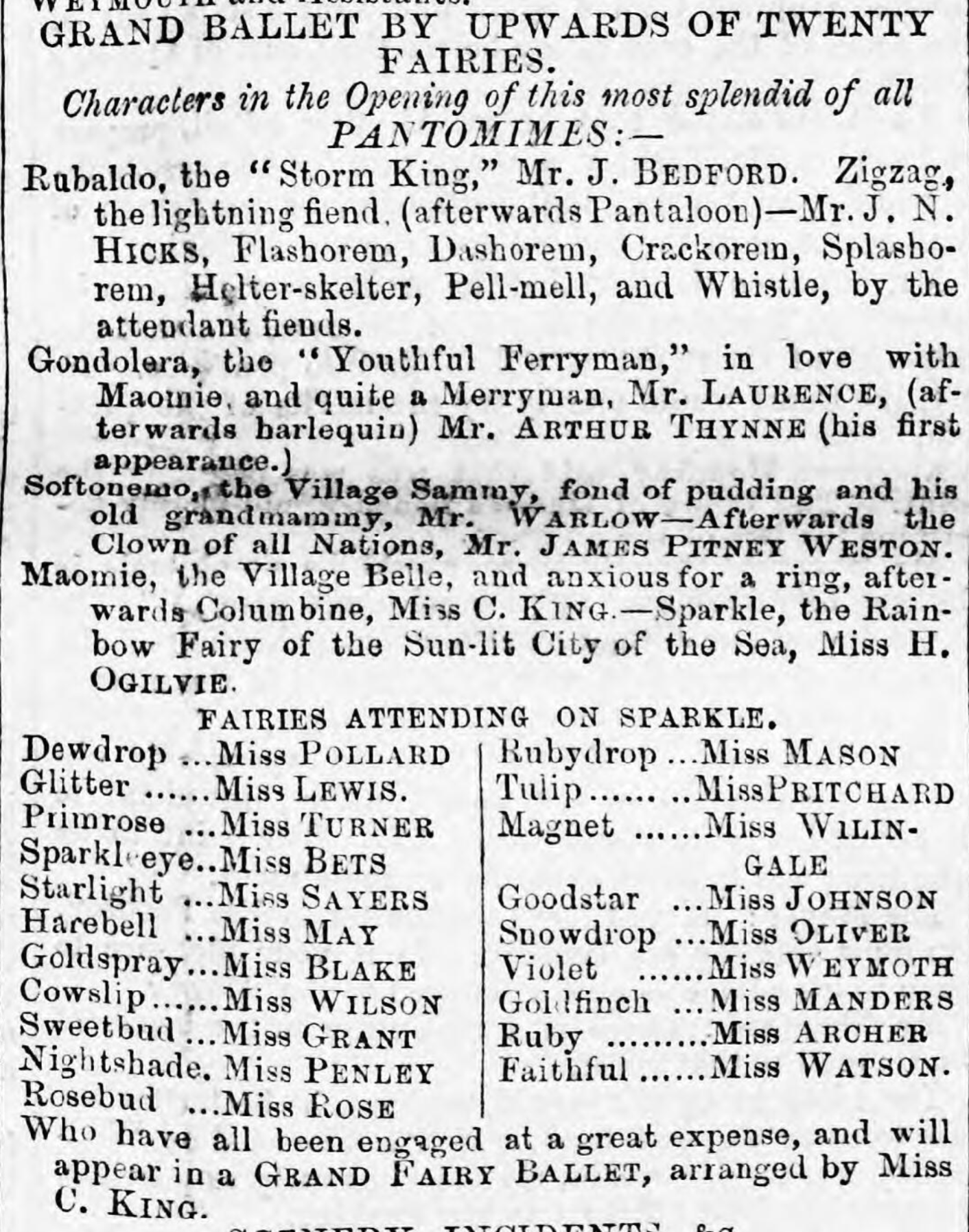
Cast & Production Crew: The Storm King's Dream (1857)
Principal Characters (Opening)
- Rubaldo (The "Storm King"): Mr. J. Bedford
- Zigzag (The Lightning Fiend, afterwards Pantaloon): Mr. J. N. Hicks
- Attendant Fiends: Flashorem, Dashorem, Crackorem, Splashorem, Helter-skelter, Pell-mell, and Whistle
- Gondolera (The "Youthful Ferryman", in love with Maomie, afterwards Harlequin): Mr. Laurence (afterwards Mr. Arthur Thynne – his first appearance)
- Softonemo (The Village Sammy, fond of pudding and his old grandmammy, afterwards Clown): Mr. Warlow (afterwards Mr. James Pitney Weston, "Clown of all Nations")
- Maomie (The Village Belle, anxious for a ring, afterwards Columbine): Miss C. King
- Sparkle (The Rainbow Fairy of the Sun-lit City of the Sea): Miss H. Ogilvie
Fairies Attending on Sparkle (Grand Fairy Ballet) Arranged by Miss C. King
- Dewdrop: Miss Pollard
- Glitter: Miss Lewis
- Primrose: Miss Turner
- Sparkle-eye: Miss Bets
- Starlight: Miss Sayers
- Harebell: Miss May
- Goldspray: Miss Blake
- Cowslip: Miss Wilson
- Sweetbud: Miss Grant
- Nightshade: Miss Penley
- Rosebud: Miss Rose
- Rubydrop: Miss Mason
- Tulip: Miss Pritchard
- Magnet: Miss Wilingale
- Goodstar: Miss Johnson
- Snowdrop: Miss Oliver
- Violet: Miss Weymoth
- Goldfinch: Miss Manders
- Ruby: Miss Archer
- Faithful: Miss Watson
Harlequinade / Transformation Cast
- Harlequin: Mr. Arthur Thynne
- Columbine: Miss C. King
- Pantaloon: Mr. J. N. Hicks
- The Merry Clown: Mr. Pitney Weston
— Monmouthshire Merlin, 11th April, 1857
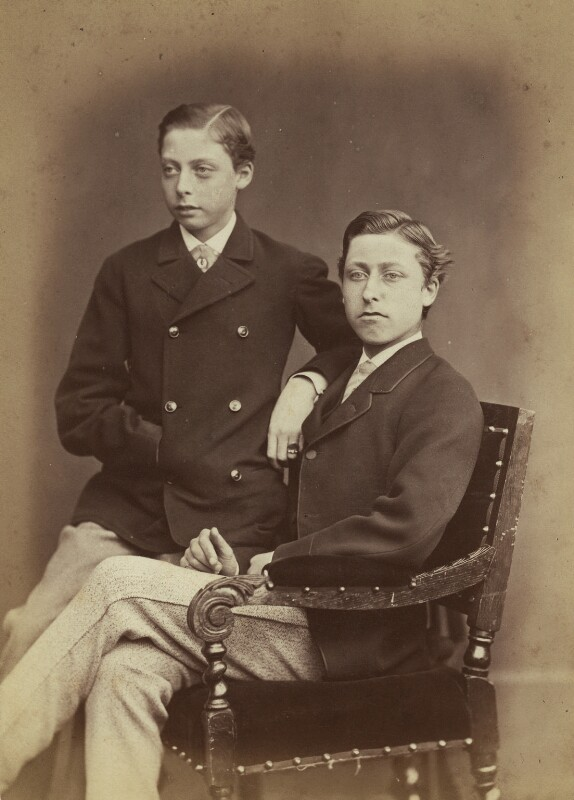
Prince Arthur at Newport
His Royal Highness Prince Arthur, who is at present on a tour through South Wales, arrived at Newport on Wednesday by the 1 10pm express train from Chepstow. But comparatively few persons were at the station, the visit being wholly unexpected, but the crowd was sufficiently great apparently to disconcert the youthful Prince, who anxious to escape the gaze of the many eyes that fixed upon him.
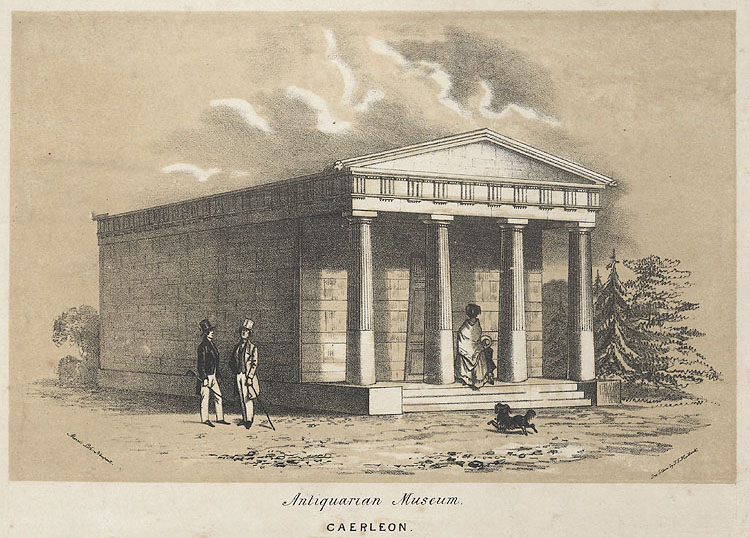
He was attended by Major Elphinstone and his tutor, the Rev. Mr. Jolly. Accompanied by these gentlemen, His Royal Highness at once proceeded on foot to Caerleon, a distance of three miles, declining himself of a carriage which was in waiting. Superintendent Huxtable, who had the honour of acting as a guide, took measures to acquaint J. E. Lee, Esq., and the Vicar of Caerleon the Rev. H. P. Edwards, 0f Royal visit, and by these gentlemen the Prince on arriving at Caerleon.
He first visited the Antiquarian Museum, where he spent some time in examining Roman remains and curiosities there deposited, and listened with evident interest to the explanations of Mr. Lee, who is secretary to the Antiquarian Association of Monmouthshire. He then inspected the Round Table field remains of the Roman wall adjoining, after which he took lunch at the Priory, the residence of Mr. Lee.
Subsequently the party visited the Roman mound in the grounds of C. H. Hotchkis, Esq., the old almshouse, the old Round House, and other places of interest in the locality. The Prince walked back to Newport, where arrived just in time for the 5.30 train to Cardiff. A large crowd of persons had assembled on the platform, and on his departure cheered him right loyally, twenty one fog signals also being fired as a salute. The Prince, who bears a strong resemblance to his Royal mother, wore a plain grey suit, and straw hat.
— Monmouthshire Merlin, 15th August, 1863
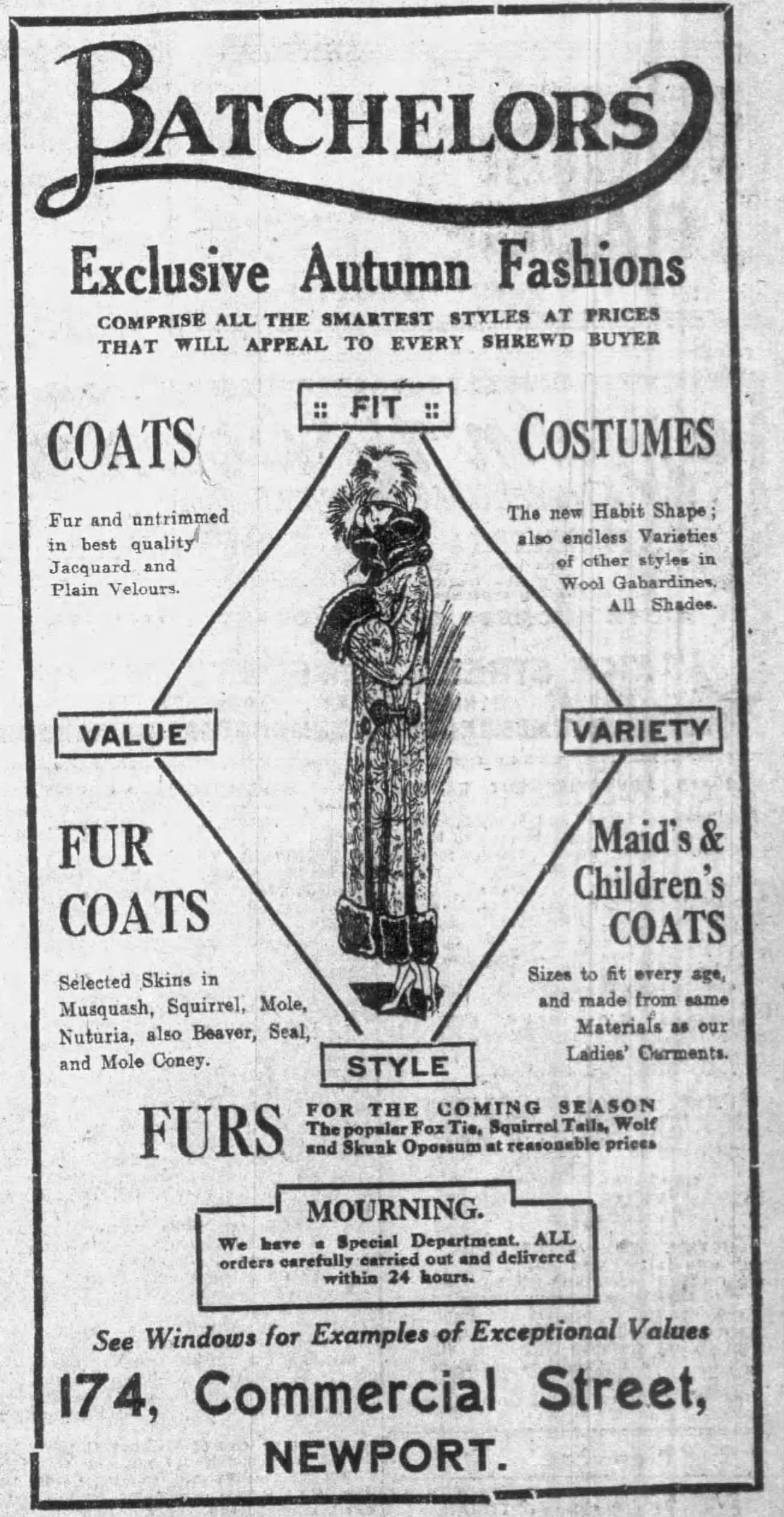
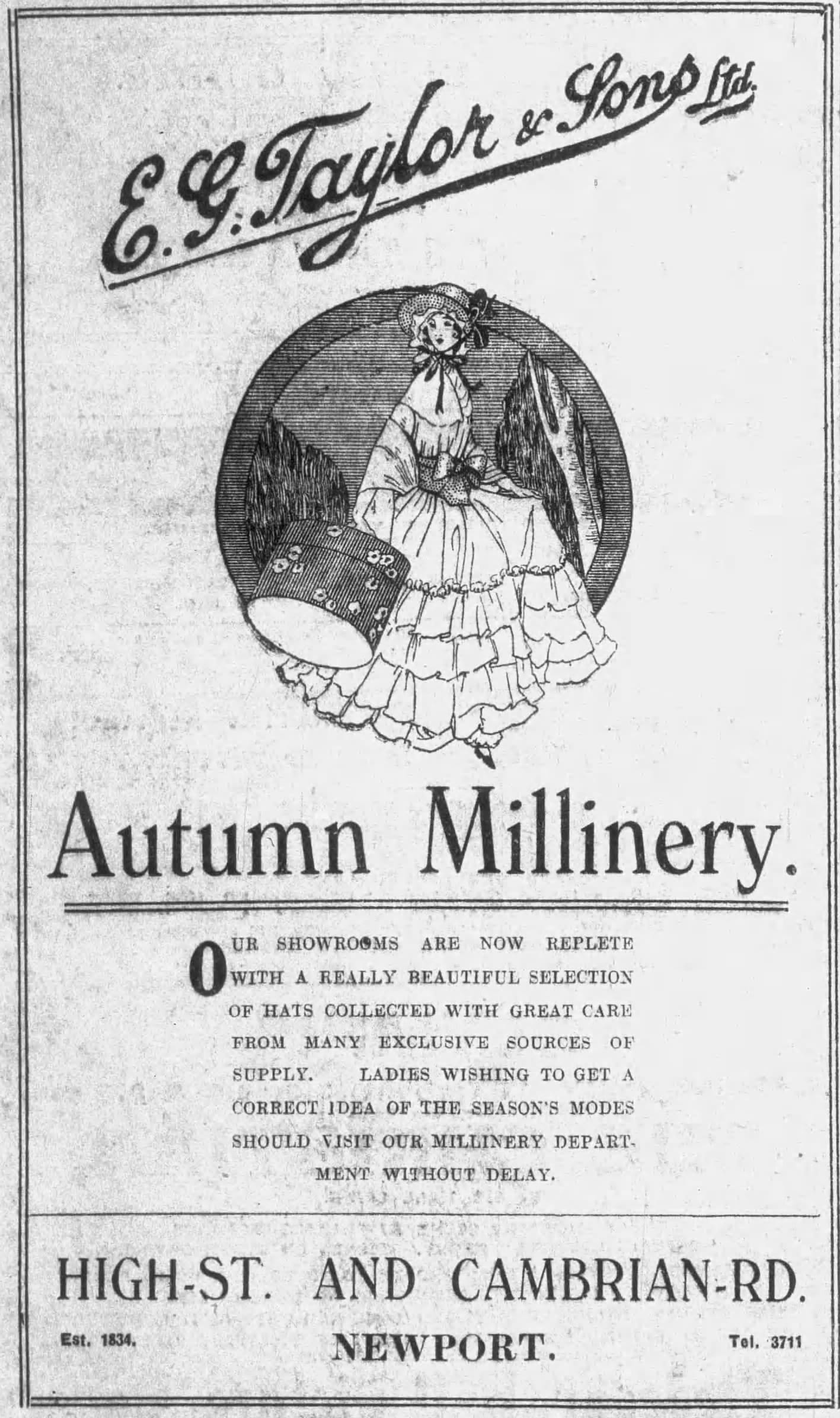
South Wales Argus, 2nd October, 1923 (Subscription Required)

Beerhouse Offence
William Carter, of the White Swan, Pontfain, was charged with opening his house for the sale of beer before one o'clock in the afternoon of Sunday, the 15th instant.
Mary Palmer, witness in the last case, went to defendant's house at half-past eleven in the morning of Sunday week, to look for her husband. She saw three men sitting in a room, one of whom was her husband, and she spoke to him through the window. In about a quarter of an hour he (the husband) went home; he was tipsy, and commenced abusing her.
Defendant passed shortly after, and she pointed out to him the state of her husband, and he said he could not help it, as her husband was not long in his house.
Defendant denied that any beer was given to Palmer, and called a young man, who said Palmer went into the defendant's house to show new potatoes. All the while he was in the house, he saw no beer drawn. He did not see that Palmer was drunk. The Bench cautioned defendant, and dismissed the case.
— Monmouthshire Merlin, 28th June, 1856
Assault
George Palmer, a constable of Christchurch, was charged with assaulting Mary Palmer, his daughter-in-law. On the 17th ult. complainant was in a neighbour's house, and the defendant came in, and ordered her off the premises. She would not go, and he dragged her out, and threw her down upon a stone heap. The Bench fined defendant 2s. 6d., and 12s. 6d. costs.
— Monmouthshire Merlin, 28th June, 1856
'Diseased Meat'
Henry Duckham was charged with having diseased meat in his possession. Inspector Williams said, on visiting Mrs. Piper's slaughter house, he saw a number of sheep hung up, two of them being unwholesome. The two diseased carcasses belonged to Mr. Duckham the others were the property of a man named Jones.
Mr. Duckham said he never sold meat, he was simply a dealer. The animals in question had been intended for food for pigs, and, in his absence, he being at Caerleon, had by mistake been taken from the place where they had been slaughtered to where they had been found by the inspector. He had now a number of diseased sheep in his possession, which he intended to kill for his brother's pigs.
The magistrates cautioned the defendant that he had no right to keep diseased meat in his possession but as the meat had not been offered for sale, and the defendant was not at home when the carcasses were hung up, he would simply be fined 10s., including costs. The carcasses were ordered to be restored to Mr. Duckham, to be applied to the purpose stated above.
— Monmouthshire, 27th July, 1861
"Telling Lies"
Ann Grace was summoned for assaulting Norah Macarthy. Complainant, who appeared in the witness box with a black eye, said on Thursday night the defendant threatened her for "telling lies" respecting her and subsequently she met her and knocked her down, and tore her hair off her head, in proof of which she produce a handful of hair. Defendant denied the assault, and said she could have no peace with complainant or her mother. A witness was called, and said there was regular fight; but she admitted that Grace struck the first blow. Defendant was fined 9s including costs, or seven days.
— Monmouthshire Merlin, 15th August, 1863
'Stealing Porter'
Thomas Morgan was charged with stealing eleven bottles of porter from the house of Evan Morgan. Prosecutor stated that he kept the Union Inn, Dock-street, and engaged the prisoner to assist in cleaning out the stores. On Sunday last he missed 12 or 13 bottles of porter. He searched for them, and found three in the manger covered with hay. He watched to see if any person came for them, and saw the prisoner about seven o'clock in the evening enter the house, and afterwards eaw him leave and go into the stable. The prisoner then left the stable, and he followed him to his house in Windmill-street, and saw the prisoner with one bottle of porter open on the table, and his wife and daughter partaking of part of it.
Asked him where he got it from, and he replied that it did not belong to him. He afterwards admitted that he had taken two bottles from the stable. He then sent for a policeman, and searched the bouse, and found eleven bottles in various parts of the house, five of them being full.
P.C. Comley said that he apprehended the prisoner about eight o'clock on Sunday night. Was informed that the prisoner had been stealing porter. He went to the prisoner's house, and saw the prosecutor with two bottles in his hand. Then searched the cupboards and found the bottles produced. The prisoner denied that the porter belonged to the prosecutor, and stated that he purchased them.
The Chief Superintendant said that he had known the prisoner for a number of years, and had always borne, as far as he knew, a good character. Committed for seven days.
— Monmouthshire Merlin, 15th August, 1863
Stealing Flowers at the Cemetery
Catherine Tafft, a married woman, living in Blewitt street, appeared to an adjourned summons, charging her with stealing flowers in the Newport Cemetery.
The Superintendent of the Cemetery (Edgar Pitson) stated that on the 25th ult. he met the defendant there, and noticed that her umbrella was rather bulky. Just after she passed witness observed her walk up to a rose tree and pick a full-blown rose. This she put into her umbrella, it, which the witness discovered a quantity of other flowers. She gave the wrong name and address, causing considerable trouble afterwards in finding her out. Cases of flower stealing were of frequent occurrence.
The defendant, who stated that some of the flowers were her own, was ordered to pay a fine of 10s., including costs. Mr. J. F. Mullock, as Clerk to the Burial Board, attended to prosecute, but did not press the charge severely.
— Monmouthshire Merlin, 4th August, 1882
Robbing a Sister
John Watts, a youth, was charged with breaking open a money box, and stealing about £2, money belonging to his sister. No one appeared to prosecute, and prisoner was discharged.
— Monmouthshire Merlin, 17th January, 1873
'Drunken Mailman'
Thomas Roberts a man employed by Mr. John Williams of Blackwood, mail contractor, to drive the mail cart from Blackwood to Newport, was charged with being drunk and thereby delaying the mails on the 11th January.
Mr. H. J. Davis said he had been instructed to conduct this prosecution on behalf of the Postmaster.
Thomas Thomas, a young man living between Bassalleg and Tydee [Risca] said between seven and eight on the evening of January 11th, he went outside his door and found the mail cart standing by the road.
The driver was leaning back on his seat fast asleep. Tried to awaken him and finding his efforts were useless, he got into the cart, and drove the mail to the Post-office, Newport, where he arrived at five minutes past nine.
Defendant was so helpless that witness had hold him on his seat all the way into town.
Mr. James Tait, postmaster, Newport, said on the night of the 11th January the Blackwood mail cart arrived at five minutes past nine instead of 8.22., and consequently was too late to send the letters on by the mail bags then being made up. Two hundred and forty letters were detained until the next day.
The defendant was an occasional driver in the employ of Mr. John Williams mail contractor, who suffered from bad health, and was not always able to drive the cart himself. Mr. Caleb Phillips also spoke to the delay of 240 letters owing to the defendant's misconduct, and Henry Stevens, letter carrier proved that the man was drunk when he arrived at the Post-office.
The extreme penalty for an offence of this kind is £20 or six months imprisonment. The Magistrates considered the case most conclusively proved and they fined defendant £5 or two months' hard labour.
If the money is not paid a distress warrant will be put in force, and if there should not be enough to make up the amount of the fine, defendant will have to go to prison. No time was allowed.
— Monmouthshire Merlin, 31st January, 1873


Member discussion