

Welcome to another issue of The Newport Cornucopia where we dig through the newspapers archives for interesting news articles and adverts. All articles are posted verbatim and most headlines are original (headlines in quotes are my own).

Child Dropping
On Tuesday night last, about nine o'clock, a labouring man in the employ of Chas. Morgan, of Ruperra Castle, Esq., M.P.. was sitting in his cottage, when he was disturbed by the cry of an infant, as he supposed, in the immediate vicinity. He arose without delay, and went out into the open air, when he observed a basket lying under his window, from which he soon ascertained that the cries proceeded.
On examining the basket, he found its contents to be a very fine male infant, well dressed, together with two good changes of apparel, and three remarkably neat caps. The poor cottager and his family treated the little foundling with kindness, and he is so well pleased with the helpless stranger, that he has expressed his determination to rear it up as his own, thus furnishing a pleasing instance of the generous feeling which characterises the peasantry of our country, and a very striking contrast to the heartless conduct of the cruel parents who abandoned their tender offspring to perish, or be supported by public charity. The infant remains under the care of the kind cottager.
— Monmouthshire Merlin, 26th November, 1842
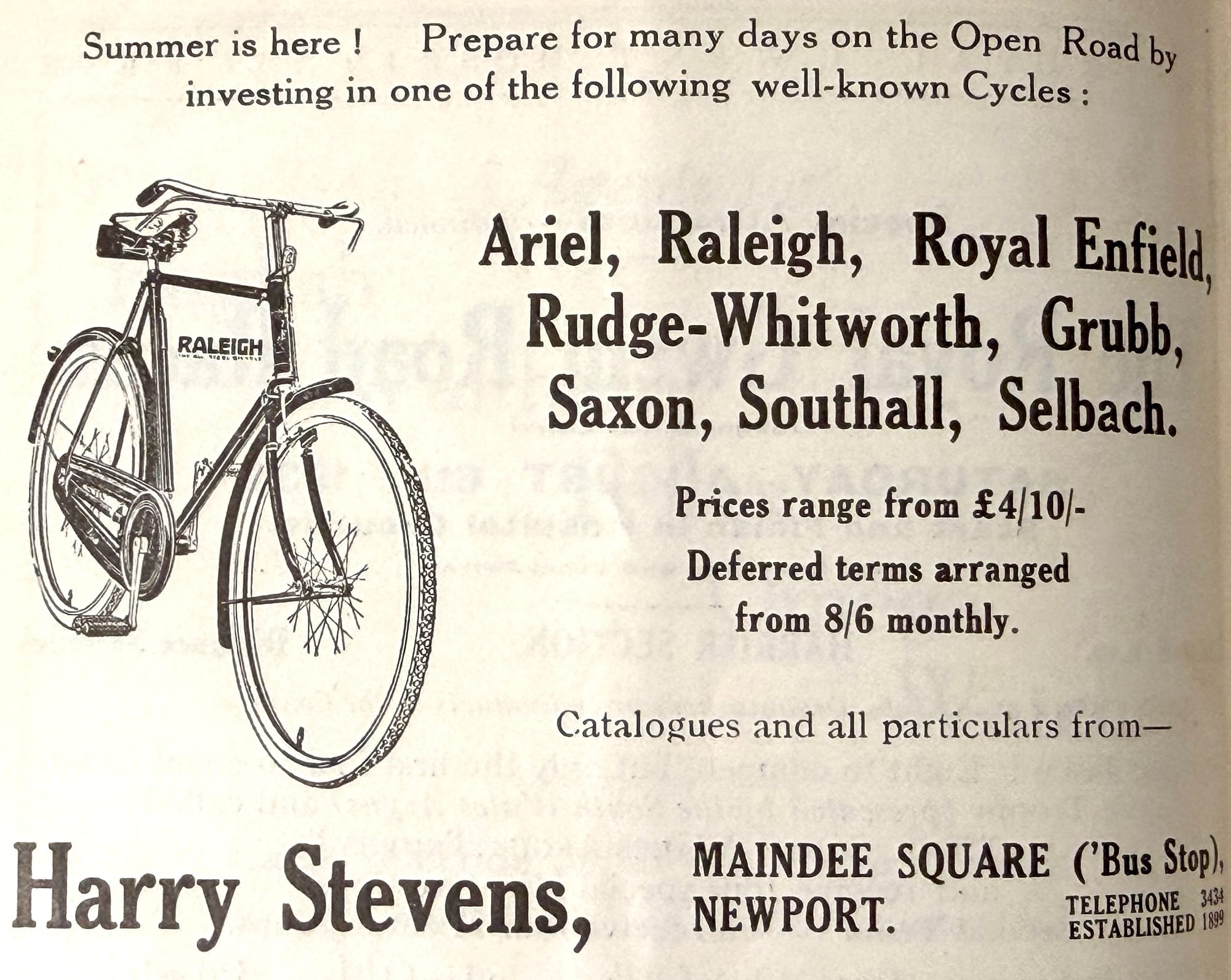
Double Bascule Bridge at Dos Forge
The photo below shows a 'double Bascule Bridge' at Dos Forge and was published in the History of the Monmouthshire Railway and Canal Company (Aubrey Byles) in 1982. It doesn't provide a date for the photograph.
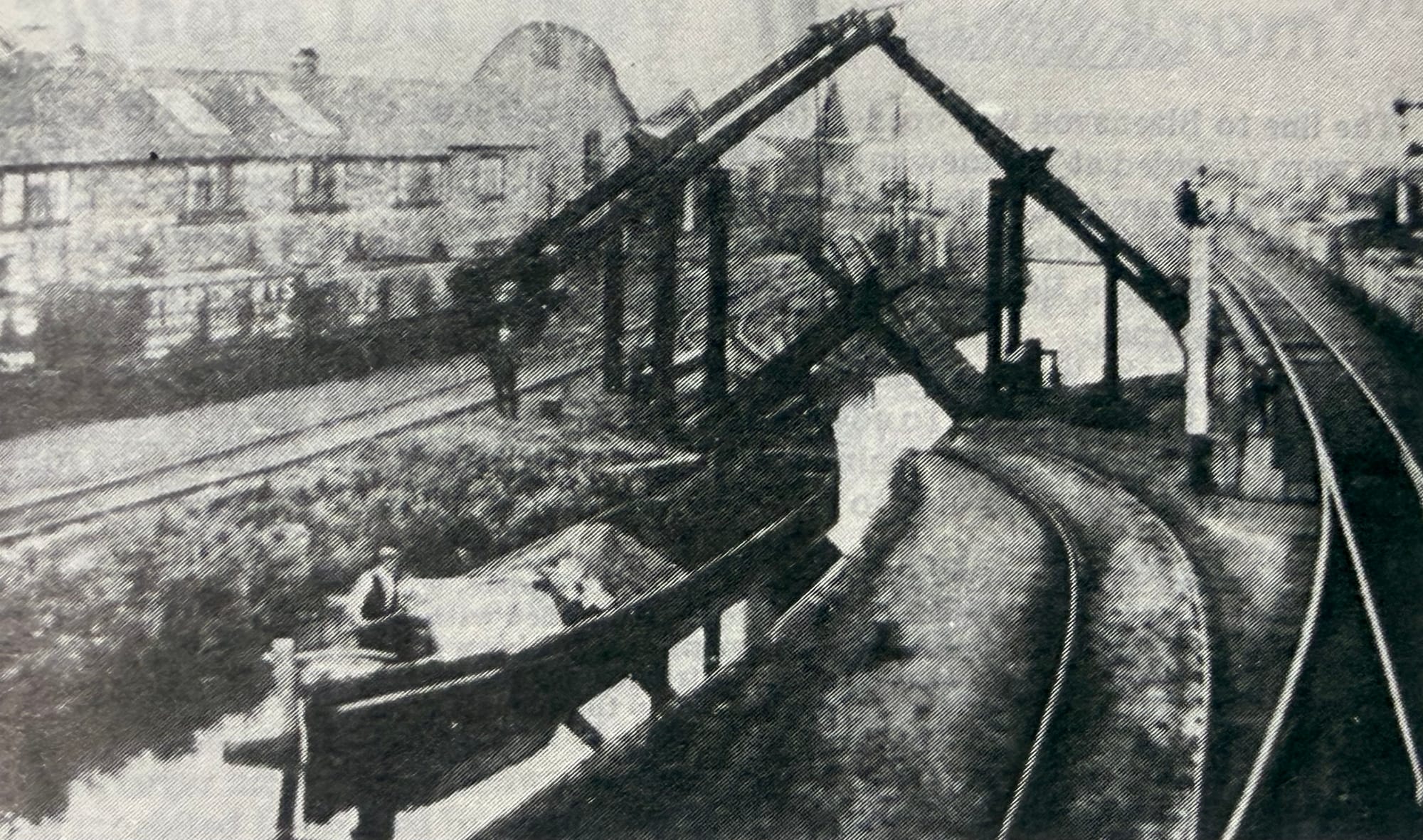
The maps below show the location of this bridge which would have allowed trains from the Dos Nail Works to cross the Monmouthshire and Brecon Canal and either use the sidings or head south to the docks or north to Pontypool. The approximate location is the slip road coming off the A4042 towards the Harlequin Roundabout.
Beer Allowance
In the same book that the photo above was published was a mention of a beer allowance for workers loading coal onto ships at the Ebbw Vale Wharf:-
The enterprising proprietors of the Ebbw Vale Co. had their own fleet of steamships moving iron and coal from their wharf at Newport. Between 1848 and 1849 self acting hydraulic coal hoists designed by Mr James Brown of Newbridge were installed at the Ebbw Vale Wharf. These machines were far more efficient than the antiquated coal hoists found at the other jetties, and they were capable of discharging 60 tons of coal per hour. The older method was to winch up one end of a tram manually to eject the coal. It was a dangerous practice, for the winches had no pawl or similar check to the lifting gear. If anyone accidentally let go of the handle, it would fly around inflicting fatal injuries to those standing near. With the touch of a lever by the operator, the new machine would raise the wagon and tip the coal down a chute into the hold of the ship.
At the other jetties, the men employed to load ships with coal worked in gangs of eight or twelve depending on the size of vessel or manner of loading. The gang was divided into two, shippers and trimmers. The shippers were those responsible for putting the coal through the hatchway, and the trimmers were those who carried the coal from where it had been tipped, and distributed it evenly in the hold. The hot choking air inside was so thick with coal dust that the trimmers could hardly see through it. Their throats were so dry, that no one could work without plenty to drink.
To remain competitive, and to encourage the men to work at preparing the ship for the turn of the tide, captains paid a bonus to the gangs over and above their wages. This was not paid in cash, but in beer amounting to 5/- per 100 tons, shared between the gang, sufficient to purchase 28 pints of beer between them. The average tonnage loaded by each gang was 120 tons per day, and they often remained drinking after their work was done. No wonder there was so much drunkeness at the quayside.
Referring to this practice, a write of the press commented:
Can we wonder at the existence of drunkeness, pauperism and misery? Wives and children, who according to the wages husbands and fathers get, ought to be the most comfortable of working people, are amongst the most wretched — worse clothed — worse housed and worse fed than those of many sober labourers who have not more than 10 /- per week, though the average wages of the dockers are double that.
— Source: The History of the Monmouthshire Railway and Canal Company
What to Buy at Cordey's in 1879
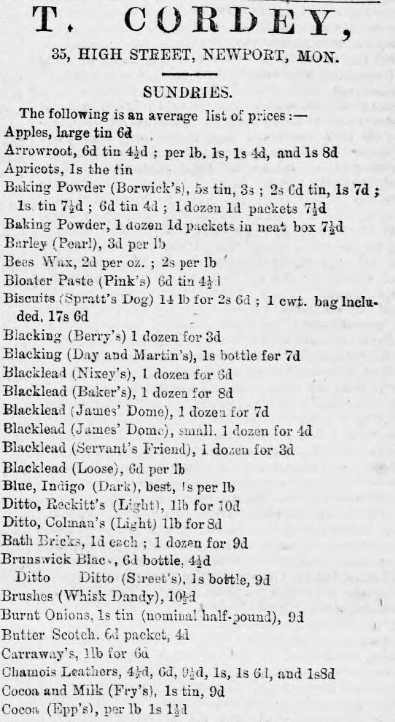
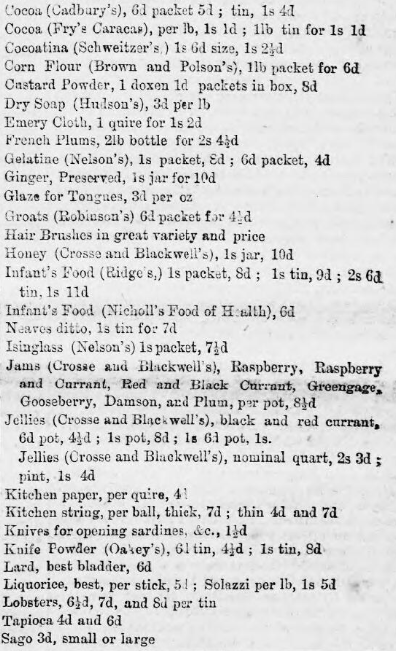
This price list for T. Cordey, located at 35 High Street, Newport, provides a fascinating snapshot of Victorian domestic life in 1879. The inventory is heavily weighted towards household maintenance and convenience foods, reflecting the era’s preoccupation with cleanliness and the growing accessibility of mass-produced, branded goods.
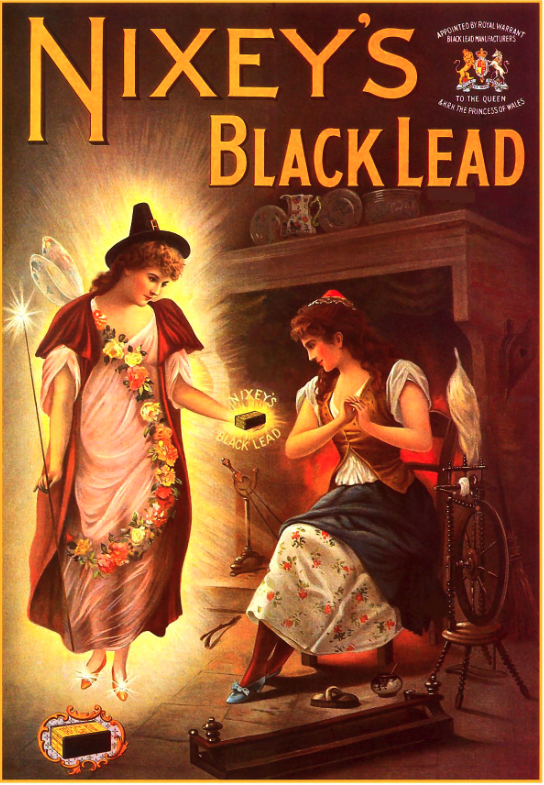
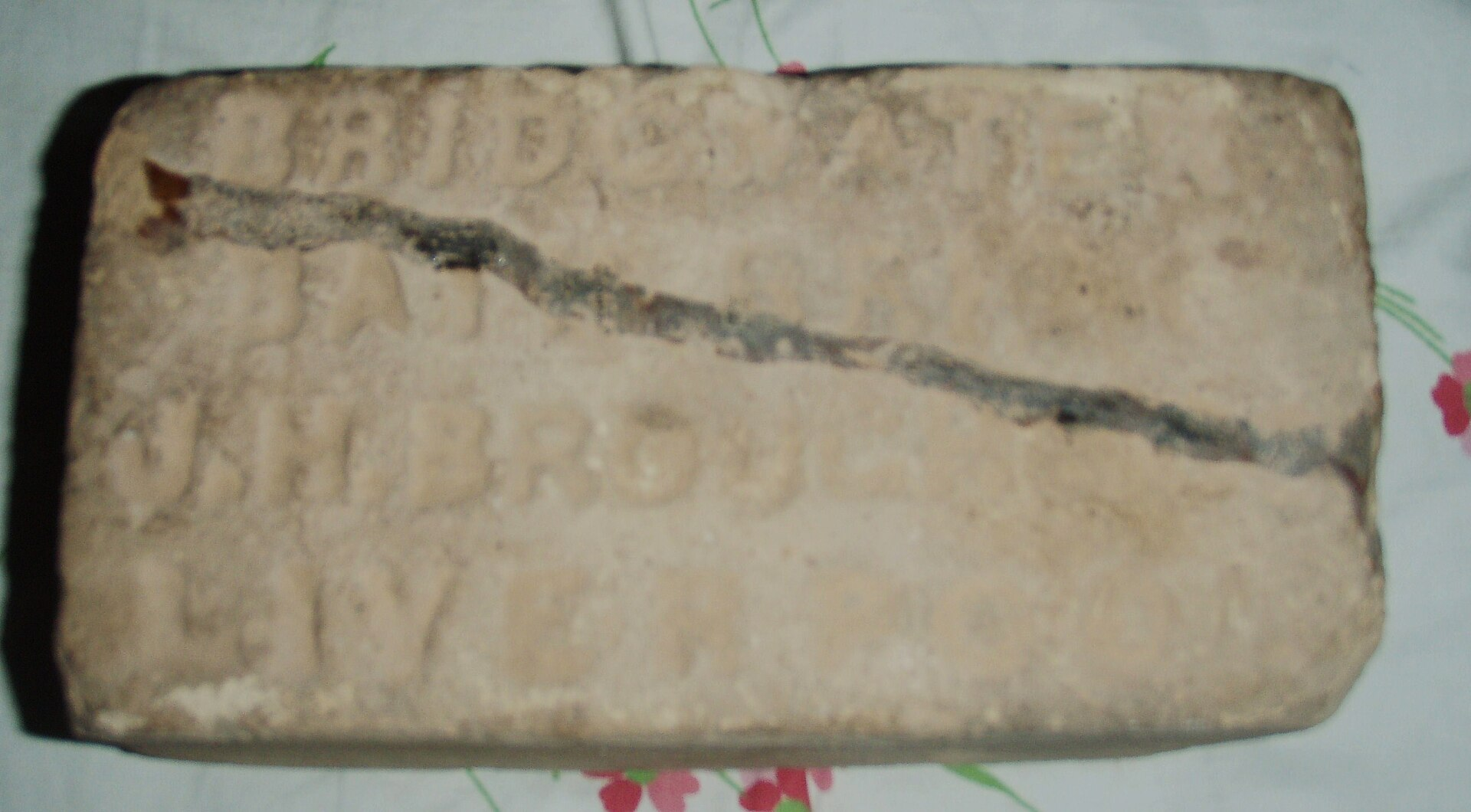
The prominence of "Blacklead" (various brands like James’ Dome and Nixey’s) and "Blacking" (for leather) highlights the labour-intensive nature of maintaining a Victorian home. Blacklead was essential for polishing cast-iron stoves and grates, while blacking was required for the constant upkeep of leather footwear. The list also includes "Bath Bricks," which were abrasive scouring blocks used for cleaning knives and hearths, and "Emery Cloth," used for polishing metal, further underscoring the manual effort required to keep a household in presentable order.
The selection of food items reveals a transition toward branded, shelf-stable products. Brands like Borwick’s Baking Powder, Fry’s Cocoa, and Crosse and Blackwell (jams and jellies) are featured prominently, showing that these names were already establishing market dominance. Other interesting items include:
- Glaze for Tongues: A culinary product used to finish cooked, cold ox tongues, giving them a smooth, glossy, and appetising appearance for presentation on a dining table.
- Groats: Hulled, crushed grains—usually oats—often used to make a nutritious, thick porridge or gruel for children or invalids.
- French Plums: Listed as a pantry staple, these were dried or preserved prunes (often from the Agen region of France) rather than fresh fruit, making them available year-round regardless of the season.
The inclusion of "Infant’s Food" by brands like Ridge’s and Neave’s points to the emerging commercialisation of childcare products, offering alternatives to traditional homemade paps. Overall, T. Cordey's inventory highlights how Victorian grocers were moving away from selling only raw bulk goods toward offering processed, packaged, and imported items that saved the housewife time in the kitchen.

Alleged Duck Shooting
James Hodgkinson, Humphrey Jones, Albert Solomon, Joshua Pope, and Edward Merchant, were charged with shooting two ducks on the river Usk, at Caerleon, on the 24th ult. The three defendants, Hodgkinson, Jones, and Solomon, for whom Mr. David appeared, had been before the Court twice previously on this charge, but had been remanded, in order that Pope and Merchant might be apprehended. P.S. Evans now said that on the 24th of April, he saw a boat arrive at the landing stage near Newport bridge. Saw a bag in the stern of the boat, and asked Pope what it contained; he said "Nothing."
Pope placed the mouth of the bag over the side of the boat, and gave it a shake, and about a minute afterwards witness saw a dead duck floating down the river. The defendants Pope and Merchant pleaded guilty to shooting a duck each.
Mrs. Young, to whom the ducks belonged, said she did not wish to press the charge. Pope and Merchant were fined 5s each and costs, and ordered to pay 3s the value of the duck. The other defendants were discharged.
— Monmouthshire Merlin, 16th May, 1879
Theft of a Watch and a Pair of Cuffs
Annie Manders was charged with stealing a silver watch and a Pair of lady's cuffs, the property of George Brown. Prosecutor's wife said prisoner came to her house, 6, Vaughan-terrace, Maindee, about 11 o'clock on Friday morning, to pay a shilling that she owed witness. She remained there about an hour. Prosecutor was removing his furniture to Pontypridd, and the prisoner helped to carry a few things out of the house. Soon after that, prosecutor missed his watch from the kitchen, and asked prisoner about it. She denied having had the watch,tbut afterwards admitted taking the watch off the nail, and placing it behind the window shutters. Went to the house and found the watch behind the shutters. The cuffs were found in prisoner's pocket. The case was not pressed, and the Bench sentenced prisoner to one day's imprisonment.
— Monmouthshire Merlin, 16th May, 1879
Serving a Drunken Man
Charles Jones was summoned for permitting drunkenness on his licensed premises, the Bunch of Grapes Inn, High-street. Mr. A. H. Oliver defended. Inspector Wilcox said that on Saturday, the 3rd inst., at 8.50 a.m., he saw a man named Sheedy going along High-street in a very drunken state. Witness saw him enter the Grapes public-house, and on following him he saw half-a-pint of beer before him. He was trying to get the money out of his pocket to pay for it.
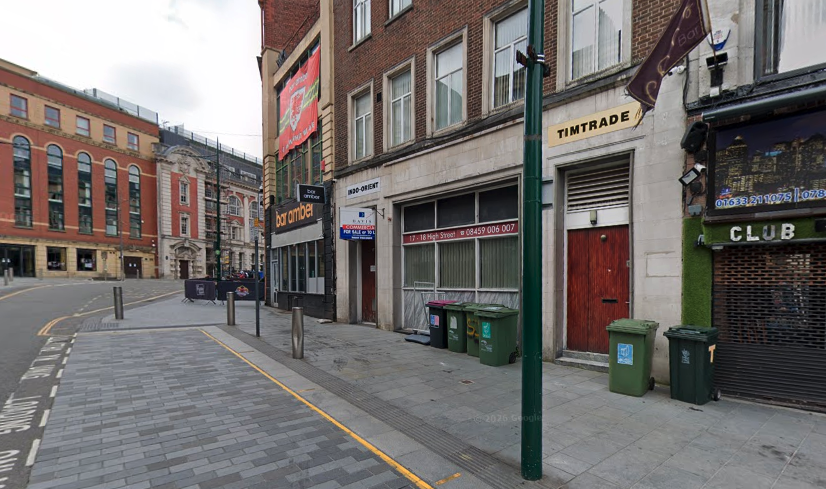
Witness asked the landlady if she had served the man. She said, "It's all right; I don't see anything the matter with him." She, however, took away the beer, and the man left. The landlord was in the bar at the time.
P.S. Brooba gave similar evidence. Mr. Oliver said the man Sheedy entered the house when the defendant was very busy, and his drunkenness was not noticed by the landlord or the landlady. The defendant said that Sheedy came into the bar while he was in the parlour. As soon as Inspector Wilcox told him the man was drunk he put him out. Sheedy did not exhibit any signs of drunkenness in the bar.
Kate Jones, defendant's wife, said she saw Sheedy in the bar, and served him with the beer spoken of. She did not see him enter, and did not notice that he was drunk. The Chairman said the case had been proved, but it was not a strong one. In consequence of the good character of the house, defendant would only have to pay the costs, and the license would not be endorsed.
— Monmouthshire Merlin, 16th May, 1879
Keeping Unlicensed Dogs
George Pyne was summoned for keeping a dog without a license. Defendant said the dog was not six months old. The case was adjourned for a week to give him an opporunity of proving what he stated.
Timothy Carroll was summoned for the same offence. Defendant's daughter appeared in Court, and sand the dog had been left with her by a woman who promised to call for it on the following week. The Magistrates' Clerk: That makes you liable. Fined 1s, and advised to take out a license at once.
Thomas Shelley charged with the same offence, said the dog did not belong to him, but he had drowned it all the same. (Laughter). Case dismissed.
Henry Harding, summoned for a similar offence, said his dog would be six months old at the end of this month, and got off in the same way.
— Monmouthshire Merlin, 16th May, 1879
Till Robbery
George Harris was charged with stealing 3s from a till in the shop of William Gould, Marshes-road. P.C. Baker said he apprehended the prisoner. When charged he said he had only 4d. Searched him and found the 3s in his waistcoat pocket.
Rosa Stirley said the prisoner came into prosecutor's shop to ask for assistance. She gave him nothing and he went out. After that, heard the till open and found the money gone. Prosecutor said he was told of the occurrence spoken of, by last witness, and went out to fetch the prisoner back. He then called in the police. Prisoner pleaded guilty, and elected to be dealt with summarily. The Bench committed him to two months' hard labour.
— Monmouthshire Merlin, 16th May, 1879
Stealing a Tame Rabbit
William Collins a youth, was charged with stealing a tame rabbit, the property of Henry Jeeno, of Christchurch, on Saturday morning. Prisoner admitted having taken the rabbit, but said he had seen it in the field, and that he did not know whose property it was. Committed to one day's imprisonment.
— Monmouthshire Merlin, 7th June, 1878
Taking Too Many Kidney Beans
John Bautield was charged with damaging growing kidney beans, the property of William Thomas. It appeared that complainant had sold or given some of his kidney beans to the defendant, and the "bone of contention" was whether defendant had taken more than he had bargained for. The Bench considered that there was no case. Dismissed.
— Monmouthshire Merlin, 7th June, 1878
1842 Fines
Back in 1842, the residents of Newport who found themselves on the wrong side of the law, not only had to go through the process of appearing in front of the magistrates and if they're lucky only receiving a fine, they also had their name printed on the front of the Monmouthshire Merlin.
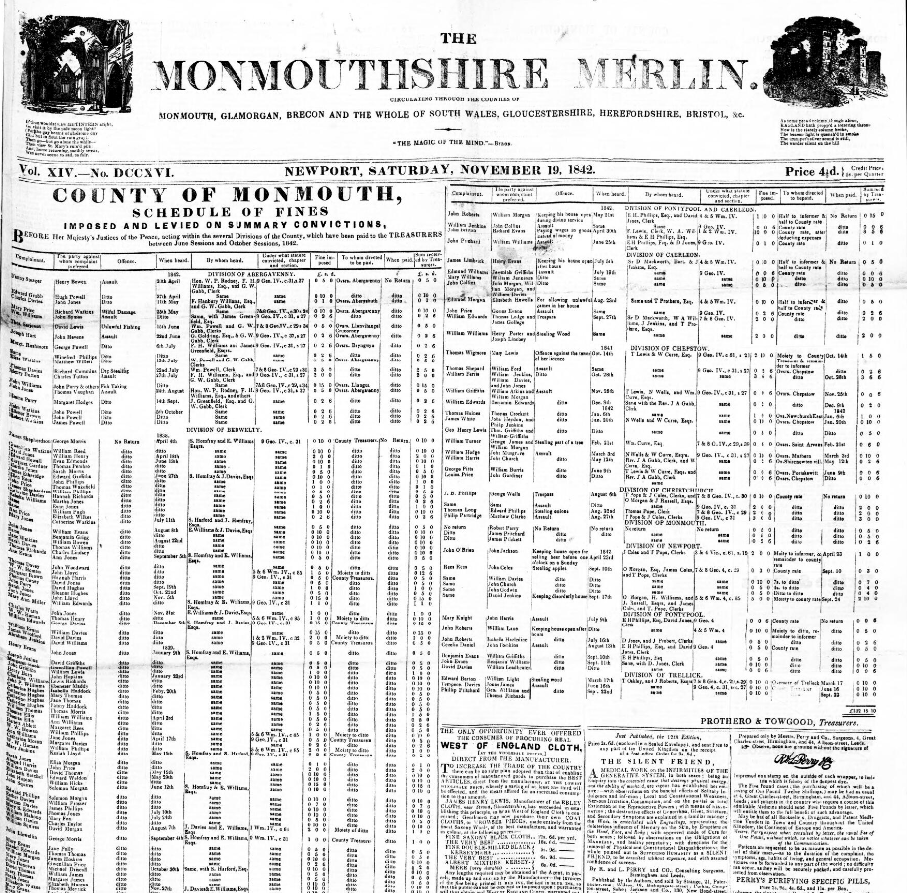
In this example from 19th November, 1842, the fines were from the Sessions of June to September and compared to other areas, there were relatively few fines. Compared to police reports in the papers of the time, this seems quite a low number so perhaps they didn't cover fines imposed in Magistrates court only by the Justices of the Peace.
There were only three crimes listed which were selling beer early on a Sunday, stealing apples and keeping a disorderly house.

For Sale: Yewberry Cottage, Malpas
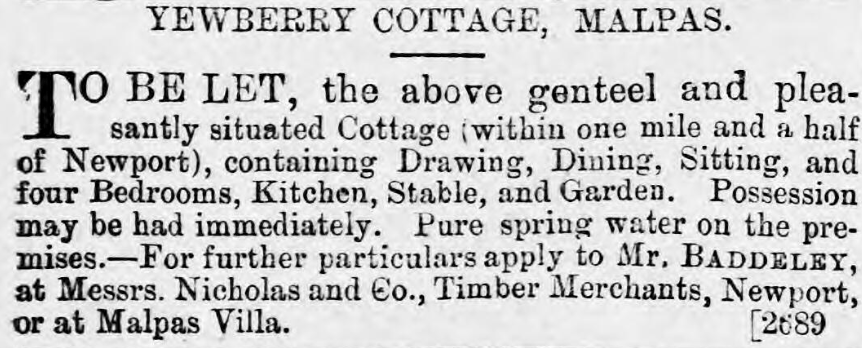
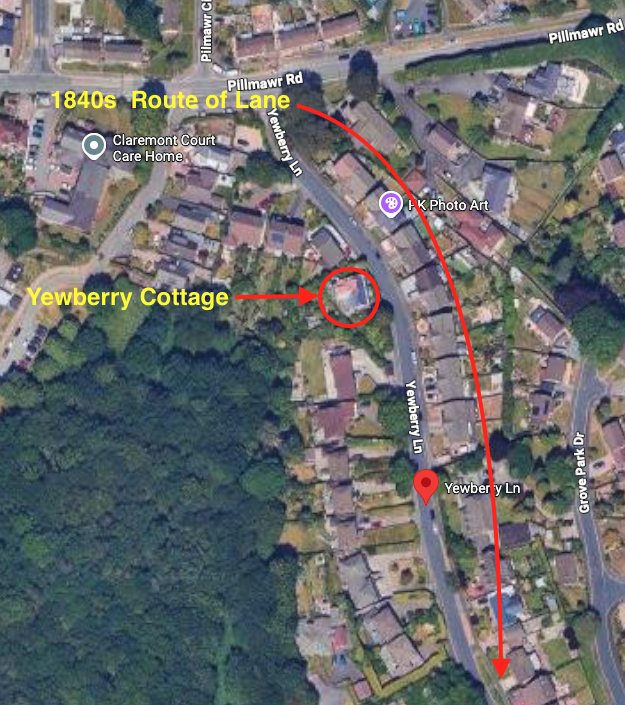
In 1879 an advert was posted for Yewberry Cottage which was a 'genteel and pleasantly situate cottage' with pure spring water on the premises.
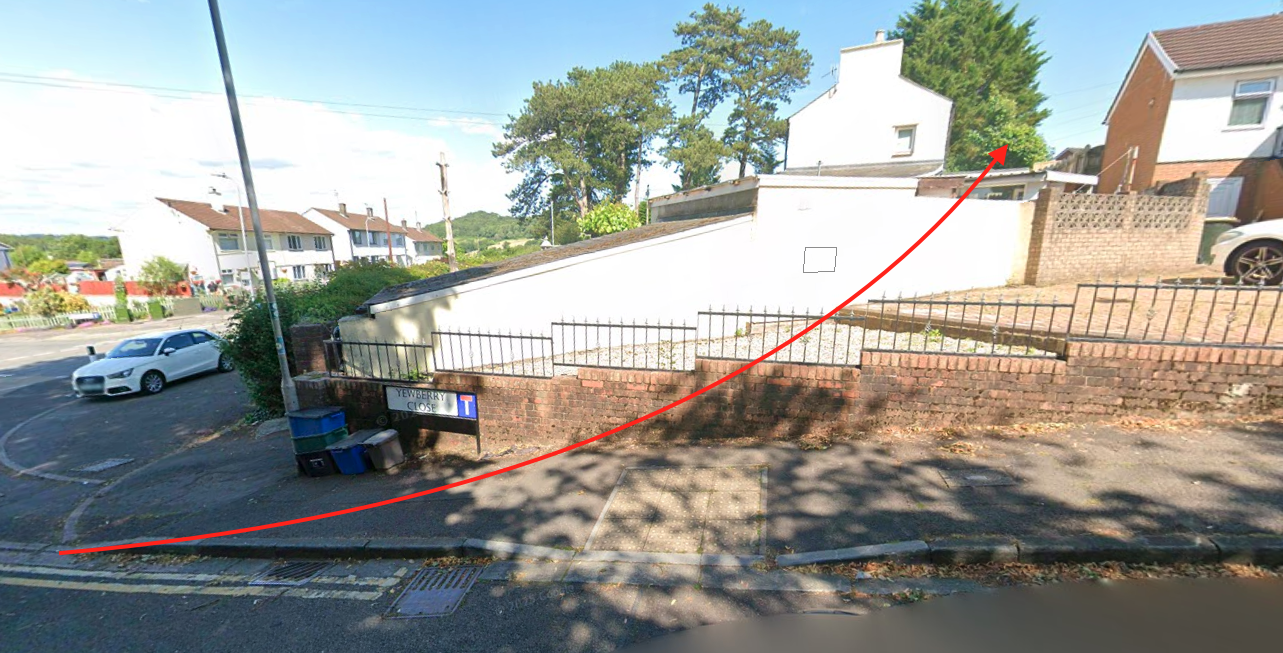
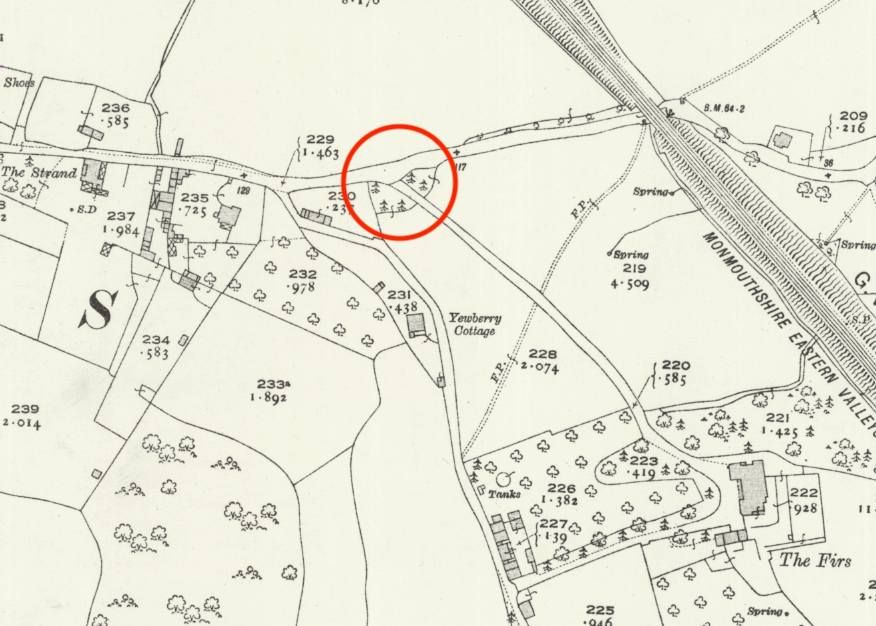
In the 1840 tithe map (see below) the cottage wasn't present although one was nearby. I don't believe they're the same cottage. It seems that Yewberry Lane didn't exist as it does today but was a lane that was slightly further east that led to both Brynglas House and The Firs.
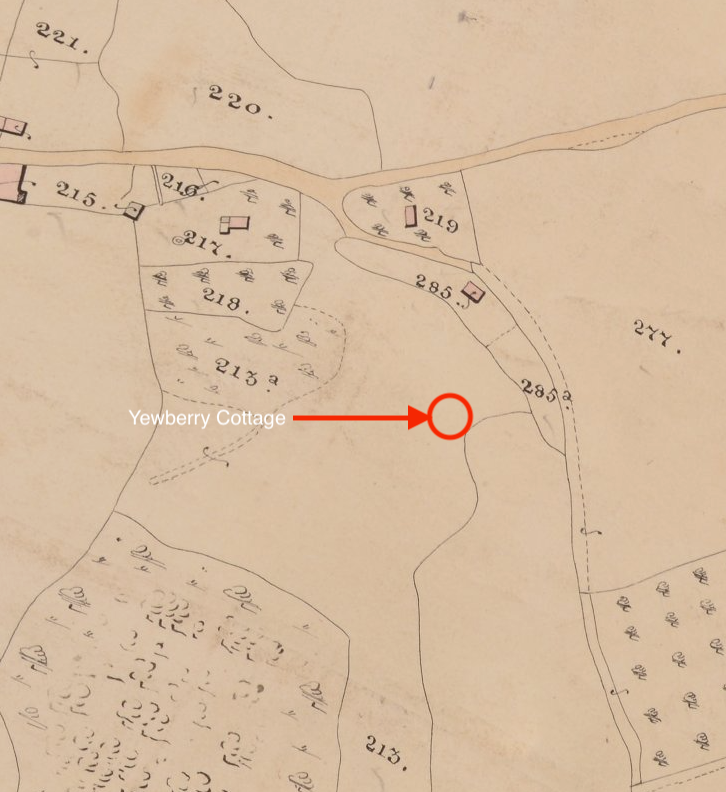
1840s Tithe Map showing the original route of the lane.
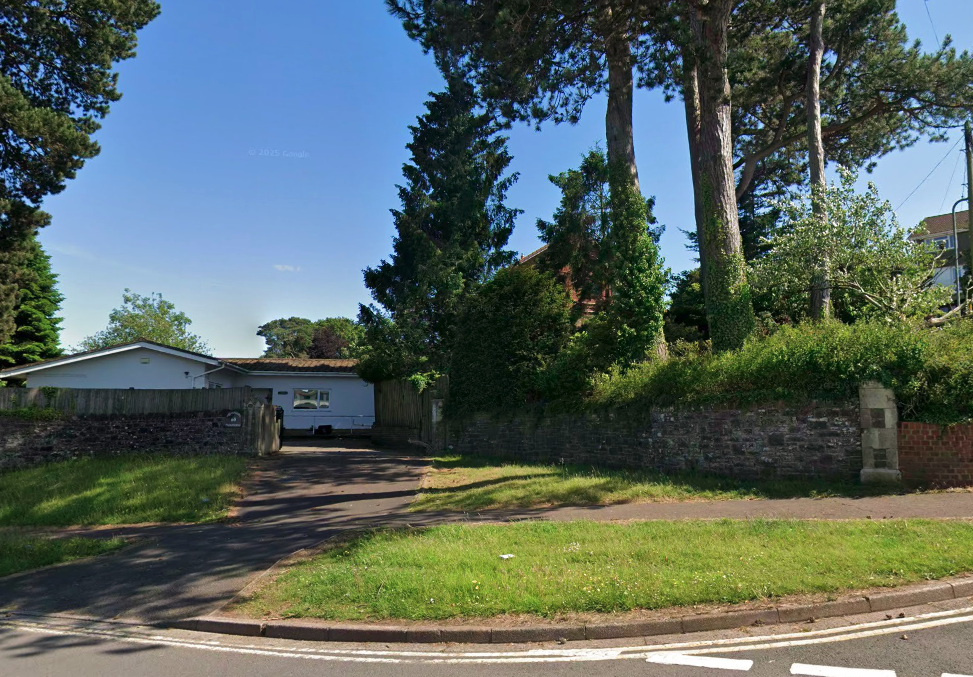
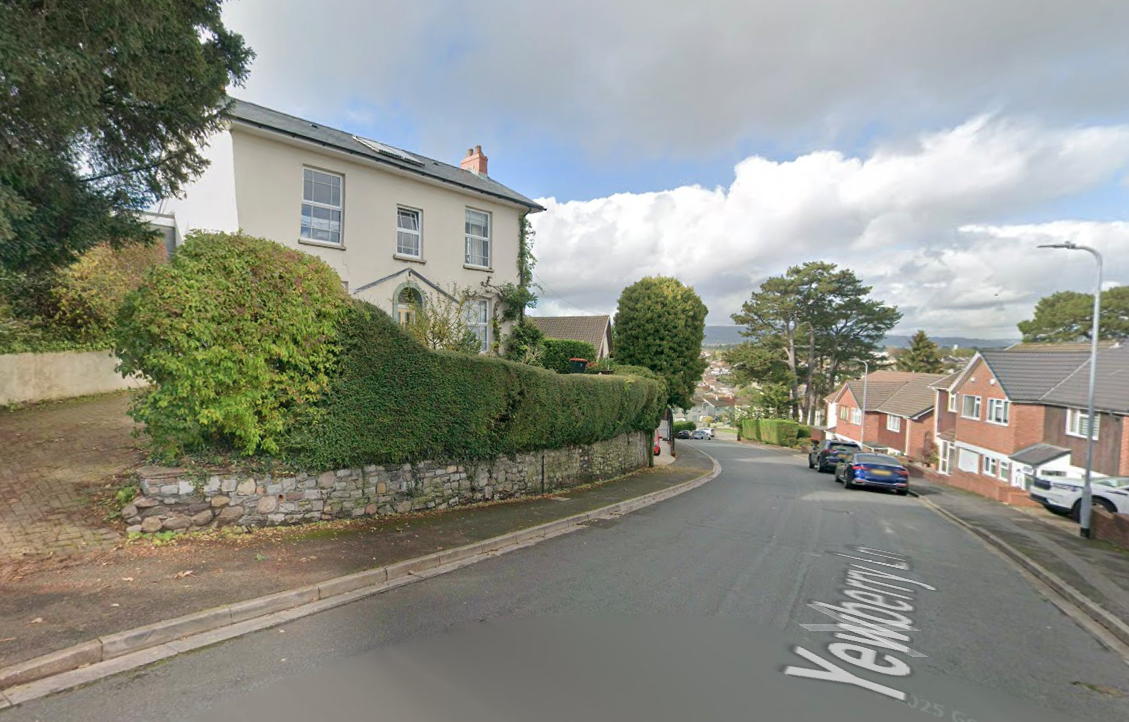
The Firs eventually got it's own driveway and Yewberry shifted a little west to its current location although the entrance was actually more were Yewberry Close is today and went behind the house you see in the photo below.
The driveway entrance to The Firs can still be seen today on the corner of Yewberry Lane.
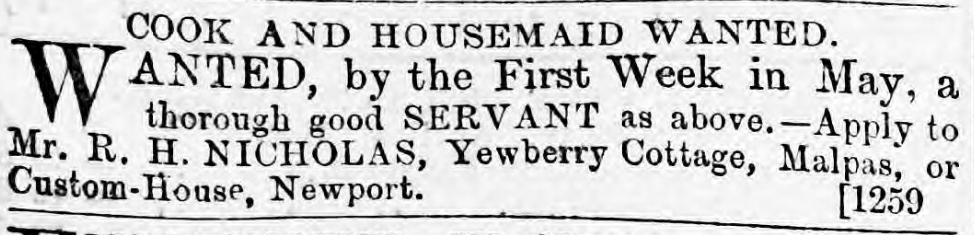
I'm not sure when Yewberry Cottage was built an advert for a cook and housemaid was posted in the Monmouthshire Merlin in 1857. The advert was posted by Mr R.H. Nicholls who worked at the Custom House.
William Jones, 159 Commercial Street
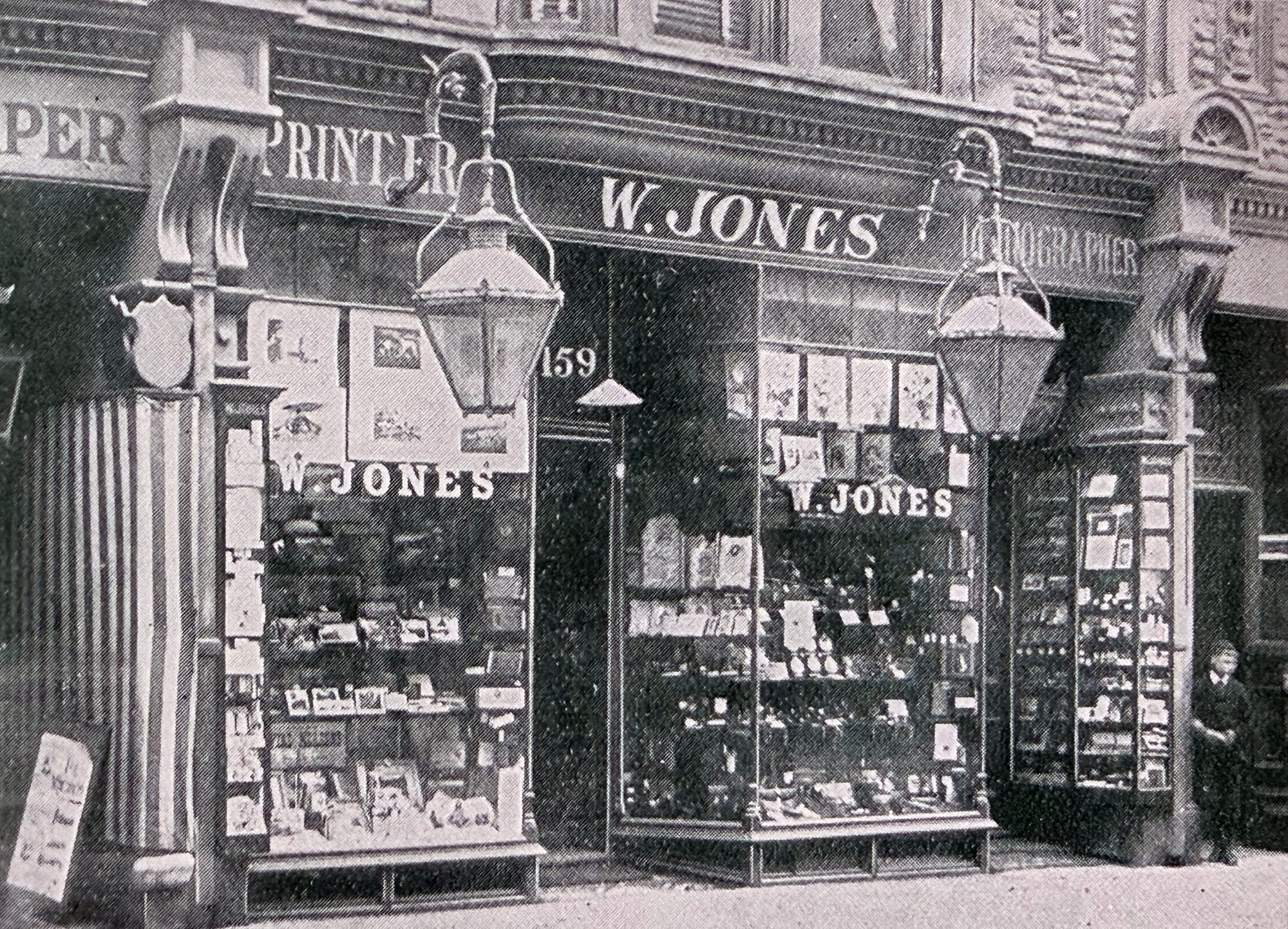
Today, 159 Commercial Street is the home to Waterstones book shop and in the past it's been Ottakar's book shop, Superdrug, a butchers and way back in the 1870s an ironmongers.
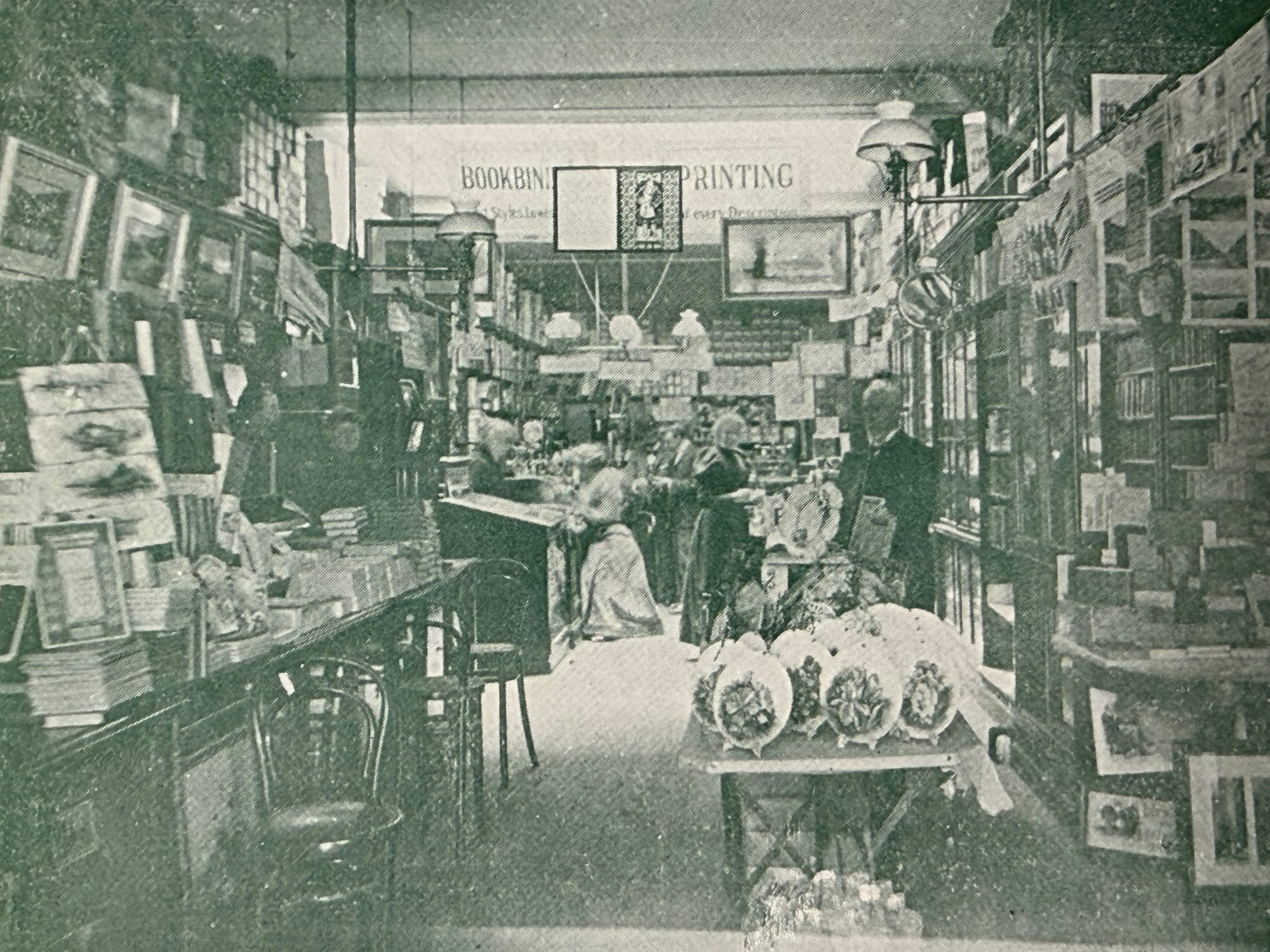
Between 1879 and 1929 it was home to William Jones who ran a 'stationery and fancy warehouse' selling all types of stationery, photographic albums, books and leather goods.
One of the earliest mentions I could find in the Monmouthshire Merlin was in September 1879 when a concert was being held at the Royal Albert Hall (not far from the shop) and those interested could see seating plans in the shop and purchase tickets.
The shop remained in the same location until 1929 when then the business was discontinued and the stock sold at half price.
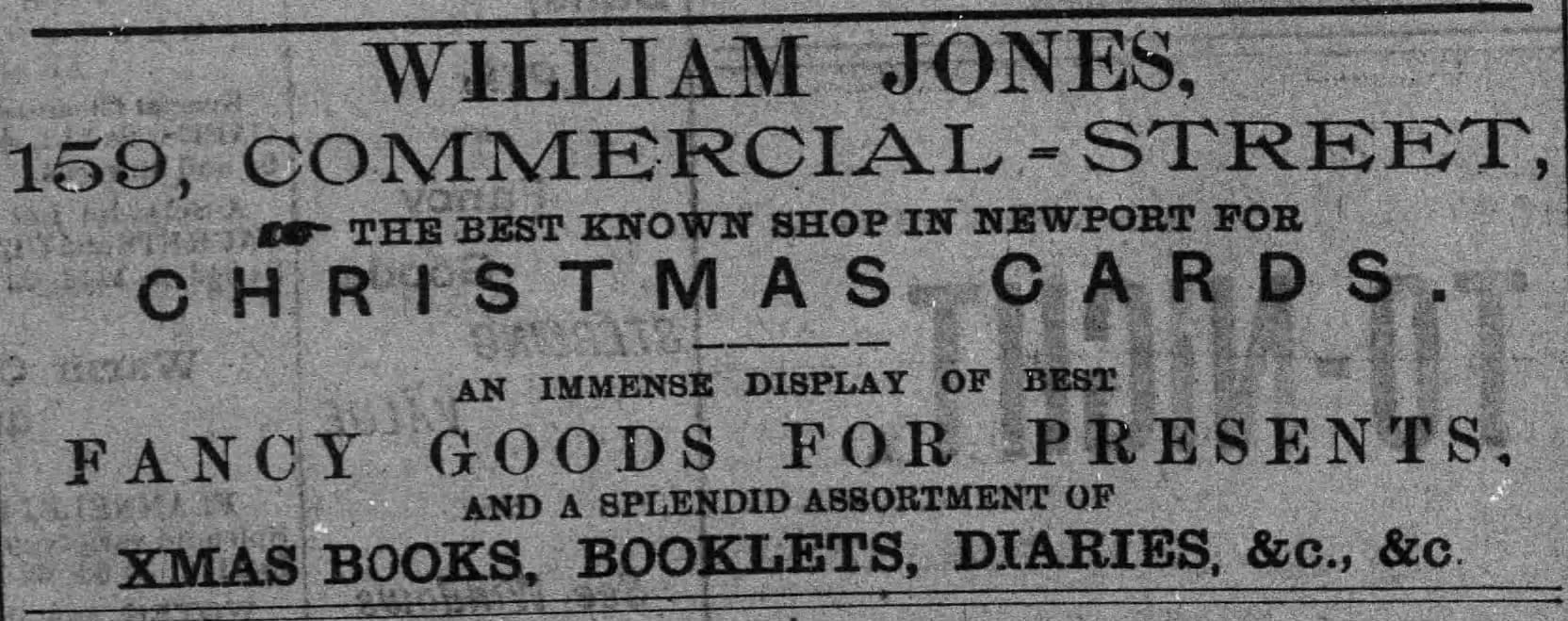
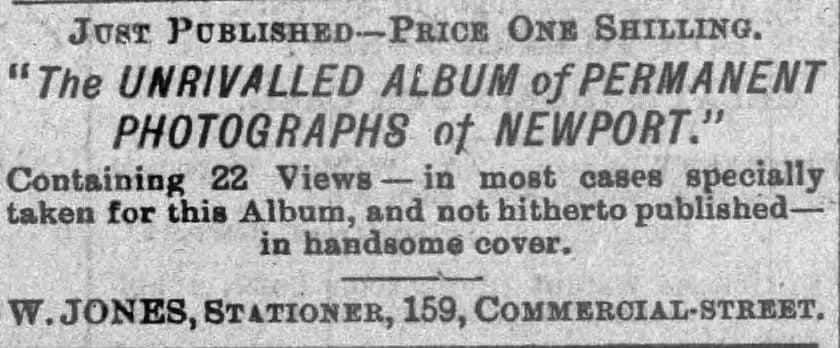
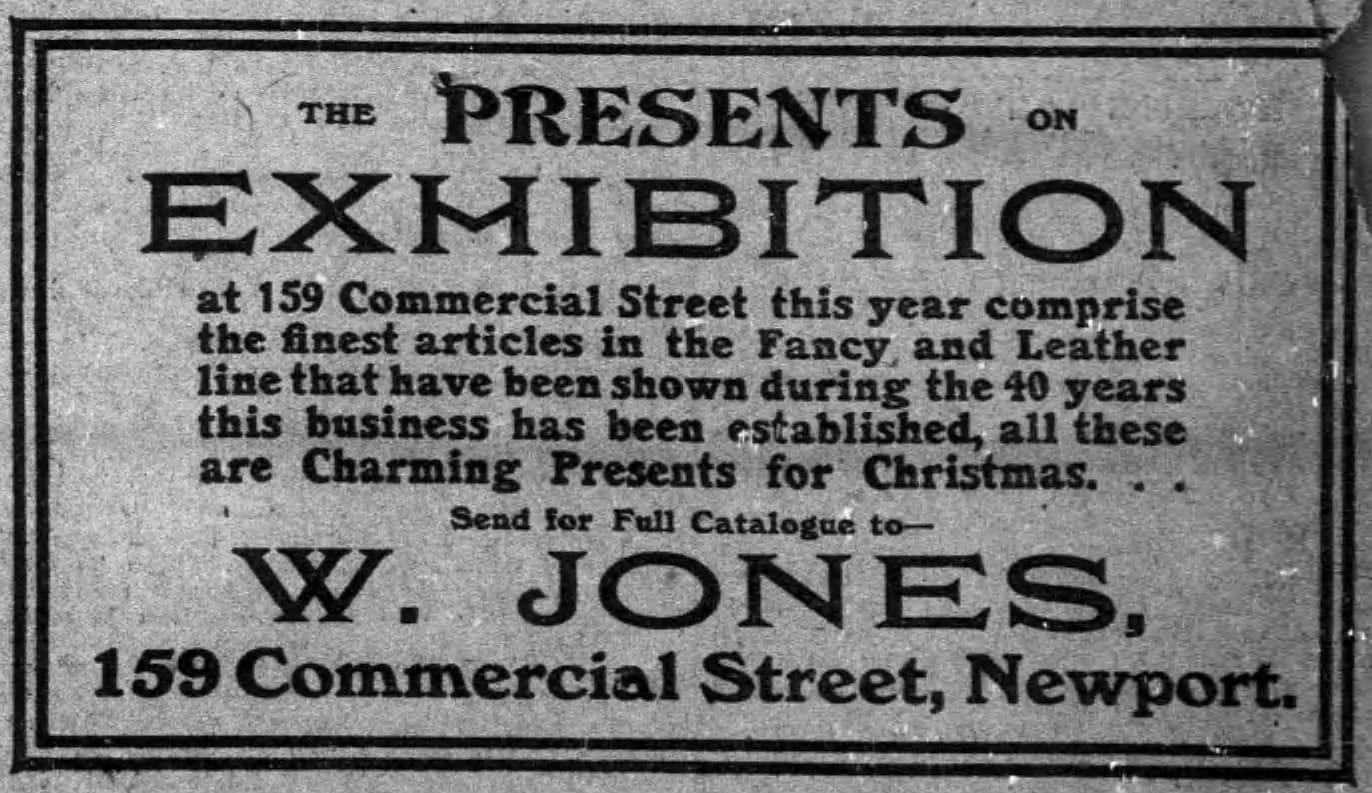
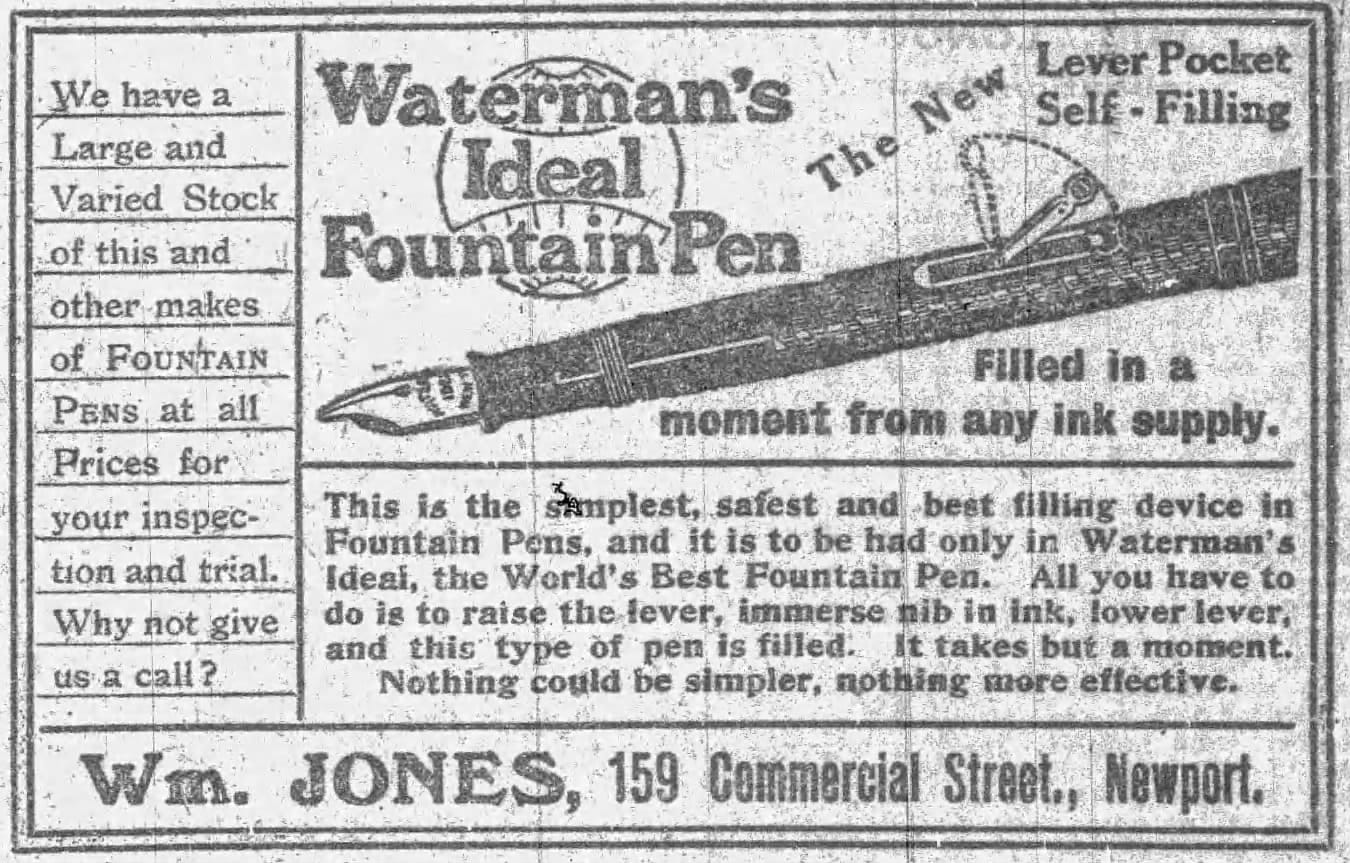
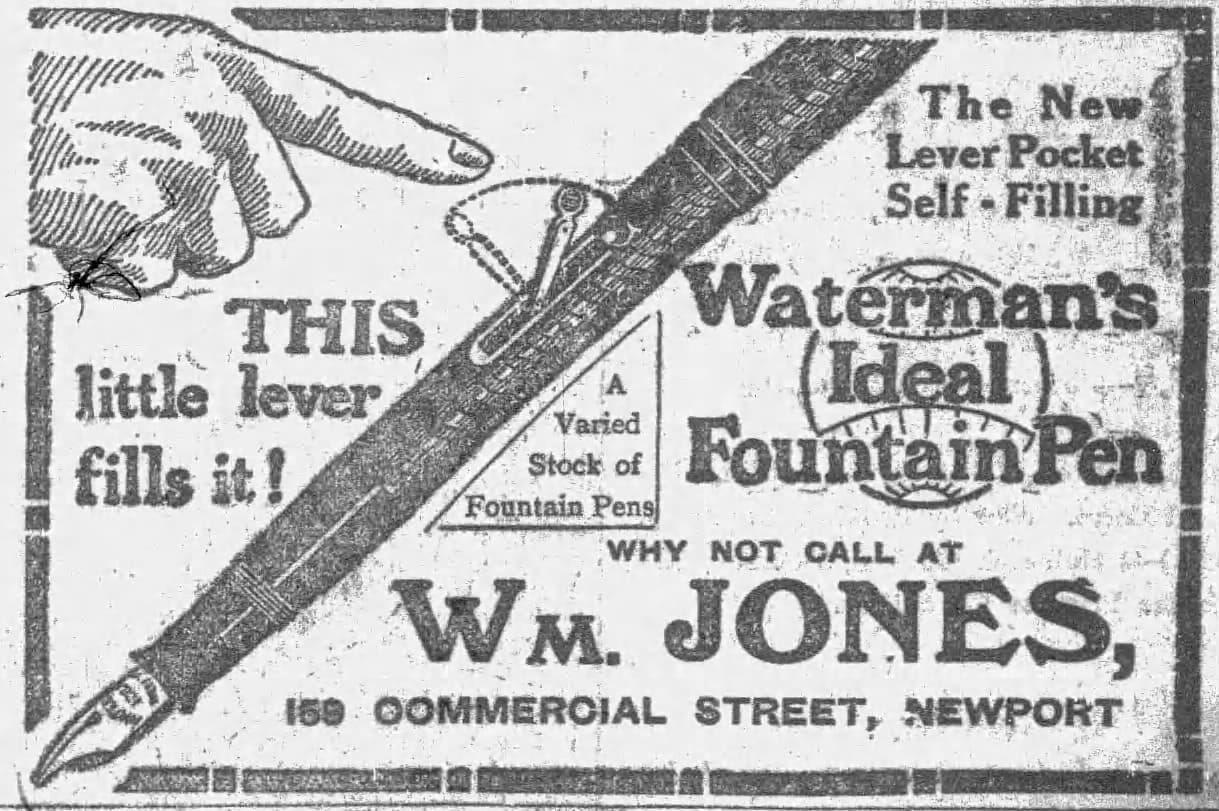
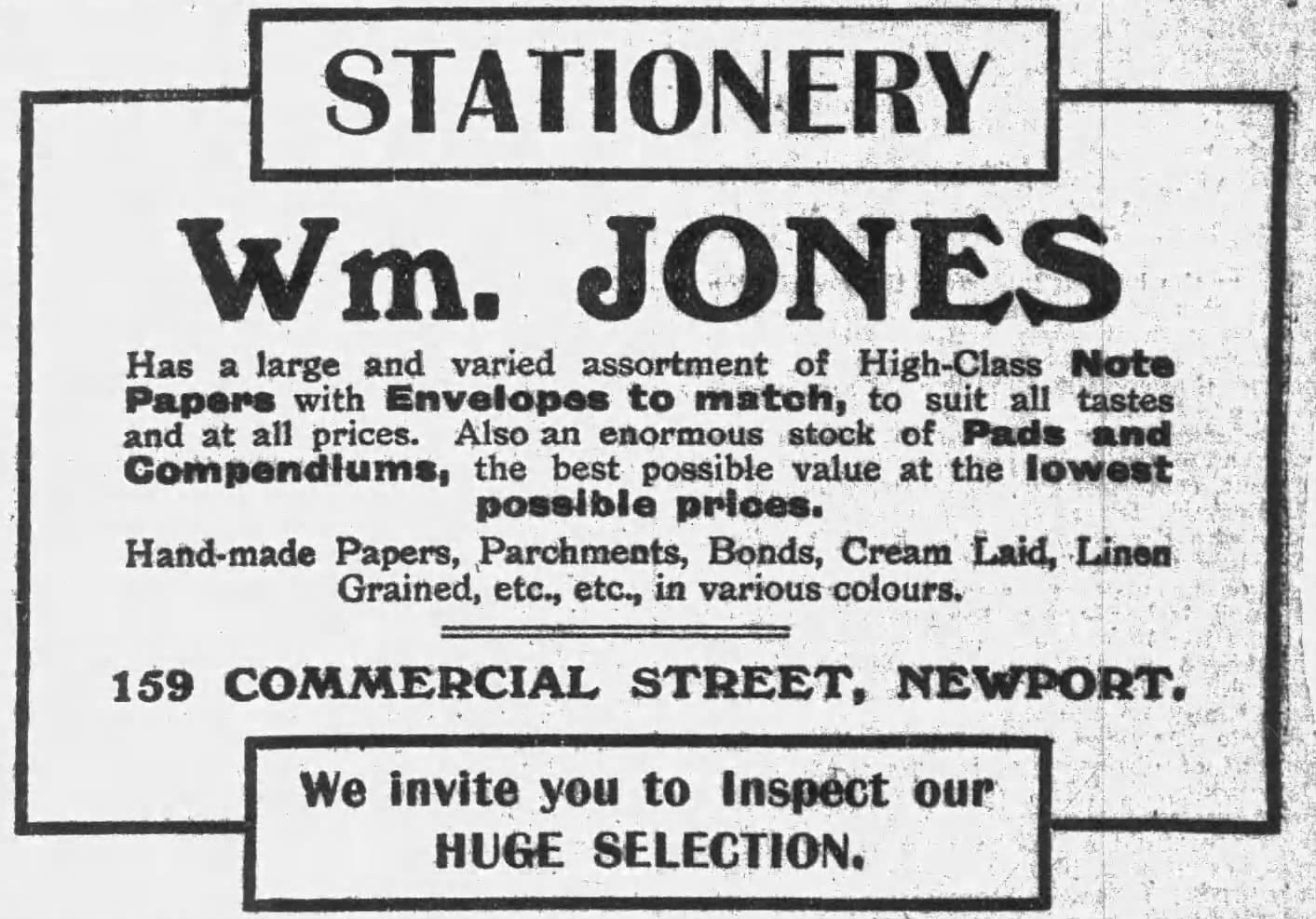
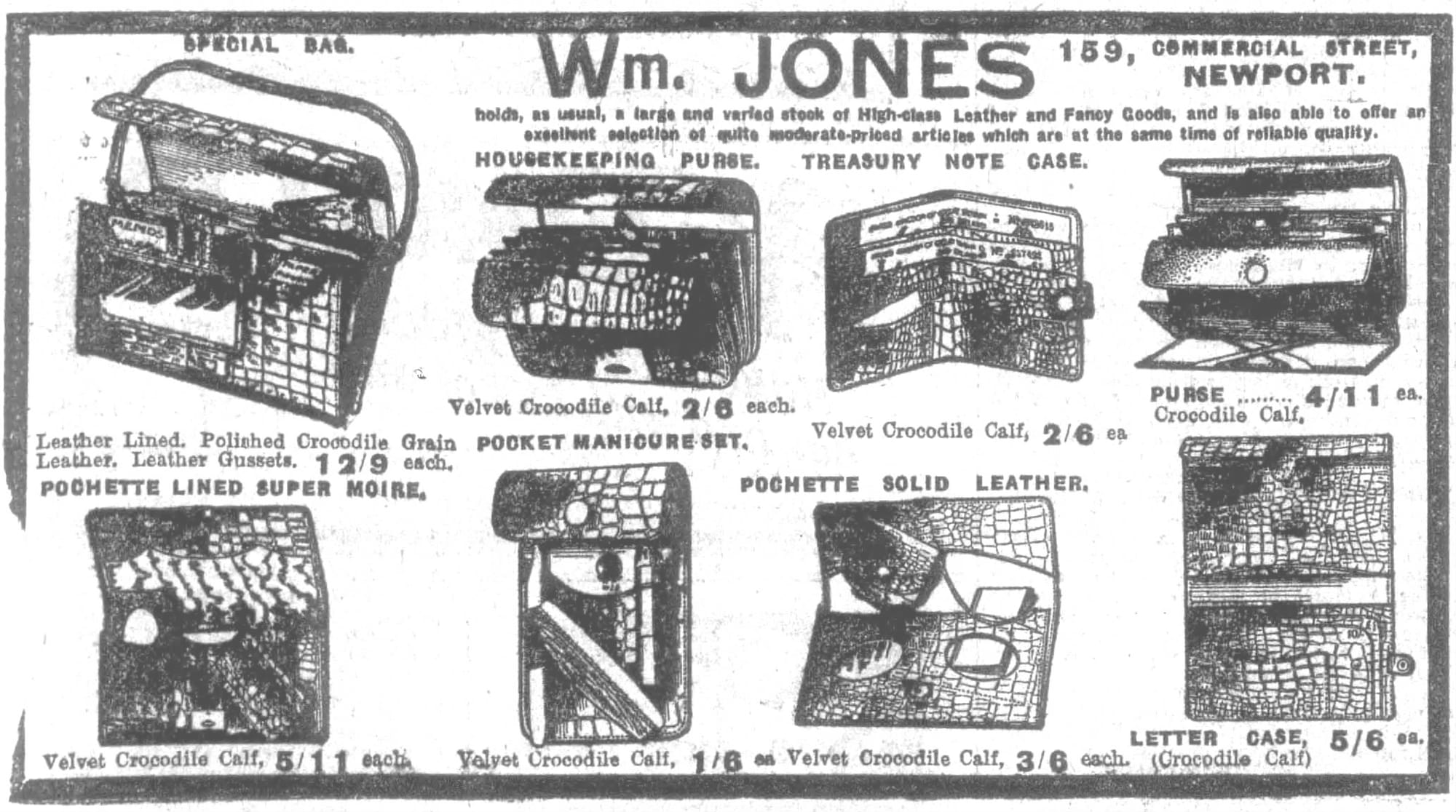
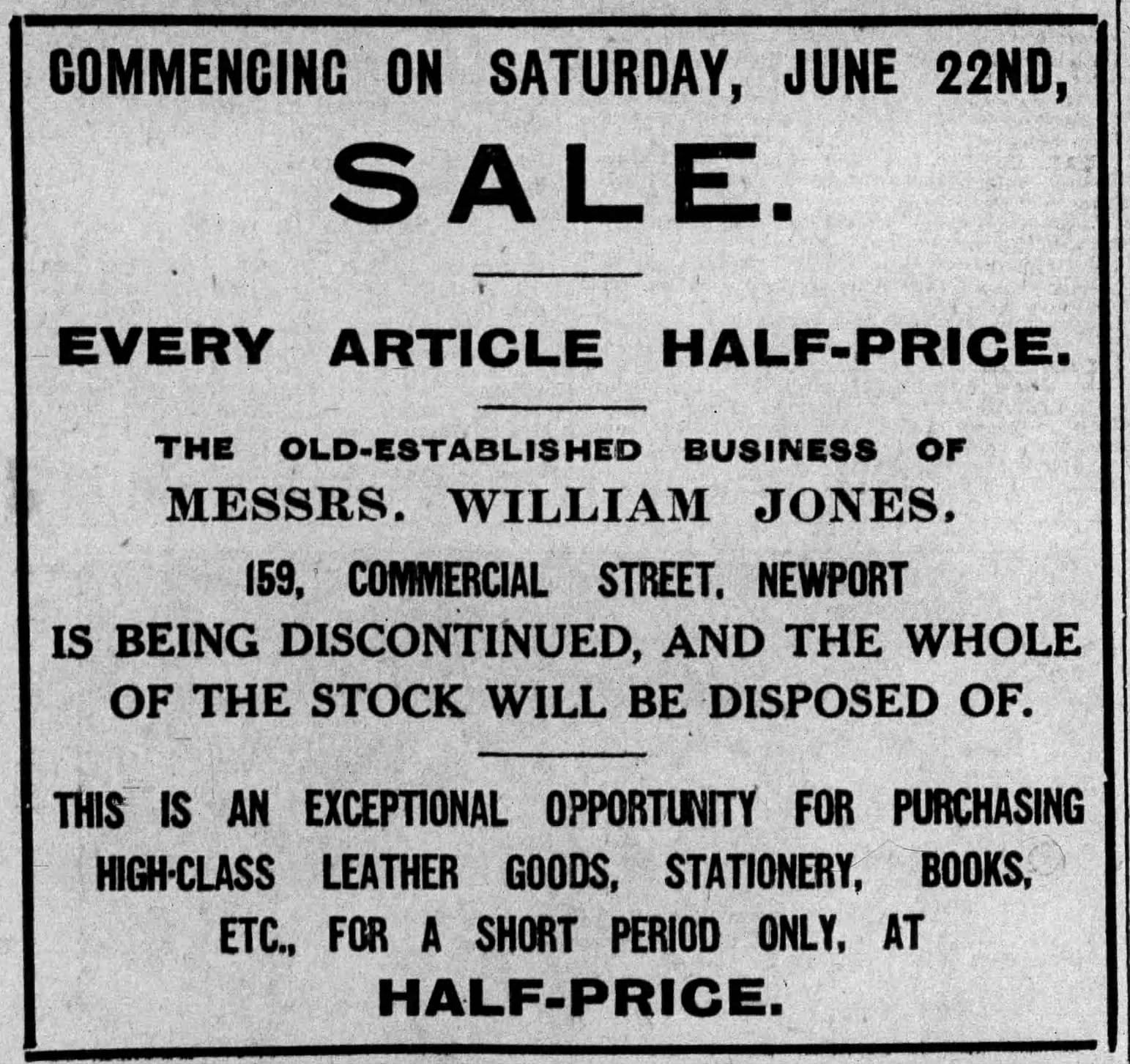
A selection of adverts from 1895 to 1929 from the South Wales Argus
Daring Robbery
On Sunday evening last, about six o'clock, Mr, Richard Haniford, and family, residing in Hill-street, went to chapel, locking up their house till their return. About eight o'clock they came back, but could not open the front door with the key. They then went to the back, and found that an entrance had been effected, during their absence, through the parlour window and, on going into the house, they found that it had been completely ransacked.
On further examination, it was found that a sum of £16, consisting of two £5 notes and two sovereigns, had been taken from a drawer, and from another four silk and other shawls, four spun silk handkerchiefs, two other silk handkerchiefs, and a pair of females boots. No clue has since been obtained to the robbers.
— Monmouthshire Merlin, 26th November, 1842


Member discussion