

Welcome to another issue of The Newport Cornucopia where we dig through the newspapers archives for interesting news articles and adverts. All articles are posted verbatim and most headlines are original (headlines in quotes are my own).

The Supply of Gas
Complaints have been made that the supply of gas in Newport is very inadequate to the demand. Since the majority of those using gas now burn by meter, it is surprising that means are not taken to ensure a larger supply, as many establishments would begin to burn earlier, and consume more throughout the evening, were it laid on in greater quantity. We hope the defect will be remedied. It is right to add that the quality of the gas has been improved.
— Monmouthshire Merlin, 27th January, 1849
Dock Policemanship
On Sunday night last, as appears by proceedings on a coroner's jury reported above, a sailor fell into the Newport Dock, and after crying out three times for assistance, sunk to die. There were no grappling irons thrown in to drag the body ashore at once, that the proper means of resuscitation might be resorted to, and perhaps with success for there was no care taken, no policeman near the spot.
Next morning, about six o'clock, means were adopted, and the body was brought to shore—some six or seven hours after the fatal occurrence. On inquiry how it was that there was no policeman or other watchman of the dock at hand, it was ascertained that Mr. Watts, the dock policeman, only does day duty. Looking at the sad accident—looking also at the great danger of persons falling into the dock by night, where the light is not very brilliant, and looking also at the fact that night affords far greater facilities for carrying on the work of theft, smuggling, or other fraudulent practices, than broad daylight, it will certainly appear a matter of surprise that either another policeman is not put on, or the duties of the present one policeman divided, between day and night.
The probability is, that had a watchman or policeman been immediately at hand with the implements provided at the dock, for saving drowning persons, that Hall might have been recovered from the water immediately, and restored alive to his ship. The matter calls for the consideration of the Dock Company. It has been stated by dock shareholders, and owners of property in Pill, with some plausibility, perhaps indeed with justice, that those who pay so largely towards the rates, should have public police protection, instead of being obliged to pay for private watchmen, who never do their duty in any way comparable to the force which are under discipline.
— Monmouthshire Merlin, 2nd September, 1848
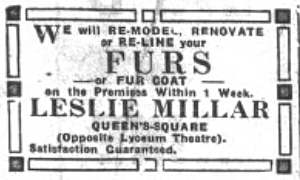
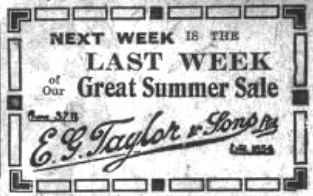
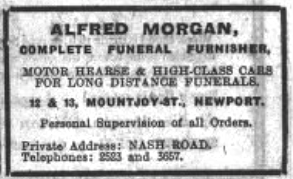
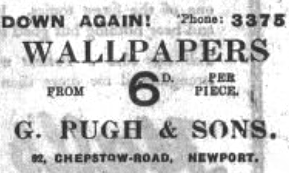
South Wales Argus, 11th July, 1922 (Subscription Required)

'1845 Miscellany'
David Morgan, George Davies. William Thomas, and William Pride, were charged with obstructing the footpath at the corner of the Three Horse Shoes, in High-street. Fined 1s. each, and costs, or 14 days' imprisonment.
Catherine Williams, Catherine Jones, and Emma Jenkins, were charged with being disorderly prostitutes, creating a disturbance in the street, and making use of bad language. Emma Jenkins being twice summarily convicted before for a similar offence, was sentenced to two months' imprisonment; the other two were discharged, it being their first appearance before the magistrates.
Jeremiah Hayes and Michael Sullivan, were charged with being drunk and disorderly in the street. They both pleaded guilty, and was fined 5s. and costs, or 14 days' imprisonment.
Ann Williams charged with stealing a purse and 10s. 6d. from Mary Ann Hughes. Committed for trial at the next Quarter Sessions. She is an old offender.
George Mosely, an apprentice of Mr. Noah Bowen, was charged with running away from his work. His master took him back.
Edward Morgan was charged with committing damage, by negligently driving. The case was dismissed; a fresh information to be laid.
A. C. Rio, charged with wilfully cutting mooring rones. Case dismissed.
T. Artaud was also charged with wilfully cutting mooring ropes. Adjourned.
A. C. Rio was charged with assaulting William Rees. Fined 5s. and costs.
— Monmouthshire Merlin, 8th March, 1845
'Green Boots'
Mary Funnell, alias Green Boots, was brought up charged with stealing a watch, the property of George Garratt, on the night of Wednesday last. It appeared that as Mr. Garratt was proceeding from the house of his brother in George-street, on Wednesday night about twelve o'clock, towards his own residence in Commercial-street. The prisoner accosted him near Mr. Clapperton's shop, and almost immediately snatched the watch from his waistcoat pocket, and secreted it on her person. Whilst holding her in the hope of seeing a policeman come up, Charles Ellicott, shopman at Mr. Garratt's was returning from the Crown, and fortunately came up at the moment, to whom Mr. Garratt told the circumstances of the robbery. Whilst taxing her with the theft, Ellicot heard the watch falling upon the pavement and stooping down; he picked it up, and a policeman being attracted by the prisoner's outcries, she as taken to the Station.
P. C. Huxtable deposed to taking the prisoner into custody, and hearing her beg Mr. Garratt's forgiveness, promising never to commit a similar offence. She was very drunk at the time. Committed for trial at the next Assizes.
— Monmouthshire Merlin, 6th February, 1841
A Drunken Post-Boy
At the police-court, yesterday (before Messrs. Woollett and Phillips). William Richardson was charged with embezzling 16s the moneys of his employers, the King's Head Hotel Company. Last Tuesday the prisoner was engaged to drive a gentleman in a carriage and pair to Usk, and received 10s. He got drunk, and spent the money, or lost it. A man from the Three Salmons at Usk had to drive the horses home, with the prisoner inside, drunk. Mr. Gretton, the manager, had discharged the prisoner, and as that was a heavy punishment in itself, the Bench dealt leniently with him, ordering him to be kept in prison one day.
— The Western Mail, 2nd September, 1871
Sailor Robbing Sailor
George Brown, a middle-aged man, was charged with stealing a bag of clothes, the property of a youth, named William Smith. Both were on board the schooner George, in the river, and on Tuesday night prosecutor missed his bag of clothes, Prisoner was in the same part of the vessel, but he denied having seen them or touched them. The clothes were traced to Ellen Dillon's house, in Club-row, to whom prisoner had sold them for 3s. 3d. Sentenced to two months' hard labour.
— The Western Mail, 2nd September, 1871
Rough Treatment of a Suitor
John Jones, David Price, and William Smallwood were charged with assaulting George Bridges, labourer, Maindee. Complainant was said to have been smitten with Jones's mother, and as Jones did not approve of his prospective step-father he hit upon the expedient of a thrashing.
It was said that complainant proposed an amicable settlement, which would have involved the marriage objected to, but the offer was declined. Jones was fined 5s. and costs; the others were dismissed.
— The Western Mail, 4th September, 1871
Theft from the Silver Grill
John Roberts (13), Arthur Powell (H), and V. Jones (12) were charged yesterday with stealing three eggs from the Silver Grill, High-street, the property of Alfred Bland. Roberts, the eldest, had been in prosecutor's employ as errand lad for 18 months. Jones was let off with a caution; Powell was ordered to receive six strokes; Roberts' dismissal from prosecutor's employ was thought to be sufficient punishment for his offence.
— South Wales Daily News, 24th March, 1888
Charge of Fortune Telling
Louisa Dixon was charged with pretending to tell fortunes and with hawking without a licence. Police-Constable Colbourne saw the defendant in Stow Park on Tuesday afternoon talking with a servant. She had hold of the girl's hand, and was making signs upon it. He apprehended the defendant, and found a pack of cards upon her. He ascertained that the defendant had been to several villas in the neighbourhood, and tried to talk with the servants.
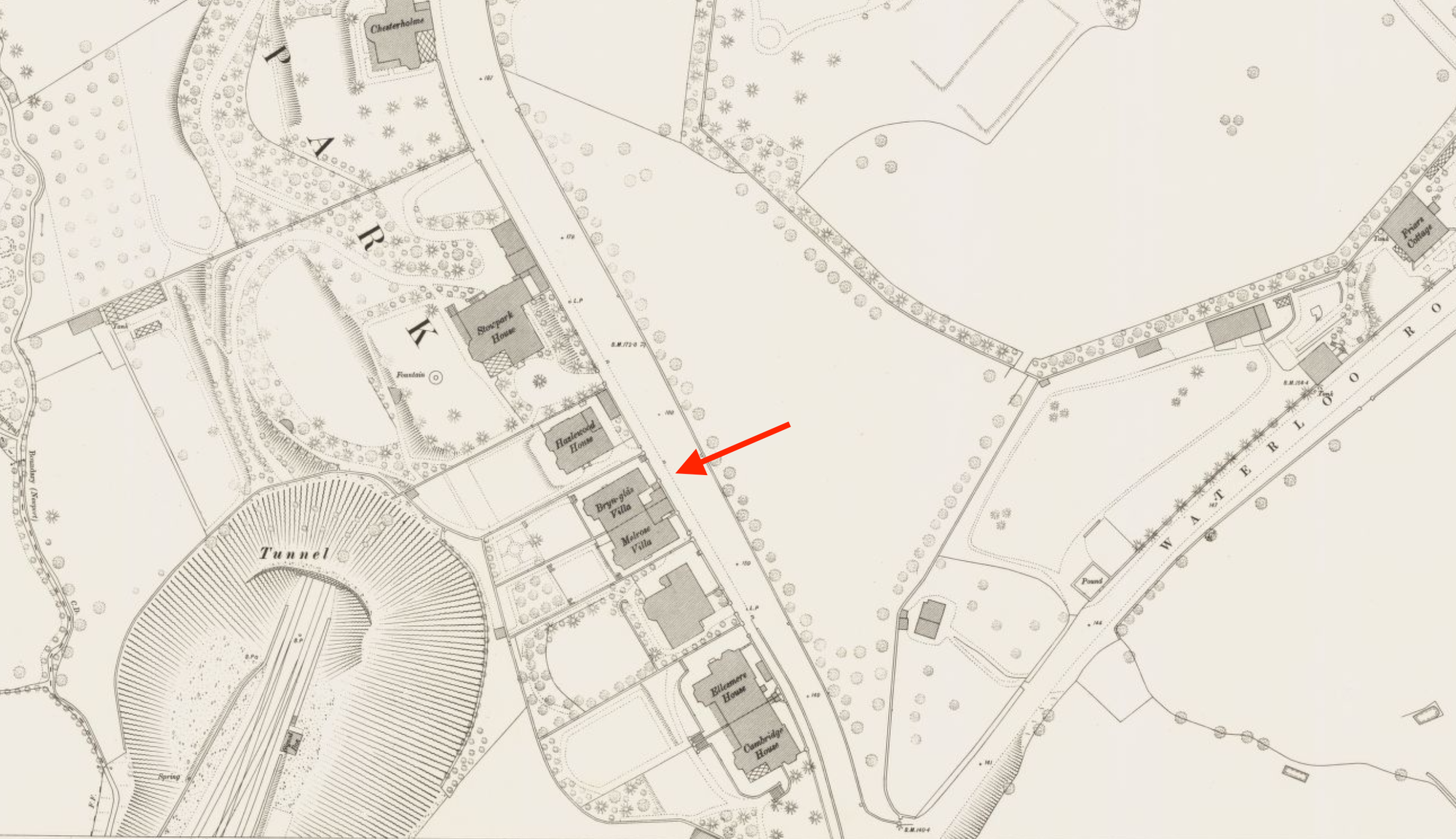
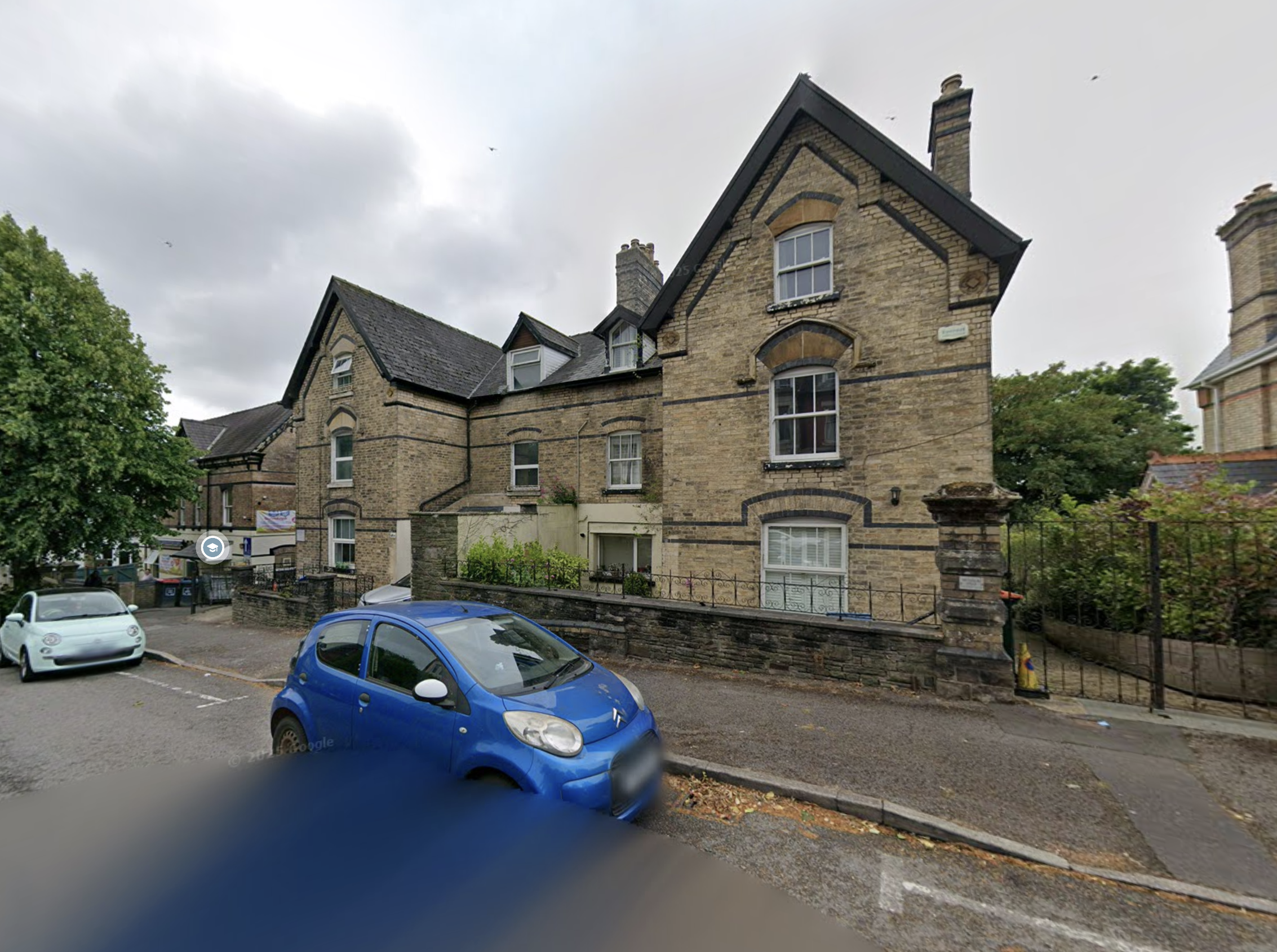
Bryn-Glas Villa on an OS Map from around the time of the incident and the property today on Stow Park Avenue.
Susan Watkins, a domestic servant at Bryn Glas Villa, said the defendant came to the house and wanted to tell her fortune, which she declined. She had a pack of cards in her hand. There was another charge against the defendant for stealing a towel, but no evidence was offered. The Bench fined her 10s., or seven days.
— Weekly Mail, 14th March, 1885
A Servant Severely Burnt
On Thursday evening last, the servant girl of Mr. Daniel Johns, portrait painter, Stow Hill, met with a serious accident, occasioned by the most reprehensible negligence. It appears that the girl was desired to nurse the child, and for that pur- pose sat down by the parlour fire, where, having permitted her little charge to play about the room, she herself speedily fell asleep; and being situated very near the fire, her apparel was soon in a blaze, the acute torture occasioned by which awoke the careless sleeper, only to find herself enveloped in flames from head to foot, and very severely burnt.
Medical aid was procured immediately, and hopes are entertained of her recovery. This practice of sleeping by the fireside is of such frequent occurrence, that only many repetitions of perhaps dangerous results, seem likely to deter persons, and especially lazy and careless servants, from the imprudent practice.
— Monmouthshire Merlin, 28th November, 1840
A Nocturnal Treat
On Wednesday evening last, between eight and nine o'clock, the Usk steamer, Captain Dando, from Bristol for Newport, ran ashore on the mud on the eastern side of the mouth of the river Usk and thus afforded the passengers — about 150 in number — opportunity for a night's aquatic enjoyment.
A passenger, whose joyous hopes of soon reaching Newport to spend a social hour with his friends, received a heavy blow and great discouragement from this untoward event, by way of annihilating every shadow of excuse on the part of the master, says, "it was a beautiful night; and whilst the captain blamed the palinurus, and the palinurus blamed the captain, for the unenviable "fix" in which they were involved, the luckless passengers were surly ruminating upon their wretched fate."
The Usk left Bristol at six o'clock Wednesday evening, and reached Newport at nine Thursday morning.
— Monmouthshire Merlin, 2nd September, 1848
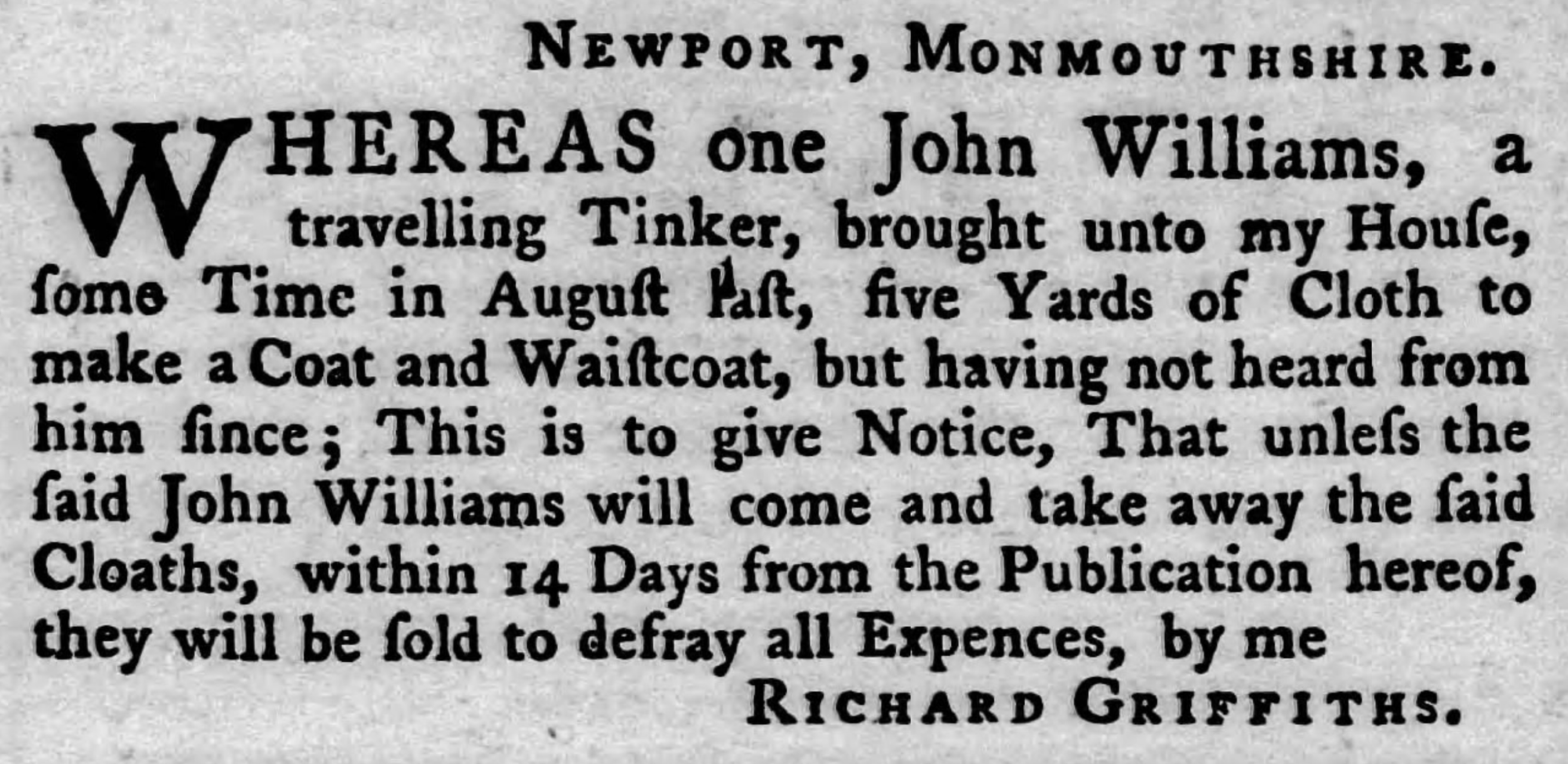
'A Travelling Tinker'
Lamp at the Pottery Lock
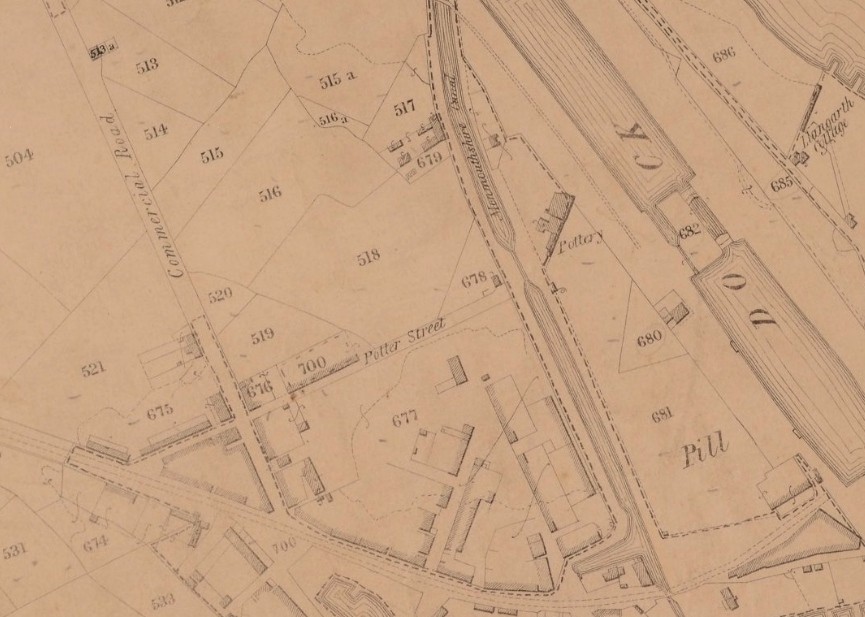
A communication has this week been addressed to us, by a gentleman who takes creditable occasion to comment on matters needing public remark, relative to the lamp which some two years since was placed near the canal side, at the Pottery lock," after the MERLIN made a noise, on the occasion of a lad being drowned, and others having escaped the most imminent peril of that fate.
This lamp, it appears, though so necessary to the preservation of life in that quarter, is never lit; so that within no great while Mr. B. Evans, the humane landlord of the Adam and Eve, near the canal, has by his own individual exertions saved from being drowned in the lock, several persons who, from the absence of the light, and the peculiar dangers of the locality, had fallen into the canal, and would, in all human probability, have perished but for his timely assistance.
Our respectable correspondent says he feels assured that the fact of the lamp not being lighted, although the neighbourhood is so dangerous, needs only be publicly mentioned to cause immediate remedy, on the part of those humane authorities who directed the lamp to be placed there and as the winter dark nights are just approaching, and particularly as the road to the dock lies across the bridge by the side of this lock, it is hoped there will be no time lost in directing that the lamp will be made useful, so that the tars and others who travel that way may be able to steer through a passage so fatal to human life.
— Monmouthshire Merlin, 2nd September, 1848
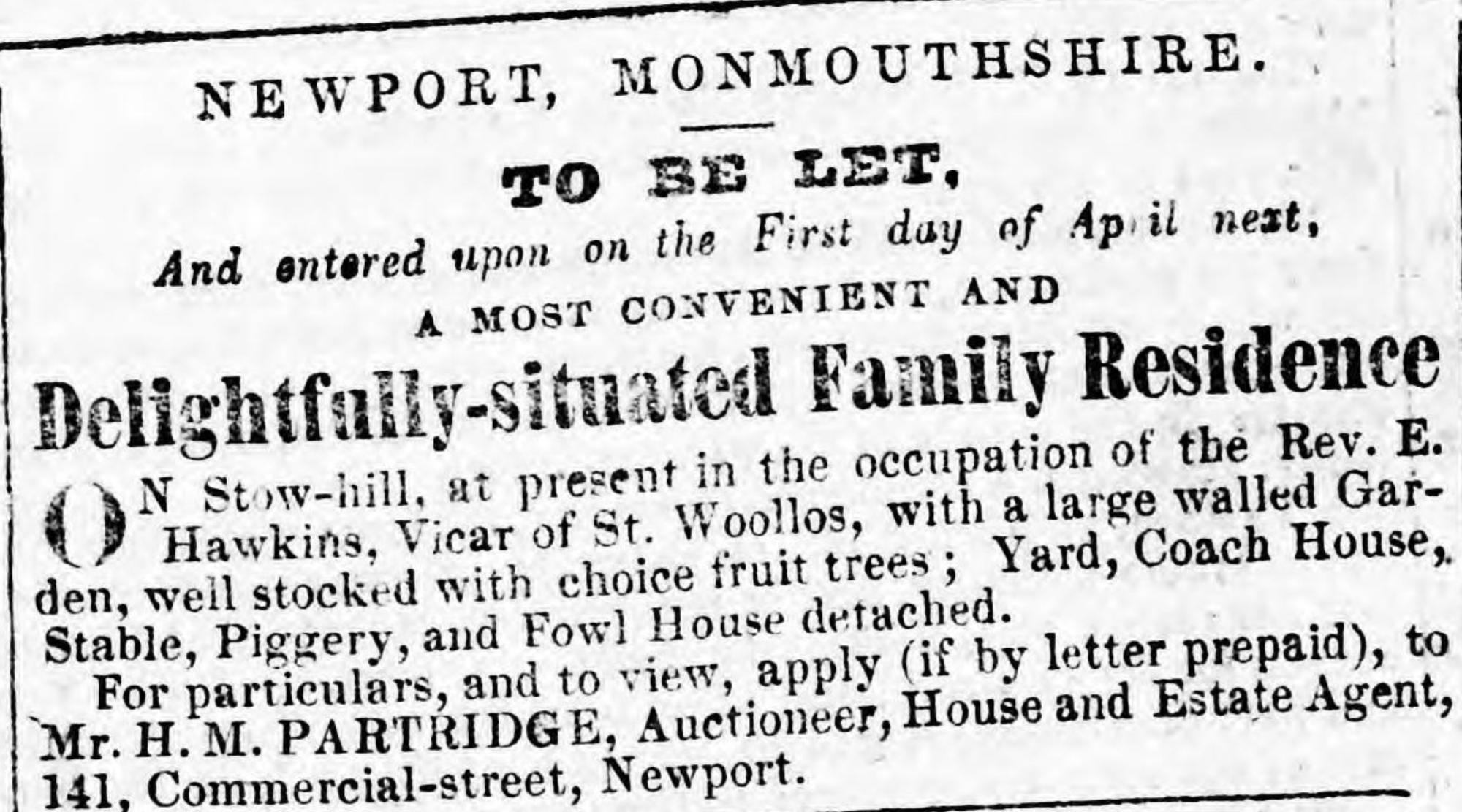
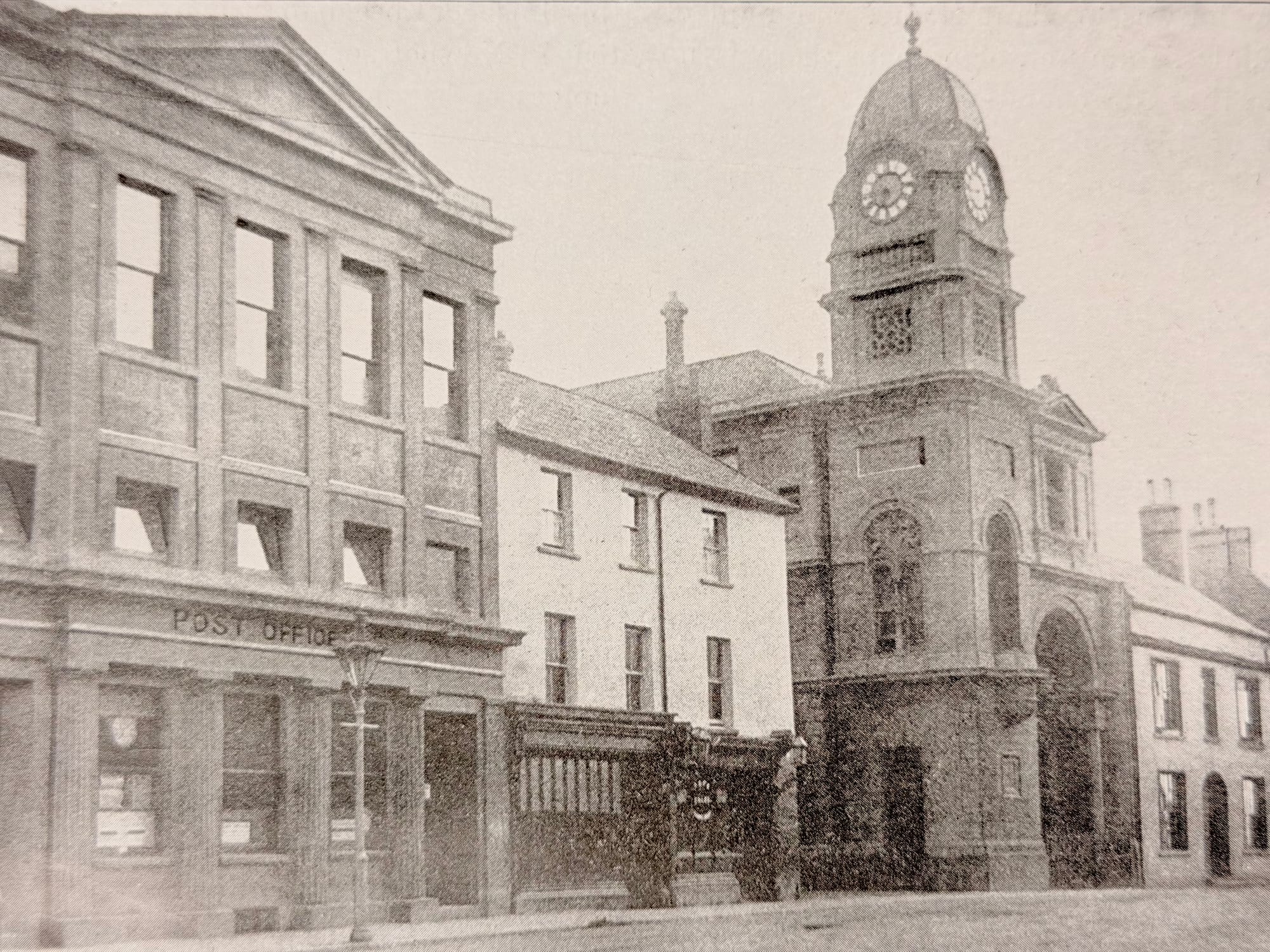
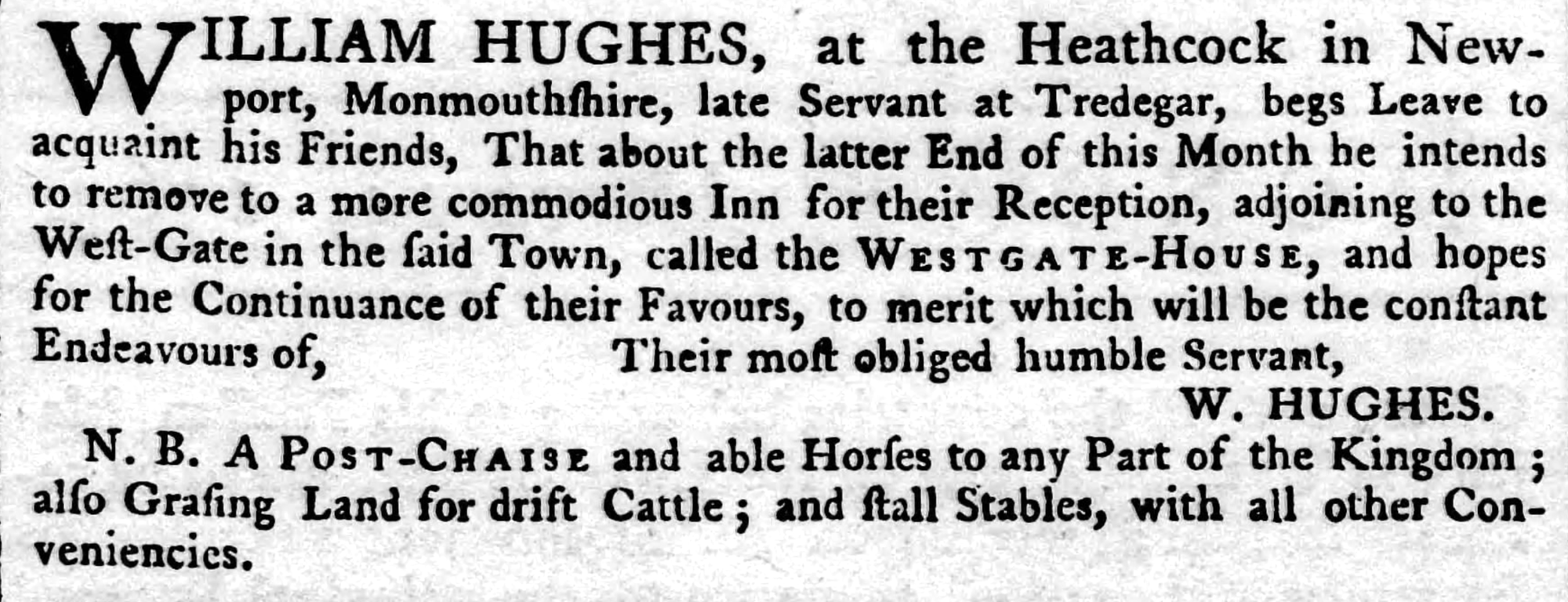
'Early Mention of the Heathcock and Westgate House'
St Woollos Pound
There have been very many complaints respecting the unhealthy and bad condition of the St. Woollos pound, near the Friars, in which, it is stated, the mud and filth are often knee deep.
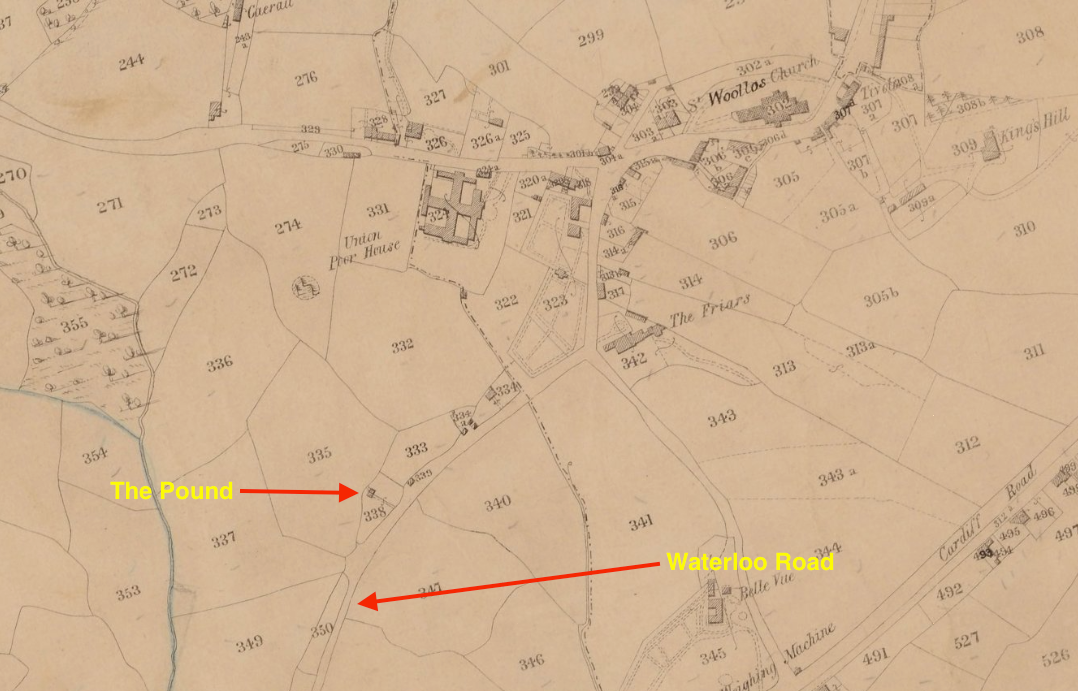
What a place in which to imprison cattle It is requisite that the ditch which supplies it, should be filled up. and some loads of stone and rubbish thrown on the floor of the pound, which would thus be considerably improved.
— Monmouthshire Merlin, 9th September, 1848
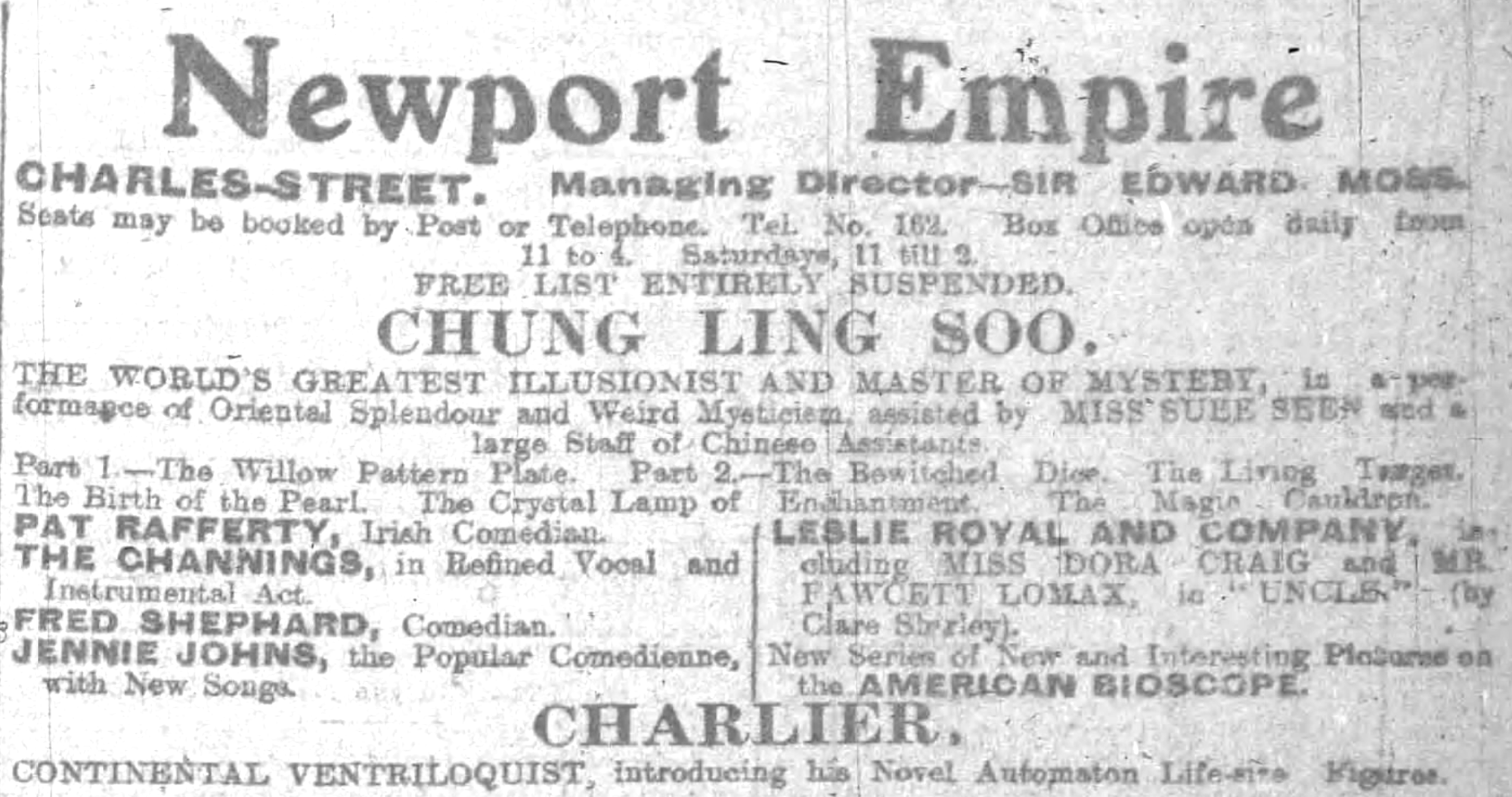
'Chung Ling Soo at the Newport Empire'
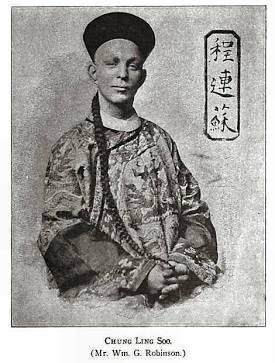
Chung Ling Soo, a stage musician, visited Newport in March 1912 and below is a modern summary of him and his performances.
He was one of the most successful and highest-paid stage magicians in Europe during the early 20th century. However, his entire persona was an elaborate illusion. He was actually an American man named William Ellsworth Robinson, who used greasepaint, traditional Chinese clothing and a shaved head with a queue (braid) to perform in "yellowface".
To maintain the deception, he never spoke English on stage, used an interpreter for press interviews and claimed to be the orphaned son of a Scottish missionary and a Cantonese woman.
He based his act and name on a real Chinese magician, Ching Ling Foo. When Foo discovered the theft, he tried to expose Robinson as an impostor in London in 1905, but the public remained captivated by Robinson's performance.
He maintained his persona so strictly that his tragic final words on stage were the first and only time he spoke English in public as Chung Ling Soo.
His stage assistant and "Chinese wife", Suee Seen, was actually an American woman named Olive "Dot" Path. Robinson was legally married to another woman back in America and also maintained a separate family in London with a mistress.
His Acts
Soo excelled at grand illusions and traditional Chinese-style conjuring. His most famous and definitive illusion was "Condemned to Death by the Boxers", a dramatic bullet-catching trick.
In this act, muzzle-loading guns were inspected and marked by audience members. Assistants fired the guns directly at him on stage, and Soo appeared to catch the marked bullets out of mid-air on a porcelain plate.
His Death
On 23 March 1918, during a performance at the Wood Green Empire in London, the bullet-catch trick failed.
The guns were designed to fire a blank charge from a secondary chamber, leaving the real bullet safely inside the barrel. However, Robinson had a habit of not cleaning the guns properly. Over time, a buildup of unburnt gunpowder formed in the internal channel. That night, the spark ignited this residue, firing the actual bullet directly into his chest.
As he collapsed, he broke character, crying out: "Oh my God. Something's happened. Lower the curtain." He died the following morning at a nearby hospital. The coroner ruled the death as misadventure.


Member discussion