

Welcome to another issue of The Newport Cornucopia where we dig through the newspapers archives for interesting news articles and adverts. All articles are posted verbatim and most headlines are original (headlines in quotes are my own).

An Unprofitable Public House
Otto Jordan was summoned by the overseers of Christchurch for rates amounting to £11 7s 9d. Defendant was represented by his wife, who stated that her husband kept the Ship Inn at Caerleon, which they rented from Miss Townsend.
About sixteen months since they entered the house, paying down nearly £100. The trade had been very had and defendant was unable to pay the rent, and Miss Townsend seized every scrap of furniture and sold it. Her husband was very ill, and the brokers would have sold the bedstead whereon he was lying had not the neighbours interfered. One or two friends had bought in some of the furniture, consisting of a few chairs and table, and this, with the bed her husband was now lying on, was all the furniture that remained of what they had originally taken into the house.
Another hardship was that the owner of the house had let it over their heads. She had eight children to maintain, and could not leave the house. The poor woman earnestly appealed to the Bench to advise her in the matter. Dr. Woollett remarked that if they were starving in the house they ought to go out.
Mrs. Jordan wanted to know who would take them in with no furniture. Dr Woolett said that the parties who had hired the house would have to apply to them for a transfer of the licence before they could take possession.
The Bench thought it was a very hard case, and allowed the matter to stand over for a week, Mrs. Jordan being advised not to part with her licence on any consideration.
— Monmouthshire Merlin, 28th November, 1884
Remarkable Escape of a Child
There was a scene in High-street on Tuesday afternoon that sent a thrill through those who were spectators. A nurse girl had paused outside a shop window to look at something that caught her eye, and while doing so she let go the handle of the perambulator she was in charge of.
The perambulator, in which was seated & child about 12 months old, toppled off the pavement just as a Maindee 'bus was coming up the-street, and in an instant the little vehicle was between the hind legs of the off horse and the wheels of the 'bus. Happily the driver saw the perambulator leave the pavement, and stopped his horses in time to avert serious consequences.
— Monmouthshire Merlin, 14th November, 1884
Accident with a Revolver
Between one and two o'clock on Monday Mrs Webber, landlady of the Brewery Inn, Llanarth-street, was shot under circumstances which afford a striking illustration of the danger attending the careless handling of firearms.
It appears that a young man connected with the circus in Friars Fields asked Mrs Webber to lend him a pistol for a few hours, and she let him have a revolver left in her care by a sailor several months ago. It being assumed that the weapon was unloaded, the young man pointed it to the ground and pulled the trigger. Unhappily one chamber contained a cartridge which exploded, and the bullet first struck the stone floor then re-bounded, and lodged in the landlady's thigh.
The poor woman fainted from loss of blood, but a medical man who was sent for succeeded in extracting the bullet, and stopping the haemorrhage. Mrs. Webber is likely to do well. The unlucky cause of the accident gave himself up to the police at the temporary Town Hall, but it was not thought necessary to detain him.
— Monmouthshire Merlin, 28th November, 1884

Robbing Employers
Henry Pollinger and Joseph Orchard were charged with stealing a plank, the property of their employers, Messrs. Powell and Sons.
John Poole, a sawyer in the employ of Messrs. Powell, saw the prisoners about eight o'elack on Tuesday morning, in the yard of the prosecutors, near Caroline-street. Saw Pollinger take a spruce plank and push it through the fence into Caroline-street, and Joseph Orchard received it from him; Orchard then took it up Caroline-street on back Sergeant Curtis apprehended the prisoner Pollinger in Granville-street, and charged him with the above stated, and he replied, "I carried the planks for Orchard".
Witness afterwards apprehended Orchard in the yard, and charged him also with stealing the plank. He replied, "I brought it to the yard to have it sawed. I have a bill of it". Orchard was further charged with stealing a lot of chisels, oil, paint, files, and a variety of other articles, the property of his employers, Messrs. T. Powell and Sons.
Sergeant Curtis searched the house, and found the various articles produced, which he brought to the station. Prisoner acknowledged that several of the articles were his Masters', but that the timber was his own, and had been in his possession four years. The Bench, after hearing witnesses, dismissed the first charge. Orchard was committed on the second.
— Monmouthshire Merlin, 20th November, 1858
'Tramping Mason'
William Jones, a tramping mason, found incapably drunk on a footpath in Maindee, on the night of the 23rd instant, was committed to Usk Gaol for seven days, in default of paying a fine of 10s., including costs.
— Monmouthshire Merlin, 30th October, 1874
Permitting Gaming on Licensed Premises
Sidney Witts was summoned for permitting gaming on his licensed premises, the Engineers' Arms, Baneswell. P.S. Williams visited the house, and said in a room upstairs he found about fifteen men. At the end of a table there was a cup containing three dice, and some tickets relating to a raffle.
Defendant admitted the case, as stated by Sergeant Williams, but pleaded that he was not aware that he was doing wrong.
Inspector Sheppard stated that the defendant had not had the house long, but with this exception he considered he was conducting the business in a highly respectable way. A mitigated penalty of 10s. and costs was imposed.
— Monmouthshire Merlin, 6th November, 1874
Vagrancy
Thomas Price, a miserable-looking object, was charged with begging in the streets, on Sunday afternoon. P.C. Gadd saw the man begging in Charles-street. He was asking a gentleman for money to help him on the way to Abergavenny. On Friday night the man was very drunk, and great complaints had been made about him.Sentenced to 14 days' hard labour.
— Monmouthshire Merlin, 6th November, 1874
Stealing Meat from a Shop Window
Harriet Rowles, was charged with stealing a piece of meat, belonging to Mr. Thomas Gregory., butcher, from his shop at Pill, on Saturday night. Emily Gregory, daughter of the prosecutor, said, between six and seven o'clock on Saturday night she missed a piece of beef about 4lbs., from the window slab. She ran out and overtook the prisoner with the meat in her possession. The woman said it had caught in her apron, and she did not know it was there. Witness took the piece of meat out of the woman's apron, and sent a policeman after her.
P.C. Evans said he found the prisoner locked up in her own room. He charged her with stealing 4lbs. of beef from Mr. Gregory s, and she told him it had caught in her apron, and she did not know she had it until Miss Gregory took it from her. He then took her into custody. Sentenced to 14 days' hard labour.
— Monmouthshire Merlin, 6th November, 1874
Indecency
John Blackmore, in the employ of the South Wales Colliery Company, Risca, was charged with being drunk and exposing his person in Commercial-street on the previous night. P.C. Brooks proved the offence, which he said was committed in front of Mr. W. Vaughan's shutters. The Magistrates fined the prisoner 10s 6d, or 14 days' imprisonment.
— Monmouthshire Merlin, 6th November, 1874
Not Fit To Be At Large
A half-witted looking man, who gave the name of William Crouch, was brought before the Bench under the following circumstances. The accused was found in High-street, in a fit, and taken to the Town-hall. He was afterwards taken to the Workhouse and liberated, when he was again guilty of a similar eccentricity.
A certificate was now handed in from Dr. Jennings, to the effect that there was no appearance that prisoner was suffer- ing from epileptic fits, and he believed him to be an imposter.—The accused said he had suffered from fits ever since he had the brain fever. The case was adjourned until Friday, to give the prisoner an oppor- tunity of leaving the town.
— Monmouthshire Merlin, 6th November, 1874
A Mischievous Glass of Brandy
John Dillon a well-dressed man of good address was summoned for being drunk at the Prince of Wales, Cardiff-road, and assaulting Edward Thomas Rees the landlord. The assault occurred last Thursday night.
The defendant went to the Prince of Wales and called for a drink which was refused, as he was not sober. The landlord asked him to leave the house, and defendant struck him on the hand with a piece of iron that seemed like a bolt.
Defendant said he came to Newport with a shipowner and drank a glass of brandy—the first for five years—and it took effect on him. Later in the day he took a man who had done him a kindness to the Prince of Wales, and he certainly became excited when complainant would not serve him. But he did not strike the defendant, though somebody knocked him down. He was exceedingly sorry for what bad occurred. Fined 10s. 6d.
— Monmouthshire Merlin, 28th November, 1884
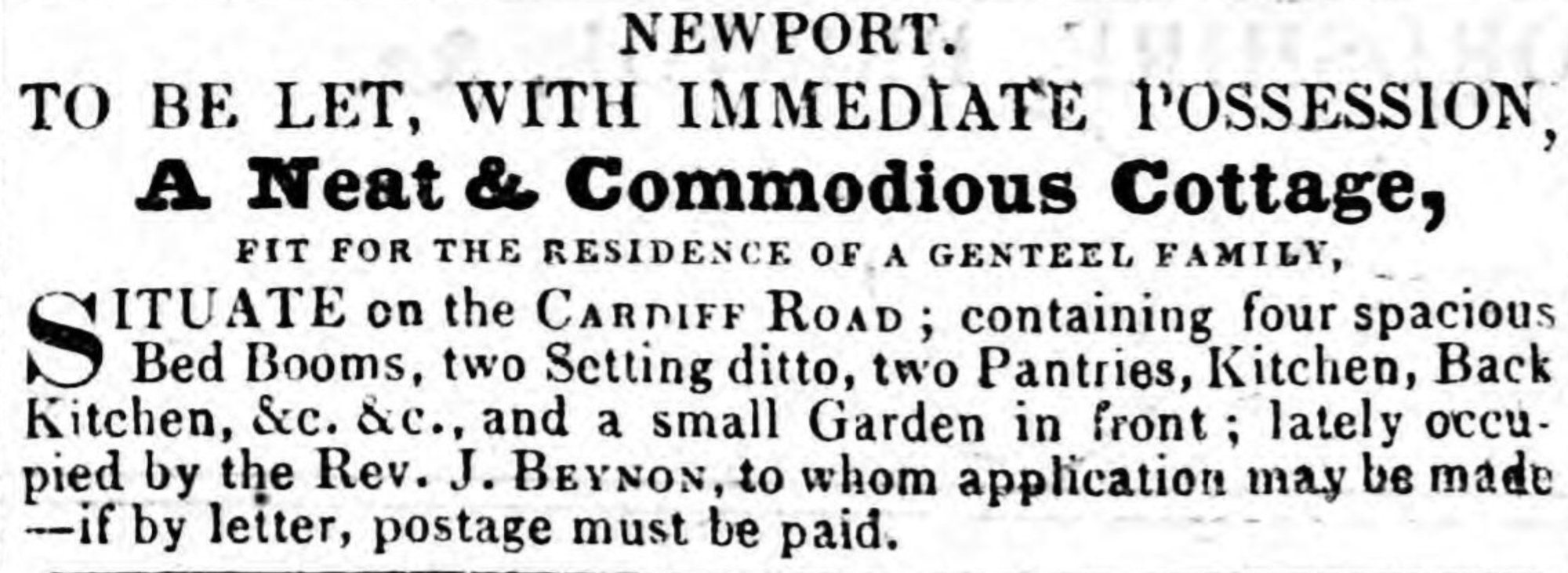
Overton House, 1856
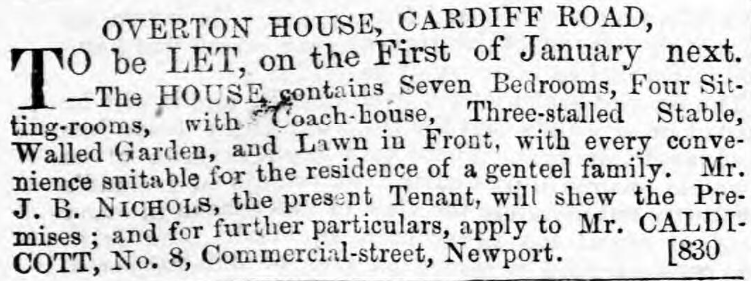
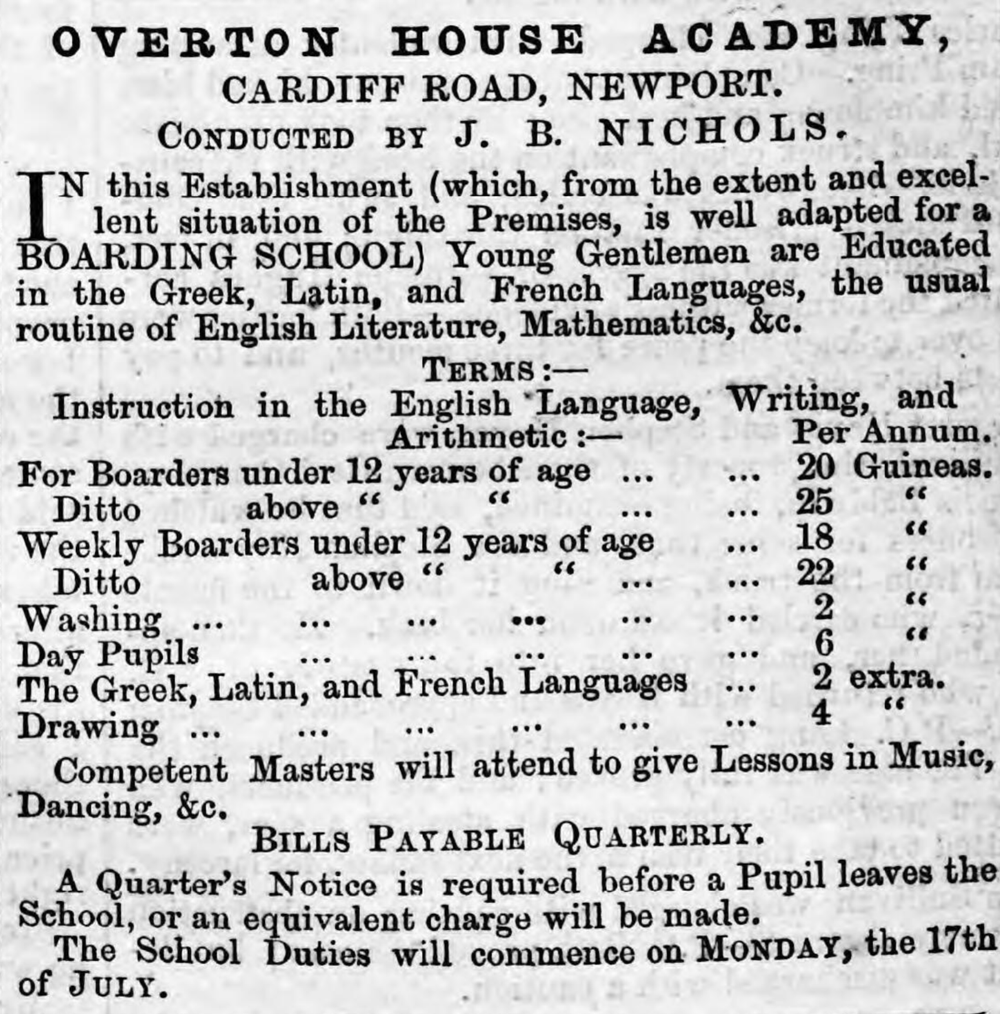
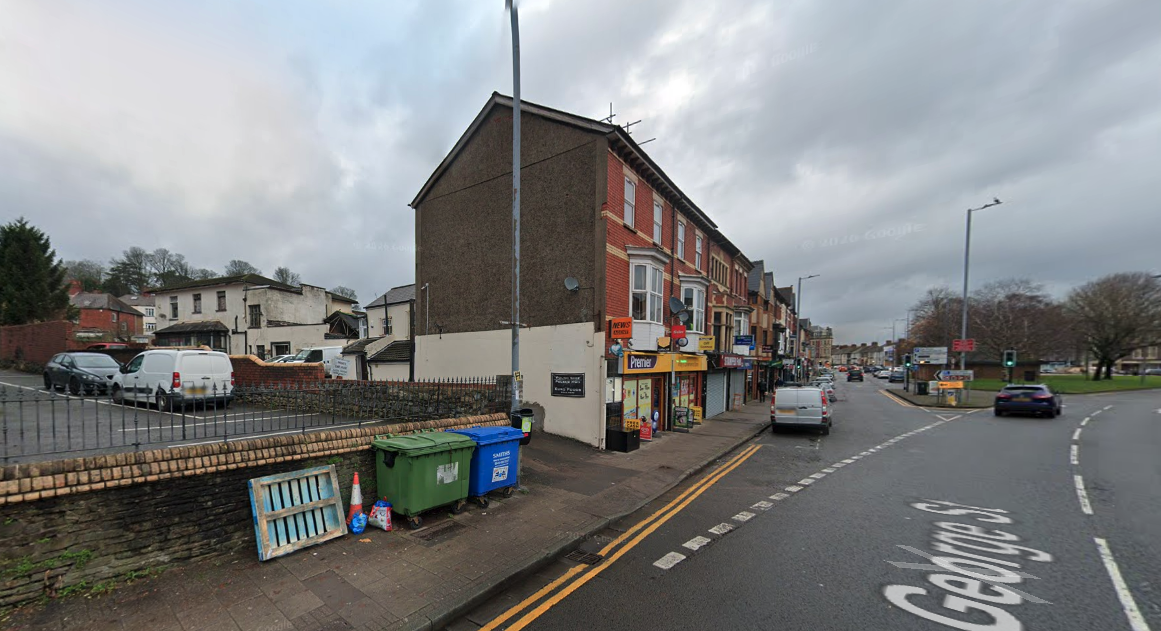
Overton House is located on the east end of Cardiff Road and was at one point the Whitehead Sports and Social Club (Courtybella Club). J.B. Nichols had run a school there called Overton Academy which had opened in 1853.
'An Evening With Charles Dickens'
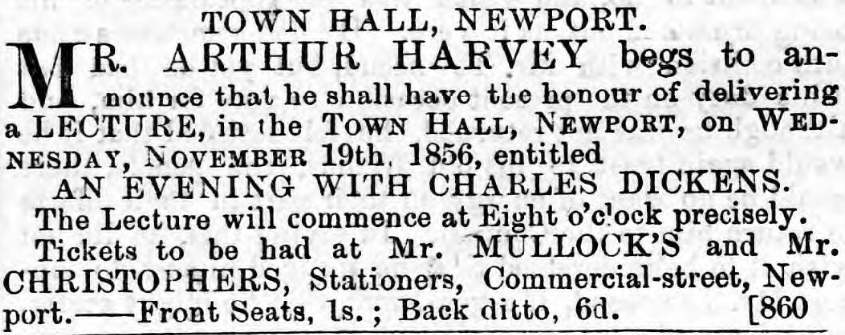
At the Town Hall in November, 1856 a lecture was given on the author Charles Dickens. This would have been in middle of when the books were being written so would have covered ones like The Pickwick Papers, Oliver Twist and David Copperfield but A Tale of Two Cities and great Expectations were yet to be written.
Strike at Spittle's Foundry
The employed at Mr Spittle's foundry, Newport, are on strike. It appears that Mr Spittle had obtained large contract, which could not be carried out unless the men worked a longer number of hours, i.e., if did not return to the ten hours' system, and this the workmen refused to do; so they came out on Monday.
It should be stated that Mr Spittle was the first employer in this town who adopted the nine hour system when it came into vogue.
— Monmouthshire Merlin, 29th August, 1879
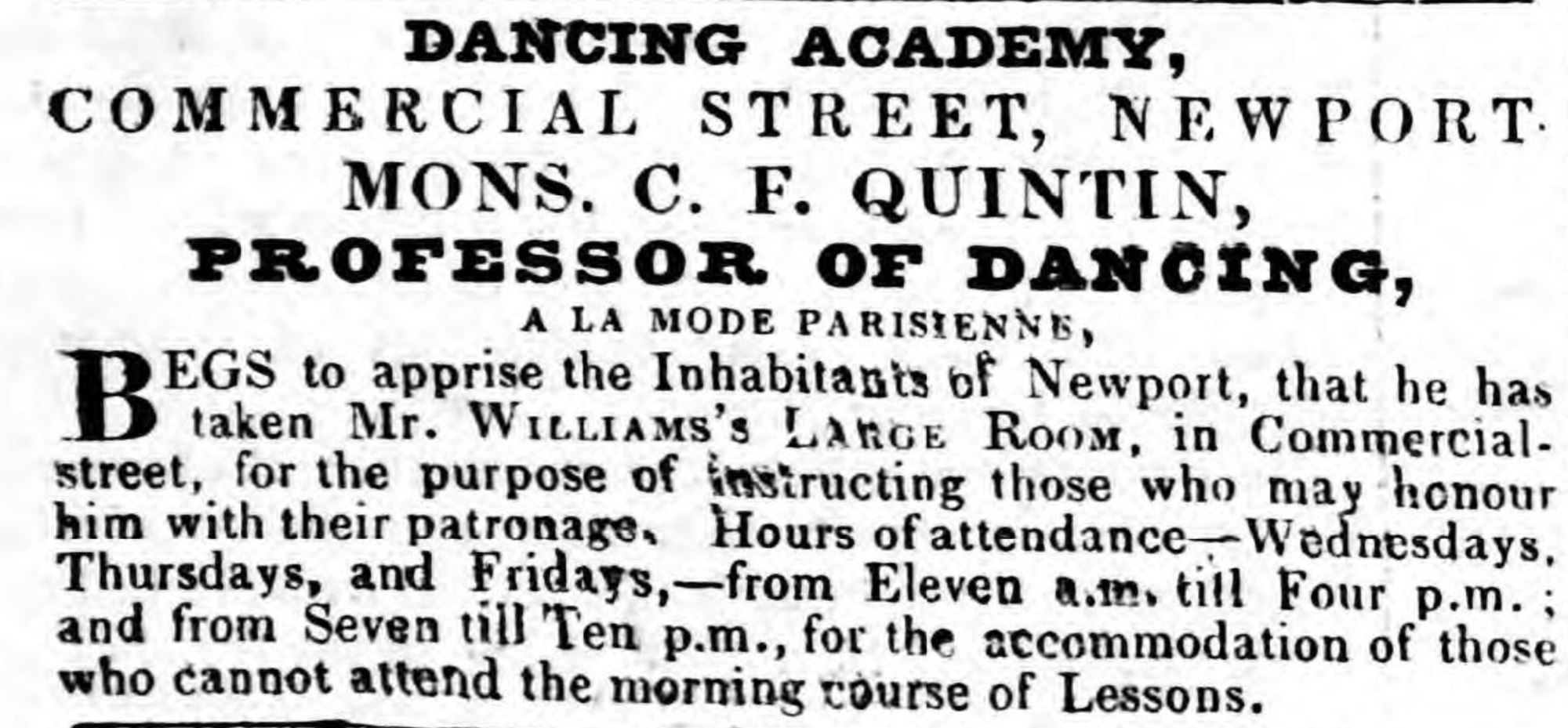
'Professor of Dancing'
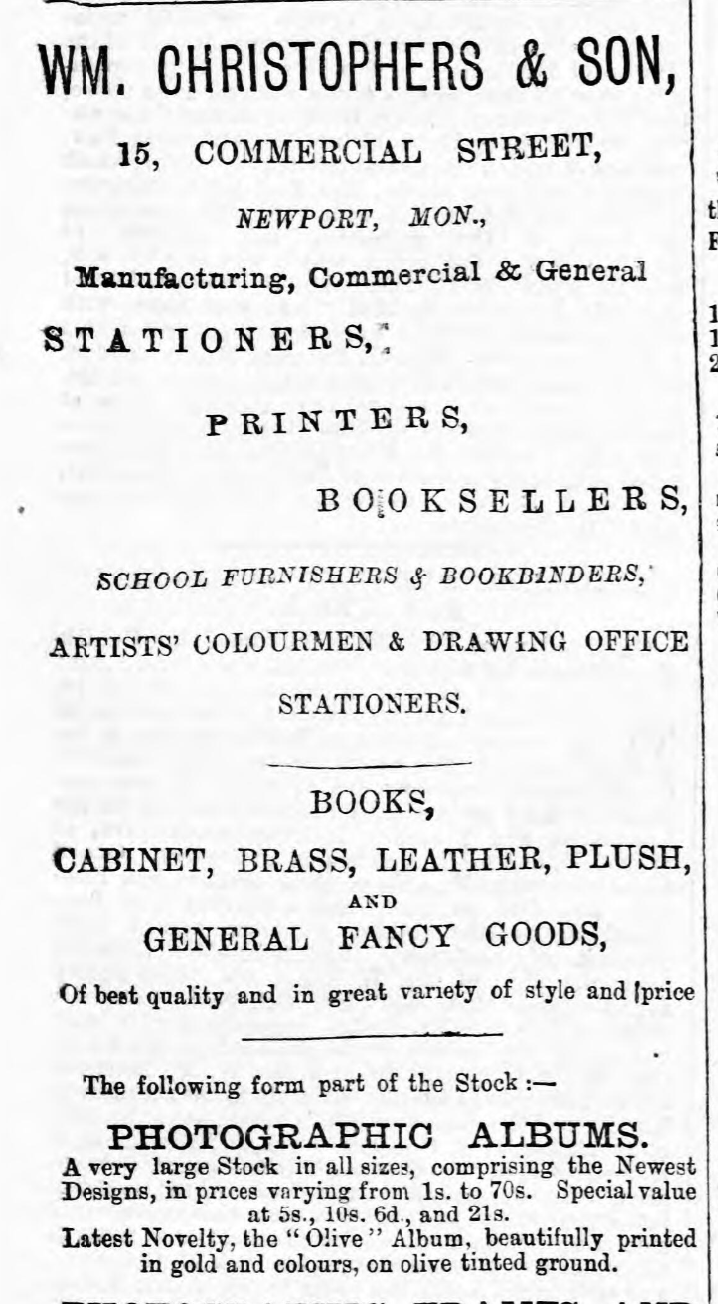
'A Visit to Christopher & Son in 1884'
Stepping into 15 Commercial Street in late 1884, a visitor to Newport would have been greeted by an astonishing array of luxury goods, stationery, and giftware. The expansive advertisement published by Wm. Christophers & Son—manufacturing stationers, printers, booksellers, and school furnishers—offers a rare window into the shopping habits and material culture of Victorian Monmouthshire as locals prepared for the new year.
A Gateway to Elegance
The advertisement opens by establishing the firm’s credentials not just as everyday stationers, but as purveyors of "Cabinet, Brass, Leather, Plush, and General Fancy Goods." Among their most fashionable offerings were Photographic Albums, ranging from modest 1s. editions to grand 70s. keepsakes. A highlight of the season was their latest novelty: the "Olive" Album, featuring pages decorated in gold and rich colours against an olive-tinted background—a perfect display piece for the Victorian parlour.
Luxury Leathers and Personal Effects
Moving further into the catalogue, the sheer variety of materials on offer is striking. Christophers & Son stocked dressing cases, jewel boxes, and tourist desks crafted from exotic timber and fine leathers, including rosewood, coromandel, plush, and carved ivory finishes.
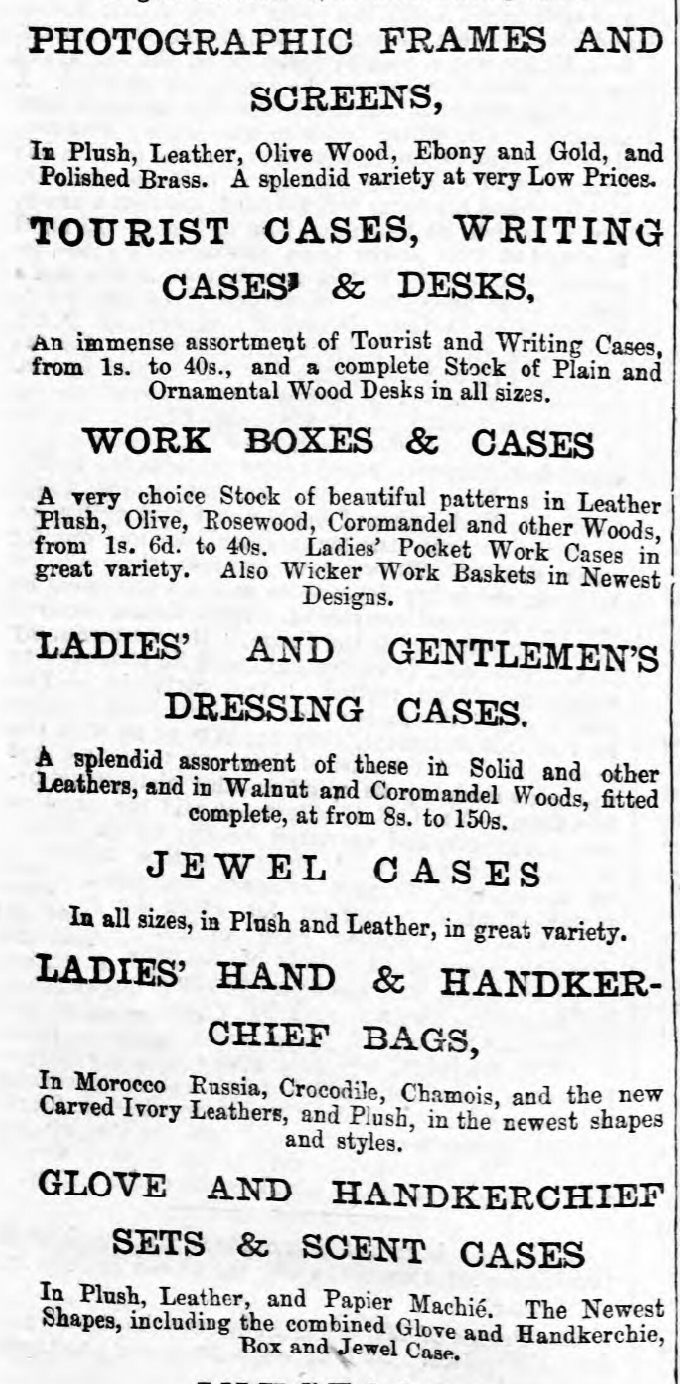
For the style-conscious shopper, the shop offered:
- Dressing Cases: Fitted models in solid leather, walnut, or coromandel, priced from 8s. up to a substantial 150s.
- Handbags & Accessories: Ladies' hand and handkerchief bags available in Morocco, Russia, Crocodile, Chamois, and plush.
- Novelties: Combined glove and handkerchief boxes, scent cases in papier-mâché, and plush-lined photographic frames.
Desk Ware, Tobacco Accessories, and Keepsakes
The third section highlights personal accoutrements and office furnishings. Writing tables of the era were catered for with solid wood inkstands (carved from oak, walnut, and olive wood) alongside brass card trays and frames.
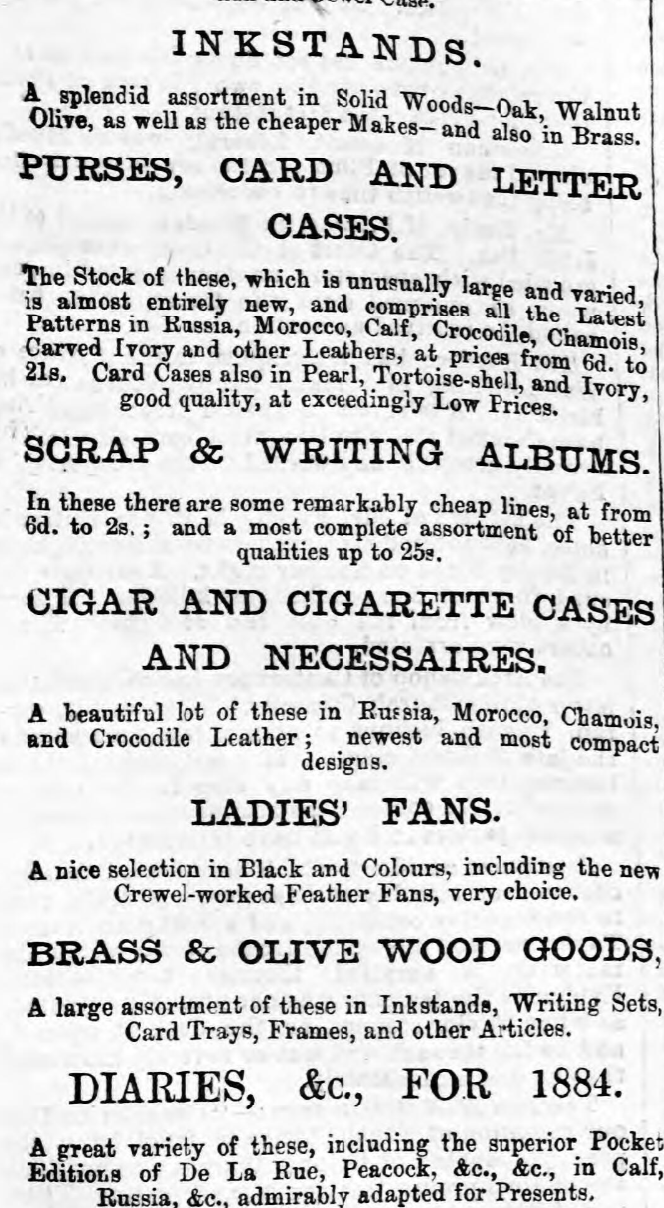
The range extended to luxury items for social life and leisure:
- Writing & Scrap Albums: Ranging from budget 6d. options to fine volumes at 25s.
- Personal Leatherwork: Purses and card cases in pearl, tortoiseshell, and ivory, as well as compact cigar and cigarette cases.
- Fashionable Extras: Ladies' fans—including the popular crewel-worked feather designs in vibrant colours.
Fine Pottery, Art Supplies, and Diaries for 1884
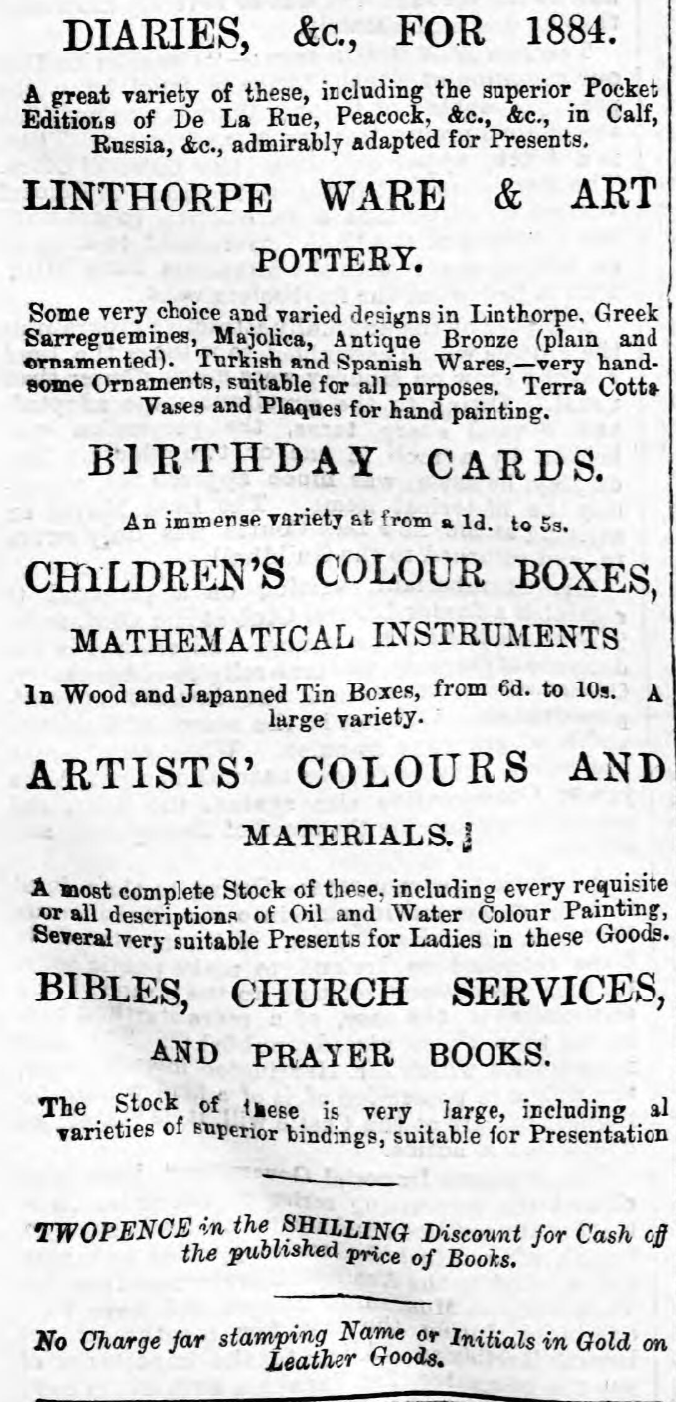
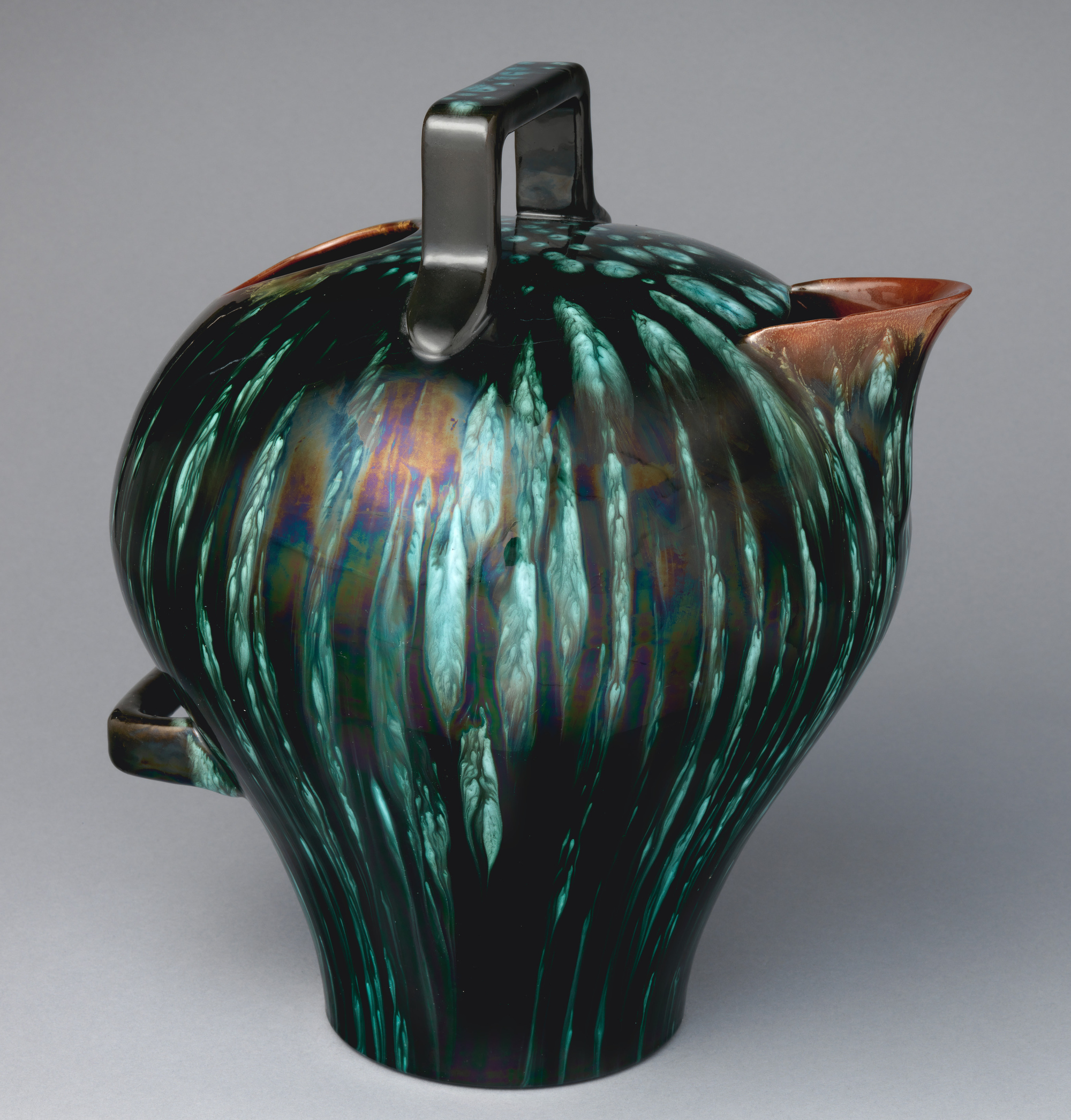
The final portion of the advertisement demonstrates the shop's pivot toward holiday gifting and creative pastimes. Christophers & Son stocked Linthorpe Ware & Art Pottery, showcasing designs in Greek, Sarreguemines, Majolica, and decorated terracotta plaques suitable for hand painting.
For scholars, artists, and readers, the stock included:
- Diaries for 1884: Pocket editions by De La Rue and Peacock, bound in calfskin and Russia leather.
- Artists' & Technical Supplies: Complete oil and watercolour sets, alongside mathematical instruments in japanned tin boxes (from 6d. to 10s.).
- Bibles & Prayer Books: Large stocks in superior presentation bindings, offered alongside birthday cards starting at just 1d.
To top off their festive promotion, the shop offered a discount of twopence in the shilling for cash purchases on books, complete with free gold-stamping of names or initials on leather goods—a thoughtful Victorian touch for custom gift-giving.
A Warning
DEAR SIR,—I regret having to state that Newport (more particularly High-street and Mill-street) is becoming infested by some of those beings (I will not say men) who delight in insulting our wives and sisters when alone and unprotected -and who, having credit of too trustful tailors, are enabled to attire themselves in gentlemanly apparel—taking credit to themselves, no doubt, of being "perfect gentlemen" by virtue of a gold chain and good unpaid for clothing.
A young lady to whom I am related was twice insulted by one of these beings a few evenings ago while going to and from the post-office, and this week I have heard of three or four similar cases -one, a respectable married lady-who was spoken to, stopped, whistled at, and dogged to her own door, being naturally greatly agitated and frightened.
Now, Sir, this coming home to myself and the relatives of those thus unmanly treated, we have met, and resolved to ask you to insert a warning—that we are determined to watch the portion of the town referred to.*
I enclose my card.
Yours, &c., MORALITY,
*[We have expunged the concluding portion of our correspondent's letter. He will not, we think, be surprised that we should decline to announce an intention to meet the evil in question by a breach of the public peace.—Ed. M. M.]
— Monmouthshire Merlin, 19th September, 1863


Member discussion